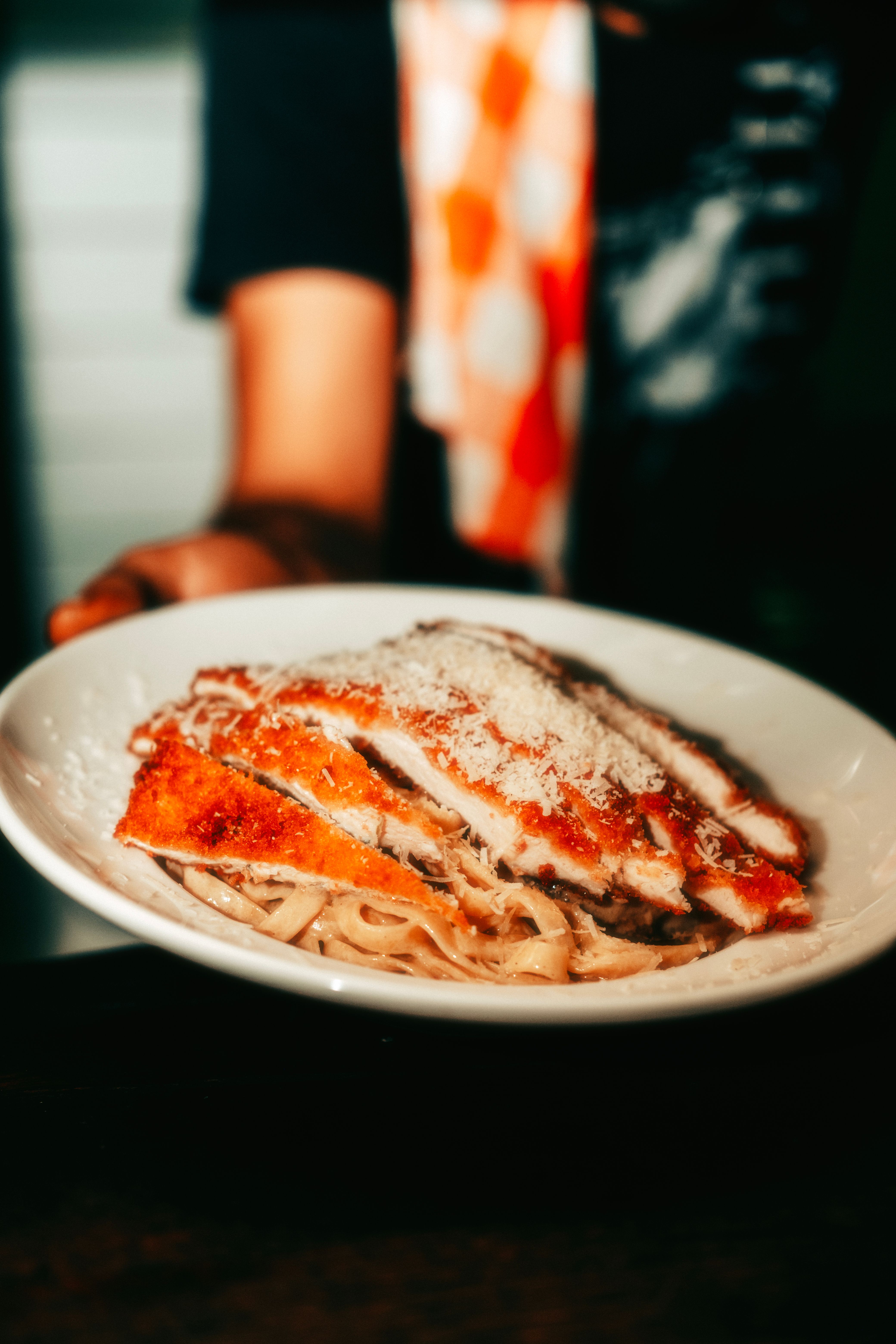
Photo: Wolrider YURTSEVEN / Pexels
Italian
Chicken Saltimbocca
The diets react (see scores below)
Common Ingredients
- chicken breast
- prosciutto
- fresh sage
- white wine
- butter
- flour
- chicken broth
Specific recipes may vary.
Incompatible with 4 of 11 diets
Diet Ratings
Chicken Saltimbocca is largely keto-friendly but contains two problematic ingredients: flour (used for dredging the chicken) and white wine (contains residual sugars and carbs). The flour coating adds meaningful net carbs and is a grain-based ingredient incompatible with strict keto. White wine contributes additional carbs (~3-4g per 1/4 cup used in the sauce). The core components — chicken breast, prosciutto, sage, butter, and chicken broth — are all keto-approved. With simple modifications (omit flour or substitute almond/coconut flour, reduce or eliminate wine or substitute with extra broth and a splash of apple cider vinegar), this dish becomes fully keto-compliant. As traditionally prepared, it sits in caution territory due to the flour dredge being the primary offender.
Chicken Saltimbocca contains multiple animal products that are unambiguously excluded from a vegan diet. Chicken breast is poultry (animal flesh), prosciutto is cured pork (animal flesh), butter is a dairy product, and chicken broth is derived from animal bones and flesh. There is no plant-based interpretation of this dish in its described form — every core component beyond the sage, flour, and wine is an animal product. This dish is entirely incompatible with vegan dietary standards.
Chicken Saltimbocca contains multiple non-paleo ingredients that make it incompatible with the diet. Flour is a grain-based ingredient and is strictly excluded. Butter is a dairy product, also excluded by paleo rules. Prosciutto, while pork-based, is a processed, cured meat that typically contains added salt and preservatives. White wine, though derived from grapes, is an alcoholic and processed product. Chicken breast and fresh sage are the only fully paleo-compliant ingredients. The dish as traditionally prepared cannot be considered paleo-friendly.
Chicken Saltimbocca sits in a cautious middle ground for the Mediterranean diet. Chicken breast is an acceptable lean protein, permitted in moderate amounts. However, the dish layers several problematic elements: prosciutto is a processed, cured red meat (pork) that should be limited to a few times per month; butter replaces the canonical olive oil as the cooking fat; and refined flour is used for dredging. The white wine and fresh sage are Mediterranean-friendly, and the dish is rooted in Italian culinary tradition, but the combination of processed cured meat, butter-based sauce, and refined flour pushes it away from core Mediterranean principles. The chicken alone would be a 'caution' food; the prosciutto and butter pull the score down further.
Traditional Italian cuisine, particularly from Lazio where saltimbocca originates, does include cured pork and butter in regional cooking, and some Mediterranean diet frameworks acknowledge these as occasional traditional foods rather than categorically prohibited items. A strict clinical interpretation (e.g., Predimed-style guidelines) would flag prosciutto and butter more harshly, while a culturally inclusive Mediterranean diet perspective might accept this dish as an occasional traditional meal.
Chicken Saltimbocca is fundamentally incompatible with the carnivore diet. While the dish contains carnivore-friendly animal proteins (chicken breast, prosciutto, butter, chicken broth), it also includes several plant-derived and processed ingredients that disqualify it. Flour is a grain-based thickener explicitly excluded from carnivore. White wine is a plant-derived fermented beverage. Fresh sage is a plant-based herb. These three ingredients are clear violations of carnivore principles. Even setting aside the debate about chicken vs. ruminant meat, the flour alone — used as a dredge — is a hard disqualifier. This dish cannot be adapted without fundamentally changing its nature.
Chicken Saltimbocca contains two clearly excluded ingredients: butter (dairy, not ghee/clarified butter) and flour (a grain). While chicken breast, prosciutto, fresh sage, white wine, and chicken broth are all Whole30-compatible, the presence of both regular butter and wheat flour makes this dish non-compliant. The dish could be modified — substituting ghee for butter and omitting or replacing flour (e.g., arrowroot) — but as traditionally prepared, it fails Whole30 requirements.
Chicken Saltimbocca is largely low-FODMAP, but two ingredients introduce meaningful concern during the elimination phase. Chicken breast, prosciutto, fresh sage, and butter are all low-FODMAP. White wine is low-FODMAP in small amounts (up to ~150ml per Monash). The two problematic ingredients are flour and chicken broth. Wheat flour is high-FODMAP due to fructans — even a small dusting for dredging (typically 1-2 tbsp per serving) keeps the total fructan load borderline; Monash rates wheat flour as low-FODMAP only at ¼ tsp (1g), making even a light dredge potentially problematic. Chicken broth/stock is a significant wildcard: many commercial broths contain onion and/or garlic, which are high-FODMAP. If the broth is homemade or certified low-FODMAP (e.g., onion/garlic-free), this becomes a non-issue. With these substitutions — gluten-free flour for dredging and a certified low-FODMAP broth — the dish would score 8-9 and be approvable. As written with standard ingredients, caution is warranted.
Monash University would flag wheat flour (even in small dredging quantities) as a fructan source during strict elimination; some clinical FODMAP practitioners allow a very light dusting (under 1g) but this is difficult to control in practice. Commercial chicken broth nearly universally contains onion or garlic, and many FODMAP dietitians advise avoiding it entirely during elimination unless the label explicitly confirms it is onion- and garlic-free.
Chicken Saltimbocca presents a mixed DASH diet profile. Chicken breast is a lean protein explicitly encouraged by DASH guidelines, and fresh sage adds flavor without sodium. However, the dish has several problematic elements: prosciutto is a cured meat with high sodium content (typically 600-900mg per 2-3 slices used in a serving), butter adds saturated fat that DASH limits, and standard chicken broth contributes additional sodium (typically 400-900mg per cup depending on brand). The white wine and flour are relatively neutral. The combination of prosciutto and salted chicken broth can easily push a single serving to 1,000-1,500mg of sodium, a significant portion of even the standard DASH limit of 2,300mg/day. The butter-based pan sauce also conflicts with DASH's emphasis on limiting saturated fat. With modifications — using low-sodium broth, reducing prosciutto quantity, and substituting olive oil for butter — this dish could move closer to DASH compliance, leveraging the lean chicken breast as its core.
NIH DASH guidelines explicitly limit cured meats and high-sodium ingredients, making traditional Saltimbocca a poor fit. However, some updated clinical interpretations note that lean chicken breast is a cornerstone DASH protein, and with mindful preparation (low-sodium broth, minimal prosciutto, olive oil substitution), the dish's overall nutritional profile can be brought into acceptable range — a position some DASH-oriented dietitians take when coaching patients on Mediterranean-style adaptations.
Chicken Saltimbocca is built around a lean Zone-friendly protein (chicken breast), which is ideal. However, the dish introduces several elements that require careful management in the Zone framework. Prosciutto adds saturated fat and sodium, though in modest quantities it can be accommodated. The pan sauce relies on butter — a saturated fat rather than the preferred monounsaturated fat (olive oil, avocado) — which conflicts with Zone fat guidelines, particularly the anti-inflammatory focus of later Sears writings. The flour dredge contributes a small but meaningful amount of higher-glycemic carbohydrate and can throw off the carb block count if not accounted for. White wine adds minimal carbs in cooking (most alcohol burns off), so it is largely a non-issue. The dish lacks vegetables entirely as presented, meaning it cannot stand alone as a Zone-balanced meal without adding low-glycemic vegetable sides to fulfill the carb blocks properly. Served with a large portion of leafy greens or non-starchy vegetables and with butter minimized or substituted with olive oil, this dish can be made Zone-compatible, but as traditionally prepared it is imbalanced toward saturated fat and incomplete on the carbohydrate side.
Some Zone practitioners and later Sears anti-inflammatory writings (e.g., 'The OmegaRx Zone') take a more relaxed view of small amounts of saturated fat like butter, especially when the overall meal is built around lean protein and polyphenol-rich herbs like sage. In this view, a small butter-based pan sauce is an acceptable fat block, and the dish could score closer to a 6-7 if portioned correctly alongside vegetables. Early Zone texts, however, consistently flagged butter and saturated fats as unfavorable compared to monounsaturated options.
Chicken Saltimbocca presents a mixed anti-inflammatory profile. On the positive side, chicken breast is a lean protein that falls into the 'moderate' category of anti-inflammatory eating, and fresh sage is an herb with meaningful antioxidant and anti-inflammatory compounds (rosmarinic acid, flavonoids). White wine and chicken broth are largely neutral. However, the dish has notable inflammatory concerns: butter is a saturated fat that should be limited, and prosciutto is a processed, cured, high-sodium red meat product that falls closer to the 'limit' category. The flour used for dredging represents refined carbohydrates, a minor but real concern. The overall dish is not deeply inflammatory — it lacks trans fats, seed oils, HFCS, or heavy saturated fat loads — but the butter-based pan sauce and processed cured meat mean it cannot be approved. It's a reasonable occasional dish for someone following anti-inflammatory principles, particularly if butter is reduced and prosciutto portions are modest.
Some anti-inflammatory practitioners, particularly those emphasizing Mediterranean diet overlap, would view this dish more favorably given its lean protein base, herb content, and wine component — ingredients consistent with Mediterranean eating patterns shown to reduce inflammatory markers. Others following stricter anti-inflammatory protocols (e.g., those managing autoimmune conditions) would flag the processed meat and saturated fat more harshly and rate this closer to a 3-4.
Chicken Saltimbocca starts with an excellent GLP-1 foundation — chicken breast is a lean, high-protein base — but the preparation introduces several moderate concerns. Prosciutto adds saturated fat and significant sodium, which can worsen fluid retention and is not ideal for GLP-1 patients already prone to dehydration. The pan sauce combines butter (saturated fat) and white wine (alcohol, even when reduced), and the chicken is typically dredged in flour before searing, adding refined carbohydrate with minimal fiber or nutrient value. The butter-wine pan sauce also increases overall fat content per serving, which may worsen nausea, bloating, or reflux given GLP-1-slowed gastric emptying. That said, portions of prosciutto and sauce are typically modest in a classic preparation, the dish is not fried, and the protein-to-fat ratio remains reasonably favorable compared to heavier Italian mains. If prepared with reduced butter, minimal flour, and the wine fully cooked off, this dish becomes more acceptable. As served in a restaurant, the fat and sodium load are harder to control.
Some GLP-1-focused dietitians would accept this dish in a modified home-prepared version — reducing butter to a minimal amount and skipping the flour dredge — arguing the lean chicken breast and small prosciutto portion keep protein density high enough to justify inclusion. Others would flag the saturated fat and sodium combination as consistently problematic for GLP-1 patients given slowed gastric emptying and the heightened sensitivity to fat-heavy meals, recommending the patient avoid it outside of home cooking with strict modifications.
*See how scores were generated at our methodology page.
Nutritional profile
Six traits that cut across every diet.
Fiber & Plants
How much whole-plant food and fiber it delivers.
Healthy Fats
The quality of its fats (unsaturated, omega-3).
Whole / Unprocessed
How close it is to its natural, unprocessed form.
Gut Gentle
How easy it is on digestion (low FODMAP, few irritants).
Low Glycemic
How little it spikes your blood sugar.
Protein Density
How much protein it packs per calorie.
Controversy Index
Higher controversy = more disagreement between diets.
Diet-Specific Tips
 Keto — 5/10
View tips
- Flour dredging adds grain-based carbs — primary keto concern
- White wine contributes residual sugars and carbs to the sauce
- Chicken breast, prosciutto, butter, sage, and broth are all keto-approved
- Easy to modify: almond flour swap and wine omission makes it fully keto
- Portion of flour per serving is small but not negligible for strict keto
- Lazy keto practitioners may accept the small flour amount; strict keto requires substitution
 Mediterranean — 4/10
View tips
- Chicken breast is an acceptable lean protein in moderation
- Prosciutto is a processed cured pork product, limited to a few times per month
- Butter used instead of extra virgin olive oil as the primary fat
- Refined flour used for dredging, not a whole grain
- White wine and fresh sage are Mediterranean-compatible ingredients
- Dish is authentically Italian but not aligned with core Mediterranean diet principles
 Low-FODMAP — 5/10
View tips
- Chicken breast is low-FODMAP — safe at any standard serving
- Prosciutto is low-FODMAP — cured meat with no high-FODMAP additives
- Fresh sage is low-FODMAP at culinary quantities
- Butter is low-FODMAP (fat-based, negligible lactose)
- White wine is low-FODMAP at ≤150ml; typical cooking quantity per serving is within range
- Wheat flour for dredging is high-FODMAP due to fructans — Monash approves only ~1g, making standard dredging risky; substitute rice flour or gluten-free flour to resolve
- Commercial chicken broth frequently contains onion/garlic (high-FODMAP fructans) — must verify label or use certified low-FODMAP stock
 DASH — 4/10
View tips
- Prosciutto is a high-sodium cured meat conflicting with DASH sodium limits
- Chicken breast is an ideal DASH lean protein
- Butter contributes saturated fat that DASH recommends limiting
- Standard chicken broth adds significant sodium; low-sodium broth is a critical substitution
- Total dish sodium per serving likely 1,000–1,500mg, challenging within DASH daily limits
- Fresh sage and white wine are DASH-neutral ingredients
- Dish can be modified toward DASH compliance but is problematic as traditionally prepared
 Zone — 5/10
View tips
- Chicken breast is an ideal lean Zone protein source
- Butter is a saturated fat, conflicting with Zone's preference for monounsaturated fats and anti-inflammatory goals
- Prosciutto adds saturated fat and sodium; must be used sparingly
- Flour dredge introduces higher-glycemic refined carbohydrate that must be counted in carb blocks
- Dish as presented contains no vegetables, requiring significant sides to balance Zone macros
- White wine contributes negligible carbs after cooking
- Sage provides polyphenols consistent with Zone anti-inflammatory principles
- Dish can be Zone-adapted by substituting olive oil for butter and pairing with abundant low-GI vegetables
 Anti-Inflammatory — 5/10
View tips
- Chicken breast is a lean, anti-inflammatory-compatible protein (moderate category)
- Fresh sage contributes rosmarinic acid and flavonoids with demonstrated anti-inflammatory activity
- Prosciutto is a processed, cured, high-sodium red meat — should be limited on anti-inflammatory diets
- Butter adds saturated fat, which is flagged for limitation in anti-inflammatory guidelines
- Refined flour (dredging) contributes refined carbohydrates, a minor inflammatory concern
- White wine and chicken broth are neutral ingredients with minimal inflammatory impact
- No trans fats, seed oils, or HFCS — avoids the worst pro-inflammatory ingredients
 GLP-1 Friendly — 5/10
View tips
- Chicken breast provides strong lean protein base — positive
- Prosciutto adds saturated fat and high sodium — negative
- Butter in pan sauce increases saturated fat load — negative
- White wine adds alcohol even when reduced; cooking off is incomplete — mild negative
- Flour dredge contributes refined carbs with no fiber — mild negative
- Dish is pan-seared, not fried — neutral to positive
- Portion size of prosciutto and sauce is typically small in classic preparation — partially mitigating
- High sodium content may worsen dehydration risk, a GLP-1 concern
- Home preparation with modifications (less butter, no flour) significantly improves the profile