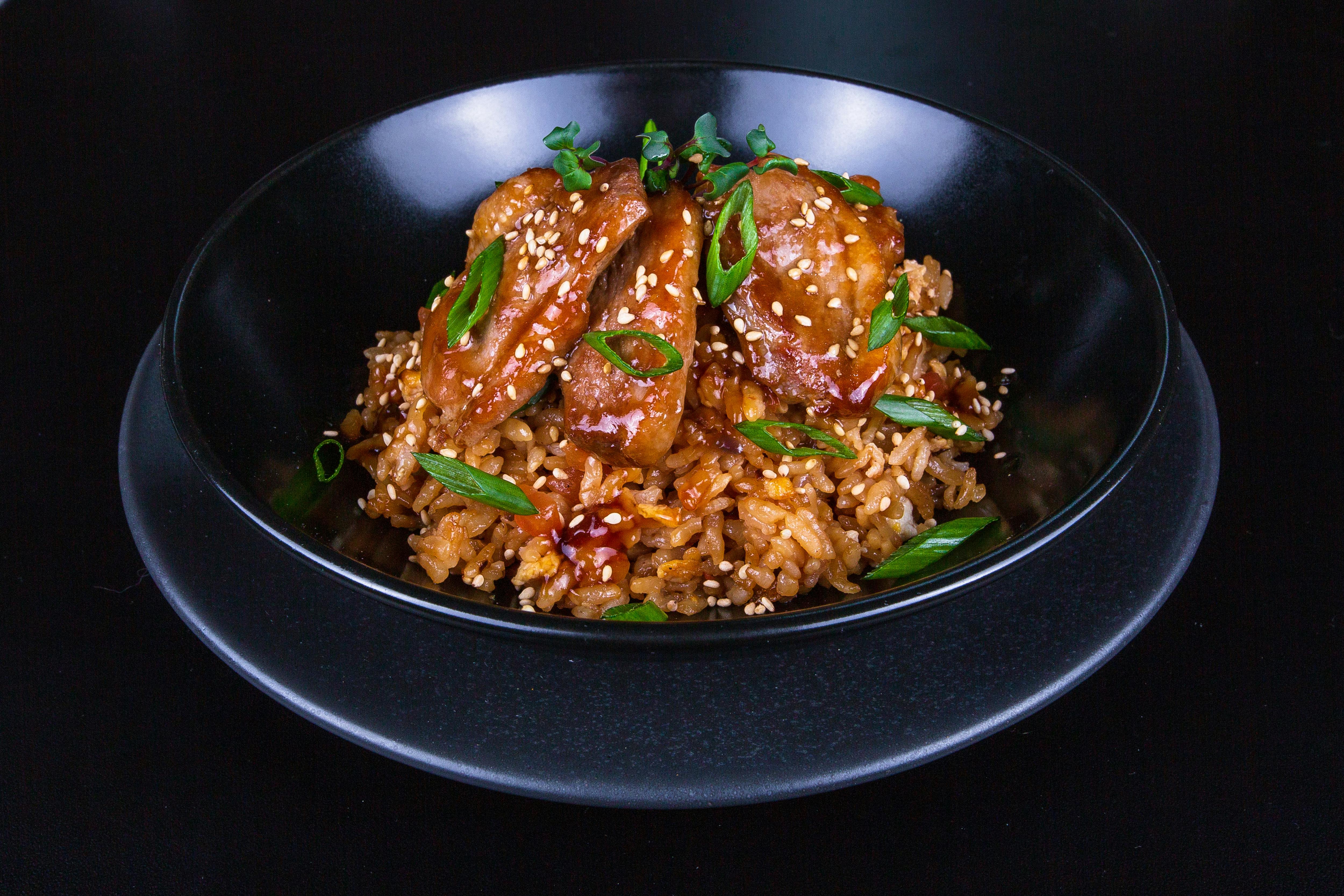
Photo: Vitaliy Haiduk / Pexels
Japanese
Chicken Teriyaki
The diets react (see scores below)
Common Ingredients
- chicken thighs
- soy sauce
- mirin
- sake
- sugar
- ginger
- garlic
- sesame seeds
Specific recipes may vary.
Incompatible with 6 of 11 diets
Diet Ratings
Traditional chicken teriyaki sauce is built on a foundation of mirin, sake, and sugar — all significant sources of carbohydrates. Mirin alone contains roughly 14g of carbs per tablespoon, sake adds additional sugars, and the recipe explicitly includes added sugar. A standard serving of teriyaki sauce can deliver 15-30g of net carbs, which can single-handedly blow a daily keto budget. While chicken thighs themselves are an ideal keto protein source (high fat, zero carbs), the sauce preparation makes this dish incompatible with ketosis in its traditional form. The dish is avoidable not because of the protein, but because of the sugar-laden glaze that defines the recipe.
Some lazy keto and flexible keto practitioners argue the dish can be made keto-compatible by substituting a sugar-free teriyaki sauce (erythritol or monk fruit instead of sugar, reduced or eliminated mirin), keeping the spirit of the dish while slashing net carbs to under 3-5g per serving. They would rate a modified version as 'caution' or even 'approve.'
Chicken Teriyaki contains chicken thighs as its primary protein, which is poultry — a direct animal product. This is unambiguously incompatible with a vegan diet. All remaining ingredients (soy sauce, mirin, sake, sugar, ginger, garlic, sesame seeds) are plant-derived and would be vegan-compatible, but the presence of chicken makes the dish entirely off-limits. A vegan version could be made by substituting the chicken with tofu, tempeh, or a plant-based protein using the same teriyaki sauce.
Chicken Teriyaki contains multiple non-paleo ingredients that disqualify it clearly. Soy sauce is a fermented soy and wheat product — both legumes and grains are explicitly excluded from the paleo diet. Mirin and sake are rice-based alcohols, meaning they derive from grains. Refined sugar is directly excluded. While chicken thighs, ginger, and garlic are fully paleo-approved, and sesame seeds occupy a gray area (seed oil debate does not extend to whole seeds), the core sauce ingredients — soy sauce, mirin, sake, and sugar — are fundamentally incompatible with paleo principles. This is not a borderline case; the dish as traditionally prepared relies structurally on excluded ingredients.
Chicken Teriyaki presents a mixed picture from a Mediterranean diet perspective. Chicken thighs are an acceptable moderate protein source (poultry is permitted a few times per week), and ginger and garlic are genuinely Mediterranean-friendly aromatics. However, the teriyaki sauce introduces several concerns: added sugar is a core ingredient, soy sauce is a high-sodium processed condiment not part of the Mediterranean tradition, and mirin/sake contribute additional sugar and alcohol. The dish is also prepared without olive oil and lacks the vegetable-forward, plant-based emphasis central to Mediterranean eating. The overall flavor profile and preparation method are distinctly non-Mediterranean. It is not inherently harmful if consumed occasionally, but it sits at the lower end of the caution range due to added sugar and processed condiments.
Some modern Mediterranean diet practitioners argue that the lean protein from chicken and the anti-inflammatory properties of ginger and garlic partially offset the processed sauce components, and that cultural dietary diversity should be accommodated. However, mainstream Mediterranean diet authorities such as those behind the PREDIMED study and the Harvard T.H. Chan School of Public Health guidelines would flag added sugars and highly processed condiments as contrary to core principles.
Chicken Teriyaki is heavily incompatible with the carnivore diet. While chicken thighs are an animal product, the dish is defined by its teriyaki sauce, which contains soy sauce (fermented soy — a legume-derived plant product), mirin (sweet rice wine — grain-derived), sake (rice wine — grain-derived), and sugar (processed plant carbohydrate). Additional plant-based ingredients include ginger, garlic, and sesame seeds, all of which are excluded on carnivore. The sauce components are not incidental trace additives — they are the core flavor profile of the dish, making this fundamentally a plant-heavy preparation. The only salvageable component is the chicken thigh itself, which if grilled plain would be acceptable.
Chicken Teriyaki as traditionally prepared contains multiple Whole30-excluded ingredients. Soy sauce is a soy product (legume-derived) and is explicitly excluded. Mirin is a sweet rice wine containing both alcohol and rice (a grain), both of which are excluded. Sake is an alcoholic rice-based beverage, also excluded on both counts. Sugar is explicitly excluded as an added sugar. While the chicken, ginger, garlic, and sesame seeds are all compliant, the core sauce components that define this dish are fundamentally incompatible with Whole30. A Whole30-adapted version would require substituting coconut aminos for soy sauce, eliminating or replacing mirin and sake, and omitting sugar entirely — at which point the dish would be a significantly altered approximation rather than traditional teriyaki.
Chicken Teriyaki contains garlic as a listed ingredient, which is one of the highest-FODMAP foods tested by Monash University due to its very high fructan content. Even small amounts of garlic (e.g., half a clove) exceed safe FODMAP thresholds during the elimination phase. Additionally, soy sauce typically contains wheat (a fructan source), though tamari or gluten-free soy sauce would be acceptable alternatives. Mirin and sake in small culinary quantities are generally considered low-FODMAP. Sugar is low-FODMAP. Ginger is low-FODMAP at typical serving sizes. Sesame seeds are low-FODMAP at standard servings. Chicken thighs are a safe, FODMAP-free protein. However, the inclusion of garlic as a direct ingredient — not garlic-infused oil — makes this dish high-FODMAP and unsuitable for the elimination phase without modification. A low-FODMAP version is achievable by substituting garlic-infused oil for garlic and using tamari instead of wheat-based soy sauce.
Chicken teriyaki presents a mixed DASH profile. The chicken thighs provide lean protein, and ginger and garlic offer beneficial phytonutrients. However, the dish is fundamentally problematic for DASH due to its high sodium content: soy sauce is one of the saltiest condiments in common use, with a single tablespoon containing roughly 900–1,000mg of sodium. A typical teriyaki sauce serving can easily contribute 800–1,500mg of sodium, pushing a single meal close to or beyond the DASH daily sodium ceiling of 2,300mg (and far exceeding the stricter 1,500mg target). Additionally, chicken thighs contain more saturated fat than DASH-preferred skinless chicken breast, and added sugar from mirin and granulated sugar increases the glycemic and caloric load. The dish can be made more DASH-compatible by substituting low-sodium soy sauce, removing the skin from thighs, and reducing added sugar — but as commonly prepared, it warrants only cautious, infrequent consumption.
Chicken teriyaki presents a mixed Zone profile. The protein source (chicken thighs) is acceptable but not ideal — thighs contain more saturated fat than skinless chicken breast, which Sears consistently recommends as the preferred poultry cut. The teriyaki sauce is the primary Zone concern: mirin, sake, and added sugar all contribute high-glycemic simple carbohydrates that spike blood sugar and trigger an insulin response — exactly what the Zone aims to prevent. However, the sugar quantities in a typical teriyaki glaze, while unfavorable, are relatively small per serving and can be partially offset by portioning. Soy sauce is Zone-neutral (minimal macronutrient impact). Ginger and garlic are polyphenol-rich and anti-inflammatory, aligning well with Sears' later emphasis on polyphenols. Sesame seeds provide small amounts of fat, though sesame oil/seeds are omega-6 heavy — a caution in Sears' anti-inflammatory framework. Overall, chicken teriyaki can fit into a Zone meal if the sauce is used sparingly, the chicken breast is substituted for thighs, and the dish is paired with low-glycemic vegetables rather than rice. As traditionally prepared, the sugar-forward sauce and fattier protein cut make this an 'unfavorable' Zone choice requiring modification.
Some Zone practitioners treat dishes like chicken teriyaki as workable Zone meals by counting the sauce sugars as carb blocks and pairing with fiber-rich vegetables to blunt the glycemic load. Dr. Sears' later work (The Zone Diet and Anti-Aging) places greater emphasis on polyphenols and omega-3s than strict glycemic avoidance, and the ginger and garlic in this dish provide meaningful anti-inflammatory polyphenols that partially offset the sauce's glycemic impact. A modified version with breast meat, reduced sugar, and vegetable sides could approach a 6-7 score.
Chicken teriyaki sits in neutral territory from an anti-inflammatory perspective. On the positive side, chicken thighs are a lean-to-moderate protein source acceptable in the anti-inflammatory framework, and ginger and garlic are both well-established anti-inflammatory spices with meaningful evidence behind them. Sesame seeds provide some lignans and vitamin E with modest anti-inflammatory activity. Soy sauce (especially traditional shoyu or tamari) is fermented, which is generally viewed favorably. However, the dish has notable concerns: the teriyaki sauce is built on added sugar and mirin (sweet rice wine), both of which contribute to glycemic load and can promote inflammatory signaling when consumed regularly. Sake adds more sugar and alcohol. Traditional teriyaki can be quite high in sodium from soy sauce, which is a secondary concern. Chicken thighs, while flavorful, contain more saturated fat than breast meat, placing them in the moderate rather than ideal category. On balance, the anti-inflammatory positives (ginger, garlic, fermented soy) are real but modest, and they are outweighed somewhat by the sugar load in the sauce. A homemade version with reduced sugar and sodium would score higher; restaurant versions with heavy sauce are more problematic.
Some anti-inflammatory practitioners would rate this more favorably, noting that traditional Japanese diets — which feature soy sauce, mirin, and small amounts of sugar — are associated with low rates of inflammatory disease and longevity (the Okinawan paradox). Dr. Weil's framework does not prohibit moderate use of naturally fermented soy condiments or small amounts of added sugar in cooking. However, those following stricter anti-inflammatory or low-glycemic protocols (e.g., the Wahls Protocol or AIP-adjacent approaches) would flag the added sugars and alcohol-derived ingredients as pro-inflammatory triggers worth limiting.
Chicken teriyaki provides solid protein from chicken thighs and is easy to digest, making it a reasonable GLP-1 meal option. However, chicken thighs are a moderate-fat cut (roughly 8-10g fat per 3oz serving vs. 3g for breast), which can worsen nausea, bloating, or reflux in GLP-1 patients sensitive to dietary fat. The teriyaki sauce adds meaningful sugar (mirin and added sugar), contributing empty calories and a moderate glycemic hit — problematic when every calorie needs to count nutritionally. Soy sauce is high in sodium, which matters for hydration balance. Sesame seeds add small amounts of healthy unsaturated fat and fiber. Ginger is a mild positive — it has antiemetic properties that may help with GLP-1-related nausea. Overall, this dish is acceptable but not optimal; substituting chicken breast would meaningfully improve the rating.
Some GLP-1-focused dietitians accept chicken thighs as a practical protein source, arguing that the fat difference from breast is modest in real-world portions and that patient adherence to eating adequate protein matters more than the cut. Others are stricter, particularly on injection days or early in treatment when GI sensitivity is highest, recommending avoiding thigh-based dishes entirely until tolerance is established.
*See how scores were generated at our methodology page.
Nutritional profile
Six traits that cut across every diet.
Fiber & Plants
How much whole-plant food and fiber it delivers.
Healthy Fats
The quality of its fats (unsaturated, omega-3).
Whole / Unprocessed
How close it is to its natural, unprocessed form.
Gut Gentle
How easy it is on digestion (low FODMAP, few irritants).
Low Glycemic
How little it spikes your blood sugar.
Protein Density
How much protein it packs per calorie.
Controversy Index
Higher controversy = more disagreement between diets.
Diet-Specific Tips
 Mediterranean — 4/10
View tips
- Poultry is acceptable in moderation per Mediterranean guidelines
- Added sugar in teriyaki sauce contradicts Mediterranean diet principles
- Soy sauce is a high-sodium processed ingredient not traditional to Mediterranean cuisine
- Mirin and sake add further sugar content
- No olive oil used; sesame oil is the implicit fat base
- Ginger and garlic are positive anti-inflammatory ingredients
- Dish lacks the plant-forward, vegetable-rich emphasis of Mediterranean eating
 DASH — 4/10
View tips
- Very high sodium from soy sauce — a single tablespoon contains ~900–1,000mg, easily exceeding DASH limits in a full serving
- Chicken thighs are higher in saturated fat than DASH-preferred skinless chicken breast
- Added sugars from mirin and granulated sugar are not DASH-emphasized
- Garlic and ginger are DASH-friendly, anti-inflammatory ingredients
- Low-sodium soy sauce substitution could significantly improve DASH compatibility
- Sake and mirin add minimal but notable sugar and sodium contributions
- Sesame seeds provide small amounts of beneficial magnesium and healthy fats
 Zone — 5/10
View tips
- Chicken thighs are higher in saturated fat than the Zone-preferred skinless chicken breast
- Teriyaki sauce contains mirin, sake, and sugar — all high-glycemic simple carbohydrates unfavorable in Zone
- Sugar content of traditional teriyaki glaze triggers insulin response counter to Zone goals
- Ginger and garlic provide anti-inflammatory polyphenols consistent with Sears' later Zone refinements
- Sesame seeds are omega-6 heavy, conflicting with Zone's anti-inflammatory fat hierarchy
- Dish is salvageable with modifications: swap to breast meat, reduce sauce sugar, pair with low-GI vegetables instead of rice
- As traditionally served (often over white rice), the full dish would score lower — evaluated here as the dish alone
 Anti-Inflammatory — 5/10
View tips
- Added sugar in teriyaki sauce (mirin, sugar, sake) raises glycemic load
- Ginger and garlic are well-evidenced anti-inflammatory spices
- Chicken thighs are moderate — acceptable but higher in saturated fat than breast
- Fermented soy sauce has neutral-to-positive profile in anti-inflammatory frameworks
- High sodium content from soy sauce is a secondary concern
- Sesame seeds provide modest lignans and antioxidants
- Overall sugar content is the primary limiting factor for anti-inflammatory scoring
 GLP-1 Friendly — 5/10
View tips
- Chicken thighs are moderate-fat; higher fat content risks worsening GLP-1 GI side effects compared to leaner breast
- Teriyaki sauce contains added sugar (mirin, sugar) reducing nutrient density per calorie
- High sodium from soy sauce may affect hydration balance, a concern given reduced thirst on GLP-1s
- Ginger ingredient is a mild positive with potential antiemetic benefit
- Protein content is adequate but fat-to-protein ratio is less favorable than leaner alternatives
- Substituting chicken breast would raise this to an approve-level dish