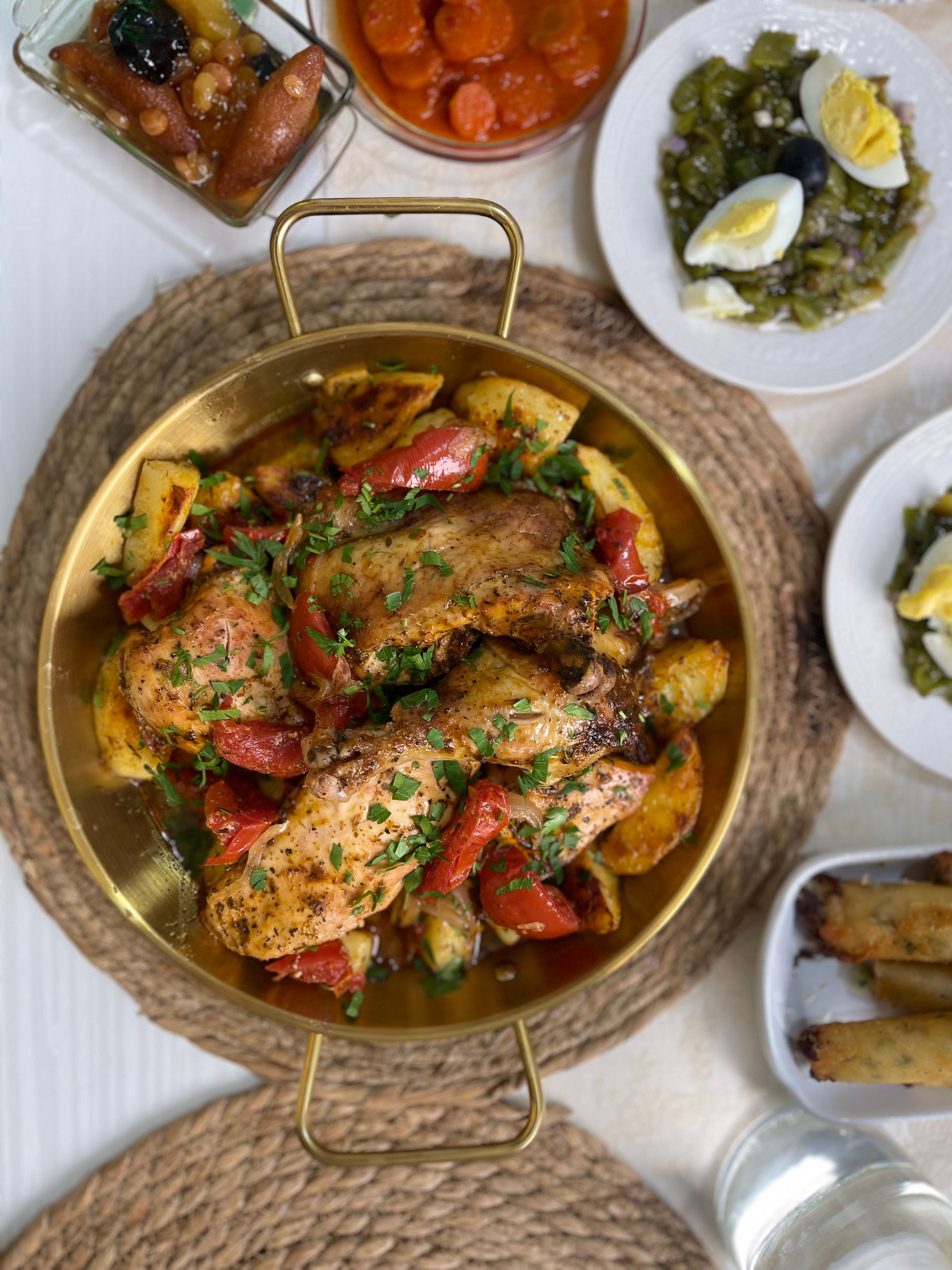
Photo: zhor abdellkader / Pexels
Italian
Chicken Vesuvio
The diets react (see scores below)
Common Ingredients
- bone-in chicken
- potatoes
- white wine
- garlic
- oregano
- peas
- olive oil
- chicken broth
Specific recipes may vary.
Incompatible with 5 of 11 diets
Diet Ratings
Chicken Vesuvio is fundamentally incompatible with a ketogenic diet in its traditional form. The two primary offenders are potatoes and peas. Potatoes are a high-starch vegetable with roughly 15-17g net carbs per 100g, and a standard serving of this dish includes a substantial portion — easily pushing 30-40g net carbs from potatoes alone. Peas add another 7-10g net carbs per half-cup. Together, these two ingredients alone can blow the entire daily keto carb budget in a single serving. The remaining ingredients (bone-in chicken, olive oil, garlic, white wine, oregano, chicken broth) are keto-friendly or at worst low-impact in normal quantities, but they cannot offset the starch load from the potatoes and peas. White wine also contributes a small amount of residual sugar (~3-4g carbs per 4oz), which is a minor but additive concern.
Chicken Vesuvio contains multiple animal products that are categorically incompatible with a vegan diet. Bone-in chicken is a direct animal flesh product, and chicken broth is an animal-derived liquid made by cooking chicken bones and tissue. These two ingredients alone make this dish entirely off-limits for vegans. There is no ambiguity here — this is a meat-based dish at its core.
Chicken Vesuvio contains several problematic ingredients from a paleo perspective. Peas are legumes and are excluded under strict paleo rules. White potatoes are debated — originally excluded by Cordain and discouraged by The Paleo Diet's official guide, though many modern paleo practitioners accept them. White wine, while derived from fruit, is an alcoholic and processed product that sits in a gray area. The remaining ingredients — bone-in chicken, garlic, oregano, olive oil, and chicken broth (assuming no additives or salt) — are paleo-friendly. However, the combination of a clear avoid (peas) and two debated ingredients (white potatoes, white wine) pulls the overall dish into avoid territory. The dish cannot be considered paleo-compliant as traditionally prepared.
Some modern paleo frameworks, including Mark Sisson's Primal Blueprint and Whole30, permit white potatoes, and many practitioners allow occasional alcohol such as dry wine. If peas were omitted and white potatoes accepted, a modified version of this dish could be argued as paleo-compliant by these less strict schools of thought.
Chicken Vesuvio is a reasonably Mediterranean-compatible dish. Olive oil is the primary fat, and the ingredient list is wholesome — garlic, oregano, peas, and potatoes are all plant-based whole foods consistent with Mediterranean eating patterns. White wine and chicken broth are traditional cooking liquids with no red flags. Chicken, however, is a moderate-consumption protein in the Mediterranean diet (a few servings per week, not daily), which prevents a full approval. The dish contains no processed ingredients, added sugars, or refined grains, which is a strong positive. Potatoes are a starchy vegetable accepted in Mediterranean cooking, though whole grains would be preferred as a carbohydrate base in modern clinical guidelines.
Some stricter modern Mediterranean diet frameworks (e.g., those based on Willett et al.'s Harvard pyramid) would caution against chicken as a frequent protein, favoring fish and legumes instead. Conversely, traditional Southern Italian and Greek home cooking regularly features braised chicken dishes very similar to this one, and some practitioners would score it closer to 7 for its wholly unprocessed, olive-oil-forward profile.
Chicken Vesuvio is overwhelmingly non-carnivore. While it contains bone-in chicken (acceptable on carnivore) and chicken broth (acceptable), virtually every other ingredient is plant-derived and strictly excluded: potatoes (starchy vegetable/tuber), white wine (fermented plant product), garlic (allium vegetable), oregano (plant spice), peas (legume), and olive oil (plant oil). The dish is fundamentally a plant-heavy preparation where animal protein is a minor component surrounded by disqualifying ingredients. There is no meaningful way to adapt this dish without completely transforming it into something unrecognizable as Chicken Vesuvio.
Chicken Vesuvio is largely Whole30-compliant: bone-in chicken, potatoes, garlic, oregano, olive oil, and chicken broth are all approved whole foods. White wine used as a cooking ingredient presents a nuance — alcohol itself is excluded on Whole30, but the official program allows wine vinegars and uses of wine in cooking where alcohol cooks off; however, the rules do not explicitly carve out cooking wine, and the spirit of the program discourages alcohol in any form. Peas are a legume, but standard garden peas (green peas) fall into a gray area — the explicit legume exceptions are green beans, sugar snap peas, and snow peas, not green peas. Most Whole30 guidance treats regular green peas as excluded legumes. These two ingredients — white wine and peas — make this dish a caution rather than a clear approval.
Official Whole30 guidelines explicitly exclude legumes including peas (garden/green peas are not among the listed exceptions), and alcohol including wine is excluded even in cooking contexts. However, some community members and practitioners argue that cooking wine reduces to negligible alcohol and that the small amount of peas in Vesuvio is a borderline call; others maintain strict exclusion per Melissa Urban's rules.
Chicken Vesuvio contains two significant high-FODMAP ingredients that make this dish unsuitable during the elimination phase. Garlic is one of the highest-FODMAP foods tested by Monash University, containing large amounts of fructans even in small quantities — there is no safe serving size of whole garlic cloves. Peas (green peas) are also high-FODMAP above a very small serving (~10 peas / 40g), and in a braised dish like this, they are typically served in quantities that far exceed that threshold, contributing GOS and fructans. The remaining ingredients are generally low-FODMAP: bone-in chicken (protein, no FODMAPs), potatoes (low-FODMAP at standard servings), white wine (low-FODMAP in small amounts), oregano (low-FODMAP as a herb), and olive oil (fat, no FODMAPs). Chicken broth can be an issue if it contains onion or garlic solids, which most commercial broths do. The combination of whole garlic and peas makes this dish clearly high-FODMAP as traditionally prepared, and substitutions would substantially alter the dish's character.
Chicken Vesuvio is a reasonably DASH-compatible dish with several favorable components: bone-in chicken (lean protein), potatoes (potassium-rich), peas (fiber and plant protein), garlic and oregano (DASH-encouraged herbs/aromatics), and olive oil (unsaturated fat, acceptable in DASH). White wine and chicken broth are standard cooking liquids. However, it lands in 'caution' territory for a few reasons: bone-in chicken often includes skin, which significantly raises saturated fat content; olive oil is used generously in traditional preparations, increasing total fat; chicken broth (standard versions) can be high in sodium; and the dish is typically roasted with a fair amount of oil. With skin removed, low-sodium broth, and moderate oil, this dish moves closer to DASH-approved territory. As commonly prepared in restaurants, sodium and saturated fat from skin push it to caution.
NIH DASH guidelines emphasize lean poultry without skin and sodium control in broths and cooking liquids. However, some DASH-oriented dietitians note that when prepared with skinless chicken, low-sodium broth, and measured olive oil, Chicken Vesuvio can function as a core DASH meal — the potassium from potatoes and peas, along with the plant-forward aromatics, align well with DASH nutrient targets.
Chicken Vesuvio is a mixed Zone picture. On the positive side, the dish features lean chicken protein, olive oil (ideal monounsaturated fat), garlic, oregano (polyphenol-rich), peas (a moderate Zone carb), white wine (small amounts are acceptable), and chicken broth — all reasonably Zone-friendly components. The primary problem is the potatoes, which are explicitly classified as 'unfavorable' high-glycemic carbohydrates in Dr. Sears' Zone framework and are among the few vegetables he specifically discourages. Bone-in chicken with skin also adds saturated fat beyond what Zone recommends. The dish's overall macro balance skews toward high-glycemic carbs and fat without a clean 40/30/30 ratio. However, because Zone is ratio-based, a Zone practitioner can adapt this dish by substantially reducing the potato portion or substituting cauliflower, removing the chicken skin, and controlling the olive oil quantity. As served in a restaurant or traditional preparation, the potato-to-protein ratio is likely too unfavorable for easy Zone compliance, keeping this firmly in 'caution' territory.
Chicken Vesuvio is a reasonably balanced dish from an anti-inflammatory perspective. Olive oil is a cornerstone anti-inflammatory fat, rich in oleocanthal and monounsaturated fatty acids. Garlic and oregano provide meaningful anti-inflammatory polyphenols and antioxidants. Peas add plant-based fiber, protein, and micronutrients. White wine contributes small amounts of polyphenols, though it lacks the resveratrol concentration of red wine and some updated anti-inflammatory guidelines recommend avoiding alcohol altogether. Bone-in chicken is a lean protein classified as acceptable in moderation under anti-inflammatory frameworks. Potatoes are a neutral starch — not anti-inflammatory in the active sense, but not significantly pro-inflammatory when prepared without frying or heavy saturated fat. Chicken broth is benign. The main limitations are that chicken is only moderately rated (not an omega-3 source like fatty fish), potatoes are a high-glycemic starch that offers little antioxidant benefit, and white wine is a mild concern depending on which anti-inflammatory authority you consult. The dish contains no processed ingredients, trans fats, refined sugars, or seed oils, which is a meaningful positive. Overall, this is a whole-food, herb-forward dish that fits comfortably within anti-inflammatory eating with moderate frequency.
Dr. Weil's Anti-Inflammatory Pyramid includes poultry and moderate wine as acceptable, supporting a favorable view of this dish. However, some stricter anti-inflammatory and autoimmune-oriented protocols (e.g., AIP-adjacent guidance) flag any alcohol as pro-inflammatory and prefer lower-glycemic carbohydrates over white potatoes, which would push the rating closer to the lower end of caution.
Chicken Vesuvio is a mixed profile for GLP-1 patients. The dish centers on bone-in chicken, which is a solid protein source, but bone-in cuts typically include skin and dark meat, both of which significantly raise the fat content compared to skinless chicken breast. The preparation involves a generous pour of olive oil (a healthy unsaturated fat, but calorically dense and adds to overall fat load), white wine (alcohol is generally flagged for GLP-1 patients due to empty calories, though cooking reduces but does not eliminate alcohol content), and potatoes (starchy, moderate glycemic load, low protein density). On the positive side, garlic, oregano, and peas contribute micronutrients and a small fiber boost, and chicken broth adds hydration support. The dish is not fried, which keeps it in caution rather than avoid territory. The main concerns are the fat load from skin-on chicken and olive oil quantity, the starchy potato base competing with protein for limited stomach volume, and the wine component. A modified version — skinless chicken breast, reduced olive oil, smaller potato portion — would score considerably higher.
Some GLP-1-focused dietitians would rate this more favorably, noting that cooking burns off most alcohol, olive oil provides anti-inflammatory unsaturated fats rather than saturated fat, and the overall dish is far preferable to fried or ultra-processed alternatives. Others would rate it lower, emphasizing that the combined fat load from skin-on chicken plus oil frequently triggers nausea and delayed gastric emptying symptoms in GLP-1 patients, and that potatoes displace higher-fiber, higher-protein options in an already reduced-appetite context.
*See how scores were generated at our methodology page.
Nutritional profile
Six traits that cut across every diet.
Fiber & Plants
How much whole-plant food and fiber it delivers.
Healthy Fats
The quality of its fats (unsaturated, omega-3).
Whole / Unprocessed
How close it is to its natural, unprocessed form.
Gut Gentle
How easy it is on digestion (low FODMAP, few irritants).
Low Glycemic
How little it spikes your blood sugar.
Protein Density
How much protein it packs per calorie.
Controversy Index
Higher controversy = more disagreement between diets.
Diet-Specific Tips
 Mediterranean — 6/10
View tips
- Chicken is a moderate-consumption protein — acceptable but not a Mediterranean staple
- Olive oil as primary fat is strongly aligned with Mediterranean principles
- Garlic, oregano, peas, and potatoes are whole, plant-based ingredients
- No processed ingredients, refined grains, or added sugars
- White wine used in cooking is consistent with Mediterranean culinary tradition
- Dish would score higher if protein were fish or legumes
 Whole30 — 6/10
View tips
- Bone-in chicken, potatoes, garlic, oregano, and olive oil are all fully compliant
- White wine is an excluded ingredient (alcohol); cooking off alcohol is not an official Whole30 exception
- Green peas are a legume and are NOT among the explicitly allowed legume exceptions (green beans, sugar snap peas, snow peas)
- Chicken broth must be label-checked for added sugar, MSG (now allowed), or other excluded additives
- Dish could be made compliant by omitting wine and peas or substituting chicken broth for wine and allowed vegetables for peas
 DASH — 6/10
View tips
- Bone-in chicken with skin raises saturated fat; removing skin significantly improves DASH compatibility
- Olive oil is acceptable in DASH but portion control is important — traditional Vesuvio uses a generous amount
- Standard chicken broth can contribute significant sodium; low-sodium versions are preferred
- Potatoes and peas provide potassium and fiber, which are DASH-encouraged nutrients
- Garlic, oregano, and white wine are DASH-friendly flavor enhancers that reduce need for added salt
- Overall sodium load depends heavily on broth selection and seasoning practices
 Zone — 5/10
View tips
- Potatoes are high-glycemic and explicitly 'unfavorable' in Zone carbohydrate lists
- Olive oil is an ideal Zone monounsaturated fat source
- Bone-in chicken with skin adds saturated fat beyond Zone recommendations
- Peas, garlic, and oregano are Zone-favorable ingredients
- White wine in cooking quantities has negligible glycemic impact
- Dish can be Zone-adapted by reducing/replacing potatoes and removing chicken skin
- As traditionally prepared, carb-to-protein ratio is likely out of Zone balance
 Anti-Inflammatory — 6/10
View tips
- Extra virgin olive oil is a primary fat — strongly anti-inflammatory (oleocanthal, MUFAs)
- Garlic and oregano provide meaningful anti-inflammatory phytochemicals
- Peas add fiber and plant protein — beneficial
- Chicken is a lean, moderate protein — acceptable but not an omega-3 source
- Potatoes are a high-glycemic starch with limited antioxidant value
- White wine is a minor concern — lacks resveratrol of red wine; some guidelines avoid alcohol entirely
- No processed ingredients, trans fats, refined sugar, or seed oils — a significant positive
- Whole-food, herb-forward preparation aligns well with anti-inflammatory cooking principles
 GLP-1 Friendly — 5/10
View tips
- Bone-in skin-on chicken raises fat content significantly vs. skinless breast
- Olive oil adds healthy unsaturated fat but increases overall calorie and fat density per serving
- White wine contains alcohol, a general caution for GLP-1 patients even when cooked
- Potatoes are starchy with low protein density, competing for limited stomach volume
- Peas add modest fiber and plant protein — a positive element
- Not fried — preparation method is relatively GLP-1 friendly
- Garlic and oregano are well-tolerated herbs with no GI concern
- Dish is portion-sensitive: a smaller serving with less skin and oil improves the profile substantially