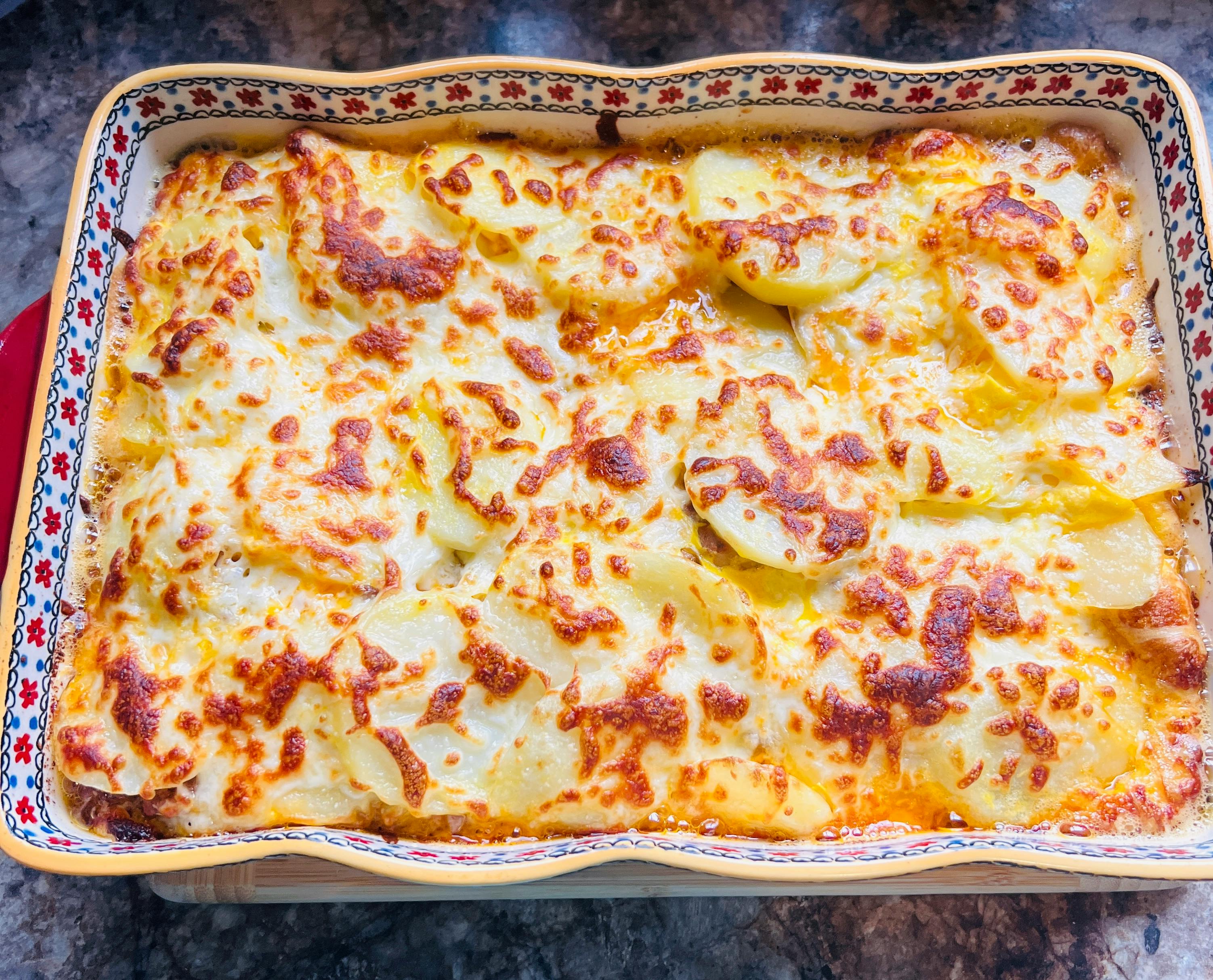
Photo: Meliha Ljaljic / Pexels
Latin-American
Pastel de Choclo
The diets react (see scores below)
Common Ingredients
- corn
- ground beef
- chicken
- onion
- olives
- hard-boiled egg
- raisins
- basil
Specific recipes may vary.
Incompatible with 6 of 11 diets
Diet Ratings
Pastel de Choclo is fundamentally incompatible with ketogenic eating. The dish's defining feature is a thick corn topping, which is extremely high in net carbs — a single serving easily contributes 30–50g of net carbs from corn alone. Raisins add concentrated sugar and additional carbohydrates. Together, these two ingredients alone would likely exceed or max out a full day's keto carb budget in a single serving. While some ingredients (ground beef, chicken, olives, hard-boiled egg, onion) are keto-friendly, the structural corn crust is non-negotiable in this dish and cannot be portioned around.
Pastel de Choclo contains multiple animal products: ground beef and chicken (meat), hard-boiled egg (egg product). These are unambiguously non-vegan ingredients that make this dish entirely incompatible with a vegan diet. There is no debate within the vegan community about whether meat and eggs are excluded.
Pastel de Choclo is fundamentally built around corn, which is a grain explicitly excluded from the paleo diet. Corn is not just a minor ingredient here — it forms the defining crust/topping of the dish, making it structurally non-paleo. While several individual components are paleo-compliant (ground beef, chicken, onion, hard-boiled egg, basil, olives), and raisins are a natural fruit acceptable in moderation, the corn base disqualifies the dish as a whole. The dish cannot be meaningfully evaluated without its corn component, as removing it would no longer constitute Pastel de Choclo. Added salt is also typically used in preparation, which is another paleo concern.
Pastel de Choclo is a Latin American casserole featuring ground beef as the primary protein base, which conflicts with Mediterranean diet principles that restrict red meat to a few times per month. The dish does include some positive elements — corn provides a whole grain-adjacent carbohydrate, onion is a Mediterranean-friendly vegetable, olives are a staple ingredient, and chicken adds a more acceptable protein. However, the combination of ground beef with chicken makes red meat the dominant concern, and the inclusion of raisins adds moderate sugar content. The dish lacks olive oil as a cooking fat and is not plant-forward. Overall, the red meat-centric filling pushes this into 'avoid' territory, though the presence of olives, egg, and chicken provide modest redemption.
Some Mediterranean diet practitioners argue that a dish like this, consumed occasionally, could fit within the broader 'few times per month' allowance for red meat, especially if portion sizes are moderate and the meal is balanced with salad or vegetables on the side. The olives, egg, and onion align well with Mediterranean ingredients, and flexible interpretations might rate this as 'caution' rather than 'avoid.'
Pastel de Choclo is a traditional Latin American casserole that is fundamentally incompatible with the carnivore diet. The dish is built around corn (a grain/plant food) as its primary base and crust, which alone makes it a hard avoid. Beyond the corn, it contains multiple plant-derived ingredients: onion, olives, raisins, and basil — all strictly excluded from the carnivore diet. Raisins add sugar via a plant source, making this doubly problematic. While ground beef, chicken, and hard-boiled egg are carnivore-approved ingredients, they are embedded within a heavily plant-based dish and cannot be separated from it in this context. The overall dish is a plant-dominant preparation that violates the core rule of exclusive animal product consumption.
Pastel de Choclo is a Chilean corn pie where the filling (ground beef, chicken, onion, olives, hard-boiled egg, raisins, basil) is individually Whole30-compliant. However, two concerns arise. First, corn is technically a grain on Whole30 and is excluded — but in this dish, whole fresh/creamed corn (not cornmeal, corn starch, or processed corn) is used as the topping crust. Whole30 excludes corn as a grain, so the corn topping is problematic. Second, the dish structurally resembles a 'pie' or baked casserole with a starchy crust-like topping, which edges toward the 'no recreating comfort foods' rule. Raisins are fine as a whole fruit. Olives are fine. The corn grain exclusion is the primary hard block here, making this dish non-compliant as traditionally prepared.
Some Whole30 community members argue that fresh or frozen corn kernels used as a vegetable topping (rather than a processed grain product) occupy a gray area, similar to how popcorn is excluded but fresh corn-on-the-cob is debated. However, official Whole30 guidelines (Melissa Urban) explicitly list corn among excluded grains, regardless of form.
Pastel de Choclo contains multiple high-FODMAP ingredients that make it unsuitable during the elimination phase. Onion is one of the highest-FODMAP foods tested by Monash University, rich in fructans, and is used as a foundational ingredient in the sofrito/filling — it cannot be avoided even in small quantities. Raisins are high in fructose and fructans at any standard serving size (Monash rates raisins as high-FODMAP at just 1 tablespoon/13g). The corn topping, while potentially low-FODMAP at small servings (Monash rates canned corn at 1/2 cup as low-FODMAP), is typically used in large quantities as the defining crust of this dish. Olives are generally low-FODMAP. Hard-boiled eggs and the protein components (ground beef, chicken) are low-FODMAP. Basil is low-FODMAP. However, the combination of onion (unavoidable, high-fructan) and raisins (excess fructose/fructans) makes this dish clearly high-FODMAP as traditionally prepared. No simple substitution can rescue the dish without fundamentally altering the recipe.
Pastel de Choclo is a Chilean corn-topped casserole with a mix of DASH-friendly and less-ideal components. On the positive side, corn provides fiber and potassium, chicken is a lean protein endorsed by DASH, onions and basil are DASH-approved vegetables/herbs, and raisins contribute natural sweetness and potassium. However, ground beef is a red meat that DASH limits due to saturated fat content, and the typical preparation uses full-fat ground beef (often 80/20) fried in oil with seasonings. Olives, while containing healthy monounsaturated fats, are high in sodium — a key concern for DASH. The hard-boiled egg is acceptable in moderation under current guidelines. The dish also commonly includes added sugar in the corn topping to create a sweet-savory contrast, which adds to concerns. The combination of red meat, olives (sodium), and potential added sugar places this dish in the caution zone. A modified version using lean ground beef or turkey, rinsed low-sodium olives, and minimal added sugar would score higher.
NIH DASH guidelines explicitly limit red meat and high-sodium ingredients like olives, placing this dish in caution territory. However, updated clinical interpretations note that lean ground beef in modest portions can fit within overall DASH macronutrient targets, and the dish's corn, chicken, and vegetable components provide meaningful potassium and fiber that partially offset concerns — portion control and ingredient modification are key.
Pastel de Choclo presents a mixed Zone profile. The protein sources (ground beef and chicken) are workable, though ground beef may carry more saturated fat than ideal — lean ground beef or chicken portions can fit Zone protein blocks at roughly 25g protein per meal. The corn topping is the primary Zone concern: corn is classified as an 'unfavorable' high-glycemic carbohydrate in Zone terminology, spiking insulin more than preferred low-GI vegetables. Raisins compound the glycemic load issue — Sears specifically lists raisins as an unfavorable carb to avoid due to their concentrated sugar content. Olives provide favorable monounsaturated fat. Hard-boiled egg contributes both protein and fat in manageable portions. Onion and basil are Zone-favorable. The dish's structure — a starchy corn crust over a meat filling — means carbohydrates are dominated by high-glycemic sources rather than the preferred colorful vegetables, making the 40/30/30 ratio difficult to achieve without significant modification. It can technically fit a Zone meal with very small portions of the corn layer, but as traditionally prepared, the carb quality is poor by Zone standards.
Some Zone practitioners take a flexible view of corn, noting that fresh corn (as opposed to refined corn products) has fiber that reduces net carbs, and that the overall meal's protein-fat balance from the meat filling could help blunt the glycemic response. Sears' later anti-inflammatory writings focus more on polyphenol-rich foods and omega-3 balance than strict GI avoidance, which might make a small portion of this dish more acceptable if paired with a large vegetable side salad to improve carb quality.
Pastel de Choclo is a Chilean corn pie with a mixed anti-inflammatory profile. On the positive side, corn provides fiber and some antioxidants (lutein, zeaxanthin), onions contribute quercetin (a notable anti-inflammatory flavonoid), olives supply monounsaturated fats and polyphenols similar to olive oil, hard-boiled eggs offer choline and selenium, raisins add polyphenols and antioxidants, and basil is a mild anti-inflammatory herb. The combination of chicken (lean protein, generally neutral-to-acceptable) and ground beef is where the dish becomes more nuanced. Ground beef, especially if higher fat, brings saturated fat and arachidonic acid, both associated with pro-inflammatory signaling at higher intake levels. Traditional recipes also often include lard or butter in the corn topping and added sugar on the crust, which would push the score lower — though these are not listed here. The absence of refined carbohydrates (the corn is whole) and the presence of anti-inflammatory supporting ingredients (onion, olives, basil) partially offset the red meat concern. Overall, this is an acceptable occasional dish but not one that embodies anti-inflammatory eating as a regular staple, primarily due to the ground beef component.
Some anti-inflammatory nutritionists, particularly those following Dr. Weil's broader Mediterranean-influenced framework, would be relatively permissive about this dish given its whole-food ingredients and the presence of polyphenol-rich onions, olives, and basil — rating it closer to acceptable. However, stricter anti-inflammatory protocols (e.g., those aligned with Dean Ornish or functional medicine approaches) would flag the ground beef's saturated fat and the egg's arachidonic acid content as meaningful concerns, particularly for individuals managing cardiovascular inflammation or autoimmune conditions.
Pastel de Choclo is a Chilean corn-topped casserole with a mixed nutritional profile for GLP-1 patients. On the positive side, it provides meaningful dual-protein from ground beef and chicken, along with fiber and some micronutrients from corn, onion, and the egg. However, several factors create concern: (1) Ground beef contributes saturated fat — the amount depends heavily on the fat percentage used (80/20 vs. 93/7 makes a significant difference). (2) The corn topping is starchy and calorie-dense with modest fiber relative to its carbohydrate load, and traditional recipes use butter or milk in the corn mash, adding fat. (3) Raisins add concentrated sugar with minimal nutritional upside for GLP-1 patients. (4) Olives contribute healthy unsaturated fat but also sodium. (5) The dish is relatively heavy and dense, which can worsen the gastroparesis-like effect of GLP-1 medications and trigger nausea or bloating. (6) Portion sensitivity is high — a standard serving is large. A modified version using lean ground beef (93/7 or leaner), reduced corn topping, no added butter, and omitting raisins would rate closer to a 6-7. As traditionally prepared, this sits firmly in the caution range.
Some GLP-1-focused dietitians may view this more favorably as a culturally relevant whole-food meal with legitimate protein and fiber sources, arguing that modification (lean beef, smaller portion) makes it workable — particularly compared to ultra-processed alternatives. Others would flag the starchy corn base and saturated fat from ground beef as significant enough concerns to recommend avoiding it during the active side-effect window of GLP-1 therapy, especially in the first few months of treatment.
*See how scores were generated at our methodology page.
Nutritional profile
Six traits that cut across every diet.
Fiber & Plants
How much whole-plant food and fiber it delivers.
Healthy Fats
The quality of its fats (unsaturated, omega-3).
Whole / Unprocessed
How close it is to its natural, unprocessed form.
Gut Gentle
How easy it is on digestion (low FODMAP, few irritants).
Low Glycemic
How little it spikes your blood sugar.
Protein Density
How much protein it packs per calorie.
Controversy Index
Higher controversy = more disagreement between diets.
Diet-Specific Tips
 Whole30 — 5/10
View tips
- Corn is explicitly excluded as a grain on Whole30, making the corn topping non-compliant
- Filling ingredients (ground beef, chicken, onion, olives, hard-boiled egg, raisins, basil) are all individually Whole30-compliant
- Raisins are whole fruit and permitted
- The pie-like structure with a corn crust may also conflict with the spirit of the program
- No dairy, soy, added sugar, or other excluded ingredients in the standard recipe
 DASH — 5/10
View tips
- Ground beef is a red meat DASH limits due to saturated fat
- Olives are high in sodium, a primary DASH concern
- Corn provides fiber and potassium — DASH-positive
- Chicken is a DASH-approved lean protein
- Raisins contribute natural sugars and potassium
- Hard-boiled egg acceptable in moderation under current guidelines
- Traditional preparation often includes added sugar in corn topping
- Dish can be modified toward DASH compliance with leaner meat and rinsed/reduced olives
 Zone — 4/10
View tips
- Corn is an 'unfavorable' high-glycemic carbohydrate per Zone classification — similar to potatoes
- Raisins explicitly listed by Sears as an unfavorable carb to avoid due to concentrated sugar
- Ground beef may be higher in saturated fat than Zone-preferred lean proteins
- Chicken component is a favorable lean Zone protein
- Olives provide ideal monounsaturated fat
- Onion is a Zone-acceptable low-glycemic vegetable
- Hard-boiled egg contributes balanced protein and fat blocks
- Traditional preparation is carb-heavy with poor glycemic quality, making 40/30/30 ratio difficult
 Anti-Inflammatory — 5/10
View tips
- Ground beef is a limited food in anti-inflammatory diets due to saturated fat and arachidonic acid
- Chicken is an acceptable lean protein (moderate tier)
- Whole corn provides fiber, lutein, and zeaxanthin — more favorable than refined corn products
- Onions are rich in quercetin, a well-researched anti-inflammatory flavonoid
- Olives contribute monounsaturated fats and polyphenols with anti-inflammatory properties
- Basil is a mild anti-inflammatory herb
- Raisins add polyphenols but also concentrated sugar — acceptable in small quantities
- No listed trans fats, seed oils, or refined sugars, which is a positive
- Traditional preparations often add butter/lard and sugar to the corn topping — these are not listed but are common and would lower the score
 GLP-1 Friendly — 5/10
View tips
- Dual protein source (beef and chicken) supports protein targets but fat content of ground beef is preparation-dependent
- Corn topping is starchy and calorie-dense; traditional preparation adds butter or milk increasing fat load
- Raisins contribute concentrated sugar with low nutritional value — counterproductive for GLP-1 patients
- Dense, heavy texture may worsen GLP-1 gastroparesis effect and increase nausea risk
- Olives provide heart-healthy unsaturated fat but add sodium
- High portion-sensitivity — standard servings are large, requiring deliberate downsizing
- Fiber present but not exceptional relative to caloric density
- Modifiable dish — lean beef, no raisins, reduced corn layer improves rating meaningfully