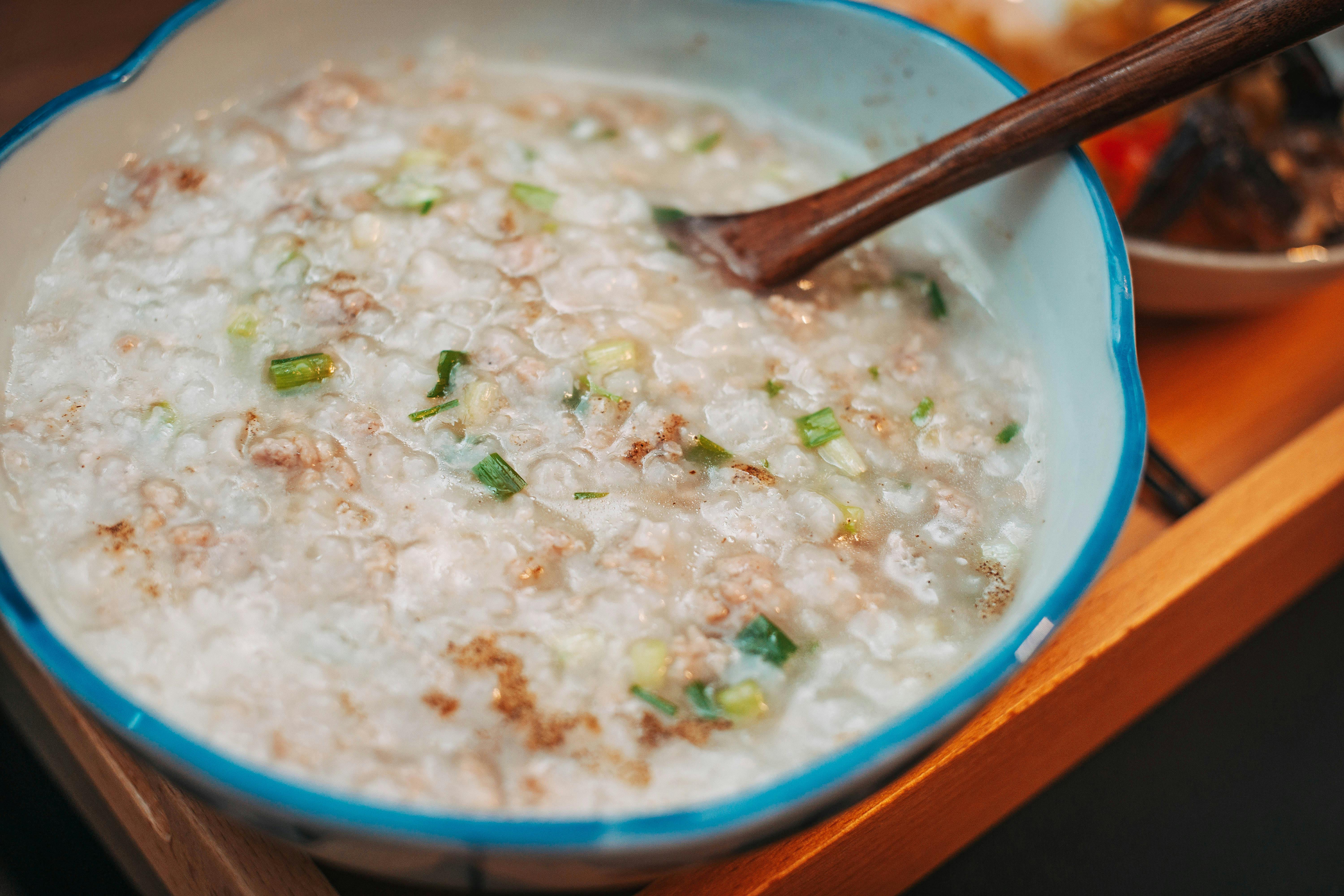
Photo: FOX ^.ᆽ.^= ∫ / Pexels
The diets react (see scores below)
Common Ingredients
- jasmine rice
- chicken broth
- ginger
- scallions
- century egg
- cilantro
- soy sauce
- white pepper
Specific recipes may vary.
Incompatible with 5 of 11 diets
Diet Ratings
Congee is fundamentally incompatible with a ketogenic diet. The primary ingredient is jasmine rice, a refined grain that is one of the highest net-carb foods available. A standard serving of congee (1 bowl, ~240ml) contains approximately 25-35g of net carbs from rice alone, and the dish typically uses a large ratio of rice to liquid even in its thin, porridge-like form. Jasmine rice provides virtually no fiber offset, meaning nearly all carbohydrates are net carbs. The remaining ingredients (ginger, scallions, soy sauce, century egg, cilantro) are either keto-neutral or keto-friendly, but they cannot redeem the dish due to the rice base. There is no meaningful portion size of traditional congee that would fit within a 20-50g daily net carb budget while leaving room for other meals.
This congee contains multiple animal-derived ingredients that disqualify it from a vegan diet. Chicken broth is an animal product derived from boiling chicken carcasses or bones. Century egg (皮蛋) is a preserved duck or chicken egg, making it directly an animal product. The listed primary proteins (chicken or pork) are meat. Together, these three components make this dish clearly non-vegan. The remaining ingredients — jasmine rice, ginger, scallions, cilantro, soy sauce, and white pepper — are all plant-based, meaning a vegan version of congee is theoretically achievable by substituting vegetable broth, omitting the egg, and using a plant-based protein such as tofu or mushrooms.
Congee is fundamentally a rice porridge — jasmine rice is its base ingredient and the dish cannot exist without it. Rice is a grain, which is explicitly excluded from the paleo diet. Beyond the grain base, soy sauce is a fermented soy product (a legume) and typically contains wheat, making it doubly non-paleo. Added salt is also a standard component of soy sauce and chicken broth. Century egg and the aromatics (ginger, scallions, cilantro) are paleo-compatible, but the foundational grain and the soy sauce disqualify this dish entirely. There is no meaningful paleo substitution that would preserve the identity of congee.
Congee is a rice porridge that presents several compatibility issues with Mediterranean diet principles. The base is jasmine rice — a refined white grain with high glycemic index, which the Mediterranean diet discourages in favor of whole grains. The dish lacks olive oil entirely, uses soy sauce (a processed, high-sodium condiment not part of Mediterranean tradition), and century egg is a highly processed preserved food that contradicts the diet's emphasis on minimally processed ingredients. Ginger, scallions, and cilantro are Mediterranean-friendly aromatics, and chicken broth is acceptable in moderation. If chicken is the primary protein, it falls into the 'moderate' poultry category; pork moves it further toward caution/avoid territory. The dish is not inherently harmful but misaligns with core Mediterranean principles on multiple fronts: refined grain base, no olive oil, processed condiments, and a preserved egg product.
Some Mediterranean diet practitioners adopt a broader 'anti-inflammatory whole foods' lens and would note that ginger, scallions, and bone broth have nutritional merit; a small bowl of congee with chicken and fresh herbs could be considered an acceptable occasional meal, particularly since the Mediterranean diet is not dogmatically opposed to all rice — traditional Mediterranean cuisines (e.g., Spanish arroz, Greek rice dishes) do include white rice in moderation.
Congee is fundamentally incompatible with the carnivore diet. The primary base ingredient is jasmine rice, a grain, which is entirely excluded from all tiers of carnivore eating. Beyond the rice, the dish contains multiple plant-derived ingredients: ginger (plant spice), scallions (vegetable), cilantro (herb), soy sauce (fermented soy — a legume), and white pepper (plant spice). While chicken broth and century egg are animal-derived components, they are minor elements within an overwhelmingly plant-based and grain-based dish. The dish cannot be adapted into a carnivore-compliant meal without fundamentally reconstructing it from scratch.
Congee contains two clearly excluded ingredients under Whole30 rules. First, jasmine rice is a grain and grains are explicitly prohibited on the Whole30 program. Second, soy sauce is a soy-based product (soy is a legume) and is explicitly excluded — coconut aminos would be the compliant substitute. These two violations make this dish incompatible with Whole30 regardless of the other ingredients (chicken broth, ginger, scallions, century egg, cilantro, and white pepper are all compliant). Additionally, congee as a dish is fundamentally rice-based and cannot be made compliant by substituting the rice without fundamentally changing what the dish is.
Congee is largely low-FODMAP in its base form, but two ingredients introduce meaningful concerns. Jasmine rice is low-FODMAP and safe in standard servings. Ginger, cilantro, white pepper, and soy sauce (in small amounts — up to 2 tablespoons) are all low-FODMAP. The primary concerns are: (1) Scallions/green onions — the GREEN tops are low-FODMAP and safe, but if the white bulb portions are included (common in congee preparation), they are high-FODMAP due to fructans, similar to onion. (2) Chicken broth — commercial broths frequently contain onion and/or garlic, making them high-FODMAP; homemade broth without these or specifically labeled low-FODMAP/FODMAP-friendly broth would be required. (3) Century egg is an egg product and eggs are low-FODMAP, but century egg has not been extensively tested by Monash independently — it is assumed safe based on its egg/mineral salt preparation. If scallion greens only are used and the broth is onion/garlic-free, this dish can be low-FODMAP. As typically prepared in restaurants or at home using standard commercial broth, it is likely to contain hidden FODMAPs.
Monash University rates scallion green tops as low-FODMAP (safe) and white parts as high-FODMAP (avoid), but many clinical FODMAP practitioners advise patients to avoid scallions entirely during elimination due to preparation ambiguity. Additionally, most commercial chicken broths contain garlic or onion, which many FODMAP dietitians flag as a hidden high-FODMAP risk in broth-based dishes, recommending patients verify broth ingredients carefully or use certified low-FODMAP broth.
Congee has both DASH-friendly and DASH-problematic elements. On the positive side, it is a whole-food, minimally processed dish built around rice with lean protein (chicken or pork), anti-inflammatory ginger, and nutrient-rich scallions and cilantro. However, the combination of chicken broth (typically 400–900mg sodium per cup), soy sauce (approximately 900mg sodium per tablespoon), and century egg (which is preserved in salt/alkaline solution and contributes significant sodium) creates a high cumulative sodium load that conflicts with DASH's core <2,300mg/day standard and especially the <1,500mg/day low-sodium DASH target. Century egg also contains moderate cholesterol. Jasmine rice is a refined white rice rather than a whole grain, which DASH de-emphasizes in favor of brown rice or other whole grains. The dish is not categorically off-limits — it can be modified substantially for DASH compliance — but as commonly prepared, sodium is the primary barrier.
NIH DASH guidelines emphasize limiting sodium from processed and preserved foods, clearly flagging broth, soy sauce, and preserved eggs as high-sodium concerns. However, updated clinical interpretations note that the base congee template (plain rice, ginger, scallions, lean protein) is genuinely DASH-compatible if low-sodium broth, reduced-sodium soy sauce (or tamari), and omission of century egg are applied — some DASH-oriented dietitians consider modified congee an acceptable whole-food breakfast option.
Congee is a rice porridge made by cooking jasmine rice in large amounts of liquid until it breaks down. From a Zone perspective, the primary concern is the jasmine rice base. Jasmine rice is a high-glycemic carbohydrate — it ranks among the 'unfavorable' carbs in Zone terminology, and the porridge cooking method further increases its glycemic load by breaking down starches into rapidly digestible form. This makes it very difficult to achieve the 40/30/30 ratio without severely restricting the rice portion. The saving graces are the accompaniments: ginger and scallions are low-glycemic Zone-favorable vegetables, cilantro adds polyphenols, and chicken broth and protein (chicken or pork) can contribute lean protein blocks. Century egg adds protein and fat. However, the dish as traditionally served is carbohydrate-heavy with very little fat, resulting in a macro profile closer to 70-80% carbs by calories. To Zone-balance congee, one would need to dramatically reduce the rice portion, increase protein toppings significantly (adding more chicken, egg whites, or tofu), and add a monounsaturated fat source (e.g., a drizzle of sesame-adjacent oil or avocado). Soy sauce adds sodium but negligible macros. The dish is workable but requires substantial modification from its traditional preparation to fit Zone ratios.
Some Zone practitioners note that congee's high water content means a typical serving contains less rice starch than it appears, and the satiety from the warm liquid may naturally reduce portion size. Additionally, Sears' later work (Zone Diet evolution toward anti-inflammatory focus) recognizes that traditional Asian dietary patterns — even rice-based ones — tend to produce lower inflammation when paired with fish, vegetables, and polyphenol-rich condiments like ginger. A modified congee with small rice portions, generous protein toppings, and vegetable garnishes could be viewed more favorably by contemporary Zone practitioners than the strict 'unfavorable carb' classification would suggest.
Congee is a mixed profile dish from an anti-inflammatory standpoint. On the positive side, ginger is a well-established anti-inflammatory spice (inhibits NF-κB and COX-2 pathways), scallions and cilantro contribute polyphenols and antioxidants, and white pepper has mild anti-inflammatory properties. Chicken broth (especially bone broth) may offer collagen and glycine with some anti-inflammatory relevance. However, the base is jasmine white rice — a refined, high-glycemic grain with minimal fiber, which contrasts with the anti-inflammatory preference for whole grains. The glycemic load of congee is particularly high because the extended cooking process breaks down starch further, raising the effective GI considerably above plain cooked rice. Soy sauce adds significant sodium (pro-inflammatory in excess) and is a processed condiment. Century egg (pidan) is a heavily processed, preserved food with high sodium content and oxidized lipids from the alkaline curing process — not aligned with anti-inflammatory principles. Overall, the dish has meaningful anti-inflammatory contributors (ginger, aromatics) but is undermined by a refined-grain base, a preserved/processed egg component, and high sodium. It is not a dish to avoid entirely, but warrants caution and moderation rather than regular endorsement as an anti-inflammatory meal.
Some integrative nutrition practitioners would rate this more favorably, noting that the bioavailability of ginger's gingerols in a slow-cooked broth is high, and that traditional congee has been used medicinally in Chinese medicine as an easily digestible, gut-soothing food — properties valued in anti-inflammatory approaches focused on gut health. Conversely, stricter anti-inflammatory protocols (and particularly those focused on blood sugar regulation) would push the score lower, flagging the high glycemic load of overcooked white rice as a significant driver of post-meal inflammatory markers like IL-6.
Congee is a rice porridge with genuinely mixed attributes for GLP-1 patients. On the positive side, it is exceptionally easy to digest — the long-cooked, highly hydrated rice is gentle on a slowed GI system, making it one of the better options when nausea or gastroparesis-like side effects are flaring. Its high water content supports hydration, a real priority on GLP-1s. Ginger is actively beneficial, with well-documented antiemetic properties that may ease GLP-1-related nausea. The dish is low in fat and small-portion friendly. However, congee has significant nutritional liabilities for GLP-1 patients. Jasmine rice is a refined, low-fiber carbohydrate that becomes even more rapidly digestible after prolonged cooking — it provides minimal fiber and offers little blood sugar stability. Protein content depends heavily on how much chicken or pork is added; the base dish itself is protein-poor. Century egg adds modest protein but also high sodium. Soy sauce further elevates sodium, which matters for patients prone to dehydration. To reach the 15–30g protein target per meal, a substantial portion of lean chicken breast would need to be added deliberately. As served in a typical restaurant or home preparation, congee is more of a comfort/recovery food than an optimized GLP-1 meal — acceptable in moderation, particularly on difficult symptom days, but not a strong regular choice without deliberate protein fortification.
Some GLP-1-focused dietitians view congee favorably as a strategic 'symptom day' food — its digestibility and hydration value outweigh its low fiber and protein when patients are struggling with nausea and cannot tolerate denser foods. Others caution against leaning on refined-grain, low-protein meals even situationally, arguing that patients should instead modify higher-protein options to be softer and easier to digest rather than defaulting to protein-poor comfort foods.
*See how scores were generated at our methodology page.
Nutritional profile
Six traits that cut across every diet.
Fiber & Plants
How much whole-plant food and fiber it delivers.
Healthy Fats
The quality of its fats (unsaturated, omega-3).
Whole / Unprocessed
How close it is to its natural, unprocessed form.
Gut Gentle
How easy it is on digestion (low FODMAP, few irritants).
Low Glycemic
How little it spikes your blood sugar.
Protein Density
How much protein it packs per calorie.
Controversy Index
Higher controversy = more disagreement between diets.
Diet-Specific Tips
 Mediterranean — 4/10
View tips
- Refined white jasmine rice base — not a whole grain, high glycemic index
- No olive oil present — primary fat source absent
- Century egg is a heavily processed preserved food
- Soy sauce is a processed high-sodium condiment, non-Mediterranean
- Chicken protein is acceptable in moderation (poultry category)
- Aromatics (ginger, scallions, cilantro) are compatible with Mediterranean eating
- Pork as protein would lower the score further toward avoid
 Low-FODMAP — 5/10
View tips
- Jasmine rice is low-FODMAP and safe as the congee base
- Scallion green tops are low-FODMAP but white bulb portions are high-FODMAP due to fructans — preparation matters
- Commercial chicken broth commonly contains onion or garlic, making it a high-FODMAP hidden risk
- Soy sauce is low-FODMAP at standard serving sizes (up to 2 tbsp)
- Century egg is egg-based and assumed low-FODMAP, though not independently tested by Monash
- Ginger, cilantro, and white pepper are low-FODMAP at typical culinary amounts
- As restaurant or standard home preparation, hidden FODMAPs in broth are a significant practical concern
 DASH — 4/10
View tips
- High sodium from chicken broth (~400–900mg/cup) significantly impacts DASH daily limits
- Soy sauce adds ~900mg sodium per tablespoon, a major DASH concern
- Century egg is preserved with salt/alkaline solution, adding extra sodium and cholesterol
- Jasmine rice is refined white rice — DASH prefers whole grains like brown rice
- Lean chicken or pork protein is DASH-compatible
- Ginger, scallions, and cilantro are DASH-friendly vegetables/herbs
- Low-sodium broth and reduced-sodium soy sauce substitutions would substantially improve DASH score
- Omitting century egg and using low-sodium alternatives could raise score to 6–7
 Zone — 4/10
View tips
- Jasmine rice is a high-glycemic, unfavorable Zone carbohydrate
- Porridge cooking method increases glycemic load beyond whole rice
- Traditional macro ratio is heavily carbohydrate-skewed (~70-80% calories from carbs)
- Protein component (chicken/pork) and century egg provide lean protein blocks
- Ginger and scallions are Zone-favorable low-glycemic vegetables with anti-inflammatory polyphenols
- Dish is nearly devoid of monounsaturated fat as traditionally prepared
- Significant modification required: reduce rice, increase protein, add healthy fat to approach 40/30/30
- Chicken broth base is Zone-neutral and adds flavor without disrupting macros
 Anti-Inflammatory — 5/10
View tips
- Jasmine white rice: refined, high-glycemic grain — not preferred over whole grains; glycemic index elevated further by prolonged cooking
- Ginger: strong anti-inflammatory spice (gingerols inhibit NF-κB, COX-2)
- Century egg: heavily processed/preserved food, high sodium, oxidized lipids — pro-inflammatory
- Soy sauce: high sodium processed condiment; use should be minimal
- Scallions and cilantro: polyphenol and antioxidant contributors
- Chicken broth: neutral to mildly beneficial; lean protein source is acceptable
- White pepper: minor anti-inflammatory benefit
- Overall sodium load is a concern for regular consumption
 GLP-1 Friendly — 5/10
View tips
- Highly easy to digest — beneficial when GLP-1 GI side effects are active
- High water content supports hydration
- Ginger is a clinically supported antiemetic — directly beneficial for GLP-1 nausea
- Jasmine rice is a refined carbohydrate with very low fiber after prolonged cooking
- Protein content is low unless substantial lean chicken is deliberately added
- Century egg and soy sauce contribute high sodium — dehydration risk
- White pepper in large amounts may worsen reflux or nausea in sensitive patients
- Low fat — does not worsen GLP-1 GI side effects
- Needs significant protein fortification to meet 15–30g per meal target