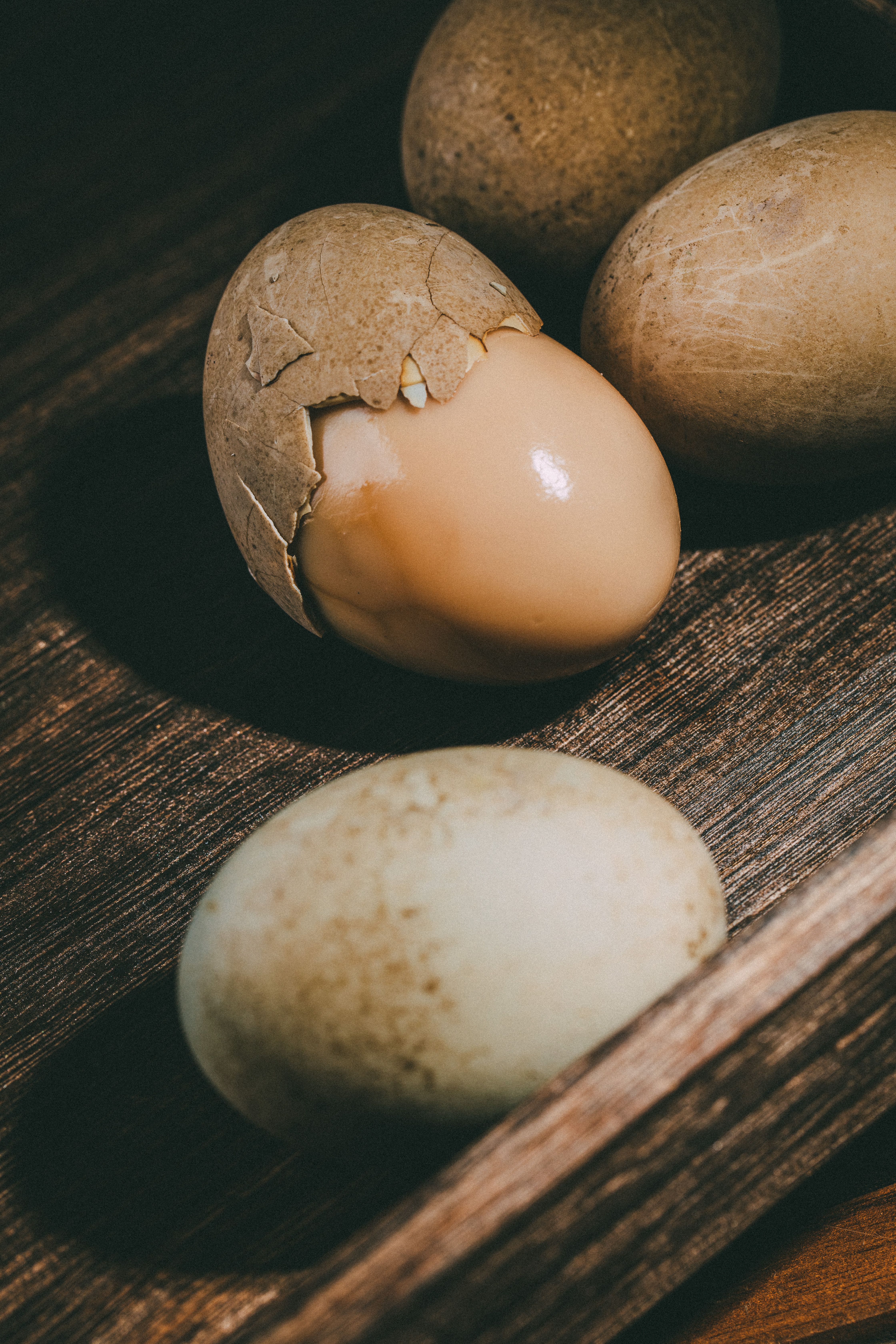
Chinese
Chinese Tea Eggs
The diets react (see scores below)
Common Ingredients
- eggs
- black tea
- soy sauce
- star anise
- cinnamon
- Sichuan peppercorns
- bay leaves
- sugar
Specific recipes may vary.
Incompatible with 4 of 11 diets
Diet Ratings
Chinese Tea Eggs are built on a keto-friendly base (eggs, tea, spices), but the inclusion of sugar in the braising liquid is a concern. However, most of the sugar remains in the cooking liquid rather than being absorbed into the eggs, so the actual sugar content per egg is relatively low. Soy sauce also contributes a small amount of carbs. The spices (star anise, cinnamon, Sichuan peppercorns, bay leaves) add negligible carbs in the quantities used. With portion control and ideally substituting the sugar with a keto-friendly sweetener, these can fit into a ketogenic diet. As typically prepared, they sit in caution territory due to the added sugar, even if absorption is partial.
Some strict keto practitioners argue that any recipe containing added sugar should be avoided outright, even if net absorption is low, on the principle of zero tolerance for sugar in cooking. Others in the lazy keto camp consider the negligible per-egg sugar absorption entirely acceptable and would approve these without modification.
Chinese Tea Eggs contain eggs as the primary protein and central ingredient. Eggs are an animal product excluded from all vegan diets. The remaining ingredients — black tea, soy sauce, star anise, cinnamon, Sichuan peppercorns, bay leaves, and sugar — are entirely plant-based, but the dish cannot be considered vegan due to the eggs. There is no ambiguity here within the vegan community.
Chinese Tea Eggs are disqualified primarily by soy sauce, which is a fermented soy (legume) product and also contains wheat — both legumes and grains being strictly excluded from the paleo diet. Sugar is a refined sweetener, also excluded. The base ingredients — eggs, black tea, star anise, cinnamon, Sichuan peppercorns, and bay leaves — are all paleo-compatible, making this dish easy to adapt, but in its traditional form the soy sauce and sugar are deal-breakers under paleo rules.
Chinese Tea Eggs are centered on eggs, which are accepted in the Mediterranean diet in moderate amounts (a few servings per week). The aromatic spices (star anise, cinnamon, Sichuan peppercorns, bay leaves) are not traditional Mediterranean flavors but are not harmful — Mediterranean cuisine itself values bold herb and spice use. Black tea is benign. Soy sauce adds significant sodium, which is not a Mediterranean staple condiment, and a small amount of added sugar is present, both mildly problematic. The dish is whole-food based, minimally processed, and protein-rich without red meat, making it a reasonable occasional snack. However, it lacks olive oil, vegetables, legumes, or whole grains, and its flavor profile and sodium source sit outside the Mediterranean pattern.
Some modern Mediterranean diet practitioners take a broader view, accepting eggs as a near-daily protein source and noting that aromatic spice-based cooking aligns with the diet's anti-inflammatory philosophy; from this perspective the dish could score slightly higher. Conversely, stricter interpretations focused on the traditional Greek or Italian dietary pattern would flag the soy sauce sodium load and non-Mediterranean spice profile as incompatible.
Chinese Tea Eggs are fundamentally incompatible with the carnivore diet despite containing eggs as the primary protein. The preparation requires multiple plant-derived ingredients: black tea (plant-derived), soy sauce (fermented soybeans — a legume), star anise (spice), cinnamon (spice), Sichuan peppercorns (spice), bay leaves (herb), and sugar (processed plant carbohydrate). While eggs themselves are accepted by most carnivore practitioners, this dish is essentially a vehicle for plant compounds, anti-nutrients (soy), and sugar. The soy sauce alone contains gluten and soy — two of the most commonly excluded foods even outside carnivore circles. Sugar adds additional disqualifying processed carbohydrates. No meaningful adaptation is possible without completely transforming the dish into something unrecognizable — plain hard-boiled eggs would be the carnivore alternative.
Chinese Tea Eggs contain two excluded ingredients: soy sauce (soy is a legume and explicitly banned on Whole30) and sugar (added sugar is explicitly excluded). While eggs, black tea, star anise, cinnamon, Sichuan peppercorns, and bay leaves are all compliant, the presence of both soy sauce and sugar makes this dish non-compliant as traditionally prepared. A modified version could substitute coconut aminos for soy sauce and omit the sugar entirely to become Whole30-compliant.
Chinese Tea Eggs are largely low-FODMAP but require attention to a few ingredients. Eggs are clearly low-FODMAP. Black tea is low-FODMAP. Soy sauce is low-FODMAP at standard small amounts (up to 2 tablespoons per Monash). Sugar (sucrose) is low-FODMAP in typical cooking quantities. The spices present the main complexity: star anise is high-FODMAP at larger quantities (Monash rates it as high-FODMAP even at small doses due to fructans), cinnamon is low-FODMAP at up to 1 teaspoon per serve, bay leaves are generally considered low-FODMAP as a flavoring herb, and Sichuan peppercorns have limited Monash data. The key practical question is whether FODMAPs from star anise and other spices leach into the braising liquid during long simmering and are subsequently absorbed by the eggs. Since tea eggs are infused over extended cooking times, water-soluble FODMAPs (including fructans from star anise) could theoretically transfer into the egg whites. However, eggs don't absorb significant liquid — the flavor transfer is largely superficial. Star anise is the primary concern; it is consistently rated as high-FODMAP by Monash, and its use in this dish warrants caution during the elimination phase. If star anise is omitted or minimized, the dish would likely be approvable.
Monash University rates star anise as high-FODMAP, which technically puts any dish using it as an ingredient at risk during elimination. However, many clinical FODMAP practitioners consider spices used in small amounts primarily for flavor (rather than consumed in bulk) to present a lower practical risk, especially when the food vehicle (egg) has limited absorption capacity — though this lenience is not officially endorsed for the strict elimination phase.
Chinese Tea Eggs present a mixed DASH profile. The eggs themselves are a lean protein source that DASH includes, but the preparation introduces significant concerns. Soy sauce is the primary issue — a typical tea egg recipe uses 3-4 tablespoons of soy sauce, contributing 500-900mg of sodium per egg, far exceeding DASH sodium targets if more than one is consumed. The spices (star anise, cinnamon, Sichuan peppercorns, bay leaves) are DASH-neutral or mildly beneficial. The small amount of sugar is minimal concern. Eggs as a protein source are acceptable under current DASH interpretations, but the sodium load from soy sauce is the dominant factor pushing this toward caution. A single egg consumed occasionally is manageable within a DASH plan, but the dish as typically prepared and portioned (2-3 eggs as a snack) could easily exceed 1,000-1,800mg sodium — a substantial portion of the daily DASH limit. Low-sodium soy sauce would significantly improve the score.
NIH DASH guidelines historically flagged whole eggs for dietary cholesterol, which would further limit this dish; however, the 2020-2025 Dietary Guidelines removed the 300mg/day cholesterol cap, and most updated DASH-oriented clinicians now permit eggs in moderation, shifting the primary concern squarely to sodium. Some practitioners allow tea eggs occasionally if low-sodium soy sauce is substituted, arguing the nutrient profile of eggs (protein, potassium, B vitamins) aligns with DASH goals.
Chinese Tea Eggs are a reasonable Zone snack candidate but require some attention. The base ingredient — whole eggs — provides good protein but also saturated fat and egg yolk fat, making them less ideal than egg whites alone. One large egg delivers roughly 6g protein and 5g fat (mostly from the yolk), so 2-3 eggs can approximate a Zone protein block serving (~7-14g protein) while bringing along meaningful fat. The marinade ingredients (black tea, star anise, cinnamon, Sichuan peppercorns, bay leaves) are essentially negligible in macros and actually contribute polyphenols, which Sears would view favorably from an anti-inflammatory standpoint. Soy sauce adds sodium but minimal macros. The main caution is the sugar in the marinade — though the quantity absorbed per egg is small, it represents an unnecessary high-glycemic addition. As a standalone snack, tea eggs lack the carbohydrate component needed for Zone balance (40/30/30), so they'd need to be paired with a low-GI fruit or vegetable. The fat profile is mixed: egg yolk fat is largely monounsaturated and polyunsaturated but does contain saturated fat. Overall, 2 tea eggs make a workable Zone protein-plus-fat snack component, but they aren't a complete Zone snack on their own and the whole-egg fat content slightly deviates from Sears' preference for lean protein sources.
Early Zone materials (Enter the Zone) treat whole eggs cautiously due to yolk saturated fat content and recommend egg whites as the preferred egg-based protein. However, Sears' later writings (The OmegaRx Zone, Zone Perfect Meals in Minutes) became more permissive about whole eggs, acknowledging their nutrient density and omega-3 content (especially from omega-3 enriched eggs). Some Zone practitioners freely use whole eggs as protein blocks; others still limit yolks. The sugar in the marinade is a genuine unfavorable element, though absorption per serving is minimal.
Chinese Tea Eggs present a mixed anti-inflammatory profile. On the positive side, the dish features several genuinely anti-inflammatory ingredients: black tea contributes polyphenols (theaflavins, thearubigins) with demonstrated antioxidant activity; cinnamon is a well-supported anti-inflammatory spice; star anise contains anethole, a compound with anti-inflammatory properties; Sichuan peppercorns offer hydroxy-alpha-sanshool and antioxidants; and bay leaves contribute eugenol and other polyphenols. Soy sauce in small quantities used as a seasoning is relatively neutral, though its high sodium content is a consideration. The primary protein — eggs — is the main source of uncertainty. Eggs contain choline (which can be anti-inflammatory) and selenium, but also arachidonic acid, which some anti-inflammatory practitioners flag as pro-inflammatory. The small amount of added sugar is a minor concern but unlikely to be significant in typical serving quantities. Overall, this is a modestly beneficial snack anchored by real anti-inflammatory spices and tea, tempered by the debated status of eggs and modest sodium from soy sauce.
Dr. Weil's Anti-Inflammatory Pyramid places eggs in the 'eat in moderation' category due to mixed research on arachidonic acid vs. beneficial nutrients like choline and selenium. Some anti-inflammatory practitioners are more permissive with eggs given their nutrient density, while stricter protocols (such as AIP) avoid them altogether due to potential gut-irritating proteins. The sodium load from soy sauce is also debated — mainstream anti-inflammatory frameworks don't flag it at typical cooking amounts, but practitioners focused on cardiovascular inflammation may caution against regular high-sodium intake.
Chinese tea eggs are hard-boiled eggs steeped in a spiced black tea and soy sauce brine. A standard serving of 2 eggs delivers roughly 12-14g of high-quality complete protein, moderate healthy fat, and virtually no refined carbohydrates or fiber. The cooking method (boiling) keeps fat content low and makes them easy to digest — a strong plus given GLP-1-slowed gastric emptying. They are naturally portion-friendly, nutrient-dense per calorie, and work well as a small snack between meals. The soy sauce adds sodium, which is worth monitoring but is not a disqualifying factor in typical snack-sized portions. The small amount of sugar in the brine is negligible. Spices like star anise, cinnamon, and Sichuan peppercorns are present in trace amounts and are generally well-tolerated, though Sichuan peppercorns may cause mild GI sensitivity in some individuals. The black tea brine introduces a small amount of caffeine, which is a minor consideration given the 1-2 cup daily coffee/tea guideline. Overall, this is a convenient, protein-forward, easy-to-digest snack well-suited to GLP-1 patients.
Some GLP-1-focused dietitians flag the caffeine absorbed from extended black tea steeping as a minor concern for patients already sensitive to nausea, and a small subset of patients report that Sichuan peppercorns worsen GI discomfort; substituting green tea or reducing steep time is sometimes recommended to address both issues.
*See how scores were generated at our methodology page.
Nutritional profile
Six traits that cut across every diet.
Fiber & Plants
How much whole-plant food and fiber it delivers.
Healthy Fats
The quality of its fats (unsaturated, omega-3).
Whole / Unprocessed
How close it is to its natural, unprocessed form.
Gut Gentle
How easy it is on digestion (low FODMAP, few irritants).
Low Glycemic
How little it spikes your blood sugar.
Protein Density
How much protein it packs per calorie.
Controversy Index
Higher controversy = more disagreement between diets.
Diet-Specific Tips
 Keto — 5/10
View tips
- Eggs are an ideal keto food — high fat, high protein, zero carbs
- Added sugar in braising liquid is a red flag, though most stays in the liquid
- Soy sauce contributes minor carbs (~1g per tablespoon across the batch)
- Spices used in small quantities add negligible net carbs
- Sugar can be substituted with erythritol or monk fruit for a fully keto-compliant version
- Per-egg net carb impact is likely low but not precisely quantifiable without lab testing
 Mediterranean — 5/10
View tips
- Eggs are acceptable in moderation under Mediterranean guidelines
- No olive oil or plant-forward Mediterranean staples present
- Soy sauce introduces high sodium, not a Mediterranean condiment
- Small amount of added sugar is mildly contrary to principles
- Whole-food, minimally processed preparation is a positive
- Non-Mediterranean spice profile is neutral in terms of health impact
- Suitable as an occasional moderate snack, not a Mediterranean staple
 Low-FODMAP — 5/10
View tips
- Eggs are low-FODMAP and safe
- Star anise is rated high-FODMAP by Monash University — primary concern
- Soy sauce is low-FODMAP at standard serving sizes (up to 2 tbsp)
- Cinnamon is low-FODMAP at up to 1 tsp per serve
- Sichuan peppercorns have limited Monash testing data
- Water-soluble FODMAPs from spices could leach into braising liquid during long simmering
- Practical absorption into egg whites is likely minimal but not definitively studied
- Sugar in small cooking quantities is low-FODMAP
 DASH — 4/10
View tips
- High sodium from soy sauce — estimated 500-900mg per egg as typically prepared
- Eggs are an acceptable lean protein under current DASH guidelines
- Spices are DASH-neutral and add no sodium concern
- Small sugar addition is minimal impact
- Portion size critical — 2-3 eggs easily exceeds DASH sodium budget
- Low-sodium soy sauce substitution would raise score to 6-7
 Zone — 5/10
View tips
- Whole eggs provide protein but also saturated fat from yolks — less ideal than egg whites per strict Zone lean protein guidelines
- Marinade spices (black tea, star anise, cinnamon) contribute polyphenols with anti-inflammatory properties favorable in Zone
- Small amount of sugar in marinade is an unfavorable high-glycemic addition, though absorbed quantity per egg is negligible
- Soy sauce adds sodium with minimal macro impact
- As a snack, tea eggs are protein+fat only — must be paired with low-GI carbs (vegetable or fruit) to achieve Zone 40/30/30 balance
- 2-3 eggs approximate 1-2 Zone protein blocks but bring fat blocks along, requiring adjustment of added fat at the meal
 Anti-Inflammatory — 5/10
View tips
- Black tea provides anti-inflammatory polyphenols (theaflavins, thearubigins)
- Cinnamon is a well-supported anti-inflammatory spice
- Star anise contributes anethole, an anti-inflammatory compound
- Sichuan peppercorns add antioxidant polyphenols
- Eggs have a debated inflammatory profile — arachidonic acid vs. choline/selenium benefits
- Small amount of added sugar is a minor concern
- High sodium from soy sauce is a consideration for inflammation-prone individuals
- Overall spice profile is a meaningful anti-inflammatory asset
 GLP-1 Friendly — 8/10
View tips
- ~12-14g complete protein per 2-egg serving — strong protein density for a snack
- Hard-boiled preparation keeps fat low and digestibility high
- Negligible sugar from brine — not a meaningful glycemic concern
- Sodium from soy sauce warrants portion awareness but is not disqualifying
- Trace caffeine from black tea brine — minor concern for nausea-sensitive patients
- Sichuan peppercorns may cause mild GI sensitivity in a small subset of patients
- No fiber contribution — pairs well with a high-fiber food if used as a meal component
- Naturally small-portion-friendly and convenient for 4-5 small meal pattern