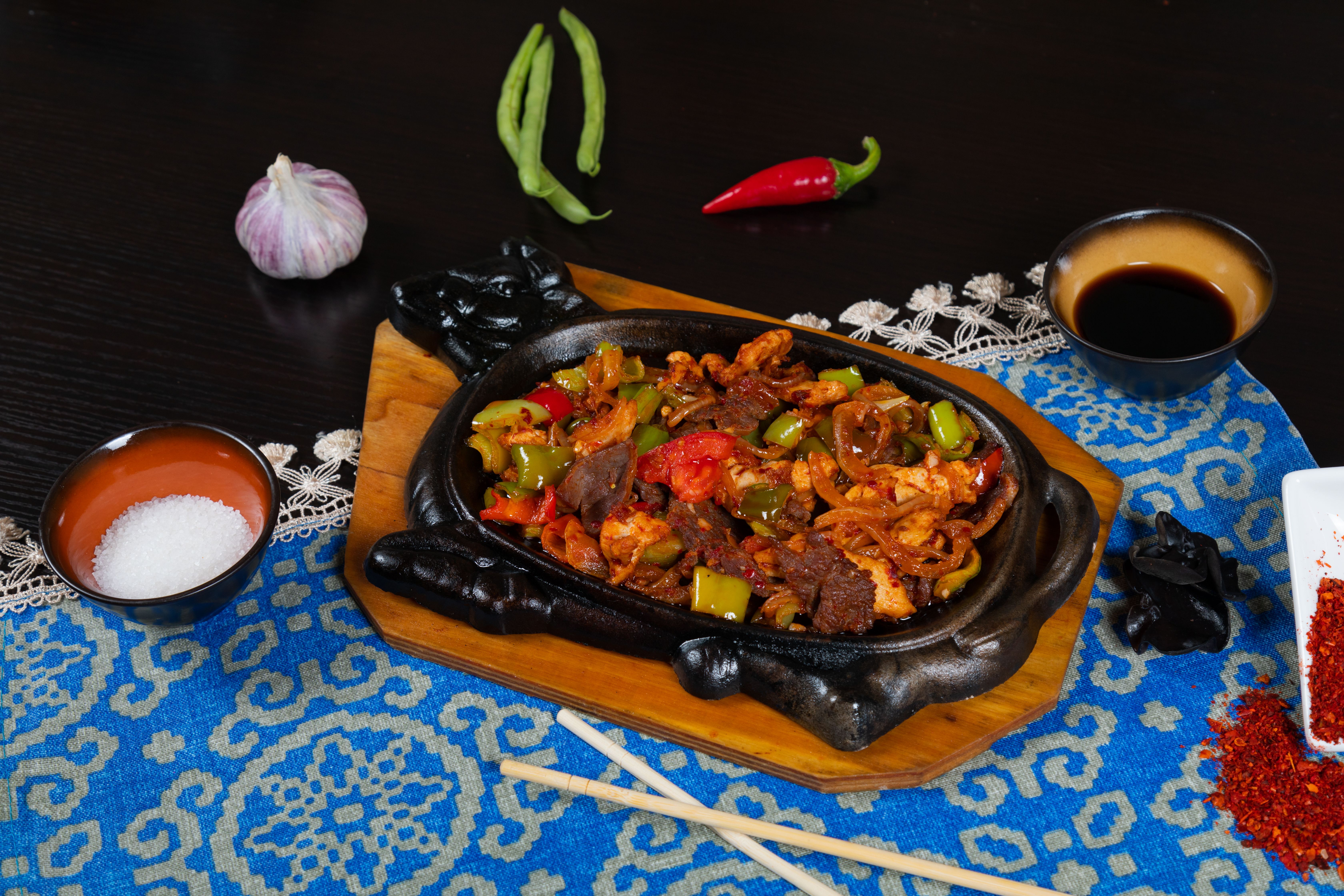
Photo: Collab Media / Pexels
Chinese
Chongqing Chicken
The diets react (see scores below)
Common Ingredients
- chicken thighs
- dried red chiles
- Sichuan peppercorns
- garlic
- ginger
- scallions
- soy sauce
- cornstarch
Specific recipes may vary.
Incompatible with 5 of 11 diets
Diet Ratings
Chongqing Chicken is based on keto-friendly ingredients — chicken thighs, dried chiles, Sichuan peppercorns, garlic, ginger, and scallions — but two components raise concerns. Cornstarch is a high-glycemic thickener that adds net carbs and is used to coat the chicken before frying, which is standard in this dish. Soy sauce also contains a small amount of carbs. The cornstarch coating, even in moderate amounts, can add 5-15g net carbs per serving depending on quantity used, pushing this dish into caution territory. With substitutions (arrowroot in small amounts or omitting the starch coating), this dish could be keto-approved. As prepared traditionally, portion control and awareness of carb load are necessary.
Some lazy keto practitioners argue the small amount of cornstarch used as a coating is negligible per serving and fits within a 50g daily carb budget when portioned carefully, effectively treating this as an approve. Strict keto adherents counter that cornstarch is a pure starch with no fiber offset and should be avoided entirely, even in small amounts.
Chongqing Chicken contains chicken thighs as its primary protein, which is animal flesh and explicitly excluded under all vegan dietary frameworks. There is no ambiguity here — poultry is a core animal product that no vegan organization or community faction considers acceptable. The remaining ingredients (dried red chiles, Sichuan peppercorns, garlic, ginger, scallions, soy sauce, cornstarch) are all plant-based, but the presence of chicken makes this dish entirely incompatible with a vegan diet.
Chongqing Chicken contains two clear paleo violations that cannot be overlooked. Soy sauce is a fermented soy product — a legume derivative — and is explicitly excluded from the paleo diet. Cornstarch is derived from corn, a grain, making it another hard disqualifier. The remaining ingredients (chicken thighs, dried red chiles, Sichuan peppercorns, garlic, ginger, scallions) are all paleo-approved whole foods, but the dish as traditionally prepared cannot be considered paleo-compatible due to these two non-negotiable exclusions.
Chongqing Chicken is a non-Mediterranean dish, but its core components can be assessed against Mediterranean principles. Chicken thighs are an acceptable moderate protein in the Mediterranean diet (poultry falls in the 'caution' category of a few servings per week). The dish is rich in aromatics — garlic, ginger, scallions, and chiles — which align well with the diet's emphasis on flavorful plant-based ingredients. However, the dish is typically cooked in significant amounts of neutral vegetable oil rather than extra virgin olive oil, and soy sauce adds sodium and processed condiment content not typical of Mediterranean eating. Cornstarch is a refined starch used as a thickener, which is mildly at odds with the whole-food emphasis. The overall dish is not highly processed and avoids red meat, added sugars, or refined grains as a base, making it a moderate fit.
Some Mediterranean diet practitioners would score this higher, arguing that the abundance of anti-inflammatory aromatics (garlic, ginger, chiles) and lean poultry protein make it broadly compatible with the diet's spirit. Others would score it lower, noting the non-Mediterranean cooking fat, high sodium from soy sauce, and refined cornstarch as meaningful departures from core principles.
Chongqing Chicken is heavily incompatible with the carnivore diet. While chicken thighs are an acceptable animal protein, the dish is defined by a large number of plant-derived ingredients: dried red chiles, Sichuan peppercorns, garlic, ginger, and scallions are all plant foods explicitly excluded from the carnivore diet. Soy sauce is a fermented grain-and-legume product (wheat and soybeans), making it doubly non-carnivore. Cornstarch is a plant-derived starch used as a coating or thickener. The chicken itself is the only carnivore-compatible component; the entire flavor profile and preparation method are built around excluded ingredients. This dish cannot be adapted to carnivore without fundamentally changing it into plain cooked chicken.
Chongqing Chicken as listed contains two non-compliant ingredients: soy sauce (a soy/legume-derived product, explicitly excluded on Whole30) and cornstarch (explicitly excluded on Whole30). These are not edge cases — both are directly named in the Whole30 exclusion list. Soy sauce could be substituted with coconut aminos, and cornstarch could be omitted or replaced with arrowroot powder (which is Whole30-compatible) to make a compliant version. All other ingredients — chicken thighs, dried red chiles, Sichuan peppercorns, garlic, ginger, and scallions — are fully compliant.
Chongqing Chicken contains two high-FODMAP ingredients that make it unsuitable during the elimination phase: garlic (high in fructans at any meaningful culinary quantity) and scallions/green onions (the white bulb portions are high in fructans). Dried red chiles are generally low-FODMAP in small culinary amounts. Sichuan peppercorns are low-FODMAP. Ginger is low-FODMAP at standard serving sizes (up to 1 teaspoon fresh). Chicken thighs are protein and inherently FODMAP-free. Soy sauce contains wheat but is typically used in small enough quantities that fructan load is minimal, though strict elimination may flag it. Cornstarch is low-FODMAP. The fundamental problem is garlic — a cornerstone ingredient in this dish and one of the most concentrated sources of fructans — which cannot simply be reduced to a 'safe' amount in this recipe without fundamentally altering the dish. Scallion bulbs compound the fructan load. This dish cannot be made low-FODMAP without substantial reformulation (e.g., replacing garlic with garlic-infused oil and using only the green tops of scallions).
Chongqing Chicken (La Zi Ji) presents a mixed DASH profile. On the positive side, chicken thighs provide lean protein (though slightly higher in saturated fat than chicken breast), and the aromatics — garlic, ginger, scallions, dried chiles — are DASH-friendly vegetables with beneficial phytochemicals. However, soy sauce is a significant concern: a typical preparation uses 2-3 tablespoons, contributing 800-1,800mg of sodium per serving, which substantially challenges the DASH sodium limit of 1,500-2,300mg/day. The use of chicken thighs rather than breast also adds modest saturated fat. The dish is not deep-fried in most traditional preparations (dry-stir-fried), which is a relative positive. It can be made more DASH-compatible by substituting low-sodium soy sauce and reducing the quantity used, and by using skinless chicken thighs or substituting breast meat. The overall sodium load in standard restaurant or home preparation makes this a caution rather than an avoid, as the protein source and vegetable components are otherwise aligned with DASH principles.
NIH DASH guidelines explicitly flag high-sodium condiments like soy sauce as incompatible with DASH targets. However, some DASH-oriented clinicians note that if low-sodium soy sauce (reduced by ~40%) is used in controlled portions at home, this dish's nutrient profile — lean protein, anti-inflammatory spices, no added sugars or saturated fats beyond the poultry — aligns reasonably well with DASH principles, and some would rate it closer to an approve in that context.
Chongqing Chicken has a promising Zone profile in some respects but raises several concerns requiring careful portioning. The chicken thighs are the primary issue: unlike skinless chicken breast, thighs are significantly higher in fat — including saturated fat — making them an 'unfavorable' Zone protein compared to leaner cuts. The spice aromatics (dried chiles, Sichuan peppercorns, garlic, ginger, scallions) are essentially free Zone foods with negligible macros and strong anti-inflammatory polyphenol credentials. Soy sauce adds sodium but minimal macros. Cornstarch is a moderate concern — it's a refined, higher-glycemic carbohydrate used as a coating, and while the quantity per serving is typically small (perhaps 5-10g net carbs), it does count against carb blocks and contributes unfavorable glycemic load. The dish as traditionally prepared is also likely cooked in significant amounts of oil, often vegetable or seed oil, which conflicts with Zone's preference for monounsaturated fats and anti-inflammatory omega-3:omega-6 balance. To make this dish Zone-compliant, one would need to: substitute chicken breast for thighs, use minimal cornstarch, cook in olive oil or avocado oil, and pair with a large serving of low-glycemic vegetables to complete the carbohydrate blocks. The dish's flavor profile is excellent and the aromatics are genuinely anti-inflammatory, but the standard preparation leans toward Zone 'unfavorable' territory.
Some Zone practitioners, particularly those following Sears' later writings that are less dogmatic about saturated fat, may view chicken thighs as acceptable in moderation, noting that the overall anti-inflammatory spice profile (capsaicin from chiles, polyphenols from ginger and garlic) partially offsets concerns. The dish could be rated a 6 by practitioners who prioritize anti-inflammatory ingredients over strict protein fat content.
Chongqing Chicken has a genuinely mixed anti-inflammatory profile. On the positive side, it features several powerful anti-inflammatory ingredients: dried red chiles (capsaicin is well-documented to reduce inflammatory cytokines), Sichuan peppercorns (contain anti-inflammatory hydroxy-alpha-sanshool and antioxidants), garlic (allicin, quercetin), ginger (gingerols and shogaols are potent anti-inflammatory compounds comparable to ibuprofen in some studies), and scallions (flavonoids, quercetin). These spices collectively represent some of the strongest anti-inflammatory ingredients in the culinary world. However, the dish also has notable limiting factors: chicken thighs are a moderate-to-higher fat cut with more saturated fat than breast meat, though still categorized as acceptable lean poultry. Soy sauce contributes significant sodium, which at high intake may promote inflammatory responses in some individuals. Cornstarch is a refined carbohydrate with minimal nutritional value, though the quantity used for coating is typically small. The preparation method matters significantly — deep-frying (common in authentic versions) would substantially worsen the inflammatory profile by adding omega-6-heavy frying oils, while pan-frying or baking would keep it in caution-to-approve range. Rated as a general preparation without assuming deep-frying, the dish lands at a moderate caution rating driven upward by its exceptional spice profile but tempered by the chicken thigh fat content and refined ingredients.
Dr. Weil's framework would likely view the spice profile favorably and rate this dish relatively well, given his strong endorsement of chiles, garlic, and ginger as anti-inflammatory staples. However, practitioners following stricter anti-inflammatory protocols (such as those addressing autoimmune conditions) might flag high sodium from soy sauce and the nightshade classification of chiles as potential concerns for sensitive individuals.
Chongqing chicken presents a mixed profile for GLP-1 patients. On the positive side, chicken is a solid protein source and the dish is not fried in the Western deep-fry sense — it is typically stir-fried or wok-tossed with minimal oil. Garlic, ginger, soy sauce, and scallions add micronutrients with negligible caloric impact. However, several factors pull the score down. Chicken thighs are a moderate-fat cut compared to breast meat, adding saturated fat that can worsen nausea and bloating. More significantly, the large quantity of dried red chiles and Sichuan peppercorns make this an intensely spicy dish — very spicy foods are a known trigger for reflux, nausea, and GI discomfort in GLP-1 patients whose gastric emptying is already slowed. The cornstarch coating, while minor, adds refined carbohydrate with low nutritional value. This dish is not inherently off-limits, but the spice level is the primary concern and is not easily modified in a standard preparation.
Some GLP-1-focused dietitians note that individual spice tolerance varies considerably — patients who regularly ate spicy food before starting medication sometimes tolerate it well, particularly at lower doses. However, the majority of GLP-1 clinical guidance flags very spicy preparations as a category to avoid due to the compounding effect of slowed gastric emptying and mucosal irritation, so this dish is not reliably safe across the patient population.
*See how scores were generated at our methodology page.
Nutritional profile
Six traits that cut across every diet.
Fiber & Plants
How much whole-plant food and fiber it delivers.
Healthy Fats
The quality of its fats (unsaturated, omega-3).
Whole / Unprocessed
How close it is to its natural, unprocessed form.
Gut Gentle
How easy it is on digestion (low FODMAP, few irritants).
Low Glycemic
How little it spikes your blood sugar.
Protein Density
How much protein it packs per calorie.
Controversy Index
Higher controversy = more disagreement between diets.
Diet-Specific Tips
 Keto — 5/10
View tips
- Cornstarch coating adds meaningful net carbs and is a non-keto ingredient
- Chicken thighs are an excellent high-fat keto protein source
- Dried chiles, Sichuan peppercorns, garlic, ginger, and scallions are low-carb and keto-compatible
- Soy sauce contributes minor carbs but is generally acceptable in small amounts
- Dish can be modified by omitting cornstarch to become fully keto-compliant
- Traditional preparation makes this a caution rather than an approve
 Mediterranean — 5/10
View tips
- Chicken thighs are acceptable poultry — moderate consumption aligns with Mediterranean guidelines
- Garlic, ginger, scallions, and dried chiles are plant-forward, anti-inflammatory aromatics
- Typically cooked in neutral vegetable oil, not extra virgin olive oil — a key Mediterranean fat principle is missed
- Soy sauce is a processed, high-sodium condiment not part of Mediterranean tradition
- Cornstarch is a refined starch, conflicting with the whole-food emphasis
- No red meat, added sugars, or refined grain base — avoids the worst offenders
 DASH — 4/10
View tips
- Soy sauce contributes high sodium (800-1,800mg per serving in standard preparation), a primary DASH concern
- Chicken thighs are moderate-fat protein; skinless thighs or substituting breast would improve DASH alignment
- Dried chiles, garlic, ginger, scallions are DASH-approved aromatic vegetables
- No added sugars, tropical oils, or heavy saturated fat sources beyond the poultry itself
- Low-sodium soy sauce substitution would significantly improve the score
- Typically stir-fried rather than deep-fried, avoiding excess added oils
- Portion control is important given the sodium density
 Zone — 5/10
View tips
- Chicken thighs are higher-fat, higher-saturated-fat protein compared to Zone-preferred lean cuts like chicken breast
- Dried chiles, Sichuan peppercorns, garlic, and ginger provide strong polyphenol and anti-inflammatory benefits aligned with Sears' anti-inflammatory emphasis
- Cornstarch coating adds refined higher-glycemic carbohydrate that must be accounted for in carb blocks
- Traditional preparation likely uses seed oils (omega-6 heavy) rather than Zone-preferred monounsaturated fats
- Dish is protein-and-fat heavy with minimal carbohydrate — would need substantial low-GI vegetable sides to achieve 40/30/30 balance
- Small portion of thigh meat with breast substitution and olive oil cooking would significantly improve Zone compatibility
 Anti-Inflammatory — 6/10
View tips
- POSITIVE: Dried red chiles — capsaicin reduces TNF-alpha and IL-6 in research
- POSITIVE: Ginger — gingerols are among the most potent culinary anti-inflammatory compounds
- POSITIVE: Garlic — allicin and quercetin reduce inflammatory markers
- POSITIVE: Sichuan peppercorns — antioxidant and anti-inflammatory phytochemicals
- POSITIVE: Scallions — quercetin and flavonoids
- NEUTRAL: Chicken thighs — acceptable lean poultry per anti-inflammatory guidelines but higher saturated fat than breast
- LIMITING: High sodium from soy sauce — excess sodium linked to inflammatory response
- LIMITING: Cornstarch — refined carbohydrate, though small quantity
- CONTEXT-DEPENDENT: Cooking method — deep-frying in seed oils would significantly worsen the profile
 GLP-1 Friendly — 4/10
View tips
- Chicken thighs are moderate-fat; breast would be significantly better for GLP-1 patients
- Intense chili and Sichuan peppercorn heat is a strong nausea and reflux trigger with slowed gastric emptying
- Protein content is meaningful but per-calorie density is lower than leaner preparations
- Cornstarch adds refined carbohydrate with no fiber or micronutrient benefit
- Stir-fry method is preferable to deep frying but still involves oil
- Portion size matters — a small serving reduces fat and spice load meaningfully