Spanish
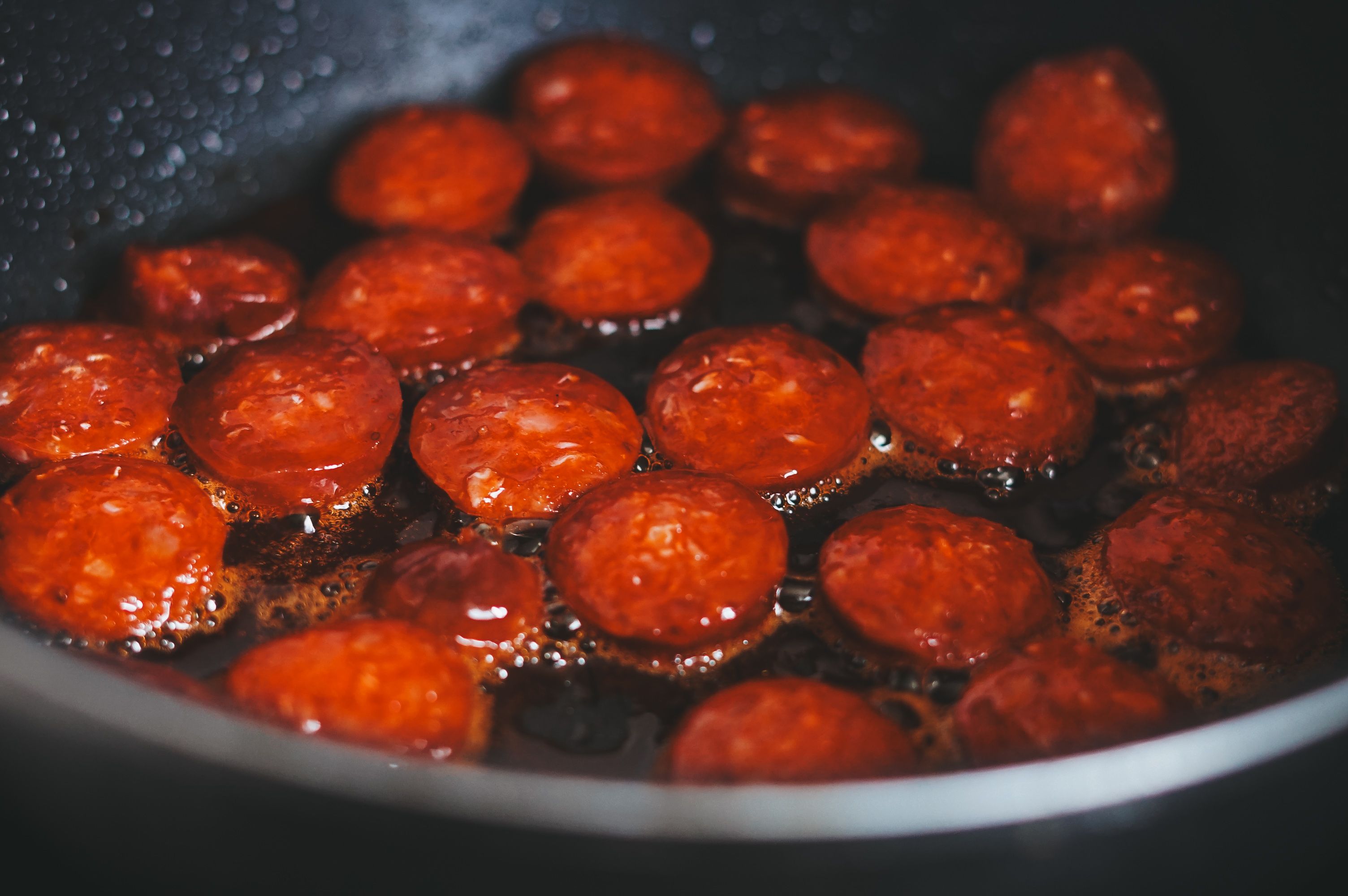
Chorizo al Vino
The diets react (see scores below)
Common Ingredients
- Spanish chorizo
- red wine
- garlic
- bay leaves
- onion
- olive oil
- black pepper
- parsley
Specific recipes may vary.
Incompatible with 9 of 11 diets
Diet Ratings
Chorizo al Vino is fundamentally a high-fat, moderate-protein pork dish that aligns well with keto macros, but the red wine is the critical concern. A standard preparation uses roughly 200-250ml of red wine, which contains approximately 5-8g of residual sugar/carbs per 150ml serving. While much of the alcohol cooks off, residual sugars remain in the reduction and can add meaningful net carbs depending on portion size and how much the wine is reduced. Spanish chorizo itself is excellent for keto — cured pork with high fat, moderate protein, and near-zero carbs. Garlic and onion add minor carbs but in small culinary quantities are manageable. Olive oil is ideal. The dish is consumable on keto with portion awareness, particularly controlling the wine-based sauce intake, but it is not a clean 'approve' due to the wine reduction carbs.
Strict keto practitioners argue that red wine should be eliminated entirely even in cooking, as the residual sugars in wine reductions are unpredictable and unnecessary — they would substitute with bone broth or simply pan-fry chorizo without the sauce. Conversely, lazy keto adherents often approve this dish outright, arguing the wine carbs per serving are negligible when the sauce is shared across multiple portions.
Chorizo al Vino is fundamentally incompatible with a vegan diet. Spanish chorizo is a cured pork sausage — a direct animal product and the primary ingredient of this dish. Pork is unambiguously excluded under all vegan frameworks. The remaining ingredients (red wine, garlic, bay leaves, onion, olive oil, black pepper, parsley) are plant-based, but the dish cannot be considered vegan in any form given that chorizo is its defining component.
Chorizo al Vino is disqualified primarily by its main ingredient: Spanish chorizo is a cured, processed meat typically containing added salt, preservatives (nitrates/nitrites), and often non-paleo fillers or additives. Processed and cured meats are excluded from paleo regardless of their protein source. Red wine falls into the 'caution' category as alcohol — technically derived from grapes but processed and debated. Olive oil, garlic, onion, black pepper, bay leaves, and parsley are all paleo-approved. However, the processed nature of commercial chorizo is the dominant disqualifying factor, making the overall dish an 'avoid.' If made with homemade, additive-free, uncured pork sausage, the dish could shift toward caution or even approve territory.
Some paleo practitioners, particularly those following a more flexible or ancestral approach (e.g., Chris Kresser), accept minimally processed charcuterie and cured meats where the only additives are salt and natural spices, arguing that fermentation and curing are ancient preservation techniques. Under this interpretation, a high-quality artisan chorizo with clean ingredients could be conditionally acceptable.
Chorizo al Vino is built around Spanish chorizo, a heavily processed, cured pork sausage high in saturated fat, sodium, and preservatives. Red meat and processed meats are explicitly limited in Mediterranean diet principles — processed meats like chorizo are among the most discouraged foods due to their high sodium, nitrate content, and saturated fat load. While the supporting ingredients (garlic, onion, olive oil, red wine, parsley) are genuinely Mediterranean-friendly, they do not redeem the dish when the primary protein is a processed red meat. The Mediterranean diet allows red meat only a few times per month, and processed meats even less so. This dish is a snack centered on the problematic ingredient, making it incompatible with regular Mediterranean diet adherence.
Some Spanish regional dietary traditions, which are part of the broader Mediterranean culinary sphere, do incorporate cured pork products like chorizo as occasional, small-portion accompaniments rather than main dishes. A strict 'traditional Spanish Mediterranean' reading might allow very small tapas-sized portions infrequently, treating it similarly to how the diet treats red meat — a rare indulgence rather than a prohibited food.
Chorizo al Vino is heavily incompatible with the carnivore diet. While Spanish chorizo itself may contain mostly pork and spices, this dish is cooked in red wine with garlic, onion, olive oil, bay leaves, and parsley — all plant-derived ingredients that are strictly excluded from carnivore. The red wine alone disqualifies the dish as a fermented plant-based alcohol. Olive oil is a plant oil, onion and garlic are vegetables, and the herbs are plant matter. Even the chorizo base typically contains paprika and other spices that strict carnivore practitioners avoid. This dish is fundamentally a plant-forward preparation that happens to contain meat, not a meat dish with minor additions.
Chorizo al Vino has two significant compliance issues. First, Spanish chorizo as commonly sold is a cured/processed sausage that typically contains added sugars, paprika-based seasonings that may include fillers, and sometimes non-compliant additives — making label verification essential. Second, and more decisively for the standard preparation, the dish uses red wine as a cooking liquid, which falls under the alcohol exclusion. While wine vinegar and certain vinegars are explicitly allowed, red wine itself (as a beverage-form alcohol used for cooking) remains excluded under Whole30 rules — the alcohol exception applies to vinegar, not to wine used as a braising liquid. These two issues together make the classic preparation non-compliant.
Some Whole30 practitioners argue that red wine used in cooking burns off most of the alcohol and functions similarly to red wine vinegar as a flavor agent; however, official Whole30 guidelines by Melissa Urban are clear that alcohol in all forms — including for cooking — is excluded for the 30-day elimination period. On the chorizo front, Whole30-compliant versions without added sugar do exist, so a compliant swap is possible, but the wine issue remains a hard stop.
Chorizo al Vino contains multiple high-FODMAP ingredients that make it unsuitable during the elimination phase. Garlic is one of the highest-FODMAP foods tested by Monash University (fructans) and is essentially non-negotiable in this dish. Onion is similarly high in fructans and is a primary FODMAP offender — both are structural ingredients that cannot be reduced to a safe serving size within a normal portion of this dish. Spanish chorizo itself frequently contains garlic as a core seasoning ingredient in its curing blend, adding another layer of fructan exposure beyond the added whole garlic. Red wine in small amounts (up to ~150ml) is considered low-FODMAP by Monash, so it is not a primary concern. Bay leaves and black pepper at culinary amounts are low-FODMAP. Olive oil and parsley are safe. However, the combination of whole garlic cloves, onion, and garlic-seasoned chorizo creates a cumulative FODMAP load that makes this dish clearly high-FODMAP at any standard serving size.
Chorizo al Vino is built around Spanish chorizo, a heavily processed, cured pork sausage that is fundamentally incompatible with DASH diet principles. Spanish chorizo is very high in sodium (typically 700–1,000mg per 2 oz serving), high in saturated fat, and falls squarely in the 'processed red meat' category that DASH explicitly limits. A single serving can exceed one-third to one-half of the daily sodium allowance on the standard DASH plan, and well over half on the low-sodium DASH plan. The high saturated fat content from fatty pork cuts used in chorizo further conflicts with DASH's directive to limit saturated fat. While a few ingredients are DASH-friendly — garlic, onion, olive oil, parsley, and red wine in moderation align with DASH principles — these supportive ingredients cannot offset the dominant nutritional concerns posed by chorizo itself. This dish is essentially defined by processed, high-fat, high-sodium cured meat, making it an avoid under DASH guidelines.
Chorizo al Vino presents significant Zone Diet challenges primarily because of the protein source. Spanish chorizo is a fatty, cured pork sausage with a high saturated fat content and notable sodium load — the opposite of the lean proteins Dr. Sears recommends. The fat-to-protein ratio in chorizo is heavily skewed toward fat (and saturated fat at that), making it difficult to hit the 30% protein / 30% fat Zone targets without dramatically overshooting fat calories. The red wine, while adding some polyphenols Sears values in his later anti-inflammatory writings, contributes alcohol calories and some sugar. On the positive side, olive oil, garlic, onion, and parsley are all Zone-favorable ingredients — monounsaturated fat and low-glycemic aromatics that support the anti-inflammatory framework. As a snack, this dish could theoretically be portioned very small (1–2 slices of chorizo) to limit saturated fat damage, but the macronutrient imbalance is hard to correct without pairing it with a lean protein source and low-GI vegetables. It sits firmly in 'caution' territory — usable in Zone eating occasionally and in small amounts, but not a recommended building block.
In Sears' later work (particularly 'The Mediterranean Zone'), he relaxed strict limits on saturated fat, emphasizing that the overall anti-inflammatory dietary pattern matters more than any single fat type. From this lens, a small portion of chorizo al vino — with its polyphenol-rich red wine, garlic, olive oil, and parsley — could be seen as a reasonable occasional indulgence within a broader Zone-Mediterranean framework. Some Zone practitioners would also note that chorizo's high fat content means a smaller portion is needed to hit fat blocks, potentially making it manageable with careful measurement.
Chorizo al Vino is built around Spanish chorizo, a heavily processed cured pork sausage high in saturated fat, sodium, and preservatives (typically nitrites/nitrates). These characteristics put it firmly in the pro-inflammatory category according to anti-inflammatory diet principles. Processed red meats are consistently flagged in anti-inflammatory frameworks due to their saturated fat content, advanced glycation end-products (AGEs) from curing and cooking, and nitrite preservatives linked to increased inflammatory markers. The dish does include several genuinely anti-inflammatory supporting ingredients — extra virgin olive oil, garlic, red wine, black pepper, and parsley — which offer polyphenols, allicin, and antioxidants. However, these supportive elements do not offset the dominant pro-inflammatory load from the chorizo itself. Red wine in moderate amounts aligns with Dr. Weil's pyramid, but the overall dish context still centers on a processed, high-saturated-fat meat. The score of 3 reflects the meaningful but insufficient anti-inflammatory contribution of the supporting ingredients.
Some culinary-focused anti-inflammatory advocates argue that high-quality artisan Spanish chorizo — minimally processed, free of artificial preservatives, and made from pasture-raised pork — is meaningfully different from industrial processed meats, and that the garlic, olive oil, and red wine in this preparation provide enough polyphenol and antioxidant activity to make it acceptable as an occasional indulgence. However, mainstream anti-inflammatory nutrition guidelines (including the IF Rating system and Dr. Weil's framework) consistently categorize processed cured meats as foods to limit or avoid regardless of preparation quality.
Chorizo al Vino is a poor fit for GLP-1 patients on multiple fronts. Spanish chorizo is a heavily processed, high-fat, high-saturated-fat cured pork sausage — exactly the type of food that worsens GLP-1 side effects including nausea, bloating, and reflux due to slowed gastric emptying. The red wine introduces alcohol, which adds empty calories. Fat content per serving is very high relative to protein density, and the processed nature of chorizo means significant sodium and preservatives alongside saturated fat. The aromatics (garlic, onion, olive oil, parsley, bay leaves) are individually fine, but they cannot redeem the core ingredients. This dish fails on three independent avoid-tier criteria: high-fat processed meat, alcohol, and difficult digestibility.
*See how scores were generated at our methodology page.
Nutritional profile
Six traits that cut across every diet.
Fiber & Plants
How much whole-plant food and fiber it delivers.
Healthy Fats
The quality of its fats (unsaturated, omega-3).
Whole / Unprocessed
How close it is to its natural, unprocessed form.
Gut Gentle
How easy it is on digestion (low FODMAP, few irritants).
Low Glycemic
How little it spikes your blood sugar.
Protein Density
How much protein it packs per calorie.
Controversy Index
Higher controversy = more disagreement between diets.
Diet-Specific Tips
 Keto — 5/10
View tips
- Spanish chorizo is high-fat, near-zero net carb — strongly keto-compatible
- Red wine introduces residual sugars post-cooking; amount depends on reduction level
- Onion and garlic add minor carbs (~2-3g net per serving in culinary quantities)
- Olive oil is an ideal keto fat source
- Portion control of the wine sauce is key to keeping net carbs in range
- Overall macro profile is fat-dominant if wine sauce is moderated
 Zone — 4/10
View tips
- Spanish chorizo is high in saturated fat and sodium — not a lean Zone protein
- Chorizo's fat-to-protein ratio is unfavorable for Zone block construction
- Olive oil is an ideal Zone monounsaturated fat source
- Garlic, onion, and parsley are low-glycemic, Zone-favorable aromatics
- Red wine contributes polyphenols (Zone-positive) but also alcohol calories and some sugar
- Very small portion sizes could make this fit a Zone snack, but balance is difficult
- Sears' later Mediterranean Zone writings are more permissive about saturated fat in context
- As a snack category item, the portion ceiling helps limit the macro damage