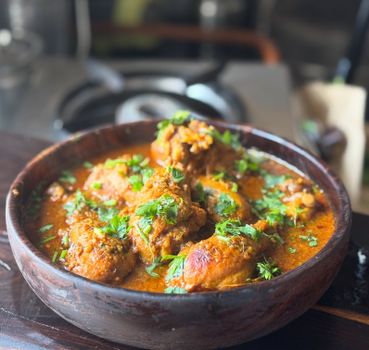
Photo: Rahul Sonawane / Pexels
Indian
Classic Indian Chicken Curry
The diets react (see scores below)
Common Ingredients
- chicken
- onion
- tomatoes
- ginger
- garlic
- garam masala
- turmeric
- cilantro
Specific recipes may vary.
Incompatible with 3 of 11 diets
Diet Ratings
Classic Indian Chicken Curry is conditionally keto-compatible. The primary protein (chicken) is excellent for keto, and the spices (garam masala, turmeric, ginger, garlic) add negligible carbs. However, onions and tomatoes contribute meaningful net carbs — a standard curry serving with one medium onion and two tomatoes can add 10-15g net carbs. Without added cream, coconut milk, or oil, the dish is also lower in fat than ideal for keto macros (70-80% fat). Portion control is key: a modest serving (e.g., ~150-200g) can fit within daily carb limits, but a full restaurant-style portion may push carb intake uncomfortably high. The dish lacks grains, added sugar, or starchy vegetables in its base form, which keeps it in caution rather than avoid territory.
Some strict keto practitioners flag onion and tomato quantities as too carb-dense for daily consumption, arguing the dish should only be eaten occasionally or with significantly reduced onion/tomato amounts. Conversely, lazy keto adherents often approve this dish freely, counting only the moderate net carbs and ignoring fat ratio concerns.
Classic Indian Chicken Curry contains chicken as its primary protein, which is poultry — a direct animal product explicitly excluded under all vegan dietary frameworks. There is no ambiguity here: chicken is animal flesh, and no vegan organization or school of thought considers it acceptable. The remaining ingredients (onion, tomatoes, ginger, garlic, garam masala, turmeric, cilantro) are all plant-based, but the presence of chicken makes this dish wholly incompatible with a vegan diet.
Classic Indian Chicken Curry in its base form is highly paleo-compatible. Chicken is a clean animal protein fully endorsed by all paleo authorities. Onion, tomatoes, ginger, and garlic are all whole vegetables available to hunter-gatherers. Garam masala is a blend of whole spices (cumin, coriander, cardamom, cloves, cinnamon, black pepper), and turmeric is a natural root-derived spice — both are unprocessed and paleo-approved. Cilantro is a fresh herb with no concerns. There are no grains, legumes, dairy, refined sugars, seed oils, or processed additives in this ingredient list. The dish as described relies on whole-food ingredients that align perfectly with paleo philosophy.
Classic Indian Chicken Curry is moderately compatible with the Mediterranean diet. Chicken is an acceptable protein—poultry is permitted in moderate amounts, ideally a few times per week. The dish is rich in vegetables (onion, tomatoes) and anti-inflammatory spices (turmeric, ginger, garlic, garam masala), which align well with Mediterranean principles emphasizing whole plant foods and bioactive compounds. Cilantro adds a fresh herb element also consistent with the diet. However, this dish is not from the Mediterranean tradition, and the cooking fat is unspecified—if prepared with ghee, butter, or coconut oil rather than olive oil, it diverges from a core Mediterranean principle. The spice profile, while healthy, is not characteristic of the Mediterranean pattern. Overall, it is a nutritious, whole-food dish that fits within the spirit of the diet when prepared with olive oil, but it is not a Mediterranean staple.
Some Mediterranean diet practitioners and researchers focus on the overall dietary pattern—whole foods, lean proteins, vegetables, and anti-inflammatory ingredients—rather than strict geographic origin. From this perspective, a chicken curry made with tomatoes, garlic, ginger, turmeric, and olive oil could be fully embraced as compatible, since turmeric and ginger are recognized for their anti-inflammatory properties aligned with Mediterranean diet goals.
Classic Indian Chicken Curry is almost entirely incompatible with the carnivore diet. While the chicken itself is an acceptable animal protein, the dish is built around a base of multiple plant-derived ingredients: onion, tomatoes, ginger, garlic, garam masala (a blend of plant spices), turmeric, and cilantro. Every one of these is explicitly excluded on a carnivore diet. Plant vegetables, aromatics, spices, and herbs are all off-limits. The only salvageable element is the chicken, but in this dish's prepared form it cannot be separated from the plant-based sauce and seasonings. This dish represents the antithesis of carnivore cooking — a heavily spiced, vegetable-based sauce with meat added.
Every ingredient in this Classic Indian Chicken Curry is fully Whole30-compliant. Chicken is an approved protein; onion, tomatoes, ginger, and garlic are all whole vegetables/aromatics; garam masala and turmeric are pure spices with no excluded additives; and cilantro is an approved herb. There are no grains, legumes, dairy, added sugars, or other excluded ingredients present. This is a straightforward, whole-food dish that aligns perfectly with the spirit and letter of the Whole30 program.
This Classic Indian Chicken Curry contains two major high-FODMAP ingredients that make it unsuitable during the elimination phase: onion (very high in fructans, one of the most potent FODMAP triggers) and garlic (extremely high in fructans, even a small amount is problematic). These are core structural ingredients in this dish, not optional garnishes — they form the flavor base of the curry. Ginger is low-FODMAP at standard servings (up to 1 tsp fresh). Tomatoes are low-FODMAP at standard servings (up to 65g). Chicken is protein and FODMAP-free. Turmeric, garam masala (in typical culinary amounts), and cilantro are all low-FODMAP. However, the presence of onion and garlic as foundational ingredients makes this dish a clear 'avoid' during elimination regardless of the other safe components. A low-FODMAP adaptation is possible by substituting the oil used to sauté onion and garlic with garlic-infused oil and using the green tops of scallions instead of onion.
Classic Indian Chicken Curry made with this ingredient list is broadly aligned with DASH principles — lean protein (chicken), vegetables (onion, tomatoes), and anti-inflammatory spices (turmeric, garam masala, ginger, garlic) are all DASH-friendly. However, the rating depends heavily on preparation: if the curry is made with added oil (especially in larger quantities), coconut milk, cream, or ghee — common in traditional preparations — it can introduce significant saturated fat, moving it away from DASH ideals. Garam masala as a spice blend is sodium-free when homemade but some commercial blends contain added salt. As listed, the ingredient profile is solid, but real-world preparation variables justify a caution rating rather than a full approve.
Some DASH clinicians would approve this dish outright when prepared with minimal oil and no cream or coconut milk, noting that the lean protein, vegetables, and polyphenol-rich spices (curcumin in turmeric, allicin in garlic) actively support cardiovascular health beyond basic DASH benchmarks. Others would maintain caution, citing that restaurant or traditional home versions frequently add ghee, coconut milk, or heavy cream, making a blanket approval inappropriate without specifying the preparation method.
Classic Indian Chicken Curry aligns well with Zone Diet principles. The primary protein is chicken, a lean Zone-favorable protein that easily fits a standard 3-block protein serving (~21g protein). The carbohydrate base consists of onions and tomatoes — both low-glycemic, Zone-favorable vegetables rich in polyphenols. Ginger and garlic are potent anti-inflammatory ingredients that Sears specifically champions in his later writings on eicosanoid control. Turmeric (curcumin) and garam masala are polyphenol-rich spices aligned with the anti-inflammatory focus of the Zone. Cilantro adds negligible calories. The main caution is fat content: traditional curry preparations may use ghee or coconut oil (saturated fat), and the dish as described contains no explicit added fat — making it potentially fat-deficient for Zone balance unless a small amount of olive oil or a few almonds are added on the side to meet the 1.5g fat-per-block target. With a Zone-appropriate fat source and portion control, this dish is an excellent Zone meal component. The spice profile actually makes this dish a standout from an anti-inflammatory polyphenol perspective.
Classic Indian chicken curry is a strong anti-inflammatory dish. The spice blend is the standout feature: turmeric (curcumin) is one of the most well-researched anti-inflammatory compounds in nutrition science, and garam masala typically contains coriander, cumin, cardamom, black pepper, cloves, and cinnamon — all of which carry meaningful anti-inflammatory and antioxidant activity. Black pepper in garam masala also enhances curcumin bioavailability via piperine. Garlic and ginger are both firmly on the anti-inflammatory emphasized list, with gingerols and allicin shown to reduce inflammatory markers like CRP and IL-6. Tomatoes contribute lycopene (especially when cooked), and onions provide quercetin, both valuable antioxidants. Cilantro adds polyphenols. Chicken is a lean protein classified as 'moderate' in anti-inflammatory frameworks — acceptable and far preferable to red meat. The overall dish is rich in phytonutrients and spices with robust research support, and contains no refined carbohydrates, added sugars, trans fats, or seed oils. The main caveat is cooking oil (often ghee, butter, or vegetable oil in traditional preparations), which is not listed here — if prepared with extra virgin olive oil or coconut oil in moderation, the profile improves; if made with seed oils or excessive ghee, it would temper the score slightly. Rated on the ingredients as listed, this dish is a textbook anti-inflammatory meal.
Classic Indian chicken curry built from this ingredient list is a reasonably strong GLP-1-friendly dish anchored by lean chicken protein and a vegetable-based sauce (onion, tomatoes). Chicken provides 25-30g protein per serving, supporting the critical muscle-preservation goal. Tomatoes and onions add modest fiber and micronutrients with high water content, supporting hydration and digestion. Turmeric has anti-inflammatory properties and is generally well-tolerated. The concern lies in execution: traditional curry preparation often includes significant added oil or ghee to bloom the spices and build the sauce, which can substantially raise the fat content per serving and worsen GLP-1 side effects like nausea, bloating, and reflux. Garam masala is a warm spice blend that most patients tolerate, but individual sensitivity to spiced dishes varies — some GLP-1 patients experience worsened reflux or GI discomfort with aromatic spice blends, especially early in treatment. Without coconut milk or cream this version avoids the highest-fat pitfall of many curry recipes, which is a meaningful positive. Scored as caution rather than approve primarily due to the fat variability in preparation and spice tolerance uncertainty, not the ingredient list itself.
Some GLP-1-focused dietitians rate well-prepared home-style chicken curry favorably given its protein density and anti-inflammatory spice profile, particularly when oil is minimized and the sauce is tomato-forward. Others flag that even moderate spice complexity can trigger nausea or reflux in patients during the dose-escalation phase, and recommend patients introduce spiced dishes cautiously and only when GI side effects have stabilized.
*See how scores were generated at our methodology page.
Nutritional profile
Six traits that cut across every diet.
Fiber & Plants
How much whole-plant food and fiber it delivers.
Healthy Fats
The quality of its fats (unsaturated, omega-3).
Whole / Unprocessed
How close it is to its natural, unprocessed form.
Gut Gentle
How easy it is on digestion (low FODMAP, few irritants).
Low Glycemic
How little it spikes your blood sugar.
Protein Density
How much protein it packs per calorie.
Controversy Index
Higher controversy = more disagreement between diets.
Diet-Specific Tips
 Keto — 5/10
View tips
- Chicken is a keto-friendly lean protein
- Onions contribute ~5-8g net carbs per medium onion — a significant portion of daily budget
- Tomatoes add ~3-5g net carbs and are borderline for strict keto
- Spices (garam masala, turmeric, ginger, garlic) are negligible in net carbs
- Dish is naturally low-fat unless coconut milk or ghee is added — not ideal for keto fat macros
- No grains, added sugars, or starchy vegetables present
- Portion size is critical — standard restaurant portions may exceed carb limits
 Paleo — 9/10
View tips
- Chicken is a fully approved paleo protein source
- All vegetables (onion, tomatoes, ginger, garlic) are whole and unprocessed
- Garam masala and turmeric are natural spice blends with no non-paleo additives
- Cilantro is a paleo-approved fresh herb
- No grains, legumes, dairy, or seed oils present
- No added salt or refined sugar listed — dish scores higher without them
- Cooking oil not specified; compliance depends on using paleo-approved fat such as coconut oil, ghee, or avocado oil
 Mediterranean — 5/10
View tips
- Chicken is an acceptable moderate-frequency protein under Mediterranean guidelines
- Tomatoes, onion, garlic, and ginger are whole plant foods consistent with the diet
- Turmeric and garam masala provide anti-inflammatory benefits aligned with Mediterranean principles
- Cooking fat not specified—ghee or coconut oil would reduce compatibility; olive oil would improve it
- Dish is not of Mediterranean culinary origin, affecting cultural and traditional alignment
- No refined grains, added sugars, or processed ingredients present
 Whole30 — 9/10
View tips
- Chicken is explicitly allowed as a protein source
- All vegetables and aromatics (onion, tomatoes, ginger, garlic) are Whole30-approved
- Garam masala and turmeric are compliant spices — verify no anti-caking agents or fillers in pre-mixed blends
- Cilantro is an approved herb
- No dairy, grains, legumes, or added sugars present
- Dish is a genuine whole-food meal, not a recreation of a banned food category
 DASH — 6/10
View tips
- Lean chicken is a DASH-approved protein source
- Tomatoes and onions contribute potassium, fiber, and antioxidants
- Turmeric, ginger, and garlic have anti-inflammatory cardiovascular benefits
- No added sodium in the listed spices if using fresh/homemade blends
- Preparation method is critical — ghee, coconut milk, or cream would significantly lower the score
- Commercial garam masala blends may contain added salt; check labels
- Naturally low in saturated fat as listed, but traditional cooking oils and fats can alter this
- Portion control of oil used for sautéing is important for total fat management
 Zone — 8/10
View tips
- Lean chicken protein is a Zone-ideal protein source
- Onions and tomatoes are low-glycemic, favorable Zone carbohydrates
- Turmeric, ginger, garlic, and garam masala provide strong anti-inflammatory polyphenols
- No high-glycemic carbohydrates (rice, naan, potatoes) in the listed ingredients
- Fat source is unspecified — if ghee is used in preparation, saturated fat should be minimized and a monounsaturated fat substituted
- Dish may need a side fat source (e.g., olive oil drizzle) to reach the 30% fat macro target
- Cilantro adds polyphenols with negligible macronutrient impact
 Anti-Inflammatory — 8/10
View tips
- Turmeric (curcumin) — one of the most studied anti-inflammatory compounds; enhances reduction of CRP and IL-6
- Garam masala spice blend — multiple spices (cumin, coriander, cloves, cinnamon, black pepper) with antioxidant and anti-inflammatory properties
- Black pepper in garam masala enhances curcumin bioavailability via piperine
- Garlic and ginger — both emphasized anti-inflammatory ingredients with strong research support
- Tomatoes — cooked lycopene bioavailability is high; contribute antioxidant protection
- Onions — quercetin content supports anti-inflammatory effect
- Chicken — lean protein, classified 'moderate/acceptable' vs. red meat
- No refined carbohydrates, added sugars, trans fats, or seed oils in listed ingredients
- Cooking oil not specified — outcome can vary depending on preparation choice
 GLP-1 Friendly — 6/10
View tips
- Good lean protein source from chicken — supports muscle preservation goal
- Tomato-onion base adds fiber, micronutrients, and water content
- No coconut milk or cream listed — avoids highest-fat curry variant
- Fat content highly preparation-dependent — oil or ghee quantity is the key variable
- Garam masala and aromatic spices may worsen reflux or nausea in sensitive patients
- Generally easy to portion into small servings
- Turmeric is anti-inflammatory and well-tolerated by most patients