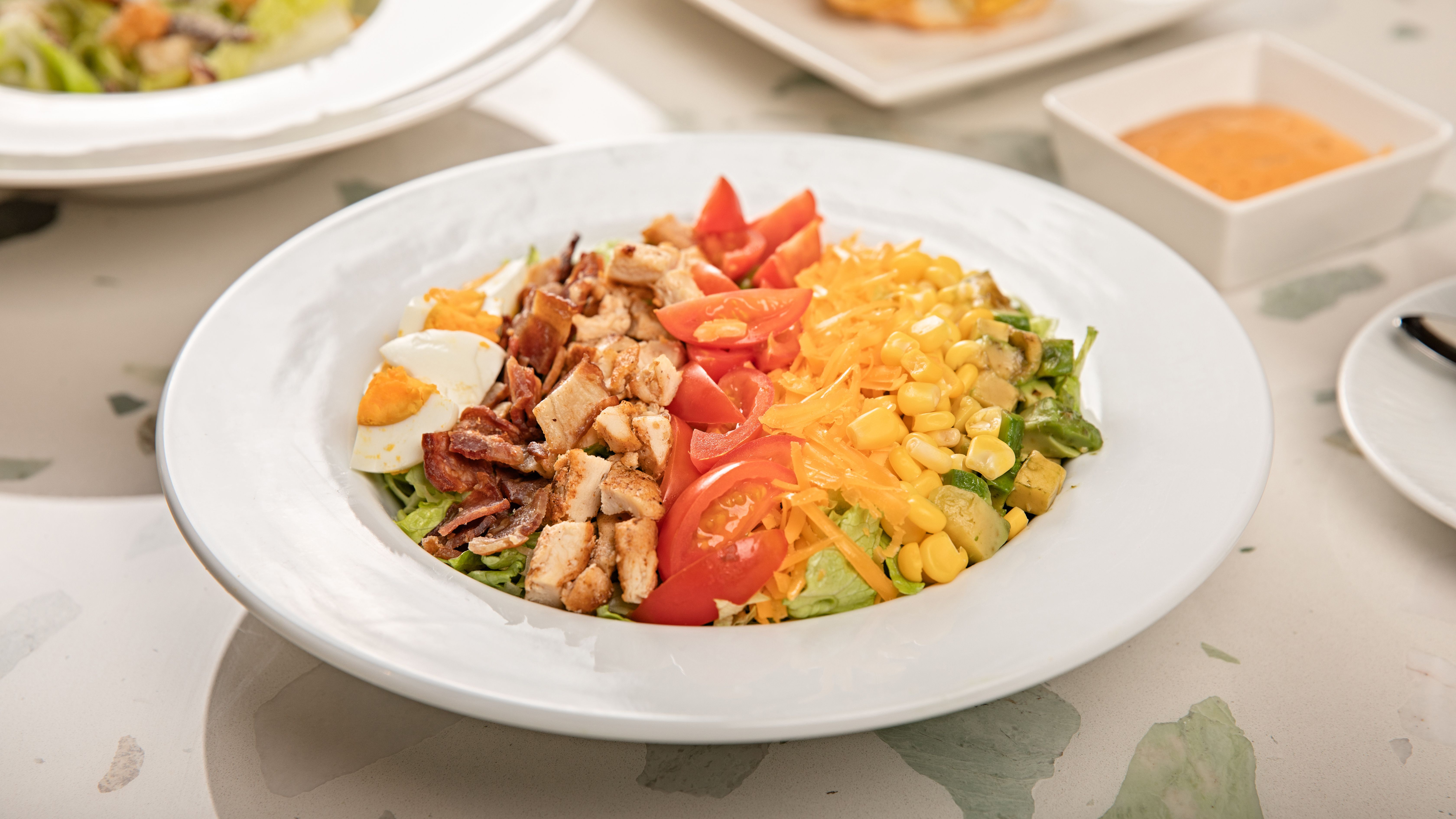
Photo: Change C.C / Pexels
The diets react (see scores below)
Common Ingredients
- chicken breast
- bacon
- hard-boiled egg
- avocado
- tomato
- blue cheese
- quinoa
- romaine
Specific recipes may vary.
Incompatible with 4 of 11 diets
Diet Ratings
The Cobb Bowl is mostly keto-friendly — chicken breast, bacon, hard-boiled egg, avocado, blue cheese, and romaine are all excellent keto staples with high fat, moderate protein, and very low net carbs. However, the inclusion of quinoa is a significant problem. Quinoa is a grain-like seed with approximately 34g of net carbs per cooked cup, which alone can exhaust or exceed the entire daily keto carb allowance. Tomato adds a small additional carb load but is manageable in standard portions. If quinoa is removed or substituted (e.g., with cauliflower rice), this dish would easily score 8-9 and be a near-perfect keto meal. As listed, the quinoa makes this a caution-level dish unless the portion is extremely small or it is omitted.
The Cobb Bowl contains multiple animal products that are unequivocally excluded from a vegan diet: chicken breast (poultry/meat), bacon (pork/meat), hard-boiled egg (egg), and blue cheese (dairy). Four distinct categories of animal-derived ingredients are present, making this dish entirely incompatible with veganism. The only vegan-friendly components are avocado, tomato, quinoa, and romaine lettuce.
This Cobb Bowl contains three non-paleo ingredients that disqualify it from approval. Quinoa is a grain (technically a pseudo-grain, but excluded under strict paleo rules due to its anti-nutrient profile — saponins, lectins — and its grain-like properties). Blue cheese is dairy, which is explicitly excluded from the paleo diet. Bacon, while made from pork, is a processed meat typically cured with added salt, nitrates, and preservatives, placing it in the avoid category. The remaining ingredients — chicken breast, hard-boiled egg, avocado, tomato, and romaine — are all paleo-approved. However, the presence of multiple core violations (a grain, dairy, and processed meat) pushes the dish firmly into avoid territory. Removing quinoa, blue cheese, and swapping bacon for plain cooked pork belly or uncured pork would bring this dish into compliance.
The Cobb Bowl contains a mix of Mediterranean-friendly and problematic ingredients. On the positive side, romaine, tomato, avocado, egg, and chicken breast are all acceptable or encouraged components. Quinoa as a base substitutes well for whole grains. However, bacon is a processed red meat high in saturated fat and sodium — a clear contradiction of Mediterranean principles. Blue cheese, while dairy, is a high-sodium, high-fat addition used more liberally in American cuisine than Mediterranean tradition would suggest. The dish lacks olive oil as the primary fat (dressings for a Cobb are typically creamy or bacon-fat-based). The strong vegetable and lean protein components prevent a lower score, but the bacon and blue cheese anchor this firmly in 'caution' territory rather than approval.
Some Mediterranean diet practitioners would score this higher by focusing on the whole-food, vegetable-forward base (romaine, tomato, avocado, quinoa, egg) and treating bacon and blue cheese as minor garnishes. If olive oil vinaigrette replaced a creamy dressing and bacon were omitted or minimized, this bowl could approach approval — the structural template is adaptable.
The Cobb Bowl is fundamentally incompatible with the carnivore diet. While it contains some acceptable animal-derived ingredients (chicken breast, bacon, hard-boiled egg, and blue cheese), the dish is overwhelmingly plant-based in composition. Romaine lettuce, tomato, and avocado are all plant foods explicitly excluded on carnivore. Quinoa is a grain and one of the most egregious violations — a complete non-starter on any tier of carnivore eating. Even the animal-derived components are mixed: chicken breast is a lean, non-ruminant protein (lower priority), bacon may contain sugar or plant-based additives depending on preparation, and blue cheese is a debated dairy product. The dish as served cannot be adapted — the plant ingredients are structural to the dish, not incidental garnishes.
This Cobb Bowl contains two excluded ingredients: quinoa (a grain explicitly prohibited on Whole30) and blue cheese (dairy, which is excluded — only ghee and clarified butter are allowed as dairy exceptions). The remaining ingredients — chicken breast, hard-boiled egg, avocado, tomato, and romaine — are all Whole30-compliant. Bacon is technically compliant only if it contains no added sugar or sulfites, though compliant versions exist. Regardless, the presence of quinoa and blue cheese makes this dish non-compliant as described.
The Cobb Bowl contains several ingredients that require careful portion management during the FODMAP elimination phase. Chicken breast, bacon, hard-boiled egg, tomato, quinoa, and romaine are all low-FODMAP at standard servings. However, two ingredients introduce meaningful risk: (1) Avocado is low-FODMAP only at 1/8 of a fruit (~30g) per Monash; a typical Cobb Bowl serving contains far more, pushing it into high-FODMAP territory due to sorbitol. (2) Blue cheese is a ripened/aged cheese, which Monash rates as low-FODMAP at small amounts (~40g), but the mold cultures and creamy texture mean many versions contain higher lactose than hard aged cheeses, and portion creep is common in restaurant settings. The combination of these two borderline ingredients in realistic serving quantities makes this dish a caution rather than an approval.
Monash University rates avocado as low-FODMAP at 1/8 fruit and blue cheese as low-FODMAP at small portions (~40g), which would technically allow this dish. However, most clinical FODMAP practitioners advise patients to avoid avocado during the strict elimination phase because standard servings almost universally exceed the safe threshold, and blue cheese's lactose content varies by production method, creating unpredictable FODMAP load.
This Cobb Bowl contains several DASH-friendly ingredients — chicken breast (lean protein), avocado (healthy monounsaturated fats, potassium), tomato (potassium, vitamins), romaine (fiber, nutrients), and quinoa (whole grain, fiber, protein). However, it is held back by two significant DASH-problematic ingredients: bacon (high sodium, high saturated fat — NIH DASH explicitly limits both processed meat and saturated fat) and blue cheese (high sodium, high saturated fat — DASH calls for low-fat dairy and sodium restriction). The hard-boiled egg is moderately debated under DASH. As a composite dish, the beneficial ingredients don't fully offset the sodium load and saturated fat from bacon and blue cheese. With modifications — removing or minimizing bacon and swapping blue cheese for a small amount of low-fat feta or omitting entirely — this bowl could score 7-8.
NIH DASH guidelines explicitly limit bacon (processed red meat, high sodium/saturated fat) and recommend low-fat dairy, making blue cheese a poor fit. However, updated clinical interpretations note that eggs are now generally accepted in moderation, and some DASH practitioners argue that small portions of full-fat cheese in an otherwise nutrient-dense salad are acceptable — particularly for non-hypertensive individuals following a general cardiovascular health diet rather than strict therapeutic DASH.
The Cobb Bowl is a strong Zone-compatible dish with several favorable components. Chicken breast provides lean protein that fits neatly into Zone protein blocks (~7g per block). Avocado delivers excellent monounsaturated fat, ideal for Zone fat blocks. Romaine and tomato are low-glycemic, polyphenol-rich carb sources that Sears explicitly favors. Hard-boiled egg contributes both protein and moderate fat. However, three ingredients introduce friction: bacon adds saturated fat and is processed, blue cheese adds saturated fat with limited nutritional upside, and quinoa — while better than white rice — is a grain-based carb with moderate glycemic load that requires portioning control. The combination of bacon and blue cheese together risks pushing saturated fat above Zone-preferred levels. With portion discipline (small bacon crumble, light blue cheese, modest quinoa serving), the dish can hit close to 40/30/30. The avocado partially offsets the saturated fat concern by shifting the overall fat profile toward monounsaturated. The romaine base ensures carb volume comes primarily from low-glycemic vegetables. Overall this is a very workable Zone meal — better than a standard Cobb salad due to the avocado and quinoa substituting for croutons — but the bacon-blue cheese combination prevents a top-tier score.
Some Zone practitioners and Sears' later anti-inflammatory writings (The Anti-Inflammation Zone, 2005) take a somewhat softer stance on saturated fat from whole-food sources like eggs, arguing that the inflammatory impact depends more on total dietary omega-6 to omega-3 ratios than saturated fat grams alone. Under this lens, the egg yolk and even moderate bacon are less problematic, potentially pushing this bowl toward an 8. Conversely, stricter early-Zone adherents would flag both bacon and blue cheese as 'unfavorable' fat sources to minimize, keeping the score at 6-7 without careful portioning.
This Cobb Bowl is a mixed profile dish with genuinely anti-inflammatory components offset by a few problematic ingredients. On the positive side: avocado provides monounsaturated fats and oleic acid with anti-inflammatory properties; tomato contributes lycopene and polyphenols; romaine offers fiber and antioxidants; quinoa is a whole grain with a favorable amino acid and fiber profile; chicken breast is a lean protein consistent with anti-inflammatory guidance. Hard-boiled egg is moderate — it provides choline and selenium but also arachidonic acid, placing it in the acceptable-in-moderation category. The two inflammatory concerns are bacon and blue cheese. Bacon is processed red meat — high in sodium, saturated fat, and typically contains nitrates/nitrites; it sits firmly in the 'limit to avoid' category for anti-inflammatory eating. Blue cheese is a full-fat, high-sodium aged cheese — the anti-inflammatory framework places full-fat dairy in the 'limit' category, and blue cheese in particular is high in saturated fat. Neither bacon nor blue cheese is present in large quantities in a typical bowl, which prevents this from scoring lower, but their presence meaningfully drags down an otherwise reasonable dish. If bacon were swapped for grilled salmon or omitted, and blue cheese replaced with a lighter option or EVOO-based dressing, this dish would score considerably higher.
Some anti-inflammatory practitioners following a more permissive whole-foods approach (aligned with Dr. Weil's pyramid) may argue that a small amount of bacon and blue cheese in an otherwise vegetable- and lean-protein-rich dish is acceptable in the context of an overall healthy diet, giving this dish a mild 'approve.' Conversely, stricter anti-inflammatory or AIP-leaning practitioners would flag processed pork, cured meats, and full-fat dairy as significant inflammatory triggers and might rate this dish more harshly, particularly for individuals with autoimmune conditions.
The Cobb Bowl has a strong nutritional foundation — chicken breast, hard-boiled egg, quinoa, tomato, and romaine all align well with GLP-1 dietary priorities. Protein content is solid and fiber from quinoa, vegetables, and romaine supports digestive health. However, two ingredients pull the score down meaningfully: bacon and blue cheese. Bacon is a high-fat processed meat with significant saturated fat, explicitly flagged as a limit item for GLP-1 patients due to its tendency to worsen nausea and GI discomfort. Blue cheese is high in saturated fat and sodium, and while it contributes some protein, the caloric density per gram of protein is poor. Avocado is a healthy unsaturated fat and is acceptable in moderate portions, but adds to the overall fat load of this dish. As typically constructed, this bowl likely exceeds the low-fat-per-serving guideline and may trigger nausea or reflux in GLP-1 patients — especially mid-dose escalation. Modified with bacon removed or replaced, blue cheese swapped for a lower-fat protein topping (e.g., cottage cheese crumble or feta in small amounts), and avocado limited to a few slices, this dish would rate 7-8.
Some GLP-1-focused RDs would approve a Cobb Bowl as-is, noting that the protein and fiber content supports satiety and muscle preservation, and that individual fat tolerance on GLP-1s varies widely — patients further along in treatment often tolerate moderate dietary fat without significant GI side effects. Others flag bacon specifically as a consistent GI trigger regardless of dose stage and recommend it be removed rather than reduced.
*See how scores were generated at our methodology page.
Nutritional profile
Six traits that cut across every diet.
Fiber & Plants
How much whole-plant food and fiber it delivers.
Healthy Fats
The quality of its fats (unsaturated, omega-3).
Whole / Unprocessed
How close it is to its natural, unprocessed form.
Gut Gentle
How easy it is on digestion (low FODMAP, few irritants).
Low Glycemic
How little it spikes your blood sugar.
Protein Density
How much protein it packs per calorie.
Controversy Index
Higher controversy = more disagreement between diets.
Diet-Specific Tips
 Keto — 4/10
View tips
- Quinoa is a high-net-carb grain (~34g net carbs/cup cooked) and is incompatible with standard keto macros
- Avocado, bacon, egg, and blue cheese are ideal keto fats
- Chicken breast is lean protein — acceptable but less fat-dense than thighs
- Romaine and tomato contribute minimal net carbs in typical serving sizes
- Dish becomes highly keto-compatible if quinoa is removed or replaced with a low-carb alternative
 Mediterranean — 5/10
View tips
- Bacon is a processed red meat — a clear avoid item under Mediterranean guidelines
- Blue cheese is high in saturated fat and sodium, used beyond moderate dairy guidance
- Avocado provides heart-healthy monounsaturated fats consistent with Mediterranean principles
- Quinoa is a whole grain and a positive substitution for refined grains
- Chicken breast is a lean poultry protein acceptable in moderation
- Romaine and tomato contribute plant-forward base aligned with Mediterranean emphasis
- No olive oil as primary fat; typical Cobb dressings are non-Mediterranean
 Low-FODMAP — 5/10
View tips
- Avocado is high-FODMAP (sorbitol) at typical serving sizes — safe only at 1/8 fruit (30g), far less than most Cobb Bowls contain
- Blue cheese has variable lactose content; aged hard cheeses are safer choices during elimination
- Chicken breast, bacon, hard-boiled egg, quinoa, romaine, and tomato are all low-FODMAP at standard servings
- Quinoa as a grain base is a strong low-FODMAP choice versus croutons or wheat-based carbs
- Dish can be made elimination-safe by limiting avocado to a small garnish and substituting blue cheese with cheddar or feta (small portion)
 DASH — 5/10
View tips
- Bacon: high sodium and saturated fat — directly conflicts with DASH limits on processed meat
- Blue cheese: high sodium and saturated fat — DASH specifies low-fat dairy
- Chicken breast: lean protein, strongly DASH-approved
- Avocado: rich in potassium and healthy fats, DASH-compatible
- Quinoa: whole grain, fiber and protein — DASH-approved
- Tomato and romaine: core DASH vegetables
- Hard-boiled egg: moderate debate under DASH; generally accepted in moderation under current guidelines
- Overall sodium load from bacon and blue cheese together likely exceeds DASH single-meal sodium targets
 Zone — 7/10
View tips
- Chicken breast is an ideal Zone lean protein source — core protein block material
- Avocado provides preferred monounsaturated fat, excellent for Zone fat blocks
- Romaine and tomato are explicitly favorable low-glycemic Zone carbohydrates
- Bacon is processed and saturated-fat-heavy — an unfavorable Zone fat source
- Blue cheese adds saturated fat with minimal Zone nutritional benefit
- Quinoa is a moderate-glycemic grain requiring portion control to avoid carb block overflow
- Hard-boiled egg is acceptable Zone protein/fat but whole egg adds saturated fat
- Combination of bacon plus blue cheese together risks exceeding Zone saturated fat tolerance
- Dish can be Zone-balanced with small bacon portions, light blue cheese, and a quarter-cup quinoa serving
 Anti-Inflammatory — 5/10
View tips
- Avocado: strong anti-inflammatory monounsaturated fat content — positive
- Quinoa: whole grain with fiber and complete protein — positive
- Tomato: lycopene and polyphenols — positive
- Romaine: fiber and antioxidants — positive
- Chicken breast: lean protein, aligned with anti-inflammatory guidelines — positive
- Egg: moderate — choline and selenium offset by arachidonic acid concerns
- Bacon: processed red meat with nitrates, high saturated fat and sodium — negative
- Blue cheese: full-fat dairy, high saturated fat and sodium — negative
- No anti-inflammatory dressing specified (e.g., EVOO) — missed opportunity
 GLP-1 Friendly — 5/10
View tips
- Strong lean protein from chicken breast and hard-boiled egg
- Quinoa adds complete protein and meaningful fiber
- Bacon is high-fat processed meat — known GLP-1 GI trigger
- Blue cheese is high in saturated fat with poor protein-to-calorie ratio
- Avocado adds healthy unsaturated fat but increases total fat load
- Romaine and tomato support hydration and micronutrient density
- Dish is portion-sensitive — standard restaurant Cobb portions are often too large for GLP-1 patients
- Modification-friendly: removing or reducing bacon and blue cheese significantly improves the profile