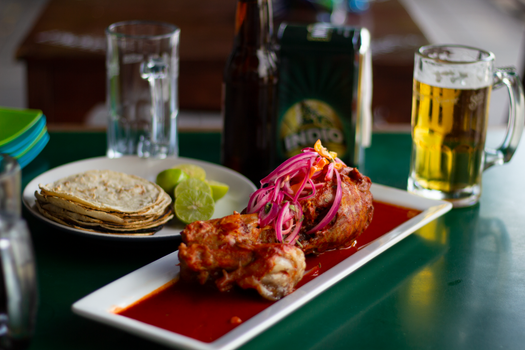
Photo: Alondra Medina / Pexels
Mexican
Cochinita Pibil
The diets react (see scores below)
Common Ingredients
- pork shoulder
- achiote paste
- sour orange juice
- garlic
- cumin
- banana leaves
- oregano
- pickled red onion
Specific recipes may vary.
Incompatible with 4 of 11 diets
Diet Ratings
Cochinita Pibil is built around pork shoulder, which is an excellent keto protein with good fat content. The spices (cumin, oregano, garlic) are negligible carb contributors. The main concerns are achiote paste, which contains annatto seeds and often vinegar or citrus — it adds a small but non-trivial amount of carbs (roughly 2-4g per serving). More significantly, sour orange juice (naranja agria) introduces natural fruit sugars and carbs; a marinade portion per serving could contribute 3-6g net carbs. Pickled red onions add another 2-4g net carbs per serving. Cumulatively, a standard serving likely lands in the 8-14g net carb range depending on marinade absorption and onion quantity, which is manageable within a daily keto budget but requires awareness. The dish is commonly served with tortillas or rice in its traditional form, which must be strictly avoided. Eaten alone as a protein/fat dish with careful portioning of the carb-containing components, it can fit keto.
Strict keto practitioners would flag the sour orange juice as an avoidable sugar source, arguing that citrus-based marinades should be replaced with apple cider vinegar to eliminate fruit sugars entirely, making this a conditional approval at best for those tracking macros tightly.
Cochinita Pibil is a traditional Mexican slow-roasted pork dish. The primary protein is pork shoulder, a direct animal product, making this dish entirely incompatible with a vegan diet. There is no ambiguity here — pork is animal flesh and is categorically excluded under all definitions of veganism.
Cochinita Pibil is largely paleo-compatible — pork shoulder, sour orange juice, garlic, cumin, oregano, and banana leaves (used as a cooking wrapper, not eaten) are all clean paleo ingredients. The main concern is achiote paste, which is a processed product that may contain added salt, vinegar, or other additives beyond the pure annatto seeds and spices. Pickled red onion is another gray area: red onion itself is paleo, but commercial pickling typically involves added salt, vinegar, and sometimes sugar. Homemade pickled onions with apple cider vinegar and no added salt would be more compliant. If achiote paste is made from scratch (annatto seeds, cumin, oregano, citrus — no additives) and the pickling is done cleanly, this dish approaches a solid approve. As typically prepared with store-bought achiote paste and commercially pickled onions, it lands in caution territory.
Strict Cordain-school paleo would flag the added salt virtually always present in commercial achiote paste and pickled onions, as well as vinegar in the pickling brine, pushing this dish toward avoid in its standard restaurant or store-bought form. Conversely, more pragmatic paleo practitioners (Mark Sisson, Balanced Bites) would likely approve this dish as written, viewing trace amounts of vinegar and minimal salt in condiments as inconsequential.
Cochinita Pibil is built around pork shoulder as the primary protein, which is red meat. The Mediterranean diet restricts red meat to a few times per month at most, making it a poor fit as a regular dish. While several of the accompanying ingredients — garlic, citrus juice, oregano, cumin, and pickled onion — are plant-based and align well with Mediterranean principles, they are condiments and aromatics rather than the dish's nutritional foundation. The dominant macronutrient and caloric contribution comes from the fatty pork shoulder. Achiote paste is a non-traditional but benign spice blend. There is no olive oil, no whole grains or legumes as a base, and the dish is inherently pork-centric by design. This is not a Mediterranean dish and does not fit Mediterranean dietary patterns when consumed with any regularity.
Cochinita Pibil is fundamentally incompatible with the carnivore diet despite its pork base. The dish is defined by a marinade of achiote paste (plant-derived annatto seeds), sour orange juice (fruit), garlic (vegetable), cumin (seed spice), oregano (plant herb), and is served with pickled red onion (plant). Banana leaves used for wrapping also introduce plant contact. Only the pork shoulder itself qualifies under carnivore rules. The dish as a whole is a heavily plant-marinated preparation — the plant ingredients are not incidental garnishes but the core flavor profile of the dish. Even a lenient carnivore practitioner who allows spices would still need to exclude the citrus juice and pickled onions. This is not a borderline case; the dish is structurally plant-forward in its preparation.
Cochinita Pibil is largely Whole30-compatible in its traditional form. Pork shoulder, sour orange juice (100% fruit juice is explicitly allowed), garlic, cumin, oregano, and banana leaves are all compliant. Pickled red onion is typically made with vinegar, which is allowed on Whole30 (red wine vinegar is explicitly permitted), plus salt and onion — compliant if no added sugar is included. The key concern is achiote paste: while annatto seeds themselves are natural and compliant, commercial achiote paste formulations often contain added ingredients such as wheat flour, corn starch, or other excluded additives. Label-reading is essential. If made from scratch with annatto, spices, vinegar, and citrus — fully compliant. As a standalone dish (not served in tortillas or wraps), this does not violate the no-recreating-junk-food rule.
Some Whole30 practitioners note that achiote paste is almost always purchased pre-made, and many commercial brands contain non-compliant fillers. Official Whole30 guidance would require verifying every ingredient on the label, making this a 'caution' rather than a clear 'approve' unless homemade or a verified-compliant brand is used. Additionally, pickled red onion recipes vary widely — some include sugar — requiring label or recipe scrutiny.
Cochinita Pibil contains multiple high-FODMAP ingredients that make it unsuitable during the elimination phase. Garlic is one of the highest-FODMAP foods tested by Monash University, containing significant fructans even in small amounts. Pickled red onion is also high in fructans and is a major FODMAP offender. Achiote paste frequently contains garlic and onion powder as core ingredients, compounding the fructan load. While pork shoulder, sour orange juice (in small amounts), cumin, oregano, and banana leaves are generally low-FODMAP, the combination of garlic and onion-based ingredients makes this dish a high-FODMAP meal in any realistic serving. The dish cannot be easily modified without fundamentally changing its character.
Cochinita Pibil is a slow-roasted Mexican pork dish with a relatively clean ingredient profile — achiote paste, citrus, garlic, cumin, and oregano are all DASH-friendly flavor builders with no added sodium concerns. However, the primary protein is pork shoulder, a fatty cut with meaningful saturated fat content, which DASH discourages in favor of lean meats, poultry, and fish. DASH does not categorically exclude pork, but specifies lean cuts (e.g., pork tenderloin) and limits red meat overall. The pickled red onions may contribute modest sodium depending on preparation. The dish contains no added sugars, no tropical oils, and no heavy processing — factors that work in its favor. Portion control and substituting a leaner cut (pork loin) would improve DASH compatibility substantially.
NIH DASH guidelines categorize pork shoulder as a red meat higher in saturated fat, recommending lean cuts and limiting red meat frequency. However, updated clinical interpretations note that unprocessed red meat in moderate portions does not carry the same cardiovascular risk as processed meats, and some DASH-oriented dietitians consider occasional lean-ish pork preparations acceptable within the broader dietary pattern.
Cochinita Pibil is a slow-roasted pork shoulder dish marinated in achiote paste and sour orange juice. The primary Zone concern is the protein source: pork shoulder is a fattier cut, higher in saturated fat than Zone-ideal lean proteins like skinless chicken or fish. However, the marinade and spice components (achiote, sour orange juice, garlic, cumin, oregano) are low-calorie, low-glycemic, and actually contribute polyphenols and anti-inflammatory compounds that Sears would appreciate. Pickled red onions add a favorable low-glycemic carbohydrate component with additional polyphenols. The dish can fit the Zone with careful portioning: a modest 3-oz serving of the pork provides roughly 21g protein while keeping saturated fat manageable, paired with low-GI vegetables to complete the carb blocks and a small amount of added monounsaturated fat if needed. The absence of high-glycemic fillers (no rice, no tortillas in the base dish) is a positive. The main challenge is that pork shoulder's fat content is predominantly saturated, which Sears historically flagged as unfavorable, though his later anti-inflammatory writings softened this stance somewhat. Served without tortillas or rice, this can be incorporated into a Zone meal; served in the traditional taco format with corn tortillas, the glycemic load increases and portioning becomes more demanding.
Dr. Sears' earlier Zone books (Enter the Zone, 1995) classify fatty cuts of pork as unfavorable due to saturated fat content and less favorable fatty acid profiles. However, his later anti-inflammatory work acknowledges that whole-food animal proteins with moderate saturated fat are acceptable when overall eicosanoid balance is maintained via omega-3 intake. Some Zone practitioners treat pork shoulder as simply a less-ideal protein block requiring careful portion control rather than avoidance, particularly given the dish's rich polyphenol and anti-inflammatory spice profile from achiote and oregano.
Cochinita Pibil presents a mixed anti-inflammatory profile. On the positive side, the dish is rich in anti-inflammatory spices and aromatics: achiote (annatto) contains bixin and norbixin, carotenoid-based pigments with antioxidant properties; garlic has well-documented anti-inflammatory effects (allicin, organosulfur compounds); cumin and oregano contribute polyphenols and antioxidants; and sour orange juice provides vitamin C and flavonoids. Pickled red onions are a solid source of quercetin. The banana leaf wrapping is neutral. However, the primary protein is pork shoulder, a fatty cut of red meat that falls into the 'limit' category due to its saturated fat content and arachidonic acid profile. Pork shoulder is higher in saturated fat than lean poultry and lacks the omega-3 advantage of fatty fish. The overall dish is not heavily processed and avoids seed oils, trans fats, refined carbohydrates, and added sugars — which is a meaningful positive. The anti-inflammatory spice base partially offsets the pork's inflammatory potential, but the fatty cut of pork prevents this from reaching 'approve' territory. Occasional consumption as part of a broadly anti-inflammatory diet pattern is reasonable; regular consumption would be a concern.
Some anti-inflammatory practitioners, particularly those following whole-food or Mediterranean-adjacent frameworks, would rate this more favorably given its rich spice profile, absence of processed ingredients, and the protective polyphenols from achiote and garlic — arguing the real-world inflammatory burden of occasional red meat is overstated when spice synergy and food quality are high. Conversely, stricter anti-inflammatory and AIP-aligned practitioners would rate it lower, pointing to pork's arachidonic acid content and saturated fat load as consistent pro-inflammatory signals regardless of preparation.
Cochinita pibil is a slow-braised pork shoulder dish, which means the protein source is a moderately fatty cut rather than a lean one. Pork shoulder typically contains 15-20g of fat per 4oz serving alongside its protein (~25g), with a meaningful portion of that fat being saturated. The achiote paste, sour orange juice, garlic, cumin, and oregano are all GLP-1-friendly — low calorie, anti-inflammatory, and digestive-friendly in normal quantities. Pickled red onion is a positive addition (fiber, low calorie, prebiotic benefit). The banana leaf steaming method is actually better than frying or roasting in oil, keeping added fat low. The main concerns are the fatty cut of pork (worsens nausea and bloating due to slowed gastric emptying), and the rich, slow-braised texture that concentrates fat in the braising liquid. A moderate portion (3-4oz) with the braising fat drained or skimmed would significantly improve the profile. Not an ideal GLP-1 meal, but not in the avoid category either — protein content is real and the preparation method is relatively clean.
Some GLP-1-focused dietitians permit fatty cuts of pork in small, carefully portioned servings because the protein density still supports the 100-120g daily target and the dish contains no added sugars or processed ingredients. Others more strictly exclude pork shoulder due to its saturated fat content and the known risk of GI side effects from high-fat meals in patients on GLP-1 agonists, particularly in the first weeks of dose escalation.
*See how scores were generated at our methodology page.
Nutritional profile
Six traits that cut across every diet.
Fiber & Plants
How much whole-plant food and fiber it delivers.
Healthy Fats
The quality of its fats (unsaturated, omega-3).
Whole / Unprocessed
How close it is to its natural, unprocessed form.
Gut Gentle
How easy it is on digestion (low FODMAP, few irritants).
Low Glycemic
How little it spikes your blood sugar.
Protein Density
How much protein it packs per calorie.
Controversy Index
Higher controversy = more disagreement between diets.
Diet-Specific Tips
 Keto — 5/10
View tips
- Pork shoulder is high-fat, keto-friendly protein base
- Achiote paste contributes modest but real carbs (~2-4g per serving)
- Sour orange juice introduces fruit sugars and raises net carb count
- Pickled red onions add 2-4g net carbs depending on portion
- No grains or starchy vegetables in the dish itself
- Traditional serving vehicle (tortillas/rice) must be excluded
- Cumulative net carbs per serving estimated 8-14g — fits keto with portion control
 Paleo — 5/10
View tips
- Pork shoulder is a clean, approved paleo protein
- Sour orange juice, garlic, cumin, and oregano are all paleo-approved
- Banana leaves used as a cooking vessel pose no dietary concern
- Achiote paste is a processed product — commercial versions commonly contain added salt and preservatives
- Pickled red onion typically contains added salt and sometimes sugar, both excluded on strict paleo
- Homemade versions with clean achiote and apple cider vinegar pickling would score higher (7-8)
 Whole30 — 6/10
View tips
- Pork shoulder is fully Whole30-compliant
- Sour orange juice is a compliant fruit juice per 2024 Whole30 guidelines
- Achiote paste (commercial) may contain wheat flour, corn starch, or other excluded ingredients — label check required
- Pickled red onion must be made without added sugar; vinegar used is compliant
- Banana leaves, garlic, cumin, and oregano are all compliant
- Dish must be served without tortillas or wraps to remain compliant
 DASH — 5/10
View tips
- Pork shoulder is a fatty cut with elevated saturated fat — DASH favors lean protein sources
- No processed ingredients, no added sodium beyond pickled onions — favorable for sodium targets
- Achiote, citrus, cumin, oregano are DASH-compatible flavor enhancers with nutritional benefits
- Pickled red onion adds modest sodium; low-sodium preparation would improve score
- Substituting pork tenderloin or trimming visible fat would make this more DASH-aligned
- No added sugars, no tropical oils, no ultra-processing — positive factors
 Zone — 5/10
View tips
- Pork shoulder is a higher-fat, higher-saturated-fat cut — less ideal than Zone-preferred lean proteins
- Achiote paste, sour orange juice, garlic, oregano, and cumin contribute anti-inflammatory polyphenols with negligible glycemic impact
- Pickled red onions are a favorable low-glycemic carbohydrate source
- No inherently high-glycemic ingredients in the base dish (no rice, no added sugar, no starchy fillers)
- Traditional serving context (tacos with corn tortillas) adds unfavorable carb blocks that complicate Zone ratios
- Portion control of the pork is key — 3 oz provides ~21g protein and keeps saturated fat in check
- Banana leaves used for cooking impart no significant macronutrient contribution
 Anti-Inflammatory — 5/10
View tips
- Pork shoulder is a fatty cut of red meat — falls into 'limit' category due to saturated fat and arachidonic acid
- Achiote/annatto provides carotenoid antioxidants (bixin, norbixin) with anti-inflammatory properties
- Garlic is a well-supported anti-inflammatory ingredient
- Cumin and oregano contribute polyphenols and antioxidant activity
- Sour orange juice adds vitamin C and flavonoids
- Pickled red onions are a good source of quercetin
- No seed oils, trans fats, refined carbohydrates, or added sugars — clean ingredient profile
- Dish is whole-food, minimally processed — favorable relative to most red meat preparations
 GLP-1 Friendly — 4/10
View tips
- Pork shoulder is a fatty cut — higher saturated fat than GLP-1-preferred lean proteins like chicken breast or fish
- Protein content is meaningful (~25g per 4oz serving) and supports daily protein targets
- Banana leaf steaming adds no additional fat — preparation method is a relative positive
- Braising liquid accumulates fat and should be skimmed or drained before serving
- No added sugars, fried components, carbonation, or alcohol — clean ingredient list
- Spice level is mild — achiote, cumin, and oregano are well-tolerated and not GI-aggravating
- Pickled red onion adds prebiotic fiber — a small digestive benefit
- Portion sensitivity is high — a small serving (3-4oz) is acceptable; a large serving significantly increases fat load