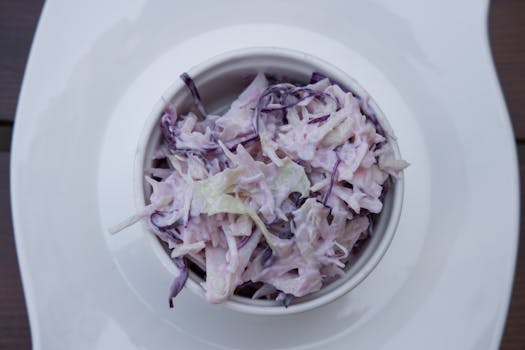
Photo: Engin Akyurt / Pexels
The diets react (see scores below)

That’s a heavy plate — want to see the leaner version?
Common Ingredients
- green cabbage
- carrots
- mayonnaiseGreek yogurt (plain, nonfat)
Nonfat Greek yogurt keeps the creamy body of mayonnaise with more protein and far less fat.
- apple cider vinegar
- sugarMonk fruit sweetener
Monk fruit sweetener removes the added-sugar load of sugar while keeping sweetness.
- celery seed
- black pepper
Specific recipes may vary.
Incompatible with 4 of 11 diets
Diet Ratings
Traditional coleslaw contains added sugar, which is a direct keto violation. However, the base ingredients — cabbage, mayonnaise, and apple cider vinegar — are fundamentally keto-friendly. Cabbage is a low-carb vegetable, mayo provides healthy fats, and ACV adds minimal carbs. The sugar and carrots are the problematic elements. A standard restaurant serving (about 100g) can contain 8-15g net carbs largely due to added sugar. With a simple modification — omitting sugar or substituting a keto sweetener — this dish becomes keto-approved. As presented with sugar in the recipe, it sits in caution territory: eatable in small portions but the added sugar is a meaningful concern for strict keto adherence.
Some strict keto practitioners would rate this as avoid due to the explicit inclusion of added sugar, arguing that any recipe calling for sugar should be rejected outright rather than consumed with portion control, as even small amounts of sugar can disrupt ketosis in metabolically sensitive individuals. Others in the lazy keto camp consider a small serving fine if it fits within daily net carb limits.
This coleslaw contains traditional mayonnaise, which is made from eggs — a clear animal product excluded from all vegan diets. The remaining ingredients (green cabbage, carrots, apple cider vinegar, sugar, celery seed, black pepper) are all plant-based. However, the mayonnaise is a deal-breaker under vegan rules. Vegan coleslaw is easily achievable by substituting egg-based mayo with a plant-based mayo (e.g., Just Mayo, Vegenaise), making the dish fully compliant — but as described with standard mayonnaise, this dish is not vegan.
This coleslaw contains two clear paleo violations: refined sugar and commercial mayonnaise. Refined sugar is explicitly excluded from the paleo diet with strong consensus. Store-bought mayonnaise is almost universally made with soybean or canola oil — both seed oils that are firmly excluded from paleo. The base vegetables (green cabbage, carrots) and seasonings (apple cider vinegar, celery seed, black pepper) are fully paleo-compliant, but the sugar and seed-oil-based mayo are disqualifying ingredients that cannot be overlooked. A paleo-compliant version would require homemade mayo using avocado oil or olive oil and eliminating the added sugar entirely.
Coleslaw is built on a vegetable base (green cabbage, carrots) that is fundamentally Mediterranean-friendly, but the American-style preparation undermines its compatibility. Mayonnaise replaces olive oil as the primary fat — a significant departure from Mediterranean principles where extra virgin olive oil is the canonical fat source. Added sugar further conflicts with Mediterranean dietary norms that minimize refined sugars. The result is a dish where nutritious vegetables are dressed in a calorie-dense, processed-fat condiment with added sweetener. A Mediterranean-style slaw using olive oil, lemon juice, and vinegar would be entirely approvable, but this version lands in caution territory due to the mayo and sugar.
Some Mediterranean-adjacent interpretations allow mayonnaise sparingly as an emulsified condiment (particularly in Spanish culinary tradition, where aioli — an olive oil-based mayo — is traditional), and the small amount of added sugar may be considered negligible. From this angle, the vegetable base could partially redeem the dish to a low-caution score.
Coleslaw is entirely plant-based and fundamentally incompatible with the carnivore diet. The primary ingredients — green cabbage and carrots — are vegetables, which are categorically excluded from carnivore eating. The dressing compounds the problem: apple cider vinegar is plant-derived, sugar is excluded as a sweetener, celery seed is a plant spice, and black pepper is also plant-derived. Even the mayonnaise, while it may contain eggs, is typically made with plant-based oils (soybean or canola) and is therefore not a clean animal product. There is no animal-derived ingredient of significance in this dish. This is one of the clearest possible 'avoid' verdicts on a carnivore framework.
This coleslaw recipe contains sugar as an explicit ingredient, which is a direct violation of Whole30 rules. Added sugar in any form — real or artificial — is excluded during the 30-day program. Additionally, the mayonnaise listed is likely a standard commercial mayo, which typically contains soybean oil and sometimes added sugar or other non-compliant ingredients. The remaining ingredients (green cabbage, carrots, apple cider vinegar, celery seed, black pepper) are all Whole30-compatible. However, the presence of added sugar alone is enough to disqualify this dish entirely.
Coleslaw contains mostly low-FODMAP ingredients (mayonnaise, apple cider vinegar, sugar, black pepper, carrots in moderate amounts), but green cabbage and celery seed introduce FODMAP concerns that are dose-dependent. Green cabbage is low-FODMAP at 75g per Monash but becomes high-FODMAP at larger serves due to fructans and GOS — a generous restaurant or homemade coleslaw portion can easily exceed this threshold. Carrots are low-FODMAP and safe. Celery seed is used in small amounts as a spice and is generally considered safe at typical culinary quantities, though it comes from the same plant family as celery (which has moderate polyols). Mayonnaise is low-FODMAP. Apple cider vinegar is low-FODMAP at up to 2 tablespoons. Sugar (sucrose) is low-FODMAP in small amounts. The dish is conditionally safe if portion-controlled to roughly 75g of cabbage, but standard restaurant servings often exceed this, making it risky during the strict elimination phase.
Monash University rates green cabbage as low-FODMAP at 75g, which may seem generous, but clinical FODMAP practitioners often note that typical coleslaw servings (150–200g or more) push cabbage intake well above the safe threshold, and some advise avoiding cabbage-heavy dishes during elimination to minimize fructan and GOS accumulation, especially when combined with other meals throughout the day.
Coleslaw presents a mixed DASH profile. The base ingredients — green cabbage and carrots — are excellent DASH foods rich in fiber, potassium, and micronutrients. However, traditional mayonnaise introduces significant saturated fat and sodium, which DASH limits. The added sugar, while modest in typical recipes, also runs counter to DASH principles. The overall dish sits in 'caution' territory: the vegetable base is highly compatible, but the dressing undermines its DASH credentials. Homemade versions using light or reduced-fat mayonnaise, less sugar, and controlled portions can push this closer to 'approve.'
NIH DASH guidelines emphasize limiting saturated fat and added sugars, which standard mayo-based coleslaw contains in meaningful amounts. However, updated clinical interpretations note that the vegetable-dense base provides real DASH benefits, and that modest amounts of mayonnaise in a portion-controlled side dish may not meaningfully impact cardiovascular outcomes — some DASH-aligned dietitians approve lighter versions freely.
Traditional coleslaw presents a mixed Zone profile. The base ingredients — green cabbage and carrots — are favorable Zone carbohydrates: low-glycemic, high in fiber, and rich in polyphenols. Cabbage in particular is an excellent Zone vegetable. However, the dressing introduces complications. Standard mayonnaise is high in omega-6-rich seed oils (soybean or canola), which Sears explicitly discourages due to their pro-inflammatory eicosanoid profile. The added sugar, while small in typical portions, bumps the glycemic load unnecessarily. Apple cider vinegar actually has a mild favorable effect on glycemic response. As a side dish with no protein, coleslaw cannot stand alone as a Zone meal but can function as a carbohydrate block component. A small portion (roughly 1/2 cup) contributes usable carb blocks from the vegetables while the fat comes largely from mayo. The fat profile is the primary concern — Zone-ideal fat is monounsaturated (olive oil, avocado), not the omega-6 polyunsaturated fat dominant in commercial mayo. Portioning carefully and pairing with lean protein and a monounsaturated fat source can make this work, but the mayo-and-sugar dressing pulls it away from Zone-ideal.
Some Zone practitioners argue that if you use an avocado-oil or olive-oil based mayonnaise, coleslaw becomes a genuinely favorable Zone side — the cabbage and carrots are excellent low-GI carb blocks, and the fat from quality mayo satisfies the fat block requirement with a better omega-3/omega-6 ratio. Sears' later anti-inflammatory writings (Toxic Fat, The Mediterranean Zone) place strong emphasis on the omega-6 vs. omega-3 balance, meaning the verdict hinges significantly on which mayo is used rather than on coleslaw as a category.
Coleslaw has a split anti-inflammatory profile. On the positive side, green cabbage is a cruciferous vegetable rich in vitamin C, glucosinolates, and anti-inflammatory phytonutrients. Carrots contribute beta-carotene and antioxidants. Apple cider vinegar has a modest anti-inflammatory reputation, and celery seed and black pepper provide small but meaningful anti-inflammatory compounds (including piperine, which enhances curcumin absorption). These ingredients collectively provide fiber and polyphenols consistent with an anti-inflammatory eating pattern. On the negative side, conventional mayonnaise is typically made with soybean or canola oil — high-omega-6 oils that are debated within anti-inflammatory frameworks — and contributes significant saturated fat in some formulations. Added sugar, while modest in a typical serving, nudges the dish in a pro-inflammatory direction. The dish is not heavily processed and does not contain trans fats or high-fructose corn syrup. The net effect is a mixed profile: meaningful anti-inflammatory vegetables offset by the mayo and sugar base. Substituting an olive oil-based or avocado-oil mayonnaise and reducing sugar would improve the profile considerably.
Most anti-inflammatory authorities would rate traditional mayo-based coleslaw as neutral-to-caution due to omega-6-heavy mayonnaise and added sugar. However, some practitioners (particularly those aligned with the AHA's view that soybean/canola oils are heart-healthy) would see the vegetable-to-fat ratio as acceptable, while stricter low-omega-6 frameworks like Paul Jaminet's Perfect Health Diet or AIP-adjacent protocols would rate it more negatively due to the seed oil content.
Traditional mayonnaise-based coleslaw presents a mixed profile for GLP-1 patients. The cabbage and carrots contribute modest fiber and are high in water content, which supports hydration and digestion — genuine positives. However, the mayonnaise base adds significant saturated fat per serving, and the added sugar contributes empty calories with no nutritional benefit. There is essentially no meaningful protein. For patients already eating fewer calories, a side dish that delivers mostly fat and sugar with minimal protein or fiber density is a poor nutritional trade-off. The fat content also risks worsening GLP-1 side effects such as nausea, bloating, and delayed gastric emptying. In small portions (2–3 tablespoons), it is tolerable as a condiment-style accompaniment, but a standard side-dish serving (½ cup or more) tilts toward problematic. A vinegar-based coleslaw without mayonnaise would rate significantly higher.
Some GLP-1-focused dietitians accept small portions of traditional coleslaw as a practical way to add vegetables and fiber to meals patients already enjoy, arguing that rigid elimination of familiar foods undermines long-term adherence. Others flag the high-fat mayonnaise base as a reliable nausea trigger, particularly in the early weeks of dose escalation, and recommend substituting Greek yogurt or vinegar dressings instead.
*See how scores were generated at our methodology page.
Nutritional profile
Six traits that cut across every diet.
Fiber & Plants
How much whole-plant food and fiber it delivers.
Healthy Fats
The quality of its fats (unsaturated, omega-3).
Whole / Unprocessed
How close it is to its natural, unprocessed form.
Gut Gentle
How easy it is on digestion (low FODMAP, few irritants).
Low Glycemic
How little it spikes your blood sugar.
Protein Density
How much protein it packs per calorie.
Controversy Index
Higher controversy = more disagreement between diets.
Diet-Specific Tips
 Keto — 4/10
View tips
- Added sugar is a direct keto violation and primary concern
- Carrots add moderate net carbs (~4-5g per 50g serving) and should be minimized
- Mayonnaise provides keto-friendly fat content
- Cabbage is a low-net-carb vegetable suitable for keto
- Total net carbs per serving are highly variable depending on sugar quantity used
- Easy to make keto-compatible by substituting or eliminating sugar
 Mediterranean — 4/10
View tips
- Cabbage and carrots are excellent Mediterranean vegetables
- Mayonnaise replaces olive oil as the primary fat — not Mediterranean
- Added sugar contradicts Mediterranean low-sugar principles
- Apple cider vinegar is compatible
- Celery seed and black pepper are Mediterranean-friendly spices
- No whole grains, legumes, or olive oil present
 Low-FODMAP — 5/10
View tips
- Green cabbage is low-FODMAP at 75g but high-FODMAP at larger serves due to fructans and GOS — standard portions often exceed this
- Carrots are low-FODMAP and safe at normal serving sizes
- Mayonnaise is low-FODMAP (no high-FODMAP ingredients)
- Apple cider vinegar is low-FODMAP up to 2 tablespoons
- Sugar (sucrose) is low-FODMAP in small culinary amounts
- Celery seed used as a spice is generally safe at typical quantities but has limited Monash testing
- Overall dish is safe only with strict portion control of cabbage
 DASH — 5/10
View tips
- Cabbage and carrots are core DASH vegetables high in fiber, potassium, and magnesium
- Standard mayonnaise adds saturated fat and sodium, both limited on DASH
- Added sugar, even in small amounts, is discouraged on DASH
- Celery seed and black pepper are negligible for sodium at typical quantities
- Portion size is important — a small side serving is more acceptable than a large portion
- Light or avocado-oil mayo and reduced sugar would significantly improve DASH compatibility
- No high-sodium processed ingredients beyond the mayo, which is favorable relative to many American sides
 Zone — 5/10
View tips
- Cabbage and carrots are favorable low-glycemic Zone carbohydrates
- Standard mayonnaise is high in omega-6 seed oils, which Sears explicitly discourages for anti-inflammatory reasons
- Added sugar increases glycemic load unnecessarily, though quantity is typically small
- Apple cider vinegar has a mild favorable glycemic-moderating effect
- No protein present — cannot serve as a standalone Zone meal component
- Portion size matters: a half-cup serving fits reasonably as a carb block contribution
- Substituting avocado-oil mayo would significantly improve Zone compatibility
 Anti-Inflammatory — 5/10
View tips
- Cabbage and carrots are anti-inflammatory cruciferous/root vegetables rich in antioxidants and fiber
- Conventional mayonnaise uses high-omega-6 soybean or canola oil, which is contested in anti-inflammatory frameworks
- Added sugar, even in modest amounts, has a mild pro-inflammatory effect
- Celery seed and black pepper provide small anti-inflammatory contributions
- Apple cider vinegar is neutral to mildly beneficial
- No trans fats, artificial additives, or HFCS present
- Profile improves significantly with olive oil or avocado oil mayo substitution
 GLP-1 Friendly — 4/10
View tips
- No meaningful protein — fails the #1 priority for GLP-1 patients
- Mayonnaise base adds saturated fat, increasing nausea and bloating risk
- Added sugar contributes empty calories in a low-appetite context
- Cabbage and carrots provide modest fiber and high water content — positives
- Portion-sensitive: condiment-sized amounts are more acceptable than a full side serving
- Vinegar-based version would be a significantly better alternative