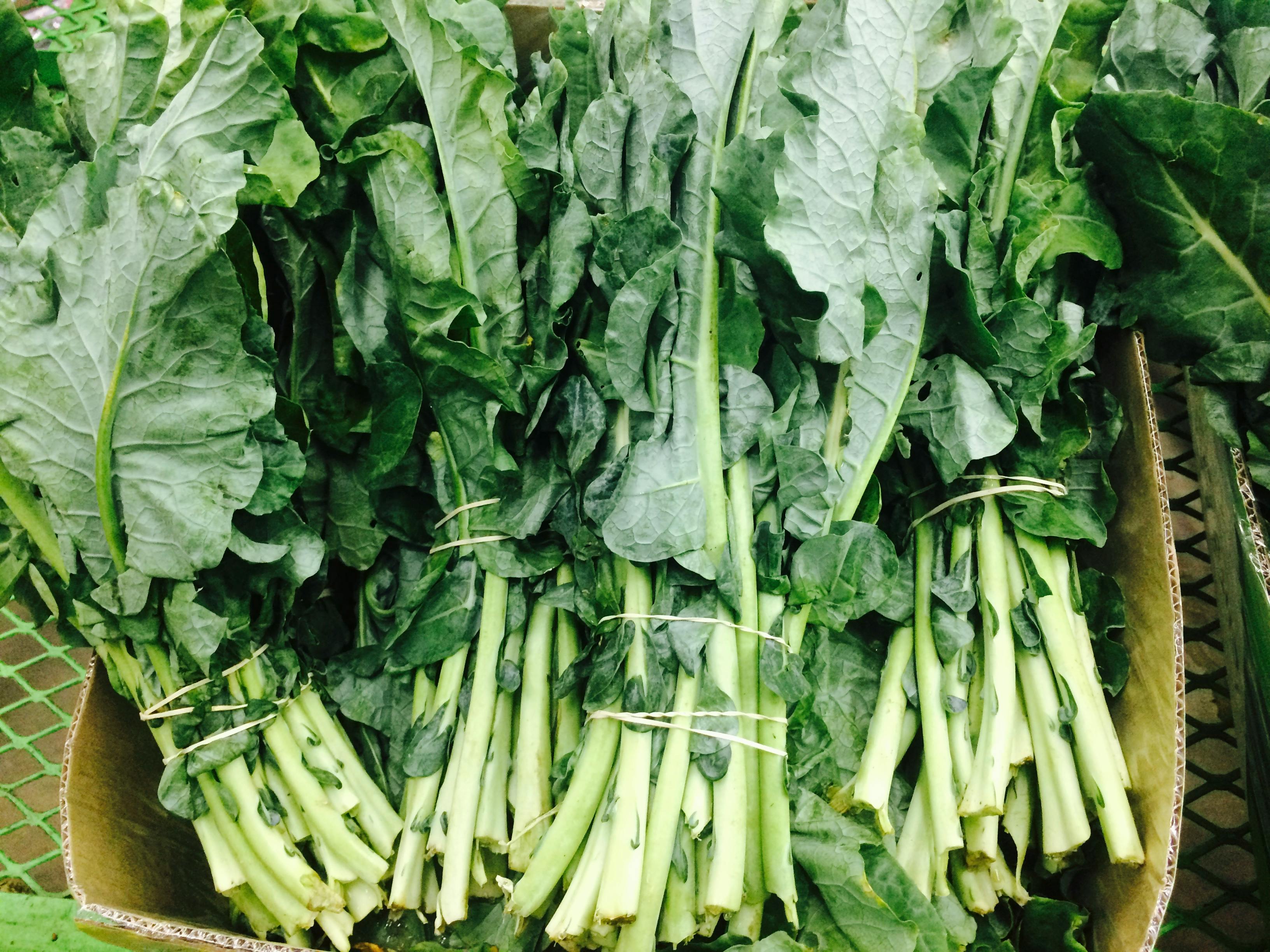
Photo: Stella Schafer / Pexels
American
Collard Greens
The diets react (see scores below)
Common Ingredients
- collard greens
- smoked ham hock
- onion
- apple cider vinegar
- chicken broth
- garlic
- red pepper flakes
Specific recipes may vary.
Incompatible with 3 of 11 diets
Diet Ratings
Collard greens are a fiber-rich leafy green with low net carbs (roughly 2-3g net carbs per cooked cup after subtracting fiber). The dish is anchored by smoked ham hock, which provides fat and protein with no carbs. Supporting ingredients — garlic, onion, chicken broth, apple cider vinegar, and red pepper flakes — add minimal carbs in typical cooking quantities. Onion does contribute some carbs, but spread across multiple servings it remains negligible. The overall macronutrient profile fits keto well: fatty pork, fiber-rich greens, and very low net carb load per serving. Apple cider vinegar in small amounts is generally keto-friendly and adds no sugar concern at culinary doses.
Some stricter keto practitioners flag traditional Southern-style collard greens recipes for occasionally including a small amount of sugar or using higher-carb broths, and caution that restaurant or packaged versions may contain hidden sugars. They advocate verifying every ingredient label, as the home-cooked version assessed here differs from commercial preparations.
This dish contains multiple animal products: smoked ham hock (pork, a meat product) and chicken broth (animal-derived liquid). These are not trace contaminants but primary ingredients listed explicitly in the recipe. Collard greens themselves are a nutritious plant food, but this traditional Southern preparation relies heavily on pork and poultry-based broth for its characteristic flavor, making it entirely incompatible with a vegan diet. A vegan version could be made by substituting smoked ham hock with smoked paprika or liquid smoke and replacing chicken broth with vegetable broth.
Most ingredients are paleo-friendly: collard greens, onion, garlic, red pepper flakes, apple cider vinegar, and chicken broth are all approved. However, the smoked ham hock is a processed/cured meat product that typically contains added salt, nitrates, and preservatives — which fall outside strict paleo guidelines. Smoked and cured meats are generally considered a gray area; they come from an approved animal source but undergo industrial processing with non-paleo additives. Commercial chicken broth may also contain added salt or natural flavors. The dish as traditionally prepared in American cuisine leans on processed pork, which prevents a full approval.
Some paleo practitioners, including those following a more flexible primal or ancestral approach advocated by Mark Sisson, argue that minimally processed smoked meats are acceptable, particularly if sourced from pasture-raised pigs without artificial preservatives — in which case this dish could score higher and approach an approval.
Collard greens themselves are an excellent leafy vegetable fully aligned with Mediterranean principles, and the aromatics (onion, garlic, red pepper flakes, apple cider vinegar) are also compatible. However, the primary flavoring agent — smoked ham hock — is a processed red/cured pork product, which directly conflicts with Mediterranean guidelines that limit red meat to a few times per month and discourage processed meats. The dish is fundamentally a vegetable preparation undermined by a significant processed meat component used not just as a garnish but as a core flavor base. A Mediterranean adaptation would substitute olive oil and perhaps a small amount of anchovies or omit animal protein entirely.
Some flexible interpretations of the Mediterranean diet treat small amounts of cured or smoked pork used primarily as a flavoring (rather than a main protein portion) as acceptable in the spirit of regional Southern European traditions — for example, Italian use of pancetta or guanciale in small quantities to season vegetables. Under this lens, if the ham hock is used sparingly for flavor and the dish is vegetable-forward, a moderate caution rather than near-avoid verdict could be justified.
Collard Greens is fundamentally a plant-based dish. While the smoked ham hock is a carnivore-approved animal product, it functions merely as a flavoring agent in what is primarily a vegetable dish. Collard greens (a leafy green vegetable), onion, garlic, and red pepper flakes are all strictly excluded plant foods on the carnivore diet. Apple cider vinegar is also plant-derived. Chicken broth is the only other animal-derived ingredient. The dish cannot be reconciled with carnivore principles — the dominant ingredients are plants, and there is universal carnivore consensus that leafy greens and vegetables are excluded regardless of how they are prepared or what animal products are cooked alongside them.
The dish ingredients themselves—collard greens, onion, apple cider vinegar, chicken broth, garlic, and red pepper flakes—are all Whole30 compliant. Apple cider vinegar is an allowed vinegar, and the vegetables and aromatics are straightforwardly fine. The concern lies with the smoked ham hock. Commercially available smoked ham hocks almost universally contain added sugar, sodium nitrate/nitrite curing agents, and sometimes other additives. While sulfites and MSG are now allowed per 2024 rule updates, added sugar remains excluded. A label-reading exercise is required: if the ham hock contains no added sugar or other excluded ingredients, the dish is fully compliant. However, finding a truly compliant smoked ham hock requires careful sourcing. Additionally, store-bought chicken broth often contains sugar, additives, or other non-compliant ingredients, so a compliant or homemade broth must be used.
Official Whole30 guidelines allow cured meats if labels confirm no excluded ingredients (particularly no added sugar), but the Whole30 community and Melissa Urban's guidance caution against relying heavily on processed/cured meats as a protein staple, noting that the spirit of the program favors whole, minimally processed foods. Some practitioners argue smoked cured pork products are too processed to truly honor the program's intent, even when technically compliant.
This dish contains two major high-FODMAP ingredients that make it unsuitable during the elimination phase: onion and garlic. Both are among the highest-fructan foods tested by Monash University and are problematic even in small amounts. Onion is a primary FODMAP trigger and contains high levels of fructans at any standard cooking portion. Garlic is similarly high in fructans and is rated as avoid at any typical serving size. The smoked ham hock itself is generally low-FODMAP as a plain cured meat, collard greens are low-FODMAP at standard servings (Monash rates them as green at 1 cup), apple cider vinegar is low-FODMAP, chicken broth (plain, without onion/garlic) is low-FODMAP, and red pepper flakes are low-FODMAP. However, the inclusion of both onion and garlic as core flavoring ingredients makes the dish a clear avoid. Even if the dish were slow-cooked and solids removed, fructans from onion and garlic are water-soluble and would leach into the braising liquid, contaminating the entire dish.
Collard greens themselves are an excellent DASH food — rich in potassium, calcium, magnesium, fiber, and vitamins — and would score a 9-10 on their own. However, this traditional Southern preparation relies on smoked ham hock as the primary protein, which is a cured, smoked pork product with very high sodium content (often 800-1,200mg per serving) and significant saturated fat. The chicken broth adds further sodium. This combination transforms a DASH-ideal vegetable into a high-sodium dish that conflicts with DASH's core sodium limits of 1,500-2,300mg/day. The apple cider vinegar and aromatics (onion, garlic, red pepper flakes) are DASH-friendly. The dish earns credit for the nutrient-dense greens but is dragged down significantly by the smoked pork and broth sodium load.
Collard greens themselves are an excellent Zone food — a dark leafy green vegetable loaded with polyphenols, fiber, and very low glycemic carbohydrates, exactly what Dr. Sears advocates. The supporting aromatics (onion, garlic, red pepper flakes) and apple cider vinegar are all Zone-friendly. However, the primary protein source — smoked ham hock — introduces meaningful concerns. Ham hock is a fatty, processed pork product with significant saturated fat, sodium, and is categorized as an 'unfavorable' protein in Zone methodology. Dr. Sears consistently recommends lean proteins and discourages fatty or processed meats. As a side dish, the ham hock flavors the greens without necessarily contributing large amounts of protein per serving, but its fat profile still pulls this dish away from Zone ideals. With careful portioning — treating this as a vegetable-dominant side accompanied by a lean protein entree — it can fit into a Zone meal plan. Substituting a leaner smoked protein (smoked turkey leg, for instance) would significantly improve the Zone rating. As prepared, this is a 'caution' dish best used in small portions alongside a properly balanced Zone plate.
Some Zone practitioners in later Sears anti-inflammatory frameworks note that small amounts of animal fat, particularly when the dish is vegetable-dominant, are acceptable in context. If the ham hock contributes minimal protein/fat per serving (used mainly as flavoring), a practical Zone coach might treat the dish as essentially a vegetable side and rate it more favorably, pairing it with a lean protein to complete the block balance.
This dish is a classic tension between a powerfully anti-inflammatory vegetable base and a pro-inflammatory protein. Collard greens are one of the most nutrient-dense leafy greens available — rich in vitamins K, C, and A, folate, calcium, and cruciferous phytonutrients (glucosinolates, sulforaphane precursors) with well-documented anti-inflammatory properties. Garlic, red pepper flakes (capsaicin), onion, and apple cider vinegar all add meaningful anti-inflammatory and antioxidant value. The broth is neutral. However, the smoked ham hock is a significant liability: it's a processed, cured pork product high in saturated fat and sodium, and red/processed meat is explicitly categorized as something to limit or avoid in anti-inflammatory frameworks. The prolonged cooking with the ham hock also means the greens absorb considerable fat and sodium from the drippings. The dish lands in 'caution' territory — the vegetable base is genuinely excellent, but the cooking method and protein choice meaningfully undercut the anti-inflammatory profile. A simple swap to smoked turkey neck or omitting the meat entirely would shift this dish toward 'approve.'
Some anti-inflammatory practitioners, including those influenced by traditional foodways and nose-to-tail eating, argue that a small amount of pasture-raised smoked pork used as a flavoring agent (rather than a primary protein serving) is acceptable in context — the overall nutrient density of the greens dominates the dish. However, mainstream anti-inflammatory guidance (Dr. Weil's framework, IF Rating system) consistently flags processed and cured red meat as pro-inflammatory regardless of quantity, given links between processed meat, saturated fat, heme iron, and elevated CRP/IL-6 markers.
Traditional Southern collard greens cooked with smoked ham hock are nutritionally complex for GLP-1 patients. The collard greens themselves are excellent — high in fiber, vitamins K, A, and C, calcium, and very low in calories, making them highly nutrient-dense. Apple cider vinegar, garlic, onion, and chicken broth are all GLP-1-friendly supporting ingredients. However, the smoked ham hock is a fatty, processed pork product high in saturated fat and sodium, which is problematic on two fronts: high fat worsens GLP-1 GI side effects (nausea, bloating, sluggish digestion due to slowed gastric emptying), and the protein contribution from ham hock in a side dish serving is relatively modest given how much fat comes with it. The red pepper flakes add mild heat that most patients tolerate, but could worsen reflux in sensitive individuals. As a side dish, the protein contribution is low — this does not move the needle meaningfully toward the 100-120g daily protein target. The dish scores higher than it would without the greens, but the ham hock prevents a full approve. Substituting smoked turkey leg or turkey neck would significantly improve the profile while preserving the traditional flavor.
Some GLP-1-focused dietitians accept ham hock in small amounts as a flavoring agent rather than a primary protein source, arguing the overall dish remains vegetable-forward and fiber-rich. Others flag the saturated fat and high sodium content as meaningful concerns, particularly for patients who are also managing cardiovascular risk factors alongside weight loss, and recommend lean smoked turkey as a straightforward substitution.
*See how scores were generated at our methodology page.
Nutritional profile
Six traits that cut across every diet.
Fiber & Plants
How much whole-plant food and fiber it delivers.
Healthy Fats
The quality of its fats (unsaturated, omega-3).
Whole / Unprocessed
How close it is to its natural, unprocessed form.
Gut Gentle
How easy it is on digestion (low FODMAP, few irritants).
Low Glycemic
How little it spikes your blood sugar.
Protein Density
How much protein it packs per calorie.
Controversy Index
Higher controversy = more disagreement between diets.
Diet-Specific Tips
 Keto — 8/10
View tips
- Collard greens are low net-carb (~2-3g net carbs per cooked cup) due to high fiber content
- Smoked ham hock provides keto-friendly fat and protein with zero carbs
- Onion contributes minor carbs but is diluted across multiple servings
- Apple cider vinegar at culinary doses adds negligible carbs
- No grains, added sugars, or high-starch ingredients present
- Whole, minimally processed ingredients align with keto food quality standards
 Paleo — 5/10
View tips
- Collard greens are fully paleo-approved vegetables
- Smoked ham hock is a cured/processed meat with likely added salt and nitrates
- Apple cider vinegar, garlic, onion, and red pepper flakes are all paleo-compliant
- Commercial chicken broth may contain added salt or additives
- If using unprocessed smoked pork without additives, the dish moves closer to approval
- Traditional Southern preparation relies on heavily processed cured pork
 Mediterranean — 4/10
View tips
- Collard greens are a nutrient-dense leafy vegetable strongly encouraged on the Mediterranean diet
- Smoked ham hock is a processed, cured red meat product — discouraged and ideally avoided
- Processed meats carry higher health risks than fresh red meat and are particularly at odds with Mediterranean principles
- Garlic, onion, vinegar, and red pepper flakes are all Mediterranean-compatible aromatics
- No olive oil present — a missed opportunity to align the fat source with Mediterranean guidelines
- Dish is culturally American Southern, not Mediterranean, and uses a traditional flavor base incompatible with the diet
 Whole30 — 6/10
View tips
- Smoked ham hock nearly always contains added sugar in commercial preparations — label reading is essential
- Store-bought chicken broth may contain sugar or non-compliant additives — use compliant or homemade broth
- Apple cider vinegar is explicitly allowed on Whole30
- All vegetable and seasoning ingredients are straightforwardly compliant
- Sulfites and MSG are now allowed per 2024 Whole30 rule updates, reducing concern about curing additives beyond sugar
- Dish is a whole-food preparation with no excluded grains, dairy, or legumes
 DASH — 4/10
View tips
- Collard greens are a DASH superfood — high potassium, calcium, magnesium, and fiber
- Smoked ham hock is high in sodium (cured/smoked pork) — a key food DASH limits
- Chicken broth adds additional sodium, compounding the sodium concern
- Saturated fat from ham hock conflicts with DASH fat guidelines
- Could be made DASH-compatible by substituting smoked turkey, using low-sodium broth, and reducing or eliminating the ham hock
- Apple cider vinegar, garlic, onion, and red pepper flakes are DASH-neutral or positive ingredients
- As commonly prepared, this dish likely exceeds DASH sodium targets in a single serving
 Zone — 5/10
View tips
- Collard greens are an ideal Zone carbohydrate — low glycemic, high fiber, polyphenol-rich
- Smoked ham hock is a fatty, processed protein — unfavorable in Zone methodology
- High sodium content from smoked pork and chicken broth is a secondary concern
- Apple cider vinegar, garlic, and aromatics are all Zone-friendly ingredients
- As a side dish, ham hock may contribute limited fat/protein per serving, reducing impact
- Dish can fit Zone meals if portioned as a vegetable side alongside a lean protein
- Substituting smoked turkey would significantly improve Zone compatibility
 Anti-Inflammatory — 5/10
View tips
- Collard greens: highly anti-inflammatory cruciferous vegetable, rich in glucosinolates, vitamins K, C, A, and fiber
- Garlic: contains allicin and organosulfur compounds with proven anti-inflammatory effects
- Red pepper flakes: capsaicin is a well-studied anti-inflammatory compound
- Onion: quercetin-rich, adds antioxidant value
- Apple cider vinegar: neutral to mildly beneficial, supports gut environment
- Smoked ham hock: processed, cured red meat — high in saturated fat, sodium, and nitrates; pro-inflammatory in anti-inflammatory frameworks
- High-sodium dish overall due to ham hock and chicken broth — chronic sodium elevation is associated with inflammatory pathways
- Long cooking leaches beneficial nutrients from greens; however, fat-soluble vitamins (K, A) may be better absorbed with fat present
 GLP-1 Friendly — 5/10
View tips
- Collard greens are high-fiber, nutrient-dense, and excellent for GLP-1 patients
- Ham hock is high in saturated fat and sodium, worsening GI side effects
- Low protein contribution per serving as a side dish — does not support daily protein targets
- Apple cider vinegar and chicken broth are GLP-1-friendly base ingredients
- Red pepper flakes may worsen reflux in sensitive individuals
- High sodium from ham hock and broth warrants attention, especially for cardiovascular comorbidities
- Smoked turkey would be a superior substitution to preserve flavor while reducing fat