Photo: Christian Bolaños / Pexels
Latin-American
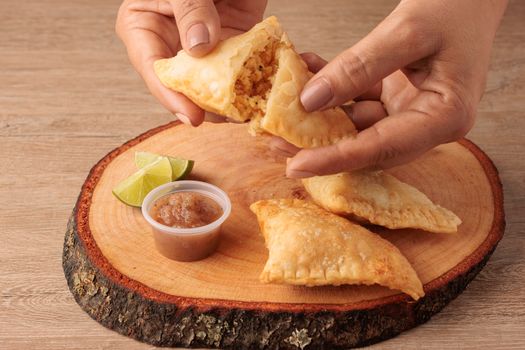
Colombian Empanadas
The diets react (see scores below)
Common Ingredients
- masarepa
- ground beef
- potatoes
- onion
- scallions
- cumin
- achiote
- garlic
Specific recipes may vary.
Incompatible with 7 of 11 diets
Diet Ratings
Colombian empanadas are fundamentally incompatible with a ketogenic diet. The shell is made from masarepa (precooked cornmeal), which is a high-carb grain product delivering approximately 25-30g of net carbs per empanada shell alone. The filling compounds the problem with potatoes, another starchy, high-glycemic vegetable. A single empanada can easily contain 35-50g of net carbs, which meets or exceeds the entire daily keto carb allowance. While the ground beef filling with onion, scallions, cumin, achiote, and garlic would be keto-friendly on its own, the two primary structural ingredients — masarepa and potatoes — make this dish a clear keto violation with no practical portion-control workaround.
Colombian Empanadas as described contain ground beef, which is a direct animal product and categorically excluded from a vegan diet. There is no ambiguity here — beef is slaughtered animal flesh. The remaining ingredients (masarepa, potatoes, onion, scallions, cumin, achiote, garlic) are all plant-based, but the inclusion of ground beef makes this dish incompatible with veganism.
Colombian Empanadas are fundamentally incompatible with the Paleo diet. The defining ingredient is masarepa — a precooked, processed cornmeal flour used to make the empanada dough. Corn is a grain and is explicitly excluded from the Paleo diet, and masarepa is additionally a processed form of it, making it doubly non-compliant. While the filling ingredients (ground beef, onion, scallions, cumin, achiote, garlic) are largely Paleo-friendly, white potatoes in the filling are also debated or discouraged by stricter Paleo authorities. The grain-based shell is the dominant and non-negotiable component of this dish, and there is universal consensus among Paleo authorities that corn and corn-derived products are off-limits.
Colombian empanadas present multiple conflicts with Mediterranean diet principles. The primary protein is ground beef, which is a red meat that the Mediterranean diet restricts to only a few times per month. The shell is made from masarepa (processed precooked cornmeal), a refined grain product that lacks the fiber and nutrients of whole grains. The dish is also typically deep-fried, adding unhealthy refined oils rather than extra virgin olive oil. While some ingredients like onion, scallions, garlic, and cumin are Mediterranean-friendly aromatics, they are minor components that do not offset the core issues: red meat filling, refined grain shell, and fried preparation method.
Colombian Empanadas are fundamentally incompatible with the carnivore diet. The dish is built around masarepa (precooked corn flour), which forms the dough shell — a plant-based grain product that is entirely excluded. Potatoes are a starchy plant food, also completely off-limits. Onion, scallions, garlic, cumin, and achiote are all plant-derived ingredients (vegetables and spices) that strict carnivore excludes. While the ground beef filling is carnivore-appropriate, it represents only a fraction of the dish and cannot redeem the overwhelmingly plant-based composition. This dish is essentially a grain-and-vegetable-dominant snack with some meat inside, making it a clear avoid with high confidence across all tiers of the carnivore community.
Colombian Empanadas are explicitly prohibited on Whole30 regardless of the filling ingredients. The shell is made from masarepa (precooked corn flour), which is a grain (corn) and therefore excluded. Beyond the corn flour issue, empanadas fall squarely into the 'no recreating baked goods/junk food' rule — they are essentially a corn-dough pastry/wrap, analogous to tortillas, crackers, or other grain-based shells explicitly listed as off-limits. The filling ingredients themselves (ground beef, potatoes, onion, scallions, cumin, achiote, garlic) are all Whole30-compliant, but the dish as a whole cannot be made compliant because the defining structural component — the corn dough shell — violates both the grain exclusion and the 'no recreating junk food/wrapped foods' rule.
Colombian Empanadas contain multiple high-FODMAP ingredients that make this dish unsuitable during the elimination phase. Garlic is one of the highest-FODMAP foods tested by Monash University, containing significant fructans even in small amounts. Onion is similarly high in fructans and is a major FODMAP offender at any typical culinary quantity. Scallions (green onions) are moderate — the green tops are low-FODMAP but the white bulb portions contain fructans. In a cooked dish like this, it is nearly impossible to separate the components or control exact quantities. The remaining ingredients are more favorable: masarepa (pre-cooked cornmeal) is gluten-free and low-FODMAP, ground beef and potatoes are low-FODMAP, cumin and achiote are low-FODMAP spices used in small amounts. However, the combination of garlic AND onion as standard structural flavor components of the filling means this dish cannot realistically be considered safe during elimination. Even if garlic and onion were used in modest amounts, their fructan content accumulates and the FODMAP load from both together would be high. This dish would require a significant recipe modification — replacing garlic and onion with garlic-infused oil and the green tops of scallions only — to become elimination-phase compliant.
Colombian empanadas made with masarepa (corn flour), ground beef, potatoes, and aromatics present a mixed DASH profile. On the positive side, masarepa is a whole-grain corn product with no added sodium, potatoes provide potassium and fiber, and the aromatics (onion, scallions, garlic) are DASH-friendly vegetables. Cumin and achiote are sodium-free spices that align well with DASH's preference for herbs and spices over salt. However, ground beef is a red meat that DASH limits due to saturated fat content, and empanadas are typically deep-fried, significantly increasing total fat content. The overall dish is calorie-dense and higher in saturated fat than DASH recommends. Sodium content is moderate if prepared at home without added salt, but restaurant or commercial versions often contain significant sodium in the filling seasoning. As an occasional snack in controlled portions, this is acceptable but not a DASH staple.
NIH DASH guidelines explicitly limit red meat and fried foods due to saturated fat and calorie density concerns. However, some DASH-oriented nutritionists note that if empanadas are baked rather than fried and made with lean ground beef (or substituted with turkey or chicken), the dish can be adapted to fit DASH principles more comfortably — the base ingredients themselves are not inherently incompatible with DASH.
Colombian empanadas present significant Zone Diet challenges across multiple macronutrient categories. The masarepa (precooked cornmeal) shell is a high-glycemic refined carbohydrate that drives up the glycemic load considerably. The potato filling adds additional high-glycemic starch — both potatoes and corn/cornmeal are explicitly listed as 'unfavorable' carbs in Dr. Sears' Zone framework due to their high glycemic index and insulin-spiking potential. The ground beef, while providing protein, is likely not lean enough to qualify as a 'favorable' Zone protein source without specifying extra-lean varieties. The dish is heavily carb-dominant (masarepa shell + potatoes) with minimal favorable Zone carbohydrates (vegetables), creating a lopsided macro ratio far from the 40/30/30 target. There is no monounsaturated fat source present. While the onion, scallions, garlic, and spices are Zone-friendly, they are minor contributors. This dish would require fundamental reformulation — replacing the masarepa shell, eliminating potatoes, using extra-lean beef — to approach Zone compatibility, making it a borderline 'avoid' in its traditional form. It scores slightly above avoid only because the protein and aromatic vegetables provide some Zone-compatible elements.
Colombian empanadas made with masarepa, ground beef, potatoes, and aromatics present a mixed anti-inflammatory profile. On the positive side, the dish contains several anti-inflammatory spices: cumin has demonstrated anti-inflammatory properties, garlic is well-regarded for its allicin content and immune-modulating effects, and achiote (annatto) contains bixin and norbixin, carotenoid antioxidants with emerging anti-inflammatory evidence. Onion and scallions contribute quercetin and other flavonoids. Masarepa (nixtamalized corn flour) is a whole-grain-adjacent, minimally processed ingredient without additives, making it a reasonable base. However, ground beef is a red meat classified under the 'limit' category due to saturated fat and arachidonic acid content, which can promote inflammatory signaling. Potatoes, while nutritious, are a starchy component that raises the glycemic load of the dish. Importantly, the cooking method matters significantly — traditional Colombian empanadas are deep-fried, which introduces oils with potentially high omega-6 content and oxidation products; baked versions would be considerably more favorable. The overall dish is a moderate-inflammation food: the spice blend is genuinely beneficial, but the red meat protein and likely frying method prevent a higher rating. In reasonable portions, this is an acceptable occasional food rather than a dietary staple for an anti-inflammatory lifestyle.
Some anti-inflammatory practitioners would rate this more favorably if baked, noting that the cumin, garlic, and achiote provide meaningful antioxidant benefit and that lean ground beef in small amounts is contextually acceptable; others following stricter anti-inflammatory or AIP protocols would push this toward 'avoid' primarily due to the red meat content and high-glycemic starchy base when fried.
Colombian empanadas made with masarepa (corn dough) and a ground beef/potato filling present a mixed nutritional profile for GLP-1 patients. The protein content per empanada is modest — typically 5–8g depending on size and beef-to-potato ratio — making it difficult to hit the 15–30g per meal protein target without eating multiple pieces, which conflicts with small-portion eating. The masarepa shell is a refined starch with low fiber and moderate calorie density, and potatoes add further starchy bulk with little fiber. Ground beef contributes saturated fat, which can worsen GLP-1 side effects like nausea and reflux, especially if the beef is not lean. The frying method used in most traditional preparations (deep-fried) would push this to an avoid; however, baked versions are increasingly common and significantly reduce the fat burden. Cumin, achiote, garlic, and scallions are GLP-1-neutral seasonings. The dish is not nutrient-dense per calorie and portions are easy to overdo. As a snack, a single baked empanada is a caution-level choice; fried versions should be avoided.
Some GLP-1-focused dietitians accept baked empanadas as a culturally appropriate option when made with lean ground beef, noting that cultural food compatibility supports long-term adherence — a factor not captured by macronutrient scoring alone. Others flag that the low protein-per-serving density and refined corn shell make even baked empanadas a poor use of limited appetite capacity compared to higher-protein snack alternatives.
*See how scores were generated at our methodology page.
Nutritional profile
Six traits that cut across every diet.
Fiber & Plants
How much whole-plant food and fiber it delivers.
Healthy Fats
The quality of its fats (unsaturated, omega-3).
Whole / Unprocessed
How close it is to its natural, unprocessed form.
Gut Gentle
How easy it is on digestion (low FODMAP, few irritants).
Low Glycemic
How little it spikes your blood sugar.
Protein Density
How much protein it packs per calorie.
Controversy Index
Higher controversy = more disagreement between diets.
Diet-Specific Tips
 DASH — 4/10
View tips
- Ground beef is a red meat limited on DASH due to saturated fat
- Typically deep-fried, increasing saturated and total fat content
- Masarepa is a low-sodium, corn-based whole grain — DASH-compatible
- Potatoes contribute beneficial potassium
- Aromatics (onion, garlic, scallions) are DASH-friendly
- Sodium content is preparation-dependent; home-cooked versions can be lower
- Baked version with lean protein would score significantly higher (6-7)
- Portion control critical — empanadas are calorie-dense snacks
 Zone — 5/10
View tips
- Masarepa (cornmeal) shell is a high-glycemic, unfavorable Zone carbohydrate
- Potato filling is explicitly unfavorable in Zone methodology due to high glycemic index
- Double starch load (corn + potato) creates severe carb imbalance far from 40/30/30 ratio
- Ground beef protein is acceptable only if extra-lean; standard ground beef carries too much saturated fat
- No monounsaturated fat source present (olive oil, avocado, almonds)
- Onion, scallions, garlic, and spices are Zone-friendly but contribute minimally to macro balance
- Dish would require fundamental ingredient substitutions to achieve Zone compliance
 Anti-Inflammatory — 5/10
View tips
- Ground beef (red meat) is in the 'limit' category due to saturated fat and arachidonic acid
- Cumin and garlic are well-supported anti-inflammatory spices
- Achiote (annatto) contains carotenoid antioxidants (bixin/norbixin) with anti-inflammatory properties
- Onion and scallions contribute quercetin and flavonoids
- Masarepa is a minimally processed corn flour without additives
- Potatoes add glycemic load
- Frying method (traditional) introduces oxidized oils and increases saturated/omega-6 fat content; baking would improve the profile significantly
- Moderate portion size is key — this is an occasional food, not a dietary staple
 GLP-1 Friendly — 4/10
View tips
- Low protein density per serving (5–8g per empanada) — hard to meet 15–30g meal target
- Masarepa shell is low-fiber refined starch
- Potato filling adds starchy bulk with minimal nutritional payoff
- Ground beef contributes saturated fat — worsens nausea and reflux risk
- Traditional deep-fried preparation would rate as avoid; baked versions are caution-acceptable
- Spice profile (cumin, achiote, garlic) is GLP-1 neutral
- Poor nutrient density per calorie — limited appetite capacity should not be spent here
- Cultural food context may support dietary adherence — a factor worth weighing