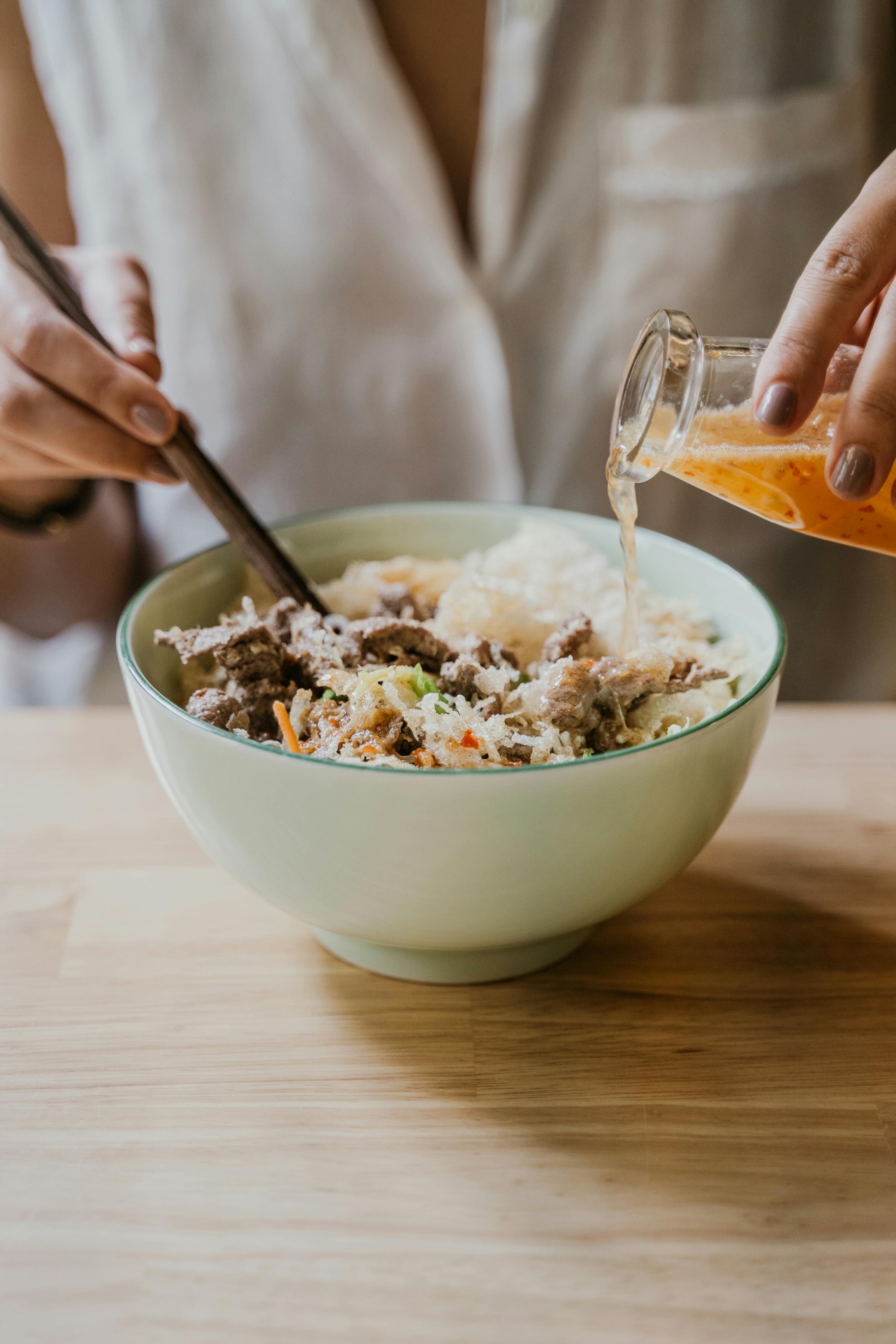
Photo: Anna Tarazevich / Pexels
Vietnamese
Vietnamese Fried Rice (Cơm Chiên)
The diets react (see scores below)
Common Ingredients
- rice
- shrimp
- Chinese sausage
- egg
- peas
- scallions
- fish sauce
- garlic
Specific recipes may vary.
Incompatible with 7 of 11 diets
Diet Ratings
Vietnamese Fried Rice is fundamentally incompatible with a ketogenic diet. Rice is the primary ingredient and is one of the highest net-carb foods available — a single cup of cooked white rice contains approximately 45g of net carbs, which alone can exceed the entire daily keto carb budget. Chinese sausage (lạp xưởng) also typically contains added sugar in its curing process, adding further carbs. Peas are a starchy legume that add additional net carbs. The remaining ingredients (shrimp, egg, scallions, fish sauce, garlic) are keto-friendly on their own, but they cannot offset the massive carbohydrate load from the rice base. There is no meaningful portion of this dish that could fit within ketosis without fundamentally altering the recipe.
Vietnamese Fried Rice (Cơm Chiên) as described contains multiple animal products, making it entirely incompatible with a vegan diet. Shrimp is seafood (animal product), Chinese sausage is typically made from pork (animal product), eggs are explicitly excluded from vegan diets, and fish sauce is derived from fermented fish (animal product). This dish contains four distinct non-vegan ingredients, leaving no ambiguity whatsoever.
Vietnamese Fried Rice contains multiple non-paleo ingredients that make it clearly incompatible with the paleo diet. Rice is a grain and is excluded under strict paleo guidelines. Chinese sausage (lạp xưởng) is a processed meat typically containing sugar, soy, and preservatives. Peas are legumes and are excluded. Fish sauce, while derived from fish, commonly contains added salt and sometimes sugar or other additives. The combination of a grain base, legumes, and processed meat makes this dish a clear avoid with no ambiguity.
Vietnamese Fried Rice contains several elements that conflict with Mediterranean diet principles. Chinese sausage (lạp xưởng) is a processed, cured red meat high in saturated fat and sodium — directly contradicting Mediterranean guidelines that limit red/processed meat to a few times per month. The rice is almost certainly white (refined grain), not a whole grain. The dish is also fried, likely in oil other than extra virgin olive oil. On the positive side, shrimp is an approved Mediterranean protein, eggs are acceptable in moderation, peas and scallions are vegetables, and garlic is a Mediterranean staple. Fish sauce, while not traditional Mediterranean, is a fermented condiment used sparingly. However, the combination of processed meat, refined grain, and frying method tips the dish into 'avoid' territory. Without the Chinese sausage and using brown rice, this would score considerably higher.
Some Mediterranean diet practitioners would score this as 'caution' rather than 'avoid,' arguing that the shrimp, vegetables, and egg components align well with the diet, and that small amounts of processed meat as a flavoring agent (rather than the primary protein) could be tolerated occasionally — similar to how some traditional Mediterranean dishes use cured meats sparingly for flavor.
Vietnamese Fried Rice is fundamentally incompatible with the carnivore diet. The dish is built on a plant-based foundation: rice is a grain and the primary ingredient. Peas are legumes, scallions are vegetables, and garlic is a plant bulb — all strictly excluded. Chinese sausage typically contains sugar and plant-based fillers, making it problematic even as a meat product. Fish sauce, while animal-derived, is used here as a condiment in a plant-heavy dish. The only carnivore-compatible components are the shrimp, egg, and potentially the fish sauce itself — but these are minor elements in a dish dominated by excluded plant foods. There is universal consensus in the carnivore community that grain-based dishes are off-limits.
Vietnamese Fried Rice contains multiple excluded ingredients. Rice is a grain and is explicitly prohibited on Whole30. Chinese sausage (lạp xưởng) typically contains sugar and often soy, both of which are excluded. Peas (field/garden peas, not snow peas or sugar snap peas) are legumes and excluded. Even if the other ingredients — shrimp, egg, scallions, garlic, and fish sauce — are compliant, the foundational ingredient (rice) alone disqualifies this dish entirely.
This dish contains multiple high-FODMAP ingredients that make it unsuitable during the elimination phase. Garlic is one of the highest-FODMAP foods (very high in fructans) and is a direct ingredient, not infused oil. Peas (green/garden peas) are high in GOS and fructans at typical serving sizes. Chinese sausage (lap cheong) commonly contains garlic and sometimes onion as ingredients, adding further fructan load. Scallions/green onions are moderate — the green tops are low-FODMAP but the white bulb portions are high in fructans and are often used together. The combination of garlic plus peas plus likely high-FODMAP Chinese sausage creates a cumulative FODMAP stacking effect that makes this dish clearly high-FODMAP overall. The remaining ingredients (white rice, shrimp, egg, fish sauce) are individually low-FODMAP and safe.
Vietnamese Fried Rice contains several DASH-problematic components alongside some acceptable ones. Fish sauce is extremely high in sodium (approximately 1,200–1,500mg per tablespoon), and Chinese sausage (lạp xưởng) is a processed, high-sodium, high-saturated-fat meat analogous to other cured sausages that DASH explicitly limits. Shrimp is a lean protein acceptable in DASH but is moderately high in dietary cholesterol. Rice (likely white, as is traditional) lacks the fiber of whole grains preferred by DASH. On the positive side, eggs, peas, scallions, and garlic are DASH-friendly ingredients providing fiber, potassium, and micronutrients. The dish as typically prepared would likely exceed DASH sodium targets in a single serving due to the combination of fish sauce and Chinese sausage. While individually manageable ingredients exist in this dish, the overall sodium load and processed meat content push it into caution territory. A DASH-modified version replacing Chinese sausage with lean chicken or tofu and reducing fish sauce significantly could improve the score.
Vietnamese Fried Rice presents significant Zone Diet challenges primarily due to its white rice base, which is a high-glycemic carbohydrate that Dr. Sears explicitly categorizes as 'unfavorable.' White rice spikes insulin rapidly and is difficult to portion into Zone blocks without dramatically reducing the serving size to the point where the dish loses its character. The Chinese sausage (lap cheong) adds saturated fat and is processed, compounding the unfavorable carb issue. On the positive side, shrimp is an excellent lean Zone protein source, eggs contribute quality protein, peas are a low-glycemic vegetable, scallions add polyphenols, fish sauce is a low-calorie flavoring, and garlic has anti-inflammatory properties. The macro ratio of a typical serving would skew heavily toward carbohydrates (likely 60-70% of calories from carbs), making it far from the 40/30/30 Zone target without significant modification. A Zone-adapted version would need to substantially reduce rice quantity, increase shrimp and egg portions, eliminate or minimize Chinese sausage, and potentially add more vegetables like peas or additional non-starchy vegetables. As served in a standard restaurant or home preparation, this dish is difficult to fit into Zone methodology without major reconstruction.
Vietnamese Fried Rice presents a mixed anti-inflammatory profile. On the positive side, shrimp provides lean protein with some omega-3s and selenium; garlic and scallions offer allicin and quercetin with well-documented anti-inflammatory properties; eggs contribute choline and antioxidants lutein and zeaxanthin; and peas add fiber, plant protein, and polyphenols. Fish sauce, while high in sodium, is a fermented condiment used in small amounts and contributes minimal direct inflammatory burden. However, several factors temper this dish's profile. White rice is a refined carbohydrate with a moderate-to-high glycemic index, contributing to blood sugar spikes that can drive inflammatory markers. Chinese sausage (lạp xưởng) is the most problematic ingredient — it is a processed, cured meat high in saturated fat, sodium, and often contains nitrates/nitrites and preservatives, all of which are pro-inflammatory. The cooking method (stir-frying at high heat) may involve oils with high omega-6 content depending on what is used, though this is unspecified. Overall, this is a culturally rich dish with a genuinely mixed profile: anti-inflammatory herbs and proteins offset by a processed meat and refined carbohydrate base.
Some anti-inflammatory practitioners would score this lower, citing the combination of white rice (glycemic load), processed Chinese sausage (nitrates, saturated fat, additives), and the high-heat frying method as collectively pro-inflammatory — AIP-adjacent protocols would flag the processed meat component particularly. Conversely, a more lenient reading consistent with Dr. Weil's principles might note that the garlic, scallions, shrimp, and eggs are genuinely beneficial, and that the dish consumed occasionally in moderate portions within an otherwise anti-inflammatory diet is acceptable.
Vietnamese Fried Rice (Cơm Chiên) presents a mixed nutritional profile for GLP-1 patients. The shrimp and egg provide meaningful lean protein, but Chinese sausage (lạp xưởng) is a high-fat, high-sodium processed meat with significant saturated fat content that can worsen nausea, bloating, and reflux — hallmark GLP-1 side effects. The dish is built on a refined white rice base, which is low in fiber and nutrient-dense calories, occupying stomach volume that could be better used for protein and fiber. Fried rice preparation requires oil at high heat, adding fat that slows digestion further on top of GLP-1's already delayed gastric emptying. Fish sauce adds sodium without major nutritional concern in small amounts. Peas and scallions contribute modest fiber and micronutrients but not enough to meaningfully offset the refined carbohydrate load. The overall dish is portion-sensitive: a small serving captures some protein benefit from shrimp and egg, but a standard restaurant or home portion delivers excess refined carbs and fat relative to protein and fiber. The Chinese sausage specifically is the most problematic ingredient — it is the primary driver of the downgrade from a borderline caution to a firm caution.
Some GLP-1-aware dietitians may rate this higher if the Chinese sausage is omitted or minimized and shrimp quantity is increased, arguing that shrimp fried rice with egg can deliver adequate per-meal protein in a tolerable format. Others emphasize that the fried preparation and refined rice base are hard to rehabilitate regardless of protein content, and would recommend cauliflower rice or brown rice substitutions before this dish becomes appropriate for regular inclusion.
*See how scores were generated at our methodology page.
Nutritional profile
Six traits that cut across every diet.
Fiber & Plants
How much whole-plant food and fiber it delivers.
Healthy Fats
The quality of its fats (unsaturated, omega-3).
Whole / Unprocessed
How close it is to its natural, unprocessed form.
Gut Gentle
How easy it is on digestion (low FODMAP, few irritants).
Low Glycemic
How little it spikes your blood sugar.
Protein Density
How much protein it packs per calorie.
Controversy Index
Higher controversy = more disagreement between diets.
Diet-Specific Tips
 DASH — 4/10
View tips
- Fish sauce is extremely high in sodium (~1,200–1,500mg/tbsp), a major DASH concern
- Chinese sausage is a processed cured meat high in sodium and saturated fat — both limited on DASH
- White rice is refined grain; DASH prefers whole grains like brown rice
- Shrimp provides lean protein but contributes dietary cholesterol
- Peas, scallions, and garlic are DASH-positive vegetables
- Single serving likely exceeds 50% of DASH daily sodium limit (2,300mg)
- Eggs contribute acceptable lean protein in moderation under DASH guidelines
 Zone — 4/10
View tips
- White rice is a high-glycemic 'unfavorable' carb in Zone terminology — drives insulin spike
- Standard serving is heavily carb-dominant, far from 40/30/30 ratio
- Chinese sausage adds saturated fat and processed ingredients — unfavorable Zone profile
- Shrimp is an ideal lean Zone protein source (low fat, high protein per block)
- Eggs contribute quality Zone-friendly protein
- Peas, scallions, and garlic are favorable low-glycemic Zone ingredients
- Fish sauce adds negligible calories/macros — Zone-neutral flavoring
- Fried preparation adds fat, likely from vegetable oils (omega-6 concern under anti-inflammatory Zone framework)
- Could theoretically fit Zone with dramatically reduced rice portion and increased protein/vegetable ratio
 Anti-Inflammatory — 5/10
View tips
- Shrimp: lean protein with modest omega-3s and selenium — anti-inflammatory positive
- Garlic and scallions: allicin, quercetin, and sulfur compounds with strong anti-inflammatory evidence
- Chinese sausage: processed cured meat with saturated fat, sodium, nitrates — pro-inflammatory concern
- White rice: refined carbohydrate with moderate-to-high glycemic index, promotes blood sugar spikes
- Eggs: mixed profile but generally acceptable — choline and antioxidants offset modest arachidonic acid
- Peas: fiber and polyphenols contribute positively
- Fish sauce: fermented condiment used sparingly — sodium is notable but not a major inflammatory driver at typical amounts
- High-heat stir-fry cooking method may degrade beneficial compounds and oxidize cooking oils
 GLP-1 Friendly — 4/10
View tips
- Chinese sausage is high in saturated fat and is a processed meat — worsens nausea, bloating, and reflux on GLP-1s
- Fried preparation adds significant fat, compounding delayed gastric emptying
- White rice base is low fiber, low nutrient density per calorie, occupies valuable stomach capacity
- Shrimp and egg provide lean protein but total protein per serving may fall short of the 15-30g per meal target depending on portion
- Peas and scallions add minimal but positive fiber and micronutrient contribution
- High sodium content (fish sauce + sausage) may worsen dehydration risk given reduced thirst on GLP-1s
- Portion-sensitive: protein benefit only realized at serving sizes that also deliver high carb and fat load