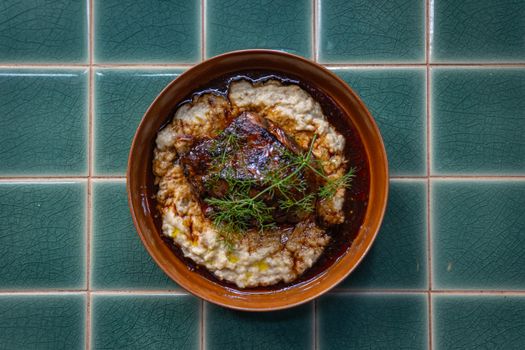
Photo: Talha Resitoglu / Pexels
The diets react (see scores below)
Common Ingredients
- chicken
- red wine
- bacon
- pearl onions
- mushrooms
- carrots
- thyme
- brandy
Specific recipes may vary.
Incompatible with 5 of 11 diets
Diet Ratings
Coq au Vin is a classic French braise with several keto-friendly elements — chicken (protein), bacon (fat), mushrooms, and thyme — but also notable carb concerns. Red wine contributes residual sugars and carbs (roughly 3-4g per 100ml, and a traditional recipe uses a full bottle reduced down). Brandy adds additional alcohol sugars. Pearl onions and carrots are higher-carb vegetables that push net carbs up further. Much of the wine alcohol burns off during cooking, but the sugars concentrate as the sauce reduces. A standard serving could easily contain 10-15g net carbs, which is manageable within keto limits if the rest of the day is very low carb, but it sits firmly in caution territory rather than a clean approve. Omitting or reducing carrots and using less wine/brandy would improve the keto profile significantly.
Strict keto practitioners argue that even small amounts of wine, brandy, and starchy vegetables like carrots and pearl onions create unpredictable blood sugar spikes and should be avoided entirely; they would recommend a fully wine-free, carrot-free version before considering this dish acceptable.
Coq au Vin is a classic French braised chicken dish that contains multiple animal products: chicken (poultry) and bacon (pork). Both are directly excluded under the most fundamental vegan rule prohibiting all animal flesh. There is no ambiguity here — this dish is built around animal proteins as its core components, with no plant-based substitution implied in the traditional recipe.
Coq au Vin contains several problematic ingredients from a paleo perspective. Bacon is a processed meat (cured with added salt, nitrates, and often sugar), which disqualifies it under strict paleo rules. Red wine and brandy are alcohol — fermented/distilled products that fall into paleo's gray area but are used here as primary cooking components in substantial quantities rather than occasional moderation. The base protein (chicken) and vegetables (mushrooms, carrots, pearl onions, thyme) are fully paleo-approved. However, the combination of processed bacon and heavy reliance on alcohol as a foundational braising liquid tips this dish into avoid territory. A paleo-adapted version using unprocessed pork belly and treating wine as optional or minimal could shift this to caution.
Some paleo practitioners, including those following Mark Sisson's more flexible 'Primal Blueprint' approach, would accept this dish with minor modifications — arguing that small amounts of wine used in cooking (where alcohol largely evaporates) are acceptable, and that quality bacon in moderation is a practical paleo staple. They would rate this as caution rather than avoid.
Coq au Vin features chicken as the primary protein, which is acceptable in Mediterranean diet guidelines at moderate frequency (a few times per week). The dish includes several Mediterranean-friendly ingredients — mushrooms, carrots, pearl onions, and thyme are all plant-based, nutrient-rich components. Red wine used in cooking aligns with the traditional Mediterranean inclusion of wine, though the alcohol largely cooks off. However, bacon introduces processed red meat and saturated fat, which contradicts core Mediterranean principles. Brandy adds additional alcohol and calories beyond what the diet encourages. The absence of olive oil as the primary fat and the reliance on bacon for flavor are the main concerns. Overall, this is an occasional dish that can fit within a Mediterranean-influenced diet if bacon is minimized or substituted, but it is not a staple.
Some traditional Mediterranean coastal French and Provençal cooking does use small amounts of cured pork products as a flavoring base, and purists might argue this aligns with regional culinary tradition. However, modern Mediterranean diet clinical guidelines (e.g., PREDIMED study framework) consistently flag processed meats as foods to limit regardless of regional tradition.
Coq au Vin is fundamentally incompatible with the carnivore diet. While the dish contains carnivore-approved ingredients (chicken, bacon), the majority of its components are plant-derived and explicitly excluded: red wine and brandy (fermented/distilled plant products), pearl onions, mushrooms, carrots, and thyme are all plant foods. The dish is defined by its wine-based braising liquid and vegetable medley, making it impossible to consider carnivore-compliant in any meaningful sense. Even the most liberal 'animal-based' practitioners would not count a dish whose flavor profile and bulk ingredients are predominantly plant-derived.
Coq au Vin contains two excluded ingredients: red wine and brandy are both alcohol, which is explicitly prohibited on Whole30. Additionally, most commercially available bacon contains added sugar, making it a further concern. While chicken, pearl onions, mushrooms, carrots, and thyme are all fully compliant, the alcohol-based cooking liquids are not an edge case — alcohol is a core Whole30 exclusion regardless of whether it is 'cooked off.' The dish cannot be made in its traditional form on Whole30.
Coq au Vin contains multiple high-FODMAP ingredients that make it unsuitable during the elimination phase. Pearl onions are very high in fructans — among the highest of any allium — and are a core ingredient of this dish, not a minor garnish. Mushrooms (especially common button or cremini varieties) are high in polyols (mannitol) at typical serving sizes. Red wine, while considered low-FODMAP at a 150ml glass when consumed as a drink, is used in large quantities in cooking this dish and concentrates as it reduces, raising concerns about fructan and sugar FODMAP load per serving. Brandy similarly concentrates during cooking. These multiple high-FODMAP components compound each other, making a standard serving of Coq au Vin clearly problematic during the FODMAP elimination phase.
Coq au Vin presents a mixed DASH profile. The base is lean chicken (a DASH-approved protein) cooked with DASH-friendly vegetables — mushrooms, carrots, pearl onions — and aromatic thyme. However, the dish includes bacon, which is high in sodium and saturated fat, both explicitly limited on DASH. Red wine and brandy contribute alcohol and some residual sugar, which DASH does not emphasize but does not strictly prohibit in moderation. The wine-based braising liquid can concentrate sodium, especially if commercial broth or seasoning is added during preparation. Restaurant or traditional versions often use lardons (cured pork belly) generously, pushing sodium well above DASH targets for a single meal. A modified home version using skinless chicken, minimal bacon or a smoked turkey substitute, low-sodium broth, and careful salt control could shift this toward 'approve,' but as classically prepared it sits firmly in the caution range.
NIH DASH guidelines explicitly flag bacon and cured meats as foods to limit due to high sodium and saturated fat content, making traditional Coq au Vin problematic. However, some DASH-oriented culinary adaptations argue that when bacon is used in very small amounts primarily for flavor (e.g., 1–2 strips for a 6-serving dish), the overall nutrient profile — lean poultry, fiber-rich vegetables, potassium from mushrooms and carrots — may still align sufficiently with DASH principles in the context of an otherwise DASH-compliant day.
Coq au Vin is a mixed Zone picture. The base protein — chicken — is a lean, ideal Zone protein source. The vegetables (mushrooms, pearl onions, carrots) are favorable low-glycemic carbohydrates that align well with Zone principles. However, several elements complicate Zone compliance: (1) Bacon introduces saturated fat and shifts the fat profile away from the preferred monounsaturated sources like olive oil; (2) Red wine and brandy contribute alcohol-derived calories and residual sugars — while much alcohol cooks off, the glycemic and caloric contribution remains relevant, and alcohol is not a recognized Zone block component; (3) Traditional Coq au Vin recipes often use skin-on chicken, adding saturated fat; (4) The dish as typically served may not hit a clean 40/30/30 ratio without deliberate portioning — the carb block contribution from wine and root vegetables needs monitoring. With modifications (skinless chicken, bacon used sparingly, portion-controlled serving paired with additional approved carbs and a monounsaturated fat source), this dish can be adapted into a Zone-compatible meal. The favorable elements — lean protein, polyphenol-rich red wine in moderation, and Zone-friendly vegetables — keep it from being a poor choice, but it requires meaningful attention to portioning and preparation.
Some Zone practitioners, particularly those following Sears' later anti-inflammatory framework, would view the polyphenols in red wine (resveratrol) and the vegetable density as net positives, potentially rating this dish more favorably (score 6-7). Conversely, stricter early-Zone adherents would flag the bacon's saturated fat and the alcohol content more harshly, potentially pushing the score lower. The classification hinges heavily on preparation specifics — skin-on vs. skinless chicken and the quantity of bacon used.
Coq au Vin presents a genuinely mixed anti-inflammatory profile. On the positive side: chicken (lean poultry) is a moderate-tier protein with no significant pro-inflammatory concern; mushrooms are actively anti-inflammatory and emphasized in Dr. Weil's framework; carrots and pearl onions contribute antioxidants and polyphenols; thyme is an approved anti-inflammatory herb; and red wine in moderate culinary quantities contributes resveratrol and polyphenols. However, several ingredients temper the verdict: bacon is a processed red meat high in saturated fat and sodium, which is pro-inflammatory and falls in the 'limit' category; brandy is a distilled spirit (not red wine), placing it in the 'limit/avoid' alcohol category rather than the moderate red wine allowance; and traditional preparations often involve butter for sautéing, which adds saturated fat. The red wine used for braising loses its alcohol content but retains some polyphenols, which is a mild positive. Overall, this is a dish with genuinely beneficial components undermined by bacon and brandy. It is acceptable as an occasional meal but not anti-inflammatory by design.
Some anti-inflammatory practitioners (aligned with updated alcohol research) would flag any alcohol-containing dish — including those using red wine in cooking — as worth avoiding due to acetaldehyde formation and systemic inflammatory signaling, even in culinary quantities. Conversely, Dr. Weil's framework explicitly includes moderate red wine and would view the mushroom-thyme-chicken base as broadly compatible with anti-inflammatory eating, treating the bacon as a minor concern that can be minimized or substituted.
Coq au Vin presents a mixed nutritional profile for GLP-1 patients. The chicken (ideally thighs in this dish) provides meaningful protein, and the vegetables — mushrooms, pearl onions, and carrots — contribute fiber and micronutrients. However, the dish has three significant concerns: (1) bacon adds saturated fat and is on the avoid list; (2) red wine and brandy are both alcohol, which is flagged as an avoid ingredient due to empty calories and dehydration — though much of the alcohol cooks off, residual alcohol and the caloric load from wine-based sauce remain; (3) traditional Coq au Vin is a rich, heavy braise with a high-fat sauce that may slow digestion further on top of GLP-1-slowed gastric emptying, worsening nausea or reflux. If modified — bacon removed or minimized, sauce defatted, chicken breast substituted, and portion kept small — the dish improves meaningfully. As traditionally prepared in a restaurant or classic recipe, it earns a caution rather than an approve.
Some GLP-1-aware dietitians may rate this higher, arguing that slow-braised chicken is easy to digest, the alcohol largely cooks off and the residual amount is clinically insignificant in a single portion, and the vegetable base adds real fiber and satiety value. The disagreement centers primarily on how much weight to assign residual alcohol content and saturated fat from bacon when both are present in a single dish alongside otherwise beneficial ingredients.
*See how scores were generated at our methodology page.
Nutritional profile
Six traits that cut across every diet.
Fiber & Plants
How much whole-plant food and fiber it delivers.
Healthy Fats
The quality of its fats (unsaturated, omega-3).
Whole / Unprocessed
How close it is to its natural, unprocessed form.
Gut Gentle
How easy it is on digestion (low FODMAP, few irritants).
Low Glycemic
How little it spikes your blood sugar.
Protein Density
How much protein it packs per calorie.
Controversy Index
Higher controversy = more disagreement between diets.
Diet-Specific Tips
 Keto — 5/10
View tips
- Red wine reduces into a concentrated sugar-containing sauce, adding meaningful net carbs
- Brandy contributes additional alcohol-derived carbs
- Pearl onions and carrots are higher-carb vegetables raising net carbs per serving
- Chicken, bacon, and mushrooms are keto-friendly components
- Estimated 10-15g net carbs per serving — manageable but requires careful daily budgeting
- Traditional preparation not optimized for keto; modifications (reduce wine, omit carrots) would help
 Mediterranean — 5/10
View tips
- Chicken is an acceptable moderate protein source
- Bacon is a processed red meat, contradicting Mediterranean principles
- Mushrooms, carrots, onions, and herbs are strongly Mediterranean-compatible
- Red wine in cooking is consistent with Mediterranean tradition
- Brandy adds extra alcohol beyond typical Mediterranean guidelines
- No olive oil as primary fat — butter or bacon fat typically used
- Dish lacks whole grains or legumes to round out Mediterranean profile
 DASH — 5/10
View tips
- Bacon is high in sodium and saturated fat — explicitly limited on DASH
- Chicken is a lean DASH-approved protein, especially skinless
- Mushrooms, carrots, and pearl onions are DASH-friendly vegetables rich in potassium and fiber
- Red wine and brandy add alcohol; DASH recommends limiting alcohol
- Braising process can concentrate sodium, particularly if commercial broth is used
- Dish is modifiable: removing or minimizing bacon and controlling salt significantly improves DASH compatibility
- As classically prepared in French cuisine, sodium and saturated fat content likely exceed DASH single-meal targets
 Zone — 5/10
View tips
- Chicken is an ideal Zone lean protein — favorable
- Mushrooms, pearl onions, and carrots are low-glycemic Zone-friendly carb blocks
- Bacon introduces saturated fat, conflicting with Zone's preference for monounsaturated fat
- Red wine and brandy contribute non-block calories and residual sugars — not a recognized Zone carb source
- Skin-on chicken (traditional preparation) adds unfavorable saturated fat
- Dish requires portioning adjustment to achieve 40/30/30 macro ratio
- Polyphenols from red wine and vegetables support Zone anti-inflammatory principles
 Anti-Inflammatory — 5/10
View tips
- Mushrooms are actively anti-inflammatory (emphasized by Dr. Weil)
- Chicken (lean poultry) is a moderate-tier approved protein
- Red wine contributes polyphenols; moderate culinary use aligns with Weil's framework
- Bacon is processed red meat high in saturated fat and sodium — pro-inflammatory
- Brandy is distilled alcohol, not red wine — falls in the avoid/limit alcohol category
- Thyme and carrots add antioxidant and anti-inflammatory value
- Butter often used in preparation adds saturated fat load
 GLP-1 Friendly — 4/10
View tips
- Chicken provides good protein but thighs (typical in this dish) are higher in fat than breast
- Bacon is a saturated fat source explicitly flagged as limit/avoid for GLP-1 patients
- Red wine and brandy contribute alcohol — a GLP-1 avoid category — though cooking reduces but does not eliminate alcohol content
- Rich braising sauce is high in fat, which worsens GLP-1 side effects including nausea, bloating, and reflux
- Mushrooms, pearl onions, and carrots add beneficial fiber and micronutrients
- Heavy, slow-braised texture may be easier to tolerate digestively than fried foods but sauce richness offsets this
- Portion sensitivity: a small serving over a lighter carbohydrate base improves the profile significantly