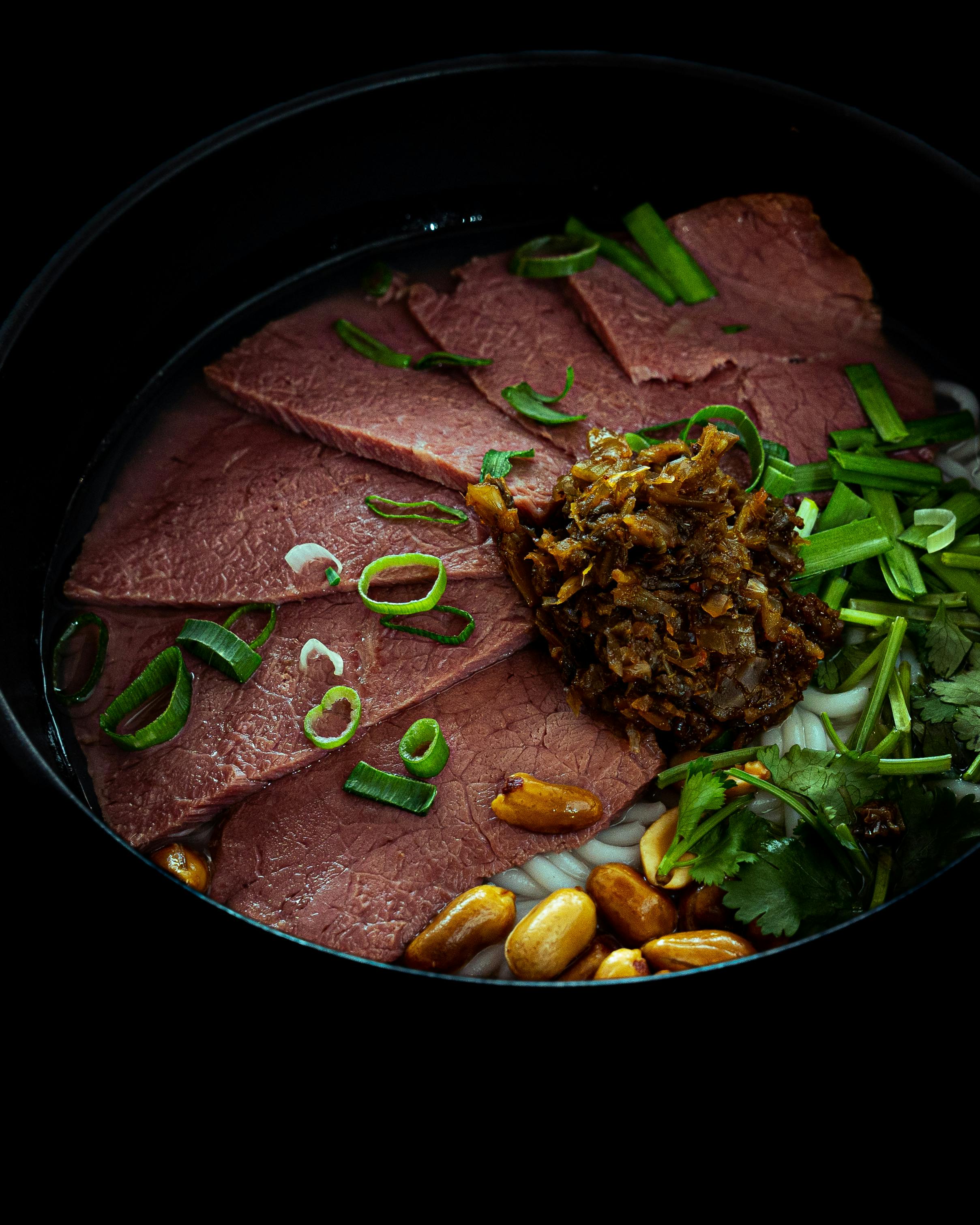
Photo: Peps Silvestro / Pexels
American
Corned Beef and Cabbage
The diets react (see scores below)
Common Ingredients
- corned beef brisket
- green cabbage
- potatoes
- carrots
- onion
- peppercorns
- bay leaves
- mustard seeds
Specific recipes may vary.
Incompatible with 9 of 11 diets
Diet Ratings
Corned beef and cabbage as traditionally prepared is incompatible with keto primarily due to potatoes and carrots. A single medium potato contains roughly 30-35g net carbs, easily exceeding or consuming the entire daily keto allowance on its own. Carrots add another 5-8g net carbs per serving. The dish as a whole unit is a high-carb meal. The corned beef brisket itself is keto-friendly (high protein, moderate fat, near-zero carbs), and the cabbage is acceptable in reasonable portions (~3-4g net carbs per cup). However, the standard recipe is built around starchy vegetables that are explicitly incompatible with ketosis. Additionally, commercial corned beef brines sometimes include sugar or dextrose, adding a small but non-trivial carb load. The dish can be modified by omitting potatoes and limiting carrots, but as traditionally served it is not keto-compatible.
Corned beef and cabbage is centered on corned beef brisket, which is cured beef — a direct animal product from cattle. Beef is unambiguously non-vegan, making this dish incompatible with a vegan diet regardless of the plant-based accompaniments (cabbage, potatoes, carrots, onion) or spices (peppercorns, bay leaves, mustard seeds). The primary protein and defining ingredient of this dish is animal flesh.
Corned beef and cabbage fails paleo standards primarily due to the corned beef itself. 'Corned' beef is a heavily processed product — brisket cured with large amounts of added salt, sodium nitrate/nitrite preservatives, and sugar. This processing directly violates paleo principles excluding added salt, refined sugar, and artificial preservatives. The remaining ingredients tell a mixed story: cabbage, carrots, onion, peppercorns, bay leaves, and mustard seeds are all paleo-approved. Potatoes are debated but conditionally acceptable in modern paleo. However, the defining ingredient — the corned beef — is fundamentally incompatible with paleo in any reasonable interpretation. A plain braised brisket with these vegetables would be paleo-friendly, but the curing process disqualifies this dish as traditionally prepared.
Corned beef and cabbage is fundamentally incompatible with Mediterranean diet principles. The primary protein is corned beef brisket — a heavily processed, salt-cured red meat that combines two major red flags: it is both red meat (already limited to a few times per month) and a highly processed product with significant added sodium and preservatives. While the accompanying vegetables (cabbage, carrots, onion, potatoes) are Mediterranean-friendly, they cannot offset the central ingredient. The dish uses no olive oil, relies on a processed red meat as its core, and represents an American Irish-influenced tradition entirely outside Mediterranean culinary patterns.
Corned Beef and Cabbage is overwhelmingly non-carnivore. While the corned beef brisket itself is an animal product, the dish is dominated by plant foods: cabbage, potatoes, carrots, and onion are all excluded vegetables on the carnivore diet. Potatoes in particular are a high-carbohydrate starchy vegetable — the antithesis of carnivore. The spices (peppercorns, bay leaves, mustard seeds) are plant-derived and excluded on strict carnivore. Additionally, corned beef is a cured/processed cut that often contains sugar and nitrates in the brining process, which adds further concern. The beef brisket alone could be carnivore-compatible if prepared without plant additives, but as presented in this traditional dish, the majority of components are off-limits.
Corned beef brisket is the central issue here. While the other ingredients (cabbage, potatoes, carrots, onion, peppercorns, bay leaves, mustard seeds) are all Whole30-compliant vegetables and spices, commercially prepared corned beef is almost universally cured with added sugar (typically brown sugar or dextrose) and often contains sodium nitrite. Added sugar is a core excluded ingredient on Whole30. Additionally, many commercial corned beef products contain other additives that may be non-compliant. The dish as it commonly exists — using store-bought corned beef brisket — is therefore not Whole30 compatible. A home-cured brisket using a sugar-free, compliant brine would technically make this dish compliant, but that is not how this dish is commonly prepared or purchased.
The official Whole30 guidelines exclude added sugar in any form, which is present in virtually all commercial corned beef curing mixtures. However, some community members argue that if you source or prepare a sugar-free corned beef brisket (cured only with salt, sodium nitrite, and spices), the dish becomes fully compliant — the vegetables and spices listed are unambiguously allowed. The verdict hinges entirely on the sourcing of the brisket.
Corned Beef and Cabbage contains onion as a primary ingredient, which is high in fructans and must be avoided during the FODMAP elimination phase at any meaningful serving size. Green cabbage is also high-FODMAP (contains fructans) at typical serving sizes — Monash rates it as high-FODMAP above about 75g, and a standard portion of this dish would far exceed that. The combination of these two high-FODMAP vegetables makes this dish a clear avoid. Corned beef itself is a processed meat that may contain added flavorings or preservatives, though plain beef is low-FODMAP. Potatoes and carrots are low-FODMAP, and spices like peppercorns, bay leaves, and mustard seeds are used in small quantities and are generally safe. However, the onion and cabbage in standard recipe proportions are disqualifying during elimination.
Corned beef and cabbage is fundamentally incompatible with the DASH diet due to the corned beef brisket, which is the dish's defining ingredient. Corned beef is cured in a brine of salt and sodium nitrate, resulting in extremely high sodium content — a 3 oz serving typically contains 800–1,000mg of sodium, making it nearly impossible to stay within the DASH sodium limits (1,500–2,300mg/day) when consuming a full meal portion. Additionally, beef brisket is a fatty cut high in saturated fat, which DASH explicitly limits. Red meat itself is a limited food in DASH guidelines. The vegetables in this dish — cabbage, carrots, onion, and potatoes — are all DASH-friendly and nutritious, but they cannot offset the severe sodium and saturated fat burden imposed by the corned beef. The dish as traditionally prepared is a clear DASH avoid.
Corned beef and cabbage presents a mixed Zone picture. The cabbage, carrots, and onion are favorable low-glycemic vegetables that align well with Zone principles. However, the dish has several significant issues: (1) Corned beef brisket is a fatty, heavily processed cut of beef with high sodium and meaningful saturated fat content — far from the lean protein ideal of Zone. (2) Potatoes are explicitly 'unfavorable' in Zone methodology due to their high glycemic index and impact on insulin. (3) The protein-to-fat ratio in corned beef skews Zone blocks heavily, requiring very careful portioning to hit 40/30/30. To Zone-ify this dish, one would need to reduce corned beef portion significantly (to ~1 oz to stay within a protein block without overshooting fat), eliminate or drastically reduce the potatoes, and increase the cabbage and carrot portions. As traditionally served, the dish tilts toward excess saturated fat and high-glycemic carbs from potatoes, making it a challenging Zone meal without significant modification.
Some Zone practitioners note that corned beef, while not ideal, is still animal protein that can fit within blocks if portioned carefully. The vegetable base (cabbage, carrots, onions) is genuinely favorable, and a small potato portion might be workable as a single carb block. Those following a more flexible Zone approach might rate this as workable comfort food with minor adjustments rather than a problematic choice.
Corned beef and cabbage presents a strongly pro-inflammatory profile driven primarily by the corned beef brisket. Corned beef is a cured, processed red meat — it is brined with large amounts of sodium nitrate/nitrite and salt, making it doubly problematic: it's both a processed meat (linked to elevated inflammatory markers including CRP and IL-6 in epidemiological research) and a high-fat red meat with significant saturated fat content. Processed/cured meats are among the most consistently flagged pro-inflammatory foods across anti-inflammatory frameworks including Dr. Weil's pyramid and the IF Rating system. The vegetables in this dish — cabbage, carrots, onion, and potatoes — do provide some antioxidants and fiber, and the spices (peppercorns, bay leaves, mustard seeds) have mild anti-inflammatory properties. However, these modest benefits are entirely overwhelmed by the corned beef's processing, saturated fat load, high sodium content, and nitrite curing. Cabbage is an anti-inflammatory brassica, and carrots and onions contain polyphenols, but they cannot rehabilitate a dish anchored by one of the most consistently pro-inflammatory proteins in the anti-inflammatory literature. This dish would score particularly poorly for individuals with cardiovascular inflammation, autoimmune conditions, or gut dysbiosis.
Corned beef and cabbage presents a mixed nutritional profile for GLP-1 patients. The corned beef brisket provides meaningful protein (roughly 15-20g per 3oz serving), which supports the primary priority, but it is a fatty, heavily processed cut of red meat with high sodium content from the curing process. High fat content can worsen GLP-1 side effects including nausea, bloating, and reflux, and the saturated fat load is a concern. The cabbage and carrots add fiber and micronutrients, and the dish is generally easy to digest when cooked soft. However, potatoes are starchy, moderate-glycemic, and protein-poor, contributing calories with limited nutritional payoff per bite. The high sodium content from curing is an additional concern since GLP-1 patients are advised to prioritize hydration, and excess sodium can complicate fluid balance. The dish is not fried or heavily processed in preparation, which prevents a lower score, but the fatty, cured meat and sodium burden make it a caution rather than an approve.
Some GLP-1-focused dietitians accept lean red meat cuts as an adequate protein source and may view a modest portion of corned beef as acceptable on an otherwise protein-lean day, while others flag any processed or cured red meat as consistently problematic due to fat, sodium, and GI tolerance concerns in this patient population.
*See how scores were generated at our methodology page.
Nutritional profile
Six traits that cut across every diet.
Fiber & Plants
How much whole-plant food and fiber it delivers.
Healthy Fats
The quality of its fats (unsaturated, omega-3).
Whole / Unprocessed
How close it is to its natural, unprocessed form.
Gut Gentle
How easy it is on digestion (low FODMAP, few irritants).
Low Glycemic
How little it spikes your blood sugar.
Protein Density
How much protein it packs per calorie.
Controversy Index
Higher controversy = more disagreement between diets.
Diet-Specific Tips
 Zone — 4/10
View tips
- Corned beef is fatty and high in saturated fat — not a lean Zone protein
- Potatoes are explicitly unfavorable/high-glycemic in Zone methodology
- Cabbage, carrots, and onion are favorable low-glycemic Zone vegetables
- High sodium from brining process is a secondary concern
- Significant portioning discipline required to balance blocks
- Dish can be partially Zone-adapted by reducing potato and beef portions while increasing vegetables
 GLP-1 Friendly — 4/10
View tips
- High saturated fat in brisket cut worsens GLP-1 GI side effects
- Curing process adds very high sodium, complicating hydration needs
- Moderate protein per serving — adequate but not protein-dense per calorie
- Cabbage and carrots contribute beneficial fiber and micronutrients
- Potatoes add starchy calories with low protein and fiber density
- Soft-cooked preparation supports digestibility
- Processed/cured meat category raises additional concerns for GLP-1 patients