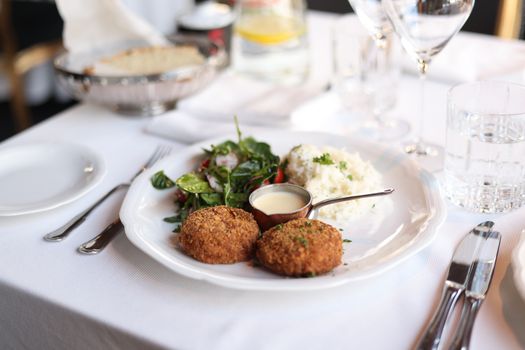
Photo: Valeria Boltneva / Pexels
The diets react (see scores below)
Common Ingredients
- lump crabmeat
- mayonnaise
- Dijon mustard
- panko breadcrumbs
- egg
- Old Bay seasoning
- lemon juice
- parsley
Specific recipes may vary.
Incompatible with 4 of 11 diets
Diet Ratings
Traditional crab cakes use panko breadcrumbs as a binder and filler, which are wheat-based and add meaningful net carbs — typically 10-15g per serving depending on the ratio. The crabmeat itself is keto-friendly (low carb, moderate protein), and mayonnaise is an excellent keto fat source. However, the panko is a dealbreaker for strict keto. With a simple substitution (almond flour, crushed pork rinds, or no binder at all), this dish would be fully keto-approved. As traditionally prepared, it lands in caution territory — one crab cake may be manageable within a 20g daily limit, but two or more will likely push carbs too high.
Crab cakes contain multiple animal-derived ingredients that are entirely incompatible with a vegan diet. Lump crabmeat is seafood (an animal product), mayonnaise is typically made with eggs, and egg is listed as a direct ingredient. All three are unambiguously non-vegan. There is no meaningful debate within the vegan community about any of these ingredients.
Crab cakes as traditionally prepared are clearly non-paleo due to multiple disqualifying ingredients. Panko breadcrumbs are a grain-based processed food (wheat), which is a hard exclude under all paleo frameworks. Mayonnaise is typically made with soybean or canola oil — both seed oils explicitly excluded from paleo. Old Bay seasoning contains added salt and often additional additives. While the core ingredients — lump crabmeat, egg, lemon juice, and parsley — are fully paleo-approved, the structural binders and flavor base of this dish rely on non-paleo staples. A paleo-adapted version could substitute almond flour or coconut flour for breadcrumbs and make homemade mayo with avocado oil, but the dish as described cannot be approved.
Crab cakes center on crab, an excellent Mediterranean-aligned seafood that aligns well with the diet's emphasis on fish and shellfish 2-3 times per week. However, the preparation introduces several non-ideal elements: mayonnaise adds saturated fat and replaces olive oil as the fat source, and panko breadcrumbs are refined grains. The egg is acceptable in moderation. Lemon juice, parsley, and Dijon mustard are fine supporting ingredients. The dish is not deeply processed and the protein source is strong, but the binder and fat profile pull it away from Mediterranean ideals — olive oil-based preparations of crab (grilled, poached, or dressed with olive oil and herbs) would score higher.
Some Mediterranean diet practitioners would view any shellfish dish favorably regardless of preparation method, noting that crab is nutritionally dense and the overall dish is far removed from ultra-processed foods. A more flexible interpretation, consistent with traditional coastal Mediterranean cooking that often incorporates eggs and small amounts of dairy-based binders, might rate this more generously.
Crab cakes as prepared here are fundamentally incompatible with the carnivore diet. While the lump crabmeat and egg are carnivore-approved ingredients, the dish contains multiple disqualifying plant-based and processed components: panko breadcrumbs (grain-based filler and primary structural ingredient), Dijon mustard (plant-derived, contains vinegar and seeds), lemon juice (citrus fruit), parsley (herb), and Old Bay seasoning (a blend of plant-derived spices). Mayonnaise, while egg and oil-based, typically contains plant oils (soybean or canola) and often additives. The breadcrumbs alone — acting as the essential binder and bulk of the cake — make this dish a clear avoid. This is not a borderline case; the majority of the ingredient list is plant-derived or processed.
Crab cakes as traditionally made contain panko breadcrumbs, which are a grain-based ingredient (wheat) explicitly excluded on Whole30. Even if the breadcrumbs were swapped for a compliant binder, this dish falls into the 'no recreating junk food/comfort food' rule — crab cakes are a classic example of a breaded, formed patty that mimics a non-compliant food format. Additionally, standard mayonnaise must be checked for compliant ingredients (no soy, canola, or added sugar), and Dijon mustard labels must be verified for added sugar or wine vinegar compliance. The presence of panko alone is a clear disqualifier.
Crab cakes contain several low-FODMAP ingredients — lump crabmeat, mayonnaise, egg, lemon juice, and parsley are all safe during elimination. Dijon mustard is generally low-FODMAP in small amounts. The critical concern is panko breadcrumbs, which are wheat-based and therefore high in fructans. A standard crab cake recipe typically uses a meaningful quantity of panko as a binder, which can push the dish into high-FODMAP territory depending on the amount per cake and how many cakes constitute a serving. Old Bay seasoning contains celery salt and paprika — celery seed is not well-tested by Monash, but the quantity used is typically very small and unlikely to be problematic. The dish could be made low-FODMAP by substituting gluten-free panko or crushed rice crackers for the breadcrumbs, but as classically prepared with standard panko, it warrants caution.
Monash University has not specifically tested crab cakes as a composite dish, and the FODMAP load from panko depends heavily on the recipe ratio — some clinical FODMAP dietitians would flag this as an avoid during strict elimination due to wheat-based binders, while others consider small amounts of panko acceptable if the per-serving fructan load remains below threshold (typically around 0.2g fructans).
Crab cakes present a mixed DASH diet profile. On the positive side, lump crabmeat is a lean seafood protein that DASH encourages, and it provides beneficial nutrients including omega-3s, zinc, and some potassium and magnesium. However, several ingredients raise concerns for DASH adherence. Old Bay seasoning is notably high in sodium — just 1/4 teaspoon contains roughly 160-200mg — and commercial recipes typically use 1-2 teaspoons per batch, contributing significant sodium load. Mayonnaise adds saturated fat and additional sodium. Panko breadcrumbs further increase sodium content. The combined sodium from Old Bay, mayonnaise, and Dijon mustard can easily push a single serving toward 600-900mg sodium, representing a substantial portion of the DASH daily limit. The dish is not categorically off-limits since crab is a DASH-friendly protein, but the preparation method and condiment choices undermine its DASH compatibility. Home preparation with reduced Old Bay, low-sodium or light mayonnaise, and minimal added salt can significantly improve the score.
NIH DASH guidelines emphasize lean seafood as a recommended protein and would likely score the crab component favorably, but the high-sodium seasoning blend and full-fat mayonnaise conflict with core DASH sodium and fat targets. Some DASH-oriented clinicians argue that when prepared at home with low-sodium Old Bay alternatives and light mayonnaise, crab cakes can fit comfortably within a DASH meal plan, especially given the beneficial lean protein and micronutrient profile of crab itself.
Crab cakes present a mixed Zone profile. The primary protein — lump crabmeat — is an excellent lean protein source, low in fat and high in quality protein, making it a favorable Zone building block. However, the dish's other ingredients introduce complications. Mayonnaise is the dominant fat source, providing primarily omega-6-heavy seed oils (soybean or canola oil typically), which directly conflicts with the Zone's anti-inflammatory emphasis on monounsaturated fats and omega-3s. Panko breadcrumbs are a refined, higher-glycemic carbohydrate — an 'unfavorable' Zone carb that Sears would discourage. An egg adds some saturated fat but is generally acceptable. The net result is a dish where the protein source is Zone-ideal but the fat and carbohydrate components are both unfavorable by Zone standards. With careful portioning — reducing the panko, substituting avocado-based or olive-oil mayo, and pairing with a large colorful vegetable side — crab cakes can be worked into a Zone meal. In their standard restaurant or recipe form, however, the omega-6-heavy mayo and refined breadcrumbs make them a caution item that requires modification.
Some Zone practitioners focus primarily on the macronutrient ratio rather than fat quality, and a standard crab cake does deliver a reasonable protein-to-carb ratio. In later writings, Sears softened his stance on fat quality in the context of otherwise balanced meals, which could push this toward a moderate approve if portions are controlled and the meal is paired with low-GI vegetables to correct the carb block balance.
Crab cakes present a mixed anti-inflammatory profile. On the positive side, lump crabmeat is a lean seafood source that provides omega-3 fatty acids (though at lower levels than fatty fish like salmon), selenium, and zinc — all of which have anti-inflammatory associations. Lemon juice and parsley contribute modest antioxidants and vitamin C. Old Bay seasoning contains celery salt, paprika, and other spices with minor anti-inflammatory properties. On the negative side, mayonnaise is the most problematic ingredient: commercial mayo is typically made with soybean or canola oil, which are high in omega-6 fatty acids and are flagged under anti-inflammatory protocols as potentially inflammatory in regular consumption. Panko breadcrumbs are refined carbohydrates, which are a 'limit' item. The egg is a neutral-to-mildly-debated ingredient. The dish is pan-fried or baked — preparation method matters significantly; pan-frying adds more oil (often omega-6-rich) and increases the inflammatory load. Overall, this is a moderately processed dish built around a beneficial protein, but the mayonnaise and refined breadcrumbs prevent a stronger approval. Enjoyed occasionally with baked preparation and avocado-based or olive-oil mayo, it would score higher.
Most anti-inflammatory frameworks would caution against regular consumption due to mayo's omega-6 content and refined breadcrumbs, but some practitioners note that the omega-3 content of crab, combined with the low portion of mayo per serving, makes this acceptable in a broadly anti-inflammatory diet. The seed oil debate is a key dividing line: mainstream nutrition (AHA) considers canola/soybean oil heart-healthy, while stricter anti-inflammatory and ancestral diet protocols flag the omega-6 load as problematic.
Crab cakes offer a meaningful protein source from lump crabmeat, which is lean, low-calorie, and nutrient-dense — an excellent base for GLP-1 patients. However, the standard preparation introduces two significant concerns. First, mayonnaise is a high-fat, calorie-dense binder; even a modest 2-tablespoon addition per serving adds substantial saturated and omega-6 fat that can worsen nausea, bloating, and reflux common on GLP-1 medications. Second, panko breadcrumbs add refined carbohydrates with minimal fiber or nutritional value, and crab cakes are almost universally pan-fried or baked with oil to achieve their characteristic crust, increasing fat load further. The dish is not fried to the degree of fast food, but the fat content from mayo and cooking method pushes it away from ideal. On the positive side, Old Bay, lemon juice, Dijon, and parsley are GLP-1-friendly flavor enhancers with no meaningful drawbacks. A baked or air-fried version with Greek yogurt or light mayo substituted for full-fat mayo, and minimal breadcrumbs, would score considerably higher (7-8). As typically prepared in restaurants or from standard recipes, this is a caution-tier food — acceptable occasionally in a small serving, but not an everyday GLP-1 staple.
Some GLP-1-focused dietitians consider crab cakes a reasonable protein vehicle given that crab itself is exceptionally lean and nutrient-dense, and argue that a modest amount of mayo-based fat is tolerable if portion size is controlled to one cake. Others flag that the combination of fat, refined binder, and pan-frying reliably triggers GI side effects in GLP-1 patients with slower gastric emptying, making even a single serving problematic during dose escalation phases.
*See how scores were generated at our methodology page.
Nutritional profile
Six traits that cut across every diet.
Fiber & Plants
How much whole-plant food and fiber it delivers.
Healthy Fats
The quality of its fats (unsaturated, omega-3).
Whole / Unprocessed
How close it is to its natural, unprocessed form.
Gut Gentle
How easy it is on digestion (low FODMAP, few irritants).
Low Glycemic
How little it spikes your blood sugar.
Protein Density
How much protein it packs per calorie.
Controversy Index
Higher controversy = more disagreement between diets.
Diet-Specific Tips
 Keto — 4/10
View tips
- Panko breadcrumbs are wheat-based and add 10-15g net carbs per serving — the primary keto concern
- Lump crabmeat is naturally low-carb and high-quality protein
- Mayonnaise is a keto-ideal fat source
- Lemon juice adds negligible carbs at typical amounts
- Old Bay seasoning is carb-minimal
- Easy to make keto-compliant by swapping panko for almond flour or crushed pork rinds
- Portion-sensitive: one small cake may fit strict macros, two or more likely will not
 Mediterranean — 5/10
View tips
- Crab is an approved Mediterranean protein source (seafood 2-3x/week)
- Mayonnaise introduces refined oils and saturated fat, replacing preferred olive oil
- Panko breadcrumbs are refined grains, not whole grain
- Egg and Dijon mustard are acceptable moderate-use ingredients
- Lemon juice and parsley are Mediterranean staples
- Not deeply processed; home-preparation context is favorable
 Low-FODMAP — 5/10
View tips
- Panko breadcrumbs are wheat-based and high in fructans — primary FODMAP concern
- Amount of panko per serving is recipe-dependent and may cross fructan threshold
- Lump crabmeat is low-FODMAP and safe
- Mayonnaise and egg are low-FODMAP
- Dijon mustard is low-FODMAP in typical condiment quantities
- Old Bay seasoning contains celery seed — minimally tested but used in trace amounts
- Gluten-free panko substitution would make this dish low-FODMAP
 DASH — 5/10
View tips
- Crab is a DASH-approved lean seafood protein
- Old Bay seasoning is high in sodium — a major concern for DASH compliance
- Mayonnaise adds saturated fat and sodium, conflicting with DASH fat guidelines
- Combined sodium per serving likely 600-900mg from multiple high-sodium ingredients
- Panko breadcrumbs add refined carbohydrates and additional sodium
- Home preparation with low-sodium substitutions can significantly improve DASH compatibility
- Lemon juice and parsley are DASH-positive ingredients with negligible concern
 Zone — 5/10
View tips
- Lump crabmeat is a favorable Zone lean protein — low fat, high quality protein
- Mayonnaise introduces omega-6-heavy seed oils, conflicting with Zone's anti-inflammatory fat guidance
- Panko breadcrumbs are a refined, higher-glycemic 'unfavorable' Zone carbohydrate
- Egg is an acceptable Zone protein/fat contributor in moderate amounts
- Dijon mustard, lemon juice, and parsley are Zone-neutral or mildly favorable
- Dish can be Zone-adapted by reducing panko, using olive-oil mayo, and pairing with abundant low-GI vegetables
- Standard preparation makes balancing the 40/30/30 ratio difficult without modification
 Anti-Inflammatory — 5/10
View tips
- Crabmeat provides lean protein and modest omega-3 fatty acids
- Commercial mayonnaise introduces omega-6-rich seed oils (soybean/canola) — flagged under anti-inflammatory protocols
- Panko breadcrumbs are refined carbohydrates, a 'limit' category ingredient
- Parsley and lemon juice add minor antioxidant and vitamin C benefit
- Old Bay seasoning contributes negligible but positive anti-inflammatory spice content
- Preparation method (frying vs. baking) significantly affects the overall inflammatory load
- Substituting avocado-based or olive-oil mayo would notably improve the profile
 GLP-1 Friendly — 5/10
View tips
- Crab is a lean, high-quality protein source — strong positive for GLP-1 patients
- Mayonnaise significantly raises fat content per serving, increasing nausea and reflux risk
- Panko breadcrumbs are refined, low-fiber carbohydrates adding calories without nutritional benefit
- Pan-frying or baking with oil adds additional fat load that slows digestion further on top of GLP-1 gastric slowing
- Small portion sensitivity: one cake is manageable; two or more increases GI side effect risk substantially
- Baked or air-fried preparation with light mayo or Greek yogurt substitute meaningfully improves the profile
- No fiber to speak of — would need to be paired with a high-fiber side to meet GLP-1 dietary priorities