Photo: Milton Das / Pexels
American
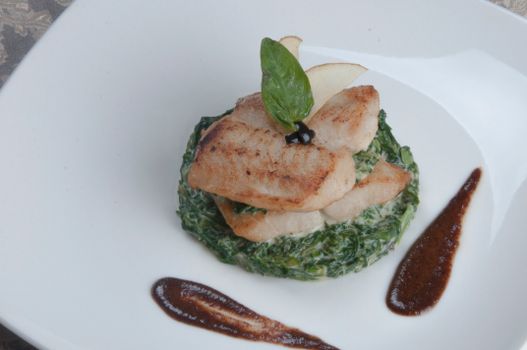
Creamed Spinach
The diets react (see scores below)
Common Ingredients
- spinach
- butter
- flour
- heavy cream
- onion
- garlic
- Parmesan
- nutmeg
Specific recipes may vary.
Incompatible with 5 of 11 diets
Diet Ratings
Creamed spinach is nearly keto-friendly but is disqualified from a full approval by the inclusion of flour as a thickening agent. Spinach, butter, heavy cream, Parmesan, onion, garlic, and nutmeg are all acceptable on keto. However, flour (a grain-based thickener) adds net carbs and is generally avoided on keto. The amount of flour used in a typical creamed spinach recipe is relatively small (1-2 tablespoons for a full batch), so a single serving may only contribute 2-4g of net carbs from the flour, keeping total net carbs per serving in a manageable range. With a simple substitution — using xanthan gum, cream cheese, or simply reducing the cream — this dish would be fully keto-approved. As served in most restaurants or standard recipes, it warrants caution due to the flour, but is not a hard avoid.
Creamed spinach as described contains multiple animal-derived ingredients: butter (dairy), heavy cream (dairy), and Parmesan cheese (dairy, and traditionally made with animal rennet). All three are clear violations of vegan dietary rules. While spinach, flour, onion, garlic, and nutmeg are fully plant-based, the dish as listed is fundamentally built around dairy products. Vegan adaptations exist — substituting plant-based butter, non-dairy cream (oat, cashew, or coconut), and vegan Parmesan — but the default recipe is not vegan.
Creamed Spinach contains multiple non-paleo ingredients that disqualify it outright. Flour is a grain product and strictly excluded from all paleo frameworks. Heavy cream and Parmesan are dairy — both excluded under standard paleo rules. Butter occupies a gray area (some paleo practitioners allow it, others don't), but it is secondary to the more serious violations here. While spinach, onion, garlic, and nutmeg are fully paleo-approved, the dish as prepared is fundamentally incompatible with the paleo diet due to its flour-thickened, cream-and-cheese-based sauce.
Creamed spinach contains a Mediterranean staple (spinach) but prepares it in a decidedly non-Mediterranean way. The base vegetable is excellent and strongly encouraged, but butter replaces olive oil as the fat, heavy cream adds significant saturated fat, and the flour introduces a refined grain thickener. Parmesan is an acceptable moderate dairy component. The dish is not highly processed or sugary, so it doesn't fully warrant 'avoid,' but the heavy cream and butter combination runs counter to core Mediterranean fat principles. A Mediterranean-style preparation would use olive oil, garlic, and perhaps a modest amount of cheese without the cream sauce.
Some Mediterranean regional traditions—particularly in Southern Italian and Greek cuisines—do incorporate dairy (including cream and cheese) into vegetable dishes on occasion, and Parmesan-dressed spinach with garlic is not entirely foreign to Italian culinary tradition. A more lenient interpretation might view this as an acceptable occasional dairy-forward side rather than a caution item, provided portion sizes are modest.
Creamed Spinach is almost entirely incompatible with the carnivore diet. The primary ingredient, spinach, is a plant food and is strictly excluded from all tiers of the carnivore diet. Additional plant-based ingredients include onion, garlic, flour, and nutmeg — all of which are prohibited. Flour introduces a grain-based thickener. While butter, heavy cream, and Parmesan are animal-derived dairy products that some carnivore practitioners consume, they are entirely overshadowed here by the dominant plant ingredients. This dish has no redeeming carnivore-compatible profile and would be universally rejected across all carnivore frameworks, from the strictest Lion Diet to the most permissive animal-based approach.
Creamed spinach as prepared here contains multiple Whole30-excluded ingredients. Butter (not ghee or clarified butter) is excluded dairy. Flour is a grain and excluded. Heavy cream is excluded dairy. Parmesan is excluded dairy (cheese). This dish has four separate violations, making it clearly non-compliant with the Whole30 program.
Creamed Spinach as traditionally prepared contains multiple high-FODMAP ingredients that make it unsuitable during the elimination phase. Onion and garlic are among the highest-FODMAP foods tested by Monash University, both rich in fructans, and are present as primary flavoring agents — not incidental traces. Flour (wheat-based) adds fructans. Heavy cream contains lactose, though in smaller amounts per serving it may be borderline. Parmesan is low-FODMAP (aged hard cheese with negligible lactose). Spinach itself is low-FODMAP at standard servings (75g). Butter is low-FODMAP. Nutmeg is low-FODMAP in small amounts. However, the combination of onion, garlic, and wheat flour creates a definitively high-FODMAP dish with no realistic way to consume a standard serving safely during elimination without recipe modification.
Creamed spinach presents a conflict between its DASH-friendly base ingredient and its problematic preparation method. Spinach itself is an ideal DASH food — rich in potassium, magnesium, calcium, and fiber — and is explicitly emphasized in NIH/NHLBI DASH guidelines. However, the preparation here relies heavily on butter, heavy cream, and Parmesan cheese, all of which are high in saturated fat and/or sodium. Heavy cream is a full-fat dairy product that DASH explicitly discourages in favor of fat-free or low-fat dairy. Butter adds saturated fat without the nutritional benefits of DASH-preferred fats (vegetable oils). Parmesan contributes additional sodium and saturated fat. The flour-based roux with cream significantly increases caloric density and saturated fat content per serving. The dish retains the spinach's micronutrients but dilutes DASH compatibility substantially through its sauce components. Occasional, portion-controlled consumption is acceptable, but this dish should not be a regular DASH staple in its traditional form.
Creamed spinach has a split Zone personality. Spinach itself is an ideal Zone carbohydrate — a low-glycemic, polyphenol-rich leafy green that Sears consistently highlights as a favorable carb. However, the preparation undermines its Zone credentials significantly. Butter and heavy cream are saturated fat sources, not the monounsaturated fats (olive oil, avocado, almonds) that the Zone prioritizes. Flour adds a refined, higher-glycemic carbohydrate that Sears classifies as unfavorable. Parmesan contributes additional saturated fat. As a side dish with no lean protein, it also does nothing to help achieve the 40/30/30 block ratio on its own — it skews toward fat (saturated) with modest carbs and minimal protein. In small portions alongside a lean protein source, the spinach base provides genuine Zone value, but the cream sauce makes precise block counting difficult and tips the fat profile in the wrong direction. A Zone-friendly rework would substitute olive oil for butter, skip the flour, and use a small amount of low-fat dairy instead of heavy cream.
Some later Zone practitioners and Sears' post-2015 anti-inflammatory writing (The Mediterranean Zone) softened the strict stance on all saturated fat, acknowledging that dairy saturated fats like those in butter and Parmesan are less inflammatory than processed fats. Under that lens, a small portion of creamed spinach could be rated slightly more favorably, especially given the polyphenol and magnesium benefits of the spinach base. The flour remains the clearest Zone objection.
Creamed spinach presents a classic mixed profile: the spinach itself is a genuinely anti-inflammatory powerhouse, rich in vitamin K, folate, carotenoids (lutein, zeaxanthin), and polyphenols that actively reduce inflammatory markers. Garlic and nutmeg add modest anti-inflammatory benefit. However, the dish is built on a base of butter, heavy cream, and Parmesan — all full-fat dairy products that are explicitly flagged as items to limit in anti-inflammatory frameworks due to their saturated fat content. Butter in particular falls into the 'limit to avoid' category. The refined flour used as a thickener adds a minor pro-inflammatory element. The net effect is a dish where a highly anti-inflammatory vegetable is substantially offset by a saturated-fat-heavy delivery vehicle. This is a quintessential 'caution' food — not without nutritional merit, but not advisable for regular consumption in an anti-inflammatory eating pattern. Occasionally as a restaurant side dish it is acceptable; as a regular preparation the dairy-heavy base is problematic. A lighter preparation using olive oil, low-fat milk, or a cashew cream base would shift this considerably toward 'approve.'
Creamed spinach offers real nutritional value from spinach (iron, folate, vitamins A and K, some fiber) and a modest protein contribution from Parmesan, but the base is built on butter and heavy cream — both high in saturated fat. For GLP-1 patients, high-fat foods slow gastric emptying further (on top of the medication's own effect), increasing risk of nausea, bloating, and reflux. The flour-thickened cream sauce also adds refined carbohydrate with minimal fiber or protein payoff. This is a portion-sensitive dish: a small 2–3 oz side alongside a lean protein source is manageable, but a full restaurant-style portion tips it firmly toward 'avoid' territory. The spinach itself is a genuinely beneficial ingredient; the preparation is the problem.
Some GLP-1-focused RDs permit creamed spinach in small amounts as a palatability bridge — patients eating very little may benefit from calorie-dense vegetables over eating nothing, and the fat content can slow absorption in ways that reduce post-meal blood sugar spikes. Others advise against it consistently because high-fat dairy is a common trigger for nausea and delayed gastric emptying complaints, particularly in the first weeks of dose escalation.
*See how scores were generated at our methodology page.
Nutritional profile
Six traits that cut across every diet.
Fiber & Plants
How much whole-plant food and fiber it delivers.
Healthy Fats
The quality of its fats (unsaturated, omega-3).
Whole / Unprocessed
How close it is to its natural, unprocessed form.
Gut Gentle
How easy it is on digestion (low FODMAP, few irritants).
Low Glycemic
How little it spikes your blood sugar.
Protein Density
How much protein it packs per calorie.
Controversy Index
Higher controversy = more disagreement between diets.
Diet-Specific Tips
 Keto — 5/10
View tips
- Flour is a grain-based thickener and technically non-keto, the primary concern
- Heavy cream and butter provide high fat content, strongly supporting ketosis
- Spinach is a low-net-carb leafy green, appropriate on keto
- Parmesan adds fat and protein with minimal carbs
- Onion and garlic contribute small amounts of net carbs but are acceptable in typical quantities
- Easily made keto-compliant by substituting flour with a low-carb thickener
 Mediterranean — 4/10
View tips
- Spinach is a core Mediterranean vegetable and a strong positive
- Butter replaces olive oil as the primary fat—contrary to Mediterranean principles
- Heavy cream adds substantial saturated fat not typical of the diet
- Flour (refined grain) used as thickener is minimally problematic but not ideal
- Parmesan is acceptable moderate dairy
- No added sugars or highly processed ingredients
- American preparation style diverges significantly from Mediterranean vegetable cooking methods
 DASH — 4/10
View tips
- Spinach is a core DASH vegetable rich in potassium, magnesium, and fiber
- Heavy cream is a full-fat dairy product explicitly discouraged by DASH guidelines
- Butter contributes saturated fat inconsistent with DASH fat recommendations
- Parmesan adds sodium and saturated fat burden
- Preparation method transforms a DASH-approved vegetable into a high-saturated-fat dish
- Could be improved for DASH by substituting evaporated skim milk or low-fat milk for heavy cream and reducing butter
 Zone — 4/10
View tips
- Spinach is a highly favorable Zone carbohydrate — low glycemic, high polyphenol
- Butter and heavy cream are saturated fats, not the preferred monounsaturated fats in Zone methodology
- Flour is a refined, unfavorable carbohydrate in Zone terminology
- No lean protein component makes Zone block balancing entirely dependent on pairing
- Small portions alongside lean protein can still fit within a Zone meal structure
- Parmesan adds modest protein but also saturated fat
- Overall fat profile skews saturated rather than monounsaturated, conflicting with Zone anti-inflammatory goals
 Anti-Inflammatory — 4/10
View tips
- Spinach is a top-tier anti-inflammatory vegetable — rich in carotenoids, vitamin K, and polyphenols
- Butter and heavy cream are full-fat dairy — explicitly in the 'limit' category due to saturated fat
- Parmesan adds additional saturated fat load (high-fat cheese)
- Garlic contributes allicin and organosulfur compounds with anti-inflammatory properties
- Refined flour is a minor pro-inflammatory element
- Nutmeg provides trace anti-inflammatory benefit
- The anti-inflammatory benefit of spinach is substantially diluted by the cream-and-butter base
 GLP-1 Friendly — 4/10
View tips
- High saturated fat from butter and heavy cream worsens GLP-1 GI side effects
- No primary protein source — Parmesan contributes minimally
- Spinach provides beneficial micronutrients and some fiber
- Flour adds refined carbohydrate with low nutritional return
- Portion-sensitive: small amounts alongside lean protein are more acceptable
- Heavy cream-based sauces are a known nausea trigger for GLP-1 patients
- Easy to digest in small amounts but problematic at standard serving sizes