Photo: Willians Huerta / Pexels
Spanish
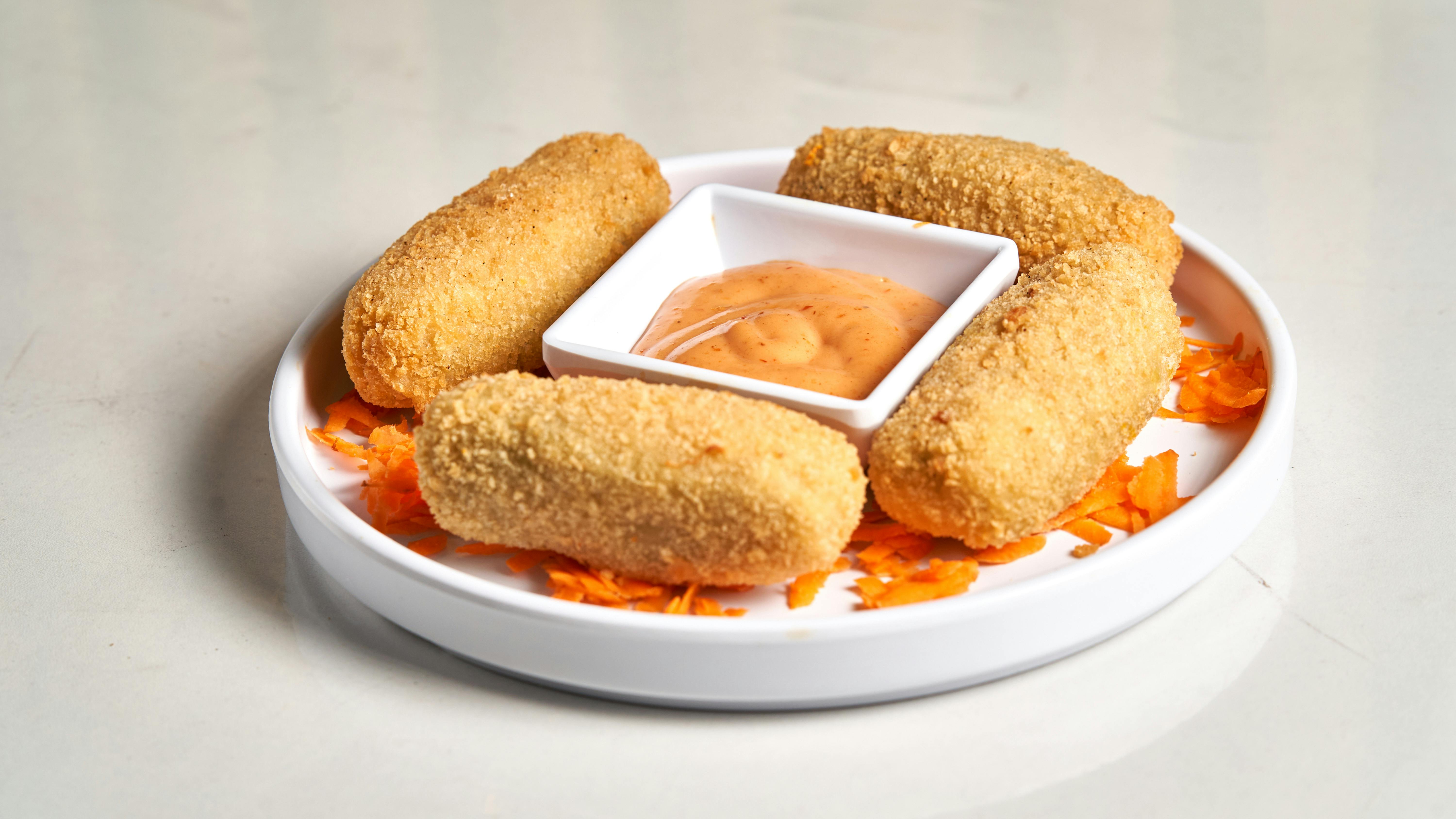
Croquetas de Jamón
The diets react (see scores below)
Common Ingredients
- Serrano ham
- milk
- flour
- butter
- onion
- egg
- breadcrumbs
- nutmeg
Specific recipes may vary.
Incompatible with 10 of 11 diets
Diet Ratings
Croquetas de Jamón are fundamentally incompatible with a ketogenic diet. The dish is built around a béchamel base made from flour, milk, and butter — the flour alone is a high-carb grain product that significantly spikes net carbs. The breadcrumb coating adds another dense layer of carbohydrates. While the Serrano ham filling itself is keto-friendly, it is a minor component surrounded by carb-heavy ingredients. A typical serving of 3-4 croquetas can easily contain 20-30g of net carbs, which alone may meet or exceed the entire daily keto carb budget. There is no realistic portion size that makes this dish keto-compatible without a full recipe overhaul (e.g., substituting almond flour and pork rinds).
Croquetas de Jamón contains multiple animal products that are strictly incompatible with a vegan diet. Serrano ham is cured pork (meat), milk and butter are dairy products, and egg is used in the breading process. This dish fails vegan criteria on at least four separate animal-derived ingredients, leaving no ambiguity whatsoever.
Croquetas de Jamón are fundamentally incompatible with the paleo diet. The dish is built around a béchamel sauce made from milk, flour, and butter — all non-paleo ingredients. Wheat flour is a grain and a core paleo exclusion, dairy (milk and butter) is explicitly excluded, and the breadcrumb coating adds a second layer of grain-based violation. Serrano ham is also a processed, salt-cured meat, which falls outside paleo guidelines. The egg and onion are the only paleo-compliant ingredients in the entire dish. This is not a borderline case — the foundational structure of the recipe relies entirely on excluded food categories.
Croquetas de Jamón conflict with Mediterranean diet principles on multiple fronts. Serrano ham is a cured, processed red meat — high in sodium and saturated fat — which should be limited to a few times per month. The dish is deep-fried in a refined-flour-and-breadcrumb coating, representing exactly the kind of refined grain and processed preparation the diet discourages. Butter forms the base of the béchamel rather than olive oil, further diverging from the primary fat principle. While individual ingredients like onion and milk are acceptable in moderation, the overall preparation is calorie-dense, processed, and built around a protein source the diet explicitly limits.
Some Spanish and broader Mediterranean culinary traditions do include cured pork products (jamón, chorizo) as small flavor accents rather than primary protein sources; a few traditional nutrition researchers argue that small portions of high-quality Iberian ham — especially jamón ibérico de bellota, whose fat profile is higher in oleic acid — can fit within a flexible Mediterranean framework on an occasional basis.
Croquetas de Jamón are fundamentally incompatible with the carnivore diet. While the dish contains carnivore-approved ingredients (Serrano ham, egg, butter, milk), the majority of its structure relies on plant-derived foods that are strictly excluded. Flour forms the béchamel base and breadcrumbs coat the exterior — both are grain-derived and central to the dish's identity. Onion is a vegetable, and nutmeg is a plant-based spice. The dish is essentially a flour-and-breadcrumb delivery system with ham flavoring. There is no practical way to consume this dish while maintaining carnivore compliance, as removing the plant ingredients would eliminate the dish entirely.
Croquetas de Jamón contains multiple excluded ingredients that make it clearly non-compliant with Whole30. Milk and butter are dairy (excluded), flour and breadcrumbs are grain-based (excluded), and the dish itself is a fried, breaded snack that falls squarely into the 'recreating junk food' category even if individual ingredients were swapped. There is no compliant version of this dish possible within Whole30 rules.
Croquetas de Jamón contain multiple high-FODMAP ingredients that make this dish unsuitable during the elimination phase. The bechamel base is made with regular wheat flour (high in fructans) and full-fat milk (high in lactose), and the breadcrumb coating typically uses wheat-based crumbs (more fructans). Onion is one of the highest-FODMAP foods tested by Monash University, being extremely high in fructans even at very small quantities. While Serrano ham itself is low-FODMAP (cured meat with negligible carbohydrates), butter, egg, and nutmeg are fine — the combination of wheat flour, milk, onion, and wheat breadcrumbs creates a dish that is comprehensively high-FODMAP at any standard serving size. There is no realistic way to eat a standard portion of traditional croquetas during the elimination phase.
Croquetas de Jamón are deep-fried snacks built around Serrano ham, which is a cured, salt-preserved pork product with very high sodium content (typically 1,500–2,500mg per 100g). The béchamel base uses butter and whole milk, contributing saturated fat. Deep-frying adds substantial total fat. The dish conflicts directly with multiple core DASH principles: (1) Serrano ham is a processed red meat high in sodium and saturated fat — both explicitly limited by NIH/NHLBI DASH guidelines; (2) deep-frying dramatically increases total fat content; (3) the butter-based béchamel adds saturated fat beyond DASH limits; (4) as a snack, this food provides minimal DASH-positive nutrients (potassium, magnesium, fiber, calcium) relative to its sodium and saturated fat load. This is not a borderline case — processed cured meats and fried foods are clearly in the 'avoid' category per DASH guidelines.
Croquetas de Jamón present multiple Zone Diet challenges. The base (béchamel) is made from butter and flour — both unfavorable Zone ingredients — creating a high-glycemic, saturated-fat-heavy foundation. The outer coating of breadcrumbs adds more refined, high-glycemic carbohydrate. The protein source, Serrano ham, is a cured pork product with moderate fat and sodium, not a lean Zone-preferred protein like skinless chicken or fish. The fat profile is dominated by saturated fat from butter and milk rather than the preferred monounsaturated sources. The macro ratio is skewed: high in refined carbs (flour, breadcrumbs), moderate in protein of the wrong type, and high in saturated fat. However, the Zone is ratio-based, not exclusionary — small portions could theoretically be incorporated into a larger meal with lean protein and low-GI vegetables to rebalance the ratios. As a standalone snack, though, they fail to hit the 40/30/30 target and offer no polyphenols or omega-3s. The portion would need to be very small (1-2 croquetas) as a minor carb/fat block within a carefully constructed meal.
Croquetas de Jamón present a notably pro-inflammatory profile across multiple dimensions. The béchamel base combines butter and whole milk — both sources of saturated fat — with refined white flour, which is a high-glycemic refined carbohydrate that can spike blood sugar and promote inflammatory signaling. The breadcrumb coating adds another layer of refined carbohydrate, and deep-frying (the standard cooking method) introduces oxidized oils and potentially harmful lipid oxidation products. Serrano ham, while a traditional cured pork product with some redeeming qualities (it is lower in fat than many processed meats and contains some oleic acid from the pig's diet), remains a processed red meat high in sodium and saturated fat — both associated with increased inflammatory markers in research. There are no meaningful anti-inflammatory components in this dish: no omega-3s, no colorful produce, no polyphenols, no fiber-rich ingredients. The combination of saturated fat, refined carbohydrates, processed meat, and frying makes this a clear 'limit or avoid' from an anti-inflammatory standpoint. Occasional consumption as part of an otherwise healthy anti-inflammatory diet is unlikely to cause harm, but it offers no anti-inflammatory benefit and checks several pro-inflammatory boxes simultaneously.
Croquetas de Jamón are a poor fit for GLP-1 patients across nearly every priority criterion. The dish is deep-fried, which is a direct avoid flag regardless of other nutritional content. The béchamel base (butter, whole milk, flour) is high in saturated fat and refined carbohydrates with minimal fiber. Serrano ham, while a protein source, is a fatty, highly processed cured meat high in sodium and saturated fat — exactly the type of protein GLP-1 guidance deprioritizes. Protein density per calorie is low relative to the fat and refined carb load. The fried coating and rich béchamel interior are likely to worsen GLP-1 side effects including nausea, bloating, reflux, and delayed gastric emptying. Small portion size does not rescue this dish — even 2-3 croquetas deliver a meaningful saturated fat and refined carb hit with minimal protein or fiber return. Nutrient density per calorie is poor.
*See how scores were generated at our methodology page.
Nutritional profile
Six traits that cut across every diet.
Fiber & Plants
How much whole-plant food and fiber it delivers.
Healthy Fats
The quality of its fats (unsaturated, omega-3).
Whole / Unprocessed
How close it is to its natural, unprocessed form.
Gut Gentle
How easy it is on digestion (low FODMAP, few irritants).
Low Glycemic
How little it spikes your blood sugar.
Protein Density
How much protein it packs per calorie.
Controversy Index
Higher controversy = more disagreement between diets.
Diet-Specific Tips
 Zone — 4/10
View tips
- Refined flour and breadcrumb coating are high-glycemic unfavorable Zone carbs
- Béchamel base made with butter contributes saturated fat rather than preferred monounsaturated fat
- Serrano ham is a processed, fatty pork — not a lean Zone protein source
- Macro ratio is skewed toward refined carbs and saturated fat, far from 40/30/30
- No vegetables, polyphenols, or omega-3 sources present
- Small portions could technically be used as carb+fat blocks within a larger balanced Zone meal, but impractical as a snack