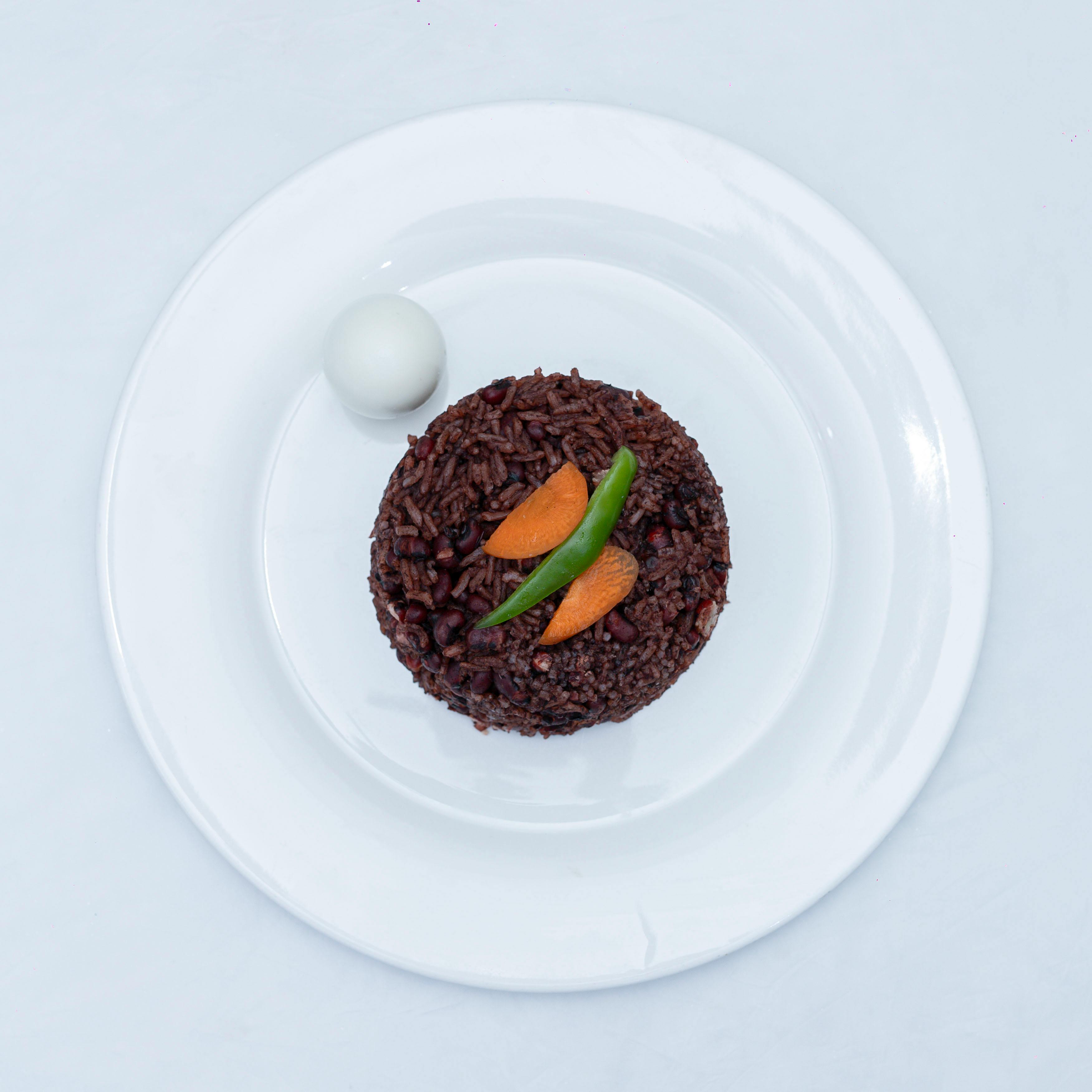
Latin-American
Cuban Black Beans and Rice
The diets react (see scores below)
Common Ingredients
- black beans
- white rice
- onion
- green bell pepper
- garlic
- cumin
- oregano
- bay leaves
Specific recipes may vary.
Incompatible with 5 of 11 diets
Diet Ratings
Cuban Black Beans and Rice is fundamentally incompatible with a ketogenic diet. White rice alone contains approximately 45g of net carbs per cup (cooked), which exceeds or nearly maxes out the entire daily keto carb budget in a single serving. Black beans add another 20-25g of net carbs per half-cup serving. Together, a standard portion of this dish easily delivers 60-80g+ of net carbs, which would completely knock a person out of ketosis. Neither of the two primary ingredients — white rice or black beans — has any place in a ketogenic diet. The aromatics and spices (onion, bell pepper, garlic, cumin, oregano, bay leaves) are largely benign in small quantities, but they are irrelevant given the catastrophic carb load from the staple ingredients. This dish is also very low in fat and lacks meaningful protein as a main course, making it a triple mismatch for keto macros.
Cuban Black Beans and Rice is entirely plant-based. Every ingredient — black beans, white rice, onion, green bell pepper, garlic, cumin, oregano, and bay leaves — is derived from plants with no animal products or animal-derived ingredients present. Black beans provide a solid source of plant protein and fiber, while the aromatic vegetables and spices reflect a traditional whole-food preparation. White rice is slightly less nutritious than brown rice but is not a disqualifying factor. This dish is a textbook example of a vegan-friendly staple across Latin American cuisine.
Cuban Black Beans and Rice is built on two core paleo-excluded food groups: legumes (black beans) and grains (white rice). Black beans are a legume, universally rejected by all major paleo authorities including Loren Cordain, Mark Sisson, and Robb Wolf due to their lectin, phytate, and antinutrient content. White rice is a grain and equally excluded under standard paleo rules, though it occupies a nuanced position in some adjacent frameworks. The remaining ingredients — onion, green bell pepper, garlic, cumin, oregano, and bay leaves — are all paleo-approved aromatics and spices. However, the two foundational ingredients that define this dish are both firmly off-limits, making this dish incompatible with a paleo diet regardless of preparation method.
Cuban Black Beans and Rice is a nutritious, plant-based dish built around legumes and vegetables — all core Mediterranean diet components. Black beans are an excellent source of plant protein and fiber, and onion, bell pepper, and garlic are foundational aromatics in Mediterranean cooking. The spices (cumin, oregano, bay leaves) are wholesome and aligned with Mediterranean flavors. However, the dish uses white rice rather than a whole grain, which conflicts with modern Mediterranean diet guidelines that emphasize whole grains like brown rice, farro, or barley over refined grains. The beans partially offset the glycemic concern, but white rice remains a notable drawback. If prepared with olive oil (not specified), the dish improves considerably. Overall, this is an acceptable, largely plant-forward meal that earns moderate approval with the white rice caveat.
Some traditional Mediterranean cuisines, particularly from Spain and parts of the Middle East, do incorporate white rice as a staple grain, and the overall dish pattern (legumes + vegetables + aromatics) aligns well with Mediterranean eating patterns. In this context, some dietitians following a flexible Mediterranean approach would view white rice paired with high-fiber beans as acceptable, since the beans substantially blunt glycemic impact.
Cuban Black Beans and Rice is entirely plant-based with zero animal-derived ingredients. Every single component — black beans, white rice, onion, green bell pepper, garlic, cumin, oregano, and bay leaves — is explicitly excluded on the carnivore diet. Black beans and rice are high-carbohydrate plant foods that directly oppose the core principles of carnivore eating. Legumes like black beans contain antinutrients (lectins, phytates) that carnivore advocates specifically cite as reasons to avoid plant foods. This dish represents essentially the opposite of a carnivore meal.
This dish contains two excluded ingredients: black beans (legumes, explicitly excluded on Whole30) and white rice (a grain, explicitly excluded on Whole30). The remaining ingredients — onion, green bell pepper, garlic, cumin, oregano, and bay leaves — are all compliant, but the two core components of the dish are both prohibited. There is no version of Cuban Black Beans and Rice that can be made compliant without fundamentally changing the dish.
Cuban Black Beans and Rice contains multiple high-FODMAP ingredients that make it unsuitable during the elimination phase. Black beans are very high in GOS (galacto-oligosaccharides) and are high-FODMAP even at small servings (Monash rates canned black beans as high-FODMAP at 1/4 cup / 40g). Onion is one of the highest-FODMAP foods tested by Monash, loaded with fructans — even small amounts are problematic. Garlic is similarly one of the most concentrated sources of fructans and is high-FODMAP at any culinary amount. These three ingredients alone make the dish a clear avoid. White rice is low-FODMAP and safe, and green bell pepper is low-FODMAP at standard servings. Cumin, oregano, and bay leaves are used in small spice quantities and are generally considered low-FODMAP. However, the combination of black beans, onion, and garlic creates a dish that is definitively high-FODMAP with no realistic way to portion-control around it in a traditional preparation.
Cuban Black Beans and Rice is a nutrient-dense dish with several DASH-positive elements: black beans are an excellent source of plant-based protein, fiber, potassium, and magnesium — all core DASH nutrients — and the vegetables (onion, green bell pepper, garlic) and spices align well with DASH principles. However, white rice is a refined grain, not the whole grain (brown rice) that DASH emphasizes. The dish as a whole earns a 'caution' rating primarily because of the white rice component, which lacks the fiber and micronutrients of whole grain alternatives. The bean-to-rice ratio matters: a bean-heavy portion with moderate white rice is more DASH-compatible than a rice-heavy serving. Sodium content depends heavily on preparation — if canned beans are used (typically 400–500mg sodium per ½ cup), sodium can add up quickly; using dried beans keeps sodium very low. No saturated fat, added sugar, or problematic ingredients are present otherwise.
NIH DASH guidelines explicitly favor whole grains over refined grains, making white rice a limiting factor. However, updated clinical interpretations note that when white rice is paired with high-fiber legumes like black beans, the overall glycemic and nutrient profile of the meal improves significantly — some DASH-oriented dietitians consider this combination acceptable and would score it higher, especially when portion-controlled and made with low-sodium or dried beans.
Cuban Black Beans and Rice is a carbohydrate-dominant dish with no dedicated lean protein source, making it structurally misaligned with Zone's 40/30/30 ratio. White rice is a high-glycemic, 'unfavorable' carb in Zone terminology — Dr. Sears explicitly recommends avoiding it in favor of low-GI whole grains or vegetables. Black beans are a mixed Zone food: they provide meaningful protein (roughly 7-8g per half cup) and fiber that lowers net carbs, but they also contribute significant starch carbohydrates, pushing the carb load high. Together, white rice and black beans create a heavily carb-skewed meal. The aromatics (onion, green bell pepper, garlic) and spices (cumin, oregano, bay leaves) are Zone-favorable — low-glycemic vegetables and anti-inflammatory polyphenol sources. However, the dish as constituted lacks the lean protein block (targeting ~25g per meal) and the monounsaturated fat component (~10-15g) required to build a proper Zone meal. It could be rehabilitated by: substituting brown rice or cauliflower rice for white rice, reducing portion size significantly, adding a lean protein (chicken, fish, or egg whites), and adding olive oil or avocado for fat balance. As served in its traditional form, this dish is a caution — usable in Zone with significant modifications but not Zone-compliant as written.
Some Zone practitioners note that black beans' high fiber content substantially reduces net carbs, and that beans as a vegetarian protein source shift the fat block calculation (3g fat per block rather than 1.5g). In later Zone writings, Sears acknowledges legumes as a reasonable protein-carb combination food for vegetarians, making black beans more favorable than the white rice they're paired with. A small portion of this dish paired with added lean protein and healthy fat could be a moderate Zone component rather than a problem meal.
Cuban black beans and rice is a nutritionally mixed dish from an anti-inflammatory perspective. The black beans are a clear positive — they are rich in fiber, plant-based protein, polyphenols (anthocyanins give them their dark color), and are explicitly emphasized in anti-inflammatory frameworks including Dr. Weil's pyramid as legumes. Garlic, onion, cumin, and oregano all contribute meaningful anti-inflammatory phytonutrients and polyphenols. Green bell pepper adds vitamin C and antioxidants. The problem is the white rice: it is a refined carbohydrate with a moderate-to-high glycemic index, stripped of the fiber, vitamins, and minerals present in brown or wild rice. Refined carbohydrates are flagged as pro-inflammatory in anti-inflammatory nutrition guidance due to their effect on blood glucose and downstream inflammatory markers like CRP. The beans partially offset this by lowering the overall glycemic index of the meal through fiber and resistant starch. If made with brown rice, this dish would score considerably higher (likely 7-8). As written with white rice, it lands in caution territory — nutritionally decent but not optimized.
Some anti-inflammatory practitioners (and much of traditional nutrition science) consider white rice relatively benign, particularly in the context of a high-fiber, plant-rich meal where the beans significantly blunt the glycemic response. Japanese and other Asian populations who consume white rice regularly show low inflammatory disease rates, suggesting dietary context matters greatly. Dr. Weil's framework is less absolutist about white rice than strict low-glycemic protocols.
Cuban black beans and rice is a nutritionally decent dish but falls short of ideal for GLP-1 patients primarily due to the absence of a dedicated protein source and the use of white rice as the carbohydrate base. Black beans do contribute meaningful plant protein (roughly 7-8g per half cup) and are an excellent fiber source (~7-8g per half cup), which supports digestion and helps counteract GLP-1-related constipation. The vegetables and spices add micronutrient value with minimal caloric cost. However, white rice is a refined grain with low fiber, high glycemic impact, and minimal nutrient density per calorie — a significant drawback given that every bite must count nutritionally on GLP-1 medications. The dish also lacks the 15-30g protein per meal target on its own. Portions matter considerably: a small serving leaning bean-heavy is far more appropriate than a rice-heavy plate. The dish is easy to digest, low in fat, and gentle on the GI tract, which are genuine positives for patients managing nausea or slow gastric emptying. To move toward approval, substitute brown rice or cauliflower rice for the white rice and add a lean protein (chicken, shrimp, or tofu).
Some GLP-1-focused dietitians view beans-and-rice as an acceptable plant-based foundation and argue the fiber and satiety value of beans compensates for the white rice, especially for patients with cultural food preferences where adherence matters. Others flag white rice more strictly as a low-value carbohydrate that should be replaced or minimized for patients eating significantly reduced calorie volumes.
*See how scores were generated at our methodology page.
Nutritional profile
Six traits that cut across every diet.
Fiber & Plants
How much whole-plant food and fiber it delivers.
Healthy Fats
The quality of its fats (unsaturated, omega-3).
Whole / Unprocessed
How close it is to its natural, unprocessed form.
Gut Gentle
How easy it is on digestion (low FODMAP, few irritants).
Low Glycemic
How little it spikes your blood sugar.
Protein Density
How much protein it packs per calorie.
Controversy Index
Higher controversy = more disagreement between diets.
Diet-Specific Tips
 Vegan — 9/10
View tips
- All ingredients are whole plant foods
- Black beans serve as the primary protein and fiber source
- No dairy, eggs, meat, or animal-derived additives present
- Traditional preparation uses no animal fats (e.g., lard), unlike some regional variants
- White rice is less nutrient-dense than whole grains but does not affect vegan compliance
- No ethically contested ingredients within vegan discourse
 Mediterranean — 5/10
View tips
- Black beans are an excellent legume — a Mediterranean diet staple encouraged at multiple meals
- White rice is a refined grain, conflicting with Mediterranean whole-grain emphasis (prefer brown rice, farro, barley)
- Onion, bell pepper, and garlic are strongly Mediterranean-aligned vegetables
- Spices (cumin, oregano, bay leaves) are wholesome and anti-inflammatory
- No added sugars, processed ingredients, red meat, or saturated fats
- Cooking fat not specified — olive oil would significantly elevate the dish's Mediterranean compatibility
- High-fiber beans partially offset the glycemic impact of white rice
 DASH — 6/10
View tips
- Black beans are a DASH-ideal legume: high in fiber, potassium, magnesium, and plant protein
- White rice is a refined grain — DASH recommends whole grains like brown rice instead
- No saturated fat, trans fat, or added sugar in the ingredient list
- Sodium risk if canned beans used; dried beans keep the dish very low sodium
- Vegetables (onion, bell pepper, garlic) and spices add micronutrients with no sodium penalty
- Bean-heavy ratio improves overall DASH compatibility of this dish
 Zone — 4/10
View tips
- White rice is a high-glycemic 'unfavorable' carb explicitly discouraged by Dr. Sears
- No lean protein source present — dish lacks the ~25g protein per meal Zone requires
- Black beans provide some protein and fiber but are primarily a starchy carbohydrate source
- Carbohydrate-to-protein ratio is heavily skewed toward carbs, breaking the 40/30/30 balance
- No fat source present — missing the monounsaturated fat block
- Aromatics (onion, bell pepper, garlic) and spices are Zone-favorable, anti-inflammatory ingredients
- Could be modified toward Zone compliance with protein addition, cauliflower or brown rice substitution, and olive oil or avocado
 Anti-Inflammatory — 6/10
View tips
- Black beans: anti-inflammatory — rich in fiber, anthocyanins, plant protein, and polyphenols
- White rice: refined carbohydrate, moderate-to-high GI — pro-inflammatory concern
- Garlic and onion: contain quercetin, allicin, and other anti-inflammatory sulfur compounds
- Cumin and oregano: antioxidant spices with documented anti-inflammatory properties
- Green bell pepper: vitamin C, flavonoids, antioxidants
- Beans partially offset rice's glycemic impact via fiber and resistant starch
- Dish would score higher (7-8) if brown or wild rice were substituted for white rice
- No added sugars, trans fats, seed oils, or processed ingredients — clean ingredient profile
 GLP-1 Friendly — 5/10
View tips
- Black beans provide meaningful fiber (~7-8g per half cup) supporting GLP-1 constipation prevention
- Black beans offer moderate plant protein but dish falls short of 15-30g per meal target without added protein
- White rice is a refined grain — low fiber, higher glycemic index, low nutrient density per calorie
- No primary protein source listed — a significant gap for muscle preservation on GLP-1 medications
- Low fat content and gentle spice profile are positives for GI tolerability
- Small portion with bean-to-rice ratio skewed toward beans improves the nutritional profile substantially
- Substituting brown rice or cauliflower rice and adding lean protein would move this to approve