Photo: AMANDA LIM / Pexels
Latin-American
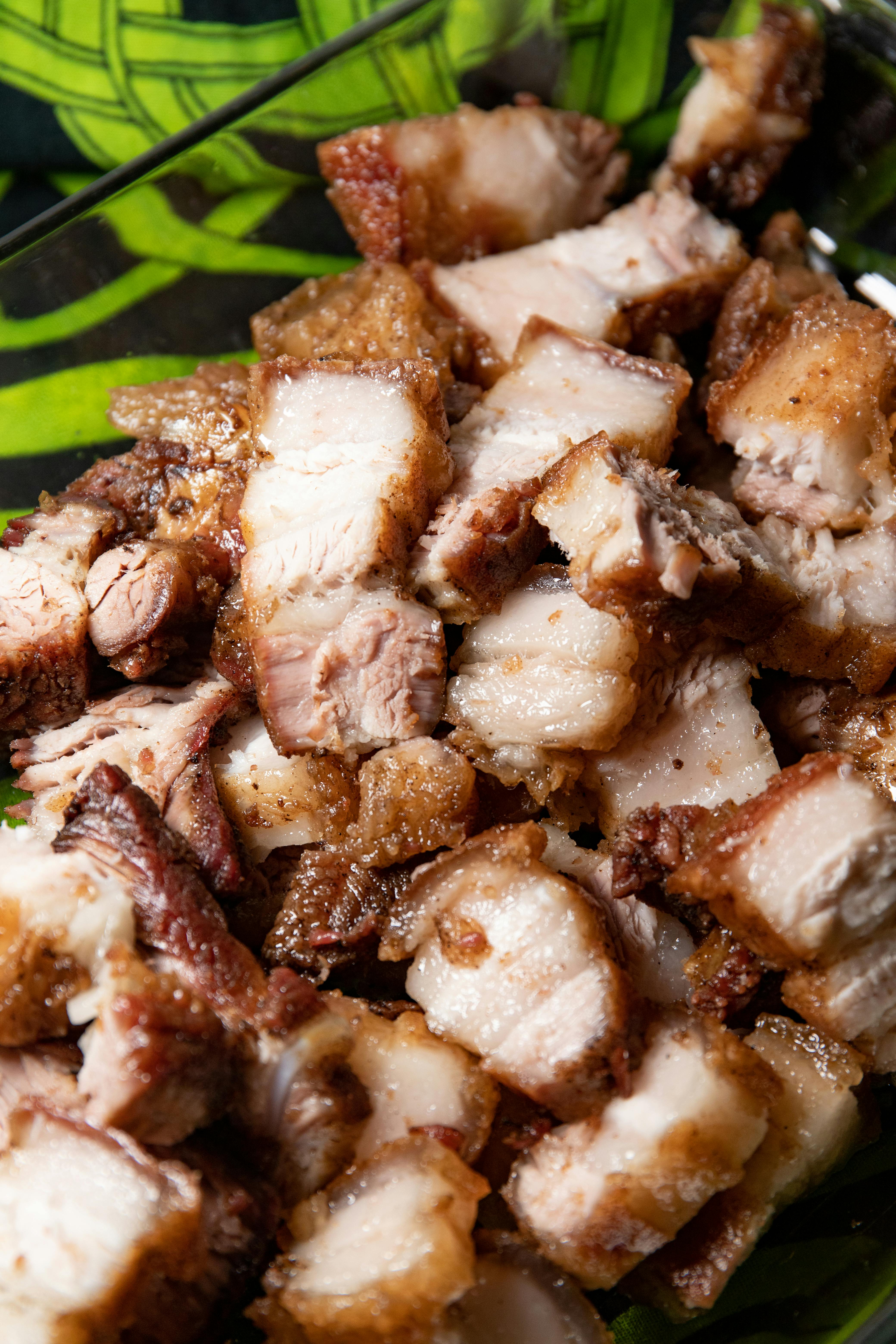
Lechón Asado
The diets react (see scores below)
Common Ingredients
- pork shoulder
- sour orange
- garlic
- oregano
- cumin
- olive oil
- onion
- bay leaves
Specific recipes may vary.
Incompatible with 4 of 11 diets
Diet Ratings
Lechón Asado is centered on pork shoulder, one of the most keto-friendly proteins due to its high fat content. The marinade (mojo) uses sour orange, garlic, oregano, cumin, olive oil, onion, and bay leaves — all low-carb ingredients in typical quantities. Sour orange juice does contain natural sugars, but the amount used per serving is small (the marinade is distributed across a large cut of meat), contributing minimal net carbs. Pork shoulder provides excellent fat and protein macros well-aligned with keto targets. Garlic and onion add trace carbs but are used in modest amounts as aromatics. Overall, this dish fits comfortably within keto parameters at a standard serving size.
Stricter keto practitioners may flag the sour orange juice marinade, as any citrus-based or fruit-derived ingredient introduces natural sugars. Some clinical or carnivore-leaning keto protocols eliminate all fruit-derived ingredients entirely, including marinades, to maintain zero sugar intake and minimize any potential insulin response.
Lechón Asado is a roasted pork dish — pork shoulder is the primary and defining ingredient. Pork is animal flesh and is unambiguously excluded from a vegan diet. While the marinade components (sour orange, garlic, oregano, cumin, olive oil, onion, bay leaves) are all plant-based, the dish as a whole is fundamentally non-vegan due to its core protein source.
Lechón Asado is an excellent fit for the paleo diet. Every ingredient is either a whole animal protein, a whole fruit/vegetable, or an unprocessed herb and spice. Pork shoulder is an unprocessed cut of meat available in ancestral form. Sour orange (naranja agria) is a whole citrus fruit used as a natural acid marinade. Garlic and onion are whole vegetables. Oregano, cumin, and bay leaves are natural herbs and spices. Olive oil is a paleo-approved fat. There are no grains, legumes, dairy, refined sugars, seed oils, or processed additives present. The preparation method — slow roasting a marinated pork shoulder — is minimally processed and ancestrally consistent.
Lechón Asado is centered on pork shoulder, a red/processed-adjacent meat that Mediterranean diet guidelines restrict to a few times per month. While the marinade ingredients — sour orange, garlic, oregano, cumin, olive oil, onion, and bay leaves — are highly Mediterranean-compatible aromatics and herbs, the foundation of the dish is a large cut of fatty pork. Red and fatty meats are discouraged as regular fare under Mediterranean principles due to their saturated fat content. The dish scores at the low end of 'avoid' rather than rock-bottom because the preparation method (roasting with olive oil and abundant aromatics) and the absence of processed ingredients or added sugars partially redeem it.
Some Mediterranean diet interpreters note that pork in lean cuts and modest portions has historically appeared in Spanish and southern Italian traditions, and that a small serving of this dish — especially given its olive oil and herb-rich marinade — could qualify as an occasional moderate indulgence rather than a strict avoidance, aligning more with a 'caution' rating.
Lechón Asado as traditionally prepared is heavily non-compliant with the carnivore diet. While pork shoulder is an approved animal protein, the marinade (mojo) contains multiple plant-derived ingredients that are entirely excluded: sour orange (fruit/citrus juice), garlic (allium vegetable), oregano (herb/spice), cumin (spice), olive oil (plant oil), onion (vegetable), and bay leaves (herb). The dish is essentially defined by its plant-based marinade — removing it would result in a completely different dish. The majority of the ingredients by count are plant-derived and excluded under all tiers of the carnivore diet. Only the pork shoulder itself is carnivore-compliant.
Lechón Asado as described contains exclusively Whole30-compliant ingredients. Pork shoulder is a whole, unprocessed meat. Sour orange (bitter orange juice) is 100% fruit juice, which is explicitly allowed on Whole30 both as a beverage and as a recipe ingredient per updated guidelines. Garlic, oregano, cumin, onion, and bay leaves are all whole herbs, spices, and vegetables with no restrictions. Olive oil is a natural fat explicitly permitted. There are no excluded ingredients — no grains, dairy, legumes, added sugars, alcohol, or other prohibited substances in this dish.
Lechón Asado as traditionally prepared contains two major high-FODMAP ingredients: garlic and onion. Both are among the highest-fructan foods in the Monash system and are high-FODMAP at any reasonable culinary quantity. Garlic cloves used in the marinade (mojo) and onion used in the sofrito-style base make this dish unsuitable during the elimination phase. Sour orange (bitter orange juice) is low-FODMAP in small amounts, pork shoulder is naturally FODMAP-free, and herbs/spices like oregano, cumin, and bay leaves are low-FODMAP at culinary doses. Olive oil is also safe. However, garlic and onion are not incidental here — they are structural flavor components of the dish, typically used in substantial quantities in the marinade. The dish cannot be considered safe during elimination as standardly prepared.
Lechón Asado (Cuban-style roasted pork) presents a mixed DASH profile. The primary protein — pork shoulder — is a fattier cut that contains more saturated fat than DASH-preferred lean proteins like skinless poultry, fish, or legumes. However, pork shoulder is not in the same category as cured, processed, or heavily salted meats. The marinade (mojo) is built on DASH-favorable ingredients: sour orange provides vitamin C and potassium, garlic and onion are heart-healthy aromatics, olive oil is a recommended unsaturated fat, and herbs like oregano, cumin, and bay leaves add flavor without sodium. The dish as commonly prepared involves slow-roasting without added salt in the marinade components listed, which keeps sodium lower than processed pork alternatives. The main concerns are the saturated fat content of pork shoulder (skin-on preparations add significantly more) and portion control — DASH recommends limiting red and fatty meat to 6 oz or fewer per day. Trimming fat and removing skin before or after cooking improves the profile. This dish is not a core DASH food but is acceptable in moderate portions with careful preparation.
NIH DASH guidelines categorize red meat (including pork) as a food to limit due to saturated fat and recommend lean cuts with fat trimmed — pork shoulder is not considered lean by USDA standards, placing it in a restricted category for strict DASH adherence. However, updated clinical interpretations note that unprocessed pork in moderate portions, especially when marinated with citrus and herbs rather than salt-heavy sauces, is far preferable to cured or processed pork products, and some DASH-oriented dietitians allow it weekly as part of an overall low-sodium, plant-forward diet.
Lechón Asado is a roasted pork shoulder dish marinated in sour orange, garlic, oregano, cumin, and olive oil — a flavorful Cuban/Latin American classic. From a Zone perspective, the dish has real strengths and notable challenges. On the positive side, pork shoulder does provide substantial protein, garlic and onion are low-glycemic Zone-favorable vegetables, sour orange juice contributes polyphenols and vitamin C, and olive oil is an ideal monounsaturated fat source. However, the primary challenge is pork shoulder itself: it is a relatively fatty cut with significant saturated fat content, unlike the lean proteins (skinless chicken, fish, lean pork loin) that Dr. Sears favors. The fat-to-protein ratio in pork shoulder makes it harder to hit a clean 30/30 protein-to-fat calorie split without careful portion control. That said, with proper portioning — a modest 3-oz serving to stay near 21-25g protein — and pairing with abundant low-glycemic vegetables and minimal added fat beyond the marinade, Lechón Asado can be incorporated into a Zone meal. The olive oil in the marinade is favorable, but combined with the inherent fat in pork shoulder, total fat per serving can exceed Zone targets. Sour orange and onion contribute minimal carbs and are favorable. The dish is not problematic in the way that high-glycemic carbs or processed foods are — it simply requires mindful portioning of the protein/fat.
Dr. Sears' earlier Zone writings (Enter the Zone, 1995) placed strict limits on fatty red meat and higher-fat pork cuts, classifying them as 'unfavorable' protein sources due to saturated fat load. However, in his later anti-inflammatory work (The OmegaRx Zone, Toxic Fat), Sears acknowledged that dietary saturated fat is less of a concern than the omega-6/omega-3 ratio and overall insulin response. Some Zone practitioners therefore treat lean-portioned pork shoulder as acceptable, especially when the marinade includes olive oil and the dish is free of high-glycemic carbohydrates. The verdict depends significantly on which era of Sears' writing you follow.
Lechón Asado presents a genuinely mixed anti-inflammatory profile. On the positive side, the marinade (mojo) is built on strongly anti-inflammatory ingredients: garlic contains allicin and organosulfur compounds with well-documented anti-inflammatory effects; oregano and cumin are rich in polyphenols and antioxidants; sour orange contributes vitamin C and flavonoids; olive oil provides oleocanthal and monounsaturated fats; onion supplies quercetin. These components collectively represent a significant anti-inflammatory contribution. The primary concern is the protein source: pork shoulder is a relatively fatty cut of red/white meat with meaningful saturated fat content, which the anti-inflammatory framework advises limiting. It also contains arachidonic acid, a precursor to pro-inflammatory eicosanoids. However, pork is not categorically condemned — it sits in a gray zone, better than processed meats or fatty red meat like ribeye, but not ideal like fatty fish or legumes. The preparation method matters too: slow-roasting renders fat and produces a whole-food result without processed additives, which is preferable. Overall, the dish is a reasonable occasional choice — the marinade elevates it considerably — but the fatty pork shoulder prevents an 'approve' rating.
Some anti-inflammatory practitioners, particularly those aligned with Dr. Weil's broader Mediterranean-influenced framework, would argue that the rich polyphenol and antioxidant load from garlic, oregano, cumin, and olive oil meaningfully offsets the saturated fat in pork shoulder, and that traditional whole-food preparations like this are far preferable to processed alternatives. Conversely, stricter anti-inflammatory and AIP-leaning protocols would rate pork more harshly due to arachidonic acid content and saturated fat, pushing this dish closer to a 4.
Lechón Asado is a slow-roasted pork shoulder marinated in sour orange, garlic, cumin, oregano, and olive oil. Pork shoulder is a moderate-to-high fat cut — significantly fattier than lean proteins like chicken breast or pork tenderloin — with a typical 3-4 oz serving delivering 20-25g protein alongside 15-20g of fat, a meaningful portion of which is saturated. The marinade ingredients (sour orange, garlic, oregano, cumin, olive oil, onion, bay leaves) are all GLP-1 friendly and nutritionally beneficial, and the dish contains no refined carbohydrates, added sugar, or fried components. The slow-roasting method is preferable to frying. However, the fat load from pork shoulder is a real concern for GLP-1 patients: high-fat meals slow gastric emptying further (compounding the drug's mechanism), increasing nausea, bloating, and reflux risk. The dish scores higher than a fried or heavily processed pork preparation but falls short of lean-protein approval. A smaller portion (3 oz) of the leaner parts of the roast, trimmed of visible fat, can make this a reasonable occasional choice within a GLP-1 dietary pattern.
Some GLP-1-focused dietitians accept pork shoulder in modest portions because its protein content supports the 100-120g daily target and whole-food preparation is preferable to processed alternatives; others recommend avoiding it entirely in favor of leaner cuts, particularly in the first weeks on medication when GI side effects are most pronounced and fat tolerance is lowest.
*See how scores were generated at our methodology page.
Nutritional profile
Six traits that cut across every diet.
Fiber & Plants
How much whole-plant food and fiber it delivers.
Healthy Fats
The quality of its fats (unsaturated, omega-3).
Whole / Unprocessed
How close it is to its natural, unprocessed form.
Gut Gentle
How easy it is on digestion (low FODMAP, few irritants).
Low Glycemic
How little it spikes your blood sugar.
Protein Density
How much protein it packs per calorie.
Controversy Index
Higher controversy = more disagreement between diets.
Diet-Specific Tips
 Keto — 8/10
View tips
- Pork shoulder is high in fat and protein — ideal keto macros
- Sour orange juice adds minimal net carbs when distributed across a large roast
- Garlic and onion contribute negligible carbs at typical marinade quantities
- Olive oil in the mojo adds healthy fat, reinforcing keto alignment
- No grains, added sugars, starches, or high-carb ingredients present
- Standard serving size keeps net carbs well within daily keto limits
 Paleo — 9/10
View tips
- Pork shoulder is an unprocessed whole-animal protein — fully paleo approved
- Sour orange is a natural whole citrus fruit providing acid without added sugar or processing
- Garlic and onion are whole vegetables with no paleo concerns
- Oregano, cumin, and bay leaves are natural herbs and spices — fully compliant
- Olive oil is a paleo-approved fat source
- No grains, legumes, dairy, refined sugar, seed oils, or processed additives
- Traditional slow-roasting preparation aligns with ancestral cooking philosophy
 Whole30 — 9/10
View tips
- Pork shoulder is a whole, unprocessed cut of meat — fully compliant
- Sour orange juice is 100% fruit juice, explicitly allowed as a recipe ingredient per Whole30 rules
- Garlic, oregano, cumin, cumin, and bay leaves are all compliant herbs and spices
- Olive oil is an approved natural fat
- Onion is a compliant vegetable
- No excluded ingredients present in this recipe
 DASH — 5/10
View tips
- Pork shoulder is a fatty cut with notable saturated fat — not a DASH-preferred lean protein
- No added sodium in the listed ingredients; mojo marinade is naturally low in sodium
- Olive oil is a DASH-recommended unsaturated fat
- Garlic, onion, citrus, and herbs are all DASH-compatible flavor enhancers
- Skin-on preparation significantly increases saturated fat load — skinless and fat-trimmed is preferable
- Portion control critical: DASH limits meat to ≤6 oz/day
- Unprocessed pork is preferable to cured alternatives (bacon, ham) from a DASH standpoint
 Zone — 5/10
View tips
- Pork shoulder is a higher-fat cut with notable saturated fat, making it 'unfavorable' compared to lean Zone proteins like chicken breast or fish
- Olive oil in the marinade is an ideal Zone monounsaturated fat source
- Sour orange, garlic, and onion are low-glycemic, Zone-favorable ingredients
- No high-glycemic carbohydrates in the dish itself — Zone-compatible carb pairing is achievable
- Portion control is critical: a 3-oz serving keeps protein near Zone targets but requires limiting additional added fat
- Rich in polyphenols and anti-inflammatory compounds (garlic, oregano, cumin, citrus) consistent with Sears' anti-inflammatory focus
- The combined fat from pork shoulder plus olive oil marinade can push fat calories above the 30% Zone target if not portioned carefully
 Anti-Inflammatory — 5/10
View tips
- Pork shoulder is a moderately fatty cut with saturated fat — anti-inflammatory diet advises limiting red/fatty meat
- Garlic is a strongly anti-inflammatory ingredient (allicin, organosulfur compounds)
- Oregano and cumin are polyphenol-rich anti-inflammatory spices
- Olive oil provides oleocanthal and heart-healthy monounsaturated fats
- Sour orange contributes vitamin C and citrus flavonoids
- Onion supplies quercetin, a well-studied anti-inflammatory flavonoid
- No processed ingredients, artificial additives, refined sugars, or seed oils
- Whole-food traditional preparation is favorable vs. processed alternatives
- Pork contains arachidonic acid, a precursor to pro-inflammatory eicosanoids
 GLP-1 Friendly — 5/10
View tips
- Pork shoulder is a moderate-to-high fat cut with 15-20g fat per serving, elevating nausea and reflux risk on GLP-1 medications
- Provides meaningful protein (20-25g per 3-4 oz serving), supporting daily protein targets
- Marinade is entirely whole-food and GLP-1 friendly — no sugar, no refined ingredients, no frying
- Slow-roasted preparation is preferable to fried or braised-in-fat methods
- High fat content compounds GLP-1-slowed gastric emptying, worsening GI side effects
- Portion control is critical — small servings of leaner sections reduce fat load significantly
- No fiber contribution; should be paired with high-fiber vegetables to balance the meal