Photo: Mustafa Erdağ / Pexels
Chinese
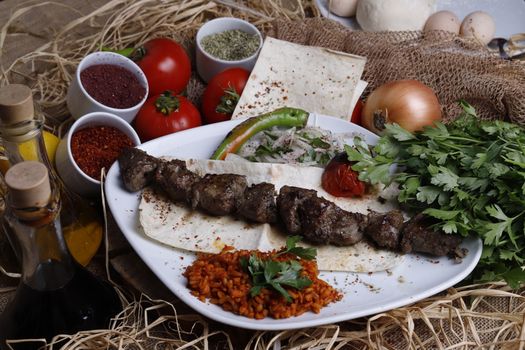
Cumin Lamb Skewers
The diets react (see scores below)
Common Ingredients
- lamb shoulder
- cumin seeds
- red chili flakes
- garlic
- Sichuan peppercorns
- salt
- Shaoxing wine
Specific recipes may vary.
Incompatible with 7 of 11 diets
Diet Ratings
Cumin lamb skewers are largely keto-friendly — lamb shoulder is an excellent high-fat, moderate-protein meat, and the spices (cumin, chili flakes, Sichuan peppercorns, garlic) contribute negligible carbs. The primary concern is Shaoxing wine, a rice-based cooking wine that contains residual sugars and carbohydrates (roughly 5-8g carbs per 2 tbsp). In typical street-food or restaurant portions, Shaoxing wine is used as a marinade, and much of it cooks off, but the residual carbs can add up if portions are large or preparation is heavy-handed. Strict keto practitioners would substitute dry sherry or simply omit it. Otherwise, this dish is high-fat, protein-rich, and spice-forward — a near-ideal keto snack with one ingredient to manage.
Some lazy keto or moderate keto practitioners consider the small residual carbs from Shaoxing wine negligible after cooking and would fully approve this dish without modification, especially in single-serving portions. Conversely, strict keto and clinical keto protocols flag any grain-derived alcohol or sugar-containing cooking wine as incompatible and require substitution.
Cumin Lamb Skewers are entirely incompatible with a vegan diet. The primary protein is lamb shoulder, which is red meat from a slaughtered animal — a clear violation of the foundational vegan principle of excluding all animal flesh. The remaining ingredients (cumin seeds, red chili flakes, garlic, Sichuan peppercorns, salt, and Shaoxing wine) are plant-derived and unproblematic, but the presence of lamb renders this dish unequivocally non-vegan. There is no ambiguity here within vegan discourse.
Cumin Lamb Skewers contain two clear paleo violations: added salt and Shaoxing wine. Salt is explicitly excluded under paleo rules as an added/processed ingredient, and Shaoxing wine is a grain-based rice wine (fermented from glutinous rice), placing it firmly in the grain-derived category. The base ingredients — lamb shoulder, cumin seeds, red chili flakes, garlic, and Sichuan peppercorns — are all paleo-approved whole foods. However, the combination of two non-compliant ingredients (salt and a grain-derived alcohol) pushes this dish into avoid territory as prepared. A paleo adaptation would require omitting the salt and substituting or removing the Shaoxing wine entirely.
Cumin lamb skewers feature lamb shoulder as the primary protein, which is red meat — explicitly limited to a few times per month in Mediterranean diet guidelines. The dish is otherwise simply spiced with whole spices (cumin, chili, garlic) which are acceptable, but the core ingredient directly contradicts the diet's principle of minimizing red meat consumption. The use of Shaoxing wine is a minor additional concern as a non-traditional ingredient, though the alcohol content is negligible in cooking. No olive oil, no plant-forward emphasis, no Mediterranean staples are present.
While lamb shoulder is an excellent carnivore-approved ruminant meat, this dish contains multiple plant-derived ingredients that disqualify it from strict carnivore compliance: cumin seeds, red chili flakes, garlic, Sichuan peppercorns, and Shaoxing wine (a rice-based cooking wine). The Shaoxing wine is particularly problematic as it is a processed grain-based alcohol. The combination of several spices and a grain-derived alcohol pushes this well outside carnivore boundaries, even for lenient practitioners. Only salt is acceptable. If the lamb were stripped of all these additions and served with salt only, it would score a 9-10.
A small but vocal segment of carnivore practitioners, particularly those following a more relaxed approach, tolerate occasional use of spices like cumin or chili as trace additions that do not meaningfully contribute plant matter to the diet. However, the Shaoxing wine (a grain alcohol) would still be rejected by virtually all carnivore camps, including the more permissive ones.
Shaoxing wine is a rice wine (alcohol) and is explicitly excluded on the Whole30, which prohibits all forms of alcohol. Every other ingredient in this dish — lamb shoulder, cumin seeds, red chili flakes, garlic, Sichuan peppercorns, and salt — is fully Whole30 compliant. However, the inclusion of Shaoxing wine as a marinade or seasoning ingredient disqualifies the dish as written. To make this Whole30-compliant, simply omit the Shaoxing wine or substitute with coconut aminos mixed with a splash of compliant vinegar (e.g., rice vinegar) to approximate the umami depth.
This dish contains garlic, which is one of the highest-FODMAP ingredients known — even small amounts of garlic cloves contribute significant fructans and must be strictly avoided during the elimination phase. Garlic is a primary seasoning in this recipe, not an incidental ingredient. The lamb shoulder itself is low-FODMAP (plain meat contains no FODMAPs), and cumin seeds, red chili flakes, Sichuan peppercorns, and salt are all low-FODMAP spices. Shaoxing wine is generally considered low-FODMAP in cooking quantities. However, the presence of garlic as a direct ingredient is disqualifying — unlike garlic-infused oil (where FODMAPs don't leach into fat), using garlic cloves or powder directly on the meat means fructans are fully present in the final dish.
Cumin lamb skewers present multiple DASH diet concerns. The primary issue is the protein source: lamb shoulder is a red meat with significant saturated fat content, which DASH guidelines explicitly advise limiting. DASH emphasizes lean proteins such as poultry, fish, and plant-based proteins over red meat. Beyond the protein choice, the preparation adds salt directly as an ingredient, increasing sodium load above what is inherent to the meat. Shaoxing wine also contributes additional sodium. The dish as a street-food snack is typically consumed in multiple skewers, compounding portion-related concerns. While the spices (cumin, garlic, chili flakes, Sichuan peppercorns) are DASH-neutral or mildly beneficial, they do not offset the core issues of red meat and added sodium. This dish conflicts with foundational DASH principles regarding saturated fat and sodium management.
Cumin lamb skewers present a mixed Zone Diet profile. Lamb shoulder is a moderately fatty cut of meat with higher saturated fat content compared to Zone-preferred lean proteins like skinless chicken breast or fish. However, the spice blend (cumin, chili flakes, garlic, Sichuan peppercorns) is excellent from an anti-inflammatory and polyphenol standpoint — strongly aligned with Sears' later work emphasizing polyphenol-rich foods. Shaoxing wine adds minimal carbs in cooking quantities. The primary Zone challenge here is the fat profile of lamb shoulder: it carries notable saturated fat and a less favorable omega-6 to omega-3 ratio compared to fish or poultry. As a snack/protein component in a Zone meal, a small portion (about 1 oz cooked) could fill one protein block, but the fat block accounting must adjust for the inherent fat in the lamb shoulder, leaving little room for additional fat additions. Served as a skewer snack without accompanying carbs, this would be a protein-and-fat heavy snack that lacks the carbohydrate block needed for Zone balance — requiring a low-GI carb side to complete the ratio. Usable in Zone with careful portioning and pairing, but not a first-choice protein.
Sears' earlier Zone books (Enter the Zone, 1995) categorized lamb as an 'unfavorable' protein due to its saturated fat content, recommending strict limits. However, Sears' later anti-inflammatory writing acknowledges that the polyphenol richness of a meal can offset some concerns, and that lean lamb in moderation is acceptable. Some Zone practitioners treat trimmed lamb as a reasonable 'caution' protein rather than an outright avoid, particularly when the spice profile (as here) is rich in anti-inflammatory compounds like cumin and capsaicin.
Cumin lamb skewers present a mixed anti-inflammatory profile. On the positive side, the dish features several potent anti-inflammatory spices: cumin has documented antioxidant and anti-inflammatory properties, garlic contains allicin and organosulfur compounds that reduce inflammatory markers, red chili flakes contain capsaicin (a known anti-inflammatory agent), and Sichuan peppercorns offer hydroxy-alpha-sanshool and antioxidant compounds. Shaoxing wine is used in small cooking quantities and poses minimal concern. However, the central protein — lamb shoulder — is red meat with notable saturated fat content, which the anti-inflammatory framework places in the 'limit' category. Lamb also contains arachidonic acid, a precursor to pro-inflammatory eicosanoids. The shoulder cut in particular is a fattier cut compared to loin or leg. The spice blend is genuinely impressive from an anti-inflammatory standpoint and partially offsets the red meat concern, but does not fully neutralize it. Occasional consumption in modest portions is acceptable within anti-inflammatory principles, but this is not a dish to eat regularly.
Some anti-inflammatory researchers (including those aligned with ancestral or paleo-adjacent frameworks) argue that unprocessed red meat like lamb, being rich in zinc, iron, B12, and conjugated linoleic acid (CLA), is not inherently pro-inflammatory and that the saturated fat concern is overstated. Mainstream anti-inflammatory authorities like Dr. Weil, however, consistently recommend limiting red meat and favor fish and plant proteins, placing lamb in the 'use sparingly' tier.
Cumin lamb skewers present a mixed profile for GLP-1 patients. Lamb shoulder is a meaningful protein source, but it is a fatty cut with significant saturated fat content, which can worsen GLP-1 side effects like nausea, bloating, and reflux — especially problematic given the slowed gastric emptying caused by these medications. The spice blend is a notable concern: red chili flakes and Sichuan peppercorns are both potent GI irritants that can exacerbate nausea and reflux, which are already common GLP-1 side effects. Cumin itself is generally well-tolerated and has some digestive benefits. Shaoxing wine contributes minimal alcohol in a cooked preparation but adds negligible nutritional value. As a skewer/snack format, portion control is more manageable than a full entrée, which slightly mitigates the fat concern. A leaner cut (lamb loin or leg) with reduced chili would score meaningfully higher. In its standard form using shoulder with full spicing, this dish sits in caution territory rather than avoid, primarily because it does deliver real protein and the skewer format supports small servings.
Some GLP-1-focused dietitians would rate this more harshly as an avoid, citing the combination of high saturated fat from shoulder cut plus aggressive spicing as a reliable trigger for GI side effects — particularly on higher doses of semaglutide or tirzepatide. Others with more permissive views on red meat note that for patients struggling to meet protein targets, fatty lamb in small skewer portions is still a net positive over skipping protein entirely, and that individual spice tolerance varies considerably.
*See how scores were generated at our methodology page.
Nutritional profile
Six traits that cut across every diet.
Fiber & Plants
How much whole-plant food and fiber it delivers.
Healthy Fats
The quality of its fats (unsaturated, omega-3).
Whole / Unprocessed
How close it is to its natural, unprocessed form.
Gut Gentle
How easy it is on digestion (low FODMAP, few irritants).
Low Glycemic
How little it spikes your blood sugar.
Protein Density
How much protein it packs per calorie.
Controversy Index
Higher controversy = more disagreement between diets.
Diet-Specific Tips
 Keto — 6/10
View tips
- Lamb shoulder is high in fat and protein — excellent keto macros
- Shaoxing wine is rice-derived and contains residual sugars/carbs — the main concern
- Cumin, chili flakes, Sichuan peppercorns, garlic all contribute near-zero net carbs
- Cooking reduces but does not eliminate alcohol and sugar content from Shaoxing wine
- Easy substitution: dry sherry or omission makes this fully keto-approved
- Portion size matters — multiple skewers with heavy marinade could push carb limits
 Zone — 5/10
View tips
- Lamb shoulder has higher saturated fat than Zone-preferred lean proteins, making it an 'unfavorable' protein source in classic Zone terminology
- Rich spice blend (cumin, chili, garlic, Sichuan pepper) provides strong anti-inflammatory and polyphenol benefits aligned with Sears' later work
- Shaoxing wine contributes negligible carbs in cooking quantities — not a Zone concern
- As a snack, these skewers lack a carbohydrate block entirely — a low-GI vegetable or fruit pairing is needed to achieve Zone 40/30/30 balance
- Portion control is critical: a typical skewer serving may exceed one protein block and already include 1-2 fat blocks from the lamb's inherent fat
- Would benefit from substituting lamb loin (leaner) for lamb shoulder to improve Zone compatibility
 Anti-Inflammatory — 5/10
View tips
- Lamb shoulder is a fatty red meat, categorized as 'limit' in anti-inflammatory frameworks due to saturated fat and arachidonic acid content
- Cumin is a well-studied anti-inflammatory spice with antioxidant properties
- Garlic provides allicin and organosulfur compounds that reduce CRP and IL-6 in research
- Red chili flakes contain capsaicin, a documented anti-inflammatory compound
- Sichuan peppercorns offer antioxidant and mild anti-inflammatory properties
- Shaoxing wine used in small amounts during cooking poses negligible concern
- No refined oils, sugars, additives, or trans fats in the ingredient list
- Grilling/skewering method avoids heavy added fats, a relative positive
 GLP-1 Friendly — 4/10
View tips
- Lamb shoulder is a high-fat, high-saturated-fat cut — poor fit for GLP-1 patients prone to nausea and slow gastric emptying
- Red chili flakes and Sichuan peppercorns are strong GI irritants that may worsen reflux and nausea common on GLP-1 medications
- Protein content is meaningful but undermined by the fatty cut choice
- Skewer/snack format supports small portion control, a mitigating factor
- Shaoxing wine is cooked off and presents minimal alcohol concern at typical quantities
- Zero fiber content — does not support the fiber priority for GLP-1 patients
- Leaner lamb cuts (leg, loin) with reduced chili would shift this toward approve territory