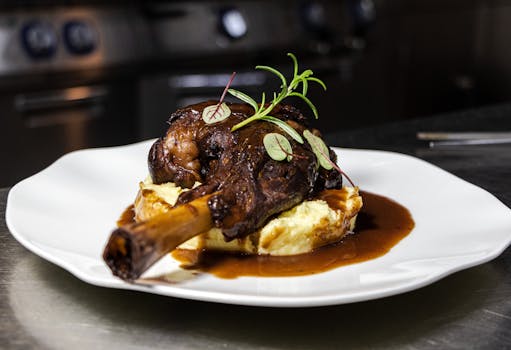
Photo: Rahib Yaqubov / Pexels
Mediterranean
Cypriot Kleftiko (Slow-Roasted Lamb)
The diets react (see scores below)
Common Ingredients
- lamb shoulder
- potatoes
- lemon
- garlic
- oregano
- bay leaves
- olive oil
- cinnamon
Specific recipes may vary.
Incompatible with 4 of 11 diets
Diet Ratings
Cypriot Kleftiko is fundamentally incompatible with ketogenic diet in its traditional form due to the potatoes, which are a starchy vegetable and a primary component of the dish. A standard serving of potatoes (150-200g) contributes 25-35g of net carbs on its own, easily breaching the 20-50g daily keto limit. While the lamb shoulder is an excellent keto protein with high fat content, and the other ingredients (olive oil, garlic, oregano, lemon in small amounts, cinnamon, bay leaves) are keto-friendly, the potatoes are not a minor garnish — they are integral to the dish and cannot simply be reduced without fundamentally changing the recipe. The lemon juice adds a small amount of carbs but is negligible. The dish cannot be 'portion controlled' around the potato problem without essentially removing a defining ingredient.
Cypriot Kleftiko is built entirely around lamb shoulder as its primary and defining ingredient. Lamb is unambiguously animal flesh, making this dish completely incompatible with a vegan diet. The remaining ingredients — potatoes, lemon, garlic, oregano, bay leaves, olive oil, and cinnamon — are all plant-based, but the central protein is a slaughtered animal. There is no meaningful vegan debate here; this is a clear disqualification.
Cypriot Kleftiko is largely paleo-compatible, but the inclusion of potatoes places it in the gray area. Lamb shoulder, lemon, garlic, oregano, bay leaves, olive oil, and cinnamon are all clearly paleo-approved ingredients. White potatoes, however, are a debated ingredient: originally excluded by Loren Cordain due to their glycemic load and glycoalkaloid content, but increasingly accepted by mainstream modern paleo practitioners. The dish scores well overall given the quality of its primary protein and fat sources, but cannot reach a full 'approve' rating while the potato debate remains unresolved.
Loren Cordain and The Paleo Diet's official guidelines discourage white potatoes due to their high glycemic index and antinutrient (glycoalkaloid) content. However, Mark Sisson (Mark's Daily Apple) and the Whole30 protocol both permit white potatoes, and this has become the dominant modern paleo position, making strict exclusion a minority stance today.
Cypriot Kleftiko is a traditional slow-roasted lamb dish deeply embedded in Eastern Mediterranean culinary heritage. The ingredient list is largely exemplary — olive oil, lemon, garlic, oregano, and potatoes are all Mediterranean diet staples, and the cooking method (slow-roasting, no processed ingredients) is wholesome. However, the primary protein is lamb, a red meat, which the Mediterranean diet restricts to a few times per month. While this is an authentic regional dish, the red meat component means it should be treated as an occasional meal rather than a regular feature of a Mediterranean diet.
Some traditional Mediterranean diet scholars argue that lamb holds a culturally significant place in Eastern Mediterranean and Greek Cypriot cuisine and is consumed at festive occasions, suggesting moderate inclusion is consistent with authentic regional practice. However, modern clinical interpretations of the Mediterranean diet (e.g., PREDIMED guidelines) clearly categorize red meat as a food to limit regardless of cultural tradition.
Cypriot Kleftiko is predominantly a plant-heavy dish despite its lamb base. The protein source — lamb shoulder — is excellent for carnivore and would score a 9-10 on its own. However, the dish is built around multiple plant-based ingredients that are entirely incompatible with the carnivore diet: potatoes (starchy vegetable/carbohydrate), lemon (fruit), garlic (allium vegetable), oregano (herb/plant spice), bay leaves (plant spice), olive oil (plant-derived oil), and cinnamon (plant spice). This is fundamentally a Mediterranean plant-forward preparation that happens to contain lamb. The only salvageable component is the lamb shoulder itself — everything else must be stripped away for carnivore compliance. The dish as presented cannot be approved in any carnivore tier.
Cypriot Kleftiko is a slow-roasted lamb dish made entirely from Whole30-compliant ingredients. Lamb shoulder is an unprocessed meat, potatoes are a compliant vegetable, lemon provides natural acidity, garlic and oregano are allowed herbs and aromatics, bay leaves are a compliant seasoning, olive oil is a natural fat, and cinnamon is a permitted spice. Every ingredient in this dish is explicitly allowed on the Whole30 program with no excluded ingredients present.
Cypriot Kleftiko contains garlic as a core ingredient, which is high-FODMAP due to fructans and must be avoided during the elimination phase at any meaningful quantity. Garlic is typically embedded directly into the lamb in this dish (stuffed into slits), meaning the fructans leach into the meat and cooking juices throughout the long slow-roast, contaminating the entire dish. There is no practical way to remove the FODMAP load once the garlic has slow-cooked into the lamb for several hours. The remaining ingredients are generally low-FODMAP: lamb shoulder is protein with no FODMAPs, potatoes are low-FODMAP at a standard serving (Monash approves ~1 medium potato), lemon juice and zest are low-FODMAP, oregano and bay leaves are low-FODMAP dried herbs in culinary quantities, olive oil is FODMAP-free, and cinnamon is low-FODMAP at typical serving sizes. The dish fails solely but definitively because of garlic.
Cypriot Kleftiko features lamb shoulder as its primary protein, which is a red meat with moderate-to-high saturated fat content — particularly concerning for DASH, which explicitly limits red meat. Lamb shoulder is a fatty cut that can contain 8-12g of saturated fat per serving, pushing against DASH's saturated fat limits. However, many of the accompanying ingredients are strongly DASH-aligned: potatoes provide potassium and fiber, garlic and herbs (oregano, bay leaves) are encouraged, lemon adds flavor without sodium, and olive oil is a preferred vegetable oil. The dish is naturally low in sodium (no processed ingredients or added salt beyond home seasoning), which is a significant DASH advantage. Cinnamon is neutral-to-positive. The slow-roasting method renders some fat out of the shoulder. Overall, this is a traditional Mediterranean dish that aligns with some DASH principles but conflicts with its red meat restriction. Acceptable occasionally in a DASH context, particularly if portion-controlled (3oz lean serving) and excess fat trimmed or skimmed.
NIH DASH guidelines categorize lamb as red meat and recommend limiting red and processed meats in favor of poultry and fish. However, updated Mediterranean-DASH hybrid perspectives (such as the MIND diet and Mediterranean diet research) suggest that unprocessed, herb-seasoned lamb consumed occasionally fits within a heart-healthy eating pattern — some DASH-oriented clinicians allow lean red meat 1-2 times per week without meaningful cardiovascular risk increase.
Cypriot Kleftiko presents a mixed Zone Diet profile. The lamb shoulder is the central concern: while lamb is a complete protein source, it is a fatty cut with significant saturated fat, unlike the lean proteins (skinless chicken, fish, egg whites) that Dr. Sears favors. A typical serving will deliver acceptable protein blocks (~25g per meal) but with an unwanted saturated fat burden that complicates the 30% fat target and the anti-inflammatory emphasis. The potatoes are a more straightforward problem — they are explicitly listed as a high-glycemic, unfavorable carbohydrate in Zone methodology, equivalent to white bread in their glycemic impact, meaning this dish's primary carbohydrate source is one Sears categorically discourages. Olive oil is ideal Zone fat (monounsaturated), and lemon, garlic, and herbs add polyphenols with negligible macro impact. Cinnamon is actually favorable in Zone's anti-inflammatory framework. Overall, the dish can be adapted — swapping potatoes for low-GI vegetables (e.g., roasted peppers, zucchini, artichokes) and choosing leaner lamb cuts (leg rather than shoulder) would significantly improve its Zone compatibility — but as traditionally prepared, two of the three macro pillars (the protein's fat quality and the carbohydrate's glycemic load) conflict with Zone ideals.
Some Zone practitioners and Sears' later anti-inflammatory writings (The OmegaRx Zone, Zone Perfect Meals in Minutes) soften the stance on lamb, noting that grass-fed lamb contains a more favorable omega-6 to omega-3 ratio and reasonable conjugated linoleic acid content compared to grain-fed red meat. Under this framing, a leaner lamb cut in a controlled portion could approach 'moderate caution' rather than a firm unfavorable. However, the potatoes remain consistently classified as unfavorable across all editions of Sears' work, keeping the dish firmly in caution territory as served.
Cypriot Kleftiko is a mixed dish from an anti-inflammatory standpoint. On the positive side, it features several strongly anti-inflammatory ingredients: extra virgin olive oil (oleocanthal, polyphenols), garlic (allicin, quercetin), oregano (rosmarinic acid, flavonoids), cinnamon (cinnamaldehyde, antioxidants), lemon (vitamin C, hesperidin), and bay leaves (eugenol, antioxidants). These spices and aromatics collectively provide meaningful anti-inflammatory phytochemical support. Potatoes, while a starchy carbohydrate, are whole and unprocessed here. The central concern is the lamb shoulder, which is red meat with significant saturated fat content — a category the anti-inflammatory framework explicitly limits. Lamb in particular has a higher saturated fat load than poultry or fish. Slow-roasting a fatty cut like lamb shoulder renders out additional fat, concentrating saturated content per serving. However, lamb also provides zinc, iron, and some conjugated linoleic acid (CLA), and the Mediterranean preparation context — generous olive oil, herbs, and aromatics — meaningfully offsets the inflammatory burden compared to, say, a plain grilled red meat dish. Overall, this is a culturally authentic Mediterranean dish that occupies the 'limit red meat' zone rather than 'avoid processed foods' — acceptable occasionally but not a staple for someone following a strict anti-inflammatory protocol.
Some anti-inflammatory practitioners, particularly those following Dr. Weil's broader Mediterranean framework, would note that lamb consumed occasionally in whole, unprocessed form within an herb- and olive-oil-rich preparation is consistent with traditional Mediterranean dietary patterns, which are themselves associated with reduced inflammatory markers — suggesting this dish could lean toward acceptable rather than cautionary. Conversely, stricter anti-inflammatory protocols (such as those targeting autoimmune conditions) would flag the arachidonic acid and saturated fat in lamb shoulder more severely and recommend swapping to fatty fish or legumes entirely.
Cypriot Kleftiko is a slow-roasted lamb shoulder dish that presents a mixed nutritional profile for GLP-1 patients. On the positive side, lamb shoulder provides meaningful protein (~25-28g per 100g cooked), the slow-roasting method improves digestibility compared to frying, and the aromatics (garlic, oregano, lemon, cinnamon) are GLP-1 friendly. Olive oil is a preferred unsaturated fat. However, lamb shoulder is a high-fat cut — typically 20-25g of fat per 100g cooked, with significant saturated fat content — which is the primary concern for GLP-1 patients prone to nausea, bloating, and reflux. The fat content can worsen GI side effects meaningfully. Potatoes add fiber and potassium but are a moderate-glycemic starch with limited protein. The dish is also calorie-dense per serving and likely requires a larger portion to hit protein targets, which conflicts with GLP-1 small-portion physiology. A standard restaurant or home serving would likely exceed recommended fat thresholds for GLP-1 patients. This dish is not ideal but not categorically prohibited — a small, lean-trimmed portion could be acceptable.
Some GLP-1-focused RDs allow lamb occasionally given its complete amino acid profile, zinc, and iron content, arguing that a carefully portioned serving with fat trimmed provides acceptable protein density without exceeding fat thresholds. Others caution that lamb shoulder specifically — as opposed to leaner cuts like lamb leg or loin — is too fatty to recommend reliably, as fat tolerance on GLP-1s varies considerably between patients and across dose-escalation phases.
*See how scores were generated at our methodology page.
Nutritional profile
Six traits that cut across every diet.
Fiber & Plants
How much whole-plant food and fiber it delivers.
Healthy Fats
The quality of its fats (unsaturated, omega-3).
Whole / Unprocessed
How close it is to its natural, unprocessed form.
Gut Gentle
How easy it is on digestion (low FODMAP, few irritants).
Low Glycemic
How little it spikes your blood sugar.
Protein Density
How much protein it packs per calorie.
Controversy Index
Higher controversy = more disagreement between diets.
Diet-Specific Tips
 Paleo — 6/10
View tips
- Lamb shoulder is an excellent paleo protein — unprocessed, nutrient-dense, and rich in healthy fats
- Olive oil is a paleo-approved fat source
- Garlic, oregano, bay leaves, cinnamon, and lemon are all whole, paleo-compliant seasonings
- White potatoes are the sole contested ingredient — excluded by strict Cordain-school paleo but accepted by many modern paleo frameworks
- No grains, legumes, dairy, seed oils, or refined sugar present
- Traditional slow-roasting method aligns well with whole-food, unprocessed paleo philosophy
 Mediterranean — 4/10
View tips
- Lamb shoulder is red meat — limited to a few times per month under Mediterranean diet guidelines
- Traditional Cypriot dish with deep regional Mediterranean roots
- Olive oil used as primary fat — positive
- No processed ingredients; whole-food preparation
- Aromatic herbs, garlic, and lemon align perfectly with Mediterranean principles
- Potatoes add a plant-based component but are refined-starch adjacent
- Occasional consumption is acceptable; not suitable as a frequent staple
 Whole30 — 9/10
View tips
- Lamb shoulder is a whole, unprocessed meat — fully compliant
- Potatoes are explicitly allowed on Whole30
- Lemon, garlic, oregano, bay leaves, and cinnamon are all compliant herbs and spices
- Olive oil is a compliant natural fat
- No grains, legumes, dairy, added sugars, or other excluded ingredients
- Dish is a whole-food preparation, not a recreation of a non-compliant comfort food
 DASH — 5/10
View tips
- Lamb shoulder is a fatty red meat cut with significant saturated fat — a primary DASH concern
- No processed ingredients or added sodium — favorable for DASH sodium targets
- Potatoes contribute potassium and fiber, supporting DASH nutrient goals
- Olive oil is the fat source — preferred over saturated/tropical oils in DASH
- Garlic, oregano, lemon, and herbs replace salt for flavor — DASH-positive cooking technique
- Portion control is critical: a 3oz trimmed serving is more compatible than a large restaurant portion
- Slow-roasting renders some fat, slightly improving the saturated fat profile vs. other cooking methods
- Cinnamon and bay leaves are neutral/positive phytochemical contributors
 Zone — 4/10
View tips
- Lamb shoulder is high in saturated fat — a less favorable Zone protein compared to skinless chicken, fish, or lean cuts
- Potatoes are explicitly categorized as a high-glycemic, unfavorable carbohydrate by Dr. Sears — comparable to white bread
- Olive oil is an ideal Zone fat source (monounsaturated) and partially offsets concerns
- Lemon, garlic, oregano, and cinnamon contribute polyphenols aligned with Zone's anti-inflammatory goals
- Dish can be Zone-adapted by substituting low-GI vegetables for potatoes and selecting leaner lamb (leg over shoulder)
- As traditionally prepared, the carbohydrate and fat quality both fall outside Zone-favorable classifications
 Anti-Inflammatory — 5/10
View tips
- Lamb shoulder is red meat with high saturated fat — falls in the 'limit' category of anti-inflammatory guidelines
- Extra virgin olive oil is a cornerstone anti-inflammatory fat (oleocanthal, polyphenols)
- Garlic provides allicin and quercetin with well-documented anti-inflammatory effects
- Oregano and cinnamon are both anti-inflammatory spices with polyphenol content
- Lemon contributes vitamin C and flavonoids
- Potatoes are whole/unprocessed but add glycemic load
- Slow-cooking renders fat from lamb shoulder, potentially increasing saturated fat concentration in the dish
- Mediterranean preparation context (herbs, olive oil, aromatics) partially offsets red meat inflammatory burden
 GLP-1 Friendly — 4/10
View tips
- Lamb shoulder is a high-fat, high-saturated-fat cut — primary concern for GLP-1 GI side effects
- Meaningful protein content but offset by high fat density per calorie
- Slow-roasting improves digestibility vs. frying, a mild positive
- Olive oil is an appropriate fat source but adds to already high fat load
- Potatoes contribute carbohydrates and some fiber but minimal protein
- Calorie-dense dish conflicts with small-portion GLP-1 physiology
- Lemon, garlic, oregano, cinnamon are all GLP-1 friendly ingredients
- Trimming visible fat and controlling portion size can mitigate concerns