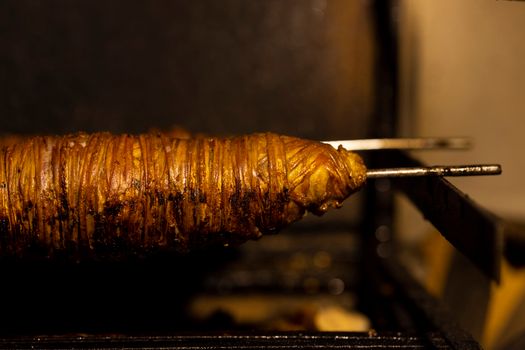
Photo: Engin Akyurt / Pexels
Mediterranean
Cypriot Souvla
The diets react (see scores below)
Common Ingredients
- lamb leg
- olive oil
- lemon juice
- oregano
- garlic
- salt
- black pepper
- bay leaves
Specific recipes may vary.
Incompatible with 5 of 11 diets
Diet Ratings
Cypriot Souvla is an excellent ketogenic dish. Lamb leg is a high-fat, high-quality protein source with virtually zero carbohydrates. The marinade ingredients — olive oil (healthy fat), lemon juice (minimal carbs), oregano, garlic, salt, black pepper, and bay leaves — contribute negligible net carbs. The dish is whole, unprocessed, and free of grains, sugars, or starchy ingredients. Total net carbs for a standard serving would be well under 2-3g, primarily from garlic and lemon juice. The fat content from lamb and olive oil aligns perfectly with keto macros.
Cypriot Souvla is a traditional slow-roasted meat dish whose primary ingredient is lamb leg (or pork), both of which are animal flesh and entirely incompatible with a vegan diet. While the marinade components — olive oil, lemon juice, oregano, garlic, salt, black pepper, and bay leaves — are all plant-based, the central protein makes this dish unequivocally non-vegan. There is no ambiguity here: this is a meat-based dish.
Cypriot Souvla is predominantly paleo-compatible — lamb leg, olive oil, lemon juice, oregano, garlic, and bay leaves are all whole, unprocessed ingredients fully aligned with paleo principles. However, the inclusion of added salt places this dish in 'avoid' territory under strict paleo rules. Salt is excluded from the paleo framework on the basis that Paleolithic humans did not have access to refined, extracted sodium chloride as a seasoning. Black pepper is a minor point of debate but is widely accepted. Without the salt, this dish would score a 9 and receive a strong approval.
Cypriot Souvla is a traditional slow-roasted meat dish built around lamb or pork — both classified as red meat in Mediterranean diet guidelines. Red meat is explicitly limited to a few times per month, making this a dish that contradicts the core protein hierarchy of the diet. The marinade ingredients (olive oil, lemon juice, oregano, garlic, bay leaves) are exemplary Mediterranean pantry staples and add genuine nutritional value, but they cannot offset the primary ingredient being red meat. The dish is whole, unprocessed, and free of refined grains or added sugars, which distinguishes it from truly egregious violations, but red meat as the centerpiece keeps it in the 'avoid' tier for regular consumption.
Traditional Cypriot and broader Eastern Mediterranean food culture has incorporated lamb and pork celebrations for centuries, and some Mediterranean diet authorities (including those referencing the original Ancel Keys observations in Greece and Crete) acknowledge that lean, whole cuts of red meat consumed occasionally in social or festive contexts fit within the cultural pattern — particularly when prepared simply with olive oil and herbs rather than processed. The absence of any ultra-processed ingredients here is noted favorably by more culturally inclusive interpretations.
While the primary protein — lamb leg — is an excellent carnivore-approved ruminant meat, Cypriot Souvla as a dish is heavily marinated in multiple plant-derived ingredients that are all excluded on a carnivore diet. Olive oil is a plant-derived oil, lemon juice is a fruit extract, oregano and bay leaves are plant herbs, garlic is a plant, and black pepper is a plant spice. Only the lamb and salt are carnivore-compliant. The dish in its traditional form cannot be considered carnivore-compatible. The lamb itself would score a 9-10 if eaten plain with salt only.
Cypriot Souvla is a whole, minimally processed dish consisting entirely of Whole30-compliant ingredients. Lamb leg is an approved protein (meat). Olive oil is a natural fat explicitly allowed. Lemon juice is a natural, compliant flavoring. Oregano, garlic, bay leaves, salt, and black pepper are all herbs and spices fully permitted on the program. There are no excluded ingredients whatsoever — no grains, legumes, dairy, added sugars, alcohol, or any other prohibited substances. This is exactly the kind of whole, clean, protein-and-fat-centered meal the Whole30 program encourages.
Cypriot Souvla contains whole garlic cloves as a core marinade ingredient, which is a high-FODMAP food due to its significant fructan content. Garlic is one of the most problematic FODMAP foods and cannot be made safe simply by reducing quantity — even small amounts of garlic flesh introduce fructans that are inappropriate during the elimination phase. All other ingredients are low-FODMAP: lamb leg (plain meat, no FODMAPs), olive oil (fat, FODMAP-free), lemon juice (low-FODMAP at standard use), oregano (low-FODMAP dried herb), salt, black pepper (low-FODMAP in culinary amounts), and bay leaves (low-FODMAP). The dish fails elimination phase compliance solely due to the garlic. If garlic were replaced with garlic-infused oil (where FODMAPs remain in the aqueous phase and do not transfer to oil), the dish would be fully approved.
Cypriot Souvla is large chunks of lamb or pork slow-roasted on a spit, seasoned with olive oil, lemon juice, oregano, garlic, salt, and bay leaves. The preparation is relatively clean — no processed ingredients, no added sugars, no trans fats — and the use of olive oil, lemon, and herbs aligns well with DASH principles. However, lamb is a red meat with moderate-to-high saturated fat content (particularly leg cuts with visible fat), which DASH guidelines advise limiting. DASH explicitly recommends lean meats and poultry over red meat, and suggests no more than 6 oz of lean meat/poultry/fish per day. The added salt is a sodium concern, though home preparation allows control. Pork shoulder (an alternative base protein) would carry similar saturated fat concerns. The dish is not heavily processed and avoids high-sodium condiments, sugar, or tropical oils, placing it firmly in the 'caution' zone rather than 'avoid.' Portion size is a key determinant — a small serving (3 oz) with fat trimmed is more compatible than a large traditional serving.
NIH DASH guidelines categorically limit red meat due to saturated fat and recommend lean poultry or fish as preferred proteins; however, some updated clinical interpretations note that unprocessed lean cuts of lamb or pork, trimmed of visible fat, may fit within a DASH-style pattern when consumed occasionally and in controlled portions, citing the 2020-2025 Dietary Guidelines' broader acceptance of lean unprocessed meats in healthy dietary patterns.
Cypriot Souvla is slow-roasted lamb leg marinated in olive oil, lemon juice, oregano, garlic, and herbs. The protein source (lamb leg) is the central Zone concern. Lamb is a complete, high-quality protein but is higher in saturated fat than Zone-preferred lean proteins like skinless chicken or fish. A typical serving of lamb leg contains meaningful saturated fat, which Sears traditionally discouraged in favor of monounsaturated fat sources. However, the marinade is exemplary from a Zone perspective — olive oil provides ideal monounsaturated fat, lemon juice adds polyphenols, and oregano and garlic are strongly anti-inflammatory. The dish contains zero carbohydrates, so it functions purely as a protein+fat component requiring significant low-glycemic vegetable sides to complete a Zone-balanced meal. With careful portioning (approximately 85-100g of lean lamb to hit ~25g protein per meal) and trimming visible fat, souvla can fit into a Zone meal as the protein block alongside a large vegetable-based carbohydrate component. The fat block is partially covered by the olive oil marinade, reducing the need for added fats. The dish is whole-food and unprocessed, which aligns with Zone's anti-inflammatory principles.
Earlier Zone writings (Enter the Zone) placed lamb in the 'use sparingly' category due to saturated fat content. However, Sears' later anti-inflammatory work acknowledged that whole-food saturated fats in modest portions are far less problematic than processed carbohydrates or omega-6 seed oils. Some Zone practitioners would approve souvla made from leg of lamb (leaner than shoulder or ribs) as an acceptable protein block, especially given the anti-inflammatory marinade. The verdict shifts based on which era of Sears' methodology one follows.
Cypriot Souvla is a slow-roasted or skewered meat dish built on a mixed anti-inflammatory foundation. The marinade is genuinely strong — extra virgin olive oil (oleocanthal, polyphenols), garlic (allicin, immune-modulating compounds), oregano (rosmarinic acid, antioxidants), lemon juice (vitamin C, alkalizing), and bay leaves all carry well-documented anti-inflammatory properties. However, the primary protein — lamb leg — is classified as red meat, which the anti-inflammatory framework places in the 'limit' category due to its saturated fat content (palmitic and myristic acid) and its association with elevated inflammatory markers (CRP, IL-6) in epidemiological research. The dish is relatively clean — no processed ingredients, refined carbohydrates, seed oils, or additives. The Mediterranean preparation style (herb-marinated, simply seasoned) is more favorable than typical Western red meat preparations, and lamb does provide anti-inflammatory zinc and B12. Pork would score marginally better as a leaner option with less saturated fat than lamb. Occasional consumption in the context of an otherwise anti-inflammatory diet is reasonable, particularly given the Mediterranean heritage of the dish and its whole-food ingredient profile. This is not an 'avoid' food — but regular reliance on lamb as a protein source would conflict with anti-inflammatory principles.
Dr. Andrew Weil's Anti-Inflammatory Pyramid does permit occasional lean red meat, and some Mediterranean diet researchers argue that pasture-raised lamb — common in Cypriot tradition — has a more favorable omega-3 to omega-6 ratio than grain-fed beef, potentially reducing its inflammatory burden. Conversely, stricter anti-inflammatory protocols and researchers focusing on arachidonic acid pathways flag all red meat as consistently pro-inflammatory regardless of sourcing or preparation, recommending it be displaced by fish or legumes.
Cypriot Souvla is slow-roasted or grilled large cuts of lamb or pork, marinated in olive oil, lemon juice, oregano, garlic, and bay leaves. The cooking method is a genuine strength — it is not fried, not heavily processed, and the marinade ingredients are all GLP-1 friendly. The dish delivers solid complete protein, which is the top priority for GLP-1 patients. However, the primary protein source is lamb leg, a fatty red meat with significant saturated fat content (a typical 150g serving of lamb leg carries 10-18g of fat, 5-8g of it saturated). Pork shoulder variants are similarly fatty. The high fat content is the central problem: GLP-1 medications slow gastric emptying, meaning a fatty, dense cut of meat will sit in the stomach longer, meaningfully increasing the risk of nausea, bloating, and reflux. The olive oil in the marinade adds unsaturated fat, which is preferable, but adds to the overall fat load. On the positive side, the dish has good nutrient density per calorie compared to fried or processed alternatives, the marinade contains no sugar or refined ingredients, and the lean portions of a lamb or pork leg do provide meaningful protein. A GLP-1 patient could make this work by selecting leaner cuts (leg of lamb trimmed of visible fat over shoulder or rib cuts), keeping portion sizes small (100-130g), and pairing with high-fiber vegetables. As presented with standard souvla cuts, the saturated fat load places this in caution territory.
Some GLP-1-focused dietitians accept lean red meat in rotation as a high-bioavailable protein source, particularly when patients struggle to meet protein targets from poultry and fish alone — in that context, a trimmed lamb leg portion might be rated more favorably. Others apply a stricter limit on all red and fatty meats due to the compounded gastric emptying slowdown, rating any lamb or pork shoulder preparation as avoid regardless of cooking method.
*See how scores were generated at our methodology page.
Nutritional profile
Six traits that cut across every diet.
Fiber & Plants
How much whole-plant food and fiber it delivers.
Healthy Fats
The quality of its fats (unsaturated, omega-3).
Whole / Unprocessed
How close it is to its natural, unprocessed form.
Gut Gentle
How easy it is on digestion (low FODMAP, few irritants).
Low Glycemic
How little it spikes your blood sugar.
Protein Density
How much protein it packs per calorie.
Controversy Index
Higher controversy = more disagreement between diets.
Diet-Specific Tips
 Keto — 9/10
View tips
- Lamb leg is naturally high in fat and protein with zero carbs
- Olive oil adds healthy monounsaturated fats, boosting fat macro
- Lemon juice and garlic contribute only trace net carbs
- No grains, sugars, or starchy ingredients present
- Whole, unprocessed ingredients align with clean keto principles
- Slow-roasted preparation preserves nutritional integrity
 Whole30 — 10/10
View tips
- Lamb leg is a compliant whole protein
- Olive oil is an approved natural fat
- Lemon juice is a compliant natural acid/flavoring
- All seasonings (oregano, garlic, salt, black pepper, bay leaves) are explicitly allowed herbs and spices
- No excluded ingredients present
- Simple, whole-food preparation aligns perfectly with Whole30 philosophy
 DASH — 5/10
View tips
- Lamb is a red meat — DASH limits red meat due to saturated fat content
- Saturated fat in lamb leg is moderate to high depending on fat trimming
- Olive oil is a DASH-approved fat source
- Lemon juice, oregano, garlic, and herbs are DASH-compatible seasonings
- Added salt increases sodium — preparation-dependent, can be reduced
- No processed ingredients, no added sugar, no tropical oils
- Portion control critical — traditional Souvla servings tend to be large
- Pork alternative carries similar saturated fat concerns
- Grilling/spit-roasting allows fat to render off, slightly improving fat profile
 Zone — 5/10
View tips
- Lamb leg is higher in saturated fat than Zone-preferred lean proteins (chicken, fish), requiring portioning discipline
- Olive oil marinade provides ideal monounsaturated fat aligned with Zone fat block principles
- Zero carbohydrate dish — must be paired with substantial low-glycemic vegetable sides to achieve 40/30/30 ratio
- Oregano, garlic, and lemon juice contribute anti-inflammatory polyphenols consistent with Zone's anti-inflammatory focus
- Whole food, unprocessed preparation with no added sugar or high-glycemic ingredients
- Trimming visible fat from lamb leg brings saturated fat content closer to Zone-acceptable levels
 Anti-Inflammatory — 5/10
View tips
- Lamb is red meat — limited in anti-inflammatory guidelines due to saturated fat and association with elevated CRP/IL-6
- Extra virgin olive oil in the marinade is strongly anti-inflammatory (oleocanthal)
- Oregano, garlic, lemon juice, and bay leaves all contribute anti-inflammatory phytochemicals
- No processed ingredients, seed oils, refined carbohydrates, or additives — clean whole-food profile
- Mediterranean preparation style (herb-marinated, minimally processed) is more favorable than typical red meat dishes
- Pasture-raised lamb may have a more favorable omega-3 profile than grain-fed beef, though still saturated-fat-heavy
- Suitable for occasional consumption; not recommended as a dietary staple in an anti-inflammatory framework
 GLP-1 Friendly — 5/10
View tips
- High saturated fat in lamb or pork leg worsens GLP-1 GI side effects including nausea and bloating
- Slowed gastric emptying means fatty dense meats linger longer in the stomach on GLP-1 medications
- Good complete protein source supporting the top dietary priority
- Cooking method is grilled or roasted not fried — a meaningful positive
- Marinade is clean with no sugar refined grains or processed ingredients
- Olive oil and lemon juice contribute unsaturated fat and micronutrients
- Portion size is critical — small lean servings significantly improve tolerability
- Pork shoulder variant carries similar or higher fat concern than trimmed lamb leg
- Pairing with fiber-rich vegetables would improve the overall meal profile