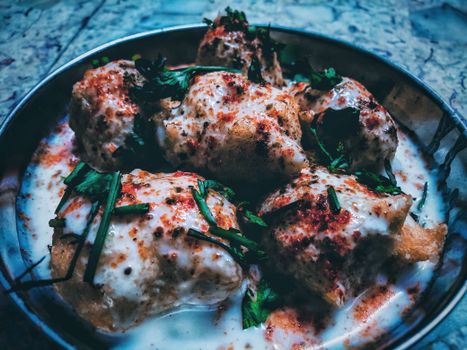
Photo: Kartik Kacha / Pexels
The diets react (see scores below)
Common Ingredients
- urad dal
- yogurt
- tamarind chutney
- mint chutney
- cumin powder
- chaat masala
- cilantro
- red chili powder
Specific recipes may vary.
Incompatible with 6 of 11 diets
Diet Ratings
Dahi Vada is fundamentally incompatible with a ketogenic diet. The primary component, urad dal (black lentils), is a starchy legume with roughly 40-50g of net carbs per 100g — a single serving of vadas would likely consume or exceed an entire day's carb allowance. Yogurt adds additional carbs (lactose), and tamarind chutney typically contains significant added sugar and high-carb tamarind paste. The combination of fried lentil fritters soaked in sweetened yogurt with sugar-laden chutneys makes this dish a multi-source carbohydrate load with virtually no pathway to keto compatibility, even with strict portion control.
Dahi Vada contains yogurt (dahi), which is a dairy product derived from cow's or buffalo's milk. Dairy is unambiguously excluded from a vegan diet under all major vegan frameworks. While the urad dal fritters themselves and all other components — tamarind chutney, mint chutney, cumin powder, chaat masala, cilantro, and red chili powder — are fully plant-based, the yogurt is a non-negotiable animal-derived ingredient that disqualifies the dish as traditionally prepared. A vegan version can be made by substituting the dairy yogurt with a plant-based alternative such as coconut yogurt or cashew-based yogurt, which would make the dish fully compliant.
Dahi Vada is fundamentally incompatible with the Paleo diet. The two core components — urad dal (a legume) and yogurt/dahi (dairy) — are both explicitly excluded from Paleo. Urad dal is a lentil, which falls squarely in the legume category that Paleo eliminates due to antinutrients like lectins and phytates. Yogurt is a dairy product, excluded across virtually all Paleo frameworks. Chaat masala typically contains added salt and sometimes dried mango powder or other additives, adding further concern. Tamarind chutney may also contain added sugar. While individual spices like cumin, cilantro, red chili powder, and mint are Paleo-approved, they cannot redeem a dish whose foundational ingredients are all non-Paleo. This is not a gray-area dish — it is built entirely around two of Paleo's most clearly prohibited food categories.
Dahi Vada features urad dal (lentils) as the primary protein, which is an excellent plant-based legume strongly aligned with Mediterranean principles. Yogurt, another key component, is a moderate dairy item acceptable within the diet. Herbs and spices (cumin, cilantro, chili, mint) are wholly compatible. The main concerns are the deep-frying of the lentil dumplings, which adds significant oil that is unlikely to be extra virgin olive oil, and the tamarind and mint chutneys, which may contain added sugars. The dish is not inherently incompatible, but the preparation method (frying) and the non-Mediterranean flavor profile introduce meaningful caveats. If baked or steamed vadas were used and minimal added sugar was present in the chutneys, this dish could score higher.
Some Mediterranean diet interpreters focus primarily on the legume and yogurt base as highly compatible staples, arguing that the frying method and condiments are secondary concerns and that global plant-forward dishes with similar nutrient profiles should be welcomed, especially given the diet's broader emphasis on whole foods over strict regional authenticity.
Dahi Vada is entirely incompatible with the carnivore diet. The primary protein is urad dal, a legume, which is strictly excluded from all tiers of carnivore eating. While yogurt is an animal-derived dairy product, it is surrounded by and inseparable from a host of plant-based ingredients: tamarind chutney, mint chutney, cumin powder, chaat masala, cilantro, and red chili powder. Every component except the yogurt is plant-derived, and even the yogurt is used as a condiment in a plant-heavy dish. There is no meaningful animal protein, no animal fat, and the dish is fundamentally built around lentils and plant-based chutneys and spices. This dish fails every carnivore criterion.
Dahi Vada contains multiple excluded ingredients. Urad dal is a legume, which is explicitly prohibited on Whole30. Yogurt is a dairy product, also explicitly excluded. Tamarind chutney and chaat masala commonly contain added sugar, and chaat masala typically includes amchur (dried mango powder) and sometimes black salt — but more critically, the foundational ingredients (lentils and yogurt) are both hard exclusions regardless of the condiments. There is no compliant version of this dish possible without fundamentally changing what it is.
Dahi Vada is problematic for multiple high-FODMAP reasons stacking together. Urad dal (black gram lentils) is high in GOS (galacto-oligosaccharides) and forms the base of this dish in significant quantity — it is high-FODMAP even in moderate servings. Yogurt contributes lactose and is high-FODMAP at standard serving sizes used in this dish (typically 100–200g), well above Monash's low-FODMAP threshold of approximately 23g. Tamarind chutney commonly contains high-fructose ingredients like dates or concentrated tamarind paste with excess fructose. Mint chutney often includes garlic and/or onion, both high-FODMAP fructan sources. Chaat masala typically contains dried mango powder and other spice blends that may include garlic or onion powder. The cumulative FODMAP load from GOS (urad dal), lactose (yogurt), potential excess fructose (tamarind), and fructans (chutneys) makes this dish a clear avoid during the elimination phase.
Dahi Vada contains several DASH-friendly components — urad dal (lentils) are an excellent source of plant-based protein, fiber, potassium, and magnesium, all core DASH nutrients. Plain yogurt (dahi) aligns well with DASH's low-fat dairy emphasis, providing calcium and protein. Spices like cumin, cilantro, and chili powder are sodium-free and beneficial. However, the dish raises moderate concerns under DASH guidelines: tamarind chutney and chaat masala are typically high in sodium and added sugar, and the combination of both chutneys can push the dish's sodium content meaningfully higher. Chaat masala in particular often contains black salt (kala namak) and amchur, contributing significant sodium per serving. The urad dal vadas are also deep-fried in traditional preparation, adding saturated fat that DASH limits. As a snack, portion size matters — one or two vadas with minimal chutney could fit within a DASH framework, but the dish as commonly served at restaurants or street stalls likely exceeds sodium thresholds. A home-prepared version with baked/steamed vadas, low-fat yogurt, and minimal chutney would score considerably higher (7-8).
NIH DASH guidelines emphasize limiting sodium and fried foods, which standard Dahi Vada preparations challenge. However, updated clinical interpretations of DASH in South Asian dietary contexts increasingly recognize that plant-forward dishes built on legumes and fermented dairy can be adapted for DASH compliance by modifying preparation methods (baking vs. frying) and using low-sodium chutney alternatives, making categorical exclusion overly restrictive.
Dahi Vada is a mixed Zone picture. The core components have both favorable and unfavorable characteristics. Urad dal (black lentils) is a legume that provides plant protein and fiber, which Zone accommodates as a vegetarian protein source — though lentils are carb-heavy relative to protein, making pure macro balance challenging. Yogurt contributes both protein and some fat, ideally from low-fat varieties. The tamarind chutney is the main concern: tamarind is relatively high in sugar, and commercial chutneys often add significant sugar, pushing the glycemic load up and making carb block counting difficult. The vadas are deep-fried, introducing omega-6-heavy seed oils (typically used for frying in Indian cooking), which conflicts with Zone's anti-inflammatory fat preference. Mint chutney and spices (cumin, chaat masala, cilantro, chili) are essentially free Zone foods with minimal macro impact. As a snack, a small portion could be made to work — the yogurt base and lentil protein provide some Zone-favorable elements — but the fried preparation, sugar in tamarind chutney, and the carb-heavy lentil base without adequate lean protein make achieving the 40/30/30 ratio difficult without significant modification. Using low-fat yogurt, limiting chutney portions, and treating this as a partial-block snack are advisable.
Some Zone practitioners, particularly those following Sears' later anti-inflammatory refinements, would rate this more cautiously (score 3-4) due to the omega-6 load from deep-frying and the sugar content in tamarind chutney being hard to control in a restaurant or traditional preparation. Conversely, a more permissive Zone reading notes that lentils are explicitly listed as a favorable Zone protein/carb source in Sears' vegetarian Zone guidance, and yogurt is a solid Zone dairy protein — making a homemade, baked/steamed vada version with minimal chutney sugar a reasonable Zone snack.
Dahi Vada is a whole-food-forward Indian snack with a genuinely solid anti-inflammatory profile. Urad dal (black lentils) is a legume rich in plant protein, fiber, and polyphenols, fitting squarely in the anti-inflammatory emphasis on beans and legumes. Yogurt contributes probiotics that support gut health and may reduce systemic inflammation — though it is a dairy product, it is low-fat in typical preparations and falls within the 'moderate' dairy category. The spice blend is a strong point: cumin is a potent antioxidant, red chili powder contains capsaicin (reduces NF-κB inflammatory signaling), and chaat masala typically includes dried mango powder, black salt, and additional spices with polyphenol content. Cilantro offers flavonoids and quercetin. Tamarind contains tartaric acid and polyphenols with antioxidant properties, though commercial chutneys may contain added sugar — homemade or low-sugar versions are preferable. Mint chutney adds additional phytonutrients. The main caution is preparation: urad dal vadas are deep-fried before soaking in yogurt. Frying adds calories and, depending on the oil used (if seed oils like sunflower or corn are used), can introduce excess omega-6 fatty acids. Using extra virgin olive oil or another favorable fat would improve the profile significantly. Overall, the base ingredients are strongly anti-inflammatory, but frying method and chutney sugar content introduce moderate concern.
Most anti-inflammatory frameworks would approve the ingredient list of Dahi Vada, but the deep-frying step is a meaningful variable — practitioners who emphasize oxidized fats and omega-6 burden (such as those aligned with functional medicine or the Wahls Protocol) would rate this more cautiously if fried in seed oils. Conversely, traditional preparation advocates note that the soaking step removes much of the oil, and Dr. Weil's framework does not categorically ban occasional fried foods within an otherwise plant-rich diet.
Dahi Vada is a lentil-based snack where urad dal dumplings are soaked in yogurt and topped with tamarind chutney, mint chutney, and spices. It has meaningful nutritional strengths for GLP-1 patients: urad dal provides plant-based protein and fiber, and yogurt adds additional protein and probiotics that support gut health. The dish is soft-textured and easy to digest in its soaked form, which suits the slowed gastric emptying of GLP-1 medications. However, several factors temper the rating. Traditional preparation involves deep-frying the vadas before soaking, which adds significant saturated fat and makes this a caution rather than an approve. The tamarind chutney and chaat masala contribute added sugar and sodium. The red chili powder and chaat masala may worsen nausea or reflux in GLP-1 patients who are sensitive to spice. Protein per serving is moderate but not high — a typical 2-3 vada serving delivers roughly 8-12g protein, falling short of the 15-30g per meal target. The dish is portion-sensitive: a small serving is acceptable, but larger portions increase fat and sugar load meaningfully. If prepared with baked or air-fried vadas and minimal chutney, the score improves toward the higher caution range.
Some GLP-1-focused dietitians flag all deep-fried preparations as avoid regardless of soaking, citing residual fat content and the risk of worsening nausea and delayed gastric emptying; others focus on the final macronutrient profile post-soaking and consider a small portion acceptable given the protein and fiber contribution from lentils and yogurt. Spice tolerance on GLP-1s varies significantly between individuals, and clinicians differ on whether moderate chili powder in a single small serving warrants a caution flag or a more permissive view.
*See how scores were generated at our methodology page.
Nutritional profile
Six traits that cut across every diet.
Fiber & Plants
How much whole-plant food and fiber it delivers.
Healthy Fats
The quality of its fats (unsaturated, omega-3).
Whole / Unprocessed
How close it is to its natural, unprocessed form.
Gut Gentle
How easy it is on digestion (low FODMAP, few irritants).
Low Glycemic
How little it spikes your blood sugar.
Protein Density
How much protein it packs per calorie.
Controversy Index
Higher controversy = more disagreement between diets.
Diet-Specific Tips
 Mediterranean — 6/10
View tips
- Urad dal (lentils) is a Mediterranean-compatible legume and primary protein
- Yogurt is an acceptable moderate dairy component
- Deep-frying preparation method adds excess non-olive oil fat
- Tamarind chutney may contain added sugars
- Herbs and spices (cumin, mint, cilantro) are fully compatible
- Dish is not from Mediterranean tradition but shares plant-forward principles
 DASH — 5/10
View tips
- Urad dal is an excellent DASH-compatible legume: high in fiber, potassium, magnesium, and plant protein
- Plain low-fat yogurt aligns with DASH dairy recommendations
- Tamarind chutney and chaat masala are typically high in sodium and added sugar — primary concerns
- Traditional deep-frying of vadas adds saturated fat, which DASH limits
- Chaat masala often contains black salt (kala namak), significantly elevating sodium content
- Baked/steamed preparation with low-sodium chutneys and low-fat yogurt would substantially improve DASH compatibility
- Portion control critical — small serving with minimal chutney is more acceptable than a full restaurant portion
 Zone — 5/10
View tips
- Urad dal provides vegetarian protein but is carbohydrate-heavy, requiring careful block balancing
- Yogurt (ideally low-fat) is a Zone-favorable protein and fat source
- Tamarind chutney adds significant sugar, increasing glycemic load and complicating carb block control
- Deep-frying introduces omega-6-heavy seed oils, conflicting with Zone's anti-inflammatory fat guidelines
- Spices (cumin, chaat masala, cilantro, chili) are essentially macro-neutral Zone-friendly additions
- As a snack, portion control is essential — large servings will significantly exceed Zone carb and fat blocks
- Homemade steamed/baked version with plain yogurt and limited chutney would score notably higher
 Anti-Inflammatory — 7/10
View tips
- Urad dal: high-fiber legume with plant protein and polyphenols — strongly anti-inflammatory
- Yogurt: probiotic benefits support gut-immune axis; low-fat dairy is acceptable in moderation
- Anti-inflammatory spice blend: cumin, red chili (capsaicin), chaat masala — reduces NF-κB activity
- Cilantro and mint: flavonoids, quercetin, and additional phytonutrients
- Tamarind chutney: polyphenols and tartaric acid, but watch for added sugar in commercial versions
- Deep-frying: introduces oxidized fats and omega-6 burden depending on oil used — key preparation concern
- No refined grains, no trans fats, no artificial additives in traditional recipe
 GLP-1 Friendly — 5/10
View tips
- Traditional preparation involves deep-frying, adding saturated fat and worsening GLP-1 GI side effects
- Urad dal provides plant-based protein and fiber — supports GLP-1 dietary priorities
- Yogurt base adds protein, probiotics, and easy digestibility
- Protein per standard serving (8-12g) falls below the 15-30g per meal target
- Tamarind chutney contributes added sugar and sodium
- Red chili powder and chaat masala may trigger nausea or reflux in sensitive GLP-1 patients
- Soft soaked texture is gentle on digestion — a positive for slowed gastric emptying
- Baked or air-fried preparation significantly improves the rating
- Portion-sensitive: small serving preferred