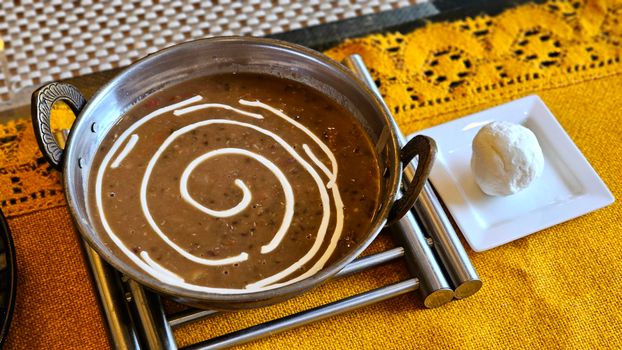
Photo: Muhammad Khawar Nazir / Pexels
The diets react (see scores below)
Common Ingredients
- black lentils
- kidney beans
- butter
- heavy cream
- tomatoes
- ginger
- garlic
- garam masala
Specific recipes may vary.
Incompatible with 6 of 11 diets
Diet Ratings
Dal Makhani is fundamentally incompatible with ketogenic diets due to its primary ingredients. Black lentils (urad dal) contain approximately 40g net carbs per 100g cooked, and kidney beans are similarly high at around 20-25g net carbs per 100g cooked. A standard serving of Dal Makhani would easily contain 30-50g of net carbs from legumes alone, which meets or exceeds the entire daily keto carb budget in one dish. While the butter and heavy cream are keto-friendly fats, and the tomatoes, garlic, ginger, and spices are acceptable in small quantities, they cannot offset the massive carbohydrate load from the legumes. Legumes are broadly excluded from ketogenic diets due to their starch content, regardless of their fiber contribution.
Dal Makhani as listed contains butter and heavy cream, both of which are dairy products derived from cows. These are clear animal-derived ingredients that disqualify the dish from vegan compliance. The base ingredients — black lentils (urad dal), kidney beans, tomatoes, ginger, garlic, and garam masala — are all fully plant-based, but the dairy components are integral to the traditional recipe and cannot be overlooked. A vegan version is achievable by substituting butter with vegan margarine or coconut oil and replacing heavy cream with full-fat coconut cream or cashew cream, which are common adaptations in vegan Indian cooking.
Dal Makhani is fundamentally incompatible with the paleo diet. The dish's primary components — black lentils and kidney beans — are legumes, which are explicitly excluded from paleo due to their anti-nutrient content (lectins, phytates). Butter and heavy cream are dairy products, also excluded. These non-paleo ingredients aren't minor additions; they are the structural foundation of the dish. The only paleo-compliant ingredients are the tomatoes, ginger, garlic, and garam masala spices. There is no version of Dal Makhani that remains true to the dish while being paleo-compatible.
Dal Makhani is built on a strong Mediterranean-compatible foundation of black lentils and kidney beans — both excellent plant-based proteins and fiber sources that align well with Mediterranean principles. Tomatoes, garlic, and ginger are also wholly compatible. However, the dish is traditionally finished with substantial amounts of butter and heavy cream, both high-saturated-fat dairy products that diverge from Mediterranean dietary norms, where olive oil is the primary fat and dairy is used sparingly. The legume base earns significant credit, but the cooking fat profile is the critical concern. A modified version using olive oil instead of butter and reducing or omitting the cream would score much higher.
Some Mediterranean diet interpreters note that moderate dairy fat (as in traditional Southern European and Levantine cuisines) is acceptable within the dietary pattern, and that legume-heavy dishes like dal are so nutritionally aligned that the dish overall could be considered broadly compatible — particularly if cream and butter quantities are modest in a given preparation.
Dal Makhani is fundamentally incompatible with the carnivore diet. The primary proteins are black lentils and kidney beans — both legumes, which are plant-derived and strictly excluded. The dish also contains tomatoes (plant/fruit), ginger and garlic (plant roots), and garam masala (a blend of plant-based spices). While butter and heavy cream are animal-derived, they represent a minor portion of the dish and cannot redeem it. This is essentially a plant-based dish with minor dairy additions. There is universal consensus in the carnivore community that legumes, vegetables, and plant spices are off-limits, making this one of the clearest possible 'avoid' verdicts.
Dal Makhani contains multiple Whole30-excluded ingredients. Black lentils and kidney beans are both legumes, which are explicitly prohibited on the Whole30 program. Butter (regular, not ghee) is a dairy product and is excluded — only ghee and clarified butter are permitted dairy exceptions. Heavy cream is also dairy and is excluded. These are foundational ingredients in Dal Makhani, making the dish incompatible with Whole30 regardless of any substitutions. The dish cannot be made compliant without fundamentally changing its nature.
Dal Makhani contains multiple high-FODMAP ingredients that make it unsuitable during the elimination phase at any standard serving size. Black lentils (urad dal) are high in GOS and fructans, and kidney beans are among the highest-FODMAP legumes due to their very high GOS content — both are core ingredients present in substantial quantities. Garlic is a major fructan source and is explicitly listed as a key ingredient; there is no safe serving size of garlic during elimination. Even if garlic-infused oil were substituted, the whole garlic listed here disqualifies the dish. The combination of two high-FODMAP legumes plus garlic makes this dish definitively high-FODMAP regardless of portion size. Butter and heavy cream are low-FODMAP (fat-based dairy with minimal lactose), tomatoes are low-FODMAP in standard servings, ginger is low-FODMAP, and garam masala in typical cooking quantities is low-FODMAP — but these safe ingredients cannot offset the multiple major FODMAP sources in this dish.
Dal Makhani presents a mixed DASH profile. The base ingredients — black lentils (urad dal) and kidney beans — are excellent DASH foods, rich in plant protein, fiber, potassium, and magnesium, all nutrients the DASH diet actively promotes. However, the traditional preparation relies heavily on butter and heavy cream, both high in saturated fat, which DASH explicitly limits. A typical restaurant or home serving can contain 8–15g of saturated fat, approaching or exceeding the DASH daily limit of ~6% of calories from saturated fat. Sodium is moderate depending on preparation. The dish is not categorically excluded — its legume base is genuinely valuable — but the saturated fat from dairy components requires significant portion control or recipe modification (substituting low-fat dairy or reducing butter/cream) to align with DASH principles.
NIH DASH guidelines clearly limit saturated fat and full-fat dairy, which would push this dish toward 'avoid' in strict interpretation. However, updated clinical interpretations note that recent meta-analyses have questioned whether full-fat dairy uniquely worsens cardiovascular outcomes, and some DASH-aligned dietitians allow modified versions of this dish given its high-fiber, high-potassium legume base — recommending reduced butter and substitution of heavy cream with low-fat yogurt or evaporated skim milk.
Dal Makhani presents a mixed Zone profile. The black lentils and kidney beans are acceptable vegetarian protein sources with low-to-moderate glycemic index, and they provide fiber that lowers net carbs. However, as vegetarian proteins, they come with a significant carbohydrate load — lentils and kidney beans are carb-heavy relative to their protein content, making it difficult to hit the 30% protein target without large portions that would simultaneously deliver too many carbs. The bigger problem is the fat profile: butter and heavy cream are high in saturated fat, which Sears consistently flags as pro-inflammatory and unfavorable in Zone methodology. Traditional Dal Makhani is slow-cooked with generous amounts of both, pushing saturated fat well above Zone-friendly levels. The tomatoes, ginger, garlic, and garam masala are all Zone-positive (anti-inflammatory polyphenols), but they cannot offset the structural fat problem. A Zone-adapted version — substituting olive oil for butter and omitting cream, or using it sparingly — could push this dish into a more workable range, but traditional preparation as described scores poorly on fat quality and protein-to-carb balance.
Some Zone practitioners working with South Asian dietary patterns treat lentil-based dishes more favorably, noting that black lentils have a genuinely low glycemic index and that the fat from butter/cream, while saturated, is naturally occurring dairy fat rather than industrially processed fat. Sears' later anti-inflammatory work (The OmegaRx Zone, The Mediterranean Zone) somewhat softened the strict anti-saturated-fat stance in favor of focusing on omega-6 seed oils as the primary culprit. Under that framing, a small portion of Dal Makhani with reduced cream could be rated as moderate caution rather than near-avoid.
Dal Makhani presents a genuinely mixed anti-inflammatory profile. On the positive side, black lentils and kidney beans are excellent sources of fiber, plant protein, and polyphenols — legumes are strongly emphasized in anti-inflammatory frameworks. Tomatoes provide lycopene and other antioxidants. Garlic and ginger are well-documented anti-inflammatory spices, and garam masala typically contains turmeric, cumin, coriander, and cardamom — all with meaningful anti-inflammatory credentials. These ingredients alone would push toward approval. However, the traditional preparation relies heavily on butter and heavy cream, both full-fat dairy products high in saturated fat. Anti-inflammatory guidelines consistently place butter and heavy cream in the 'limit' category, as saturated fat can upregulate inflammatory pathways and raise pro-inflammatory markers when consumed in excess. The degree to which this dish is pro-inflammatory depends heavily on the quantity of butter and cream used — restaurant versions tend to be very generous, while home cooking can be moderated. The dish is not in 'avoid' territory because its core ingredients (legumes, spices, tomatoes) are genuinely anti-inflammatory, but the saturated fat load from traditional preparation prevents a clear approval.
Some anti-inflammatory practitioners, including those influenced by Dr. Weil's broader dietary philosophy, argue that small amounts of full-fat dairy from quality sources are acceptable in context and that the strong legume and spice base of dal makhani makes it a net positive — particularly if butter is used minimally. Conversely, stricter anti-inflammatory and AIP-adjacent protocols would flag the saturated fat content more severely and suggest swapping butter/cream for olive oil and coconut milk or oat cream as a modification to bring the dish into approval range.
Dal Makhani is a protein- and fiber-rich legume dish built on black lentils and kidney beans — both excellent GLP-1-friendly staples. However, the traditional recipe relies heavily on butter and heavy cream, which significantly raise the saturated fat content per serving. High fat loads worsen the nausea, bloating, and reflux that GLP-1 medications already predispose patients to, and slowed gastric emptying means a rich, fatty dish sits in the stomach much longer. The legume base earns strong marks for protein density, soluble fiber, and nutrient density per calorie, but the dairy fat components pull the rating into caution territory. A modified version made with minimal butter and swapped to a small amount of low-fat yogurt or plant-based cream would score considerably higher (7–8). Restaurant or takeout versions are particularly high in fat and should be treated with extra caution. Standard home portions also tend to be served with rice or naan, adding refined carbohydrate load — the dish itself is rated here, but pairing context matters.
Some GLP-1-focused dietitians consider a moderate portion of traditional Dal Makhani acceptable because the legume base provides substantial protein and soluble fiber that offset the fat content, and individual GI tolerance to dairy fat varies widely among GLP-1 patients. Others are stricter, noting that the saturated fat and cream content make it a consistent trigger for nausea and delayed gastric emptying symptoms, particularly in the early weeks of dose escalation.
*See how scores were generated at our methodology page.
Nutritional profile
Six traits that cut across every diet.
Fiber & Plants
How much whole-plant food and fiber it delivers.
Healthy Fats
The quality of its fats (unsaturated, omega-3).
Whole / Unprocessed
How close it is to its natural, unprocessed form.
Gut Gentle
How easy it is on digestion (low FODMAP, few irritants).
Low Glycemic
How little it spikes your blood sugar.
Protein Density
How much protein it packs per calorie.
Controversy Index
Higher controversy = more disagreement between diets.
Diet-Specific Tips
 Mediterranean — 5/10
View tips
- Black lentils and kidney beans are excellent Mediterranean-approved legumes
- Tomatoes, garlic, and ginger are wholly compatible plant-based ingredients
- Butter replaces olive oil as the primary cooking fat — contradicts Mediterranean fat principles
- Heavy cream adds significant saturated fat beyond typical Mediterranean dairy norms
- No refined grains or added sugars
- Dish could be easily adapted to be more Mediterranean-compatible by substituting olive oil and reducing cream
 DASH — 5/10
View tips
- Black lentils and kidney beans are excellent DASH legumes — high fiber, potassium, magnesium, plant protein
- Butter and heavy cream are high in saturated fat, which DASH explicitly limits
- Traditional preparation can deliver 8–15g saturated fat per serving
- Tomatoes, ginger, and garlic are DASH-friendly ingredients
- Sodium is moderate but varies by recipe — restaurant versions may be higher
- Recipe modification (reducing butter, replacing heavy cream with low-fat dairy) would improve DASH compatibility significantly
- Portion control is important given the saturated fat load
 Zone — 4/10
View tips
- Black lentils and kidney beans are low-GI vegetarian protein sources but carry high carb load relative to protein, complicating Zone block math
- Butter and heavy cream are high in saturated fat — explicitly unfavorable in Sears' Zone framework
- As a vegetarian protein dish, fat blocks are counted at 3g per block, meaning the saturated fat from cream/butter quickly exceeds allowances
- Tomatoes, garlic, ginger, and spices are Zone-positive polyphenol sources
- Traditional recipe ratios make it very difficult to hit 40/30/30 without significant modification
- Portion control and substituting olive oil or light coconut milk for butter/cream would substantially improve Zone compatibility
 Anti-Inflammatory — 5/10
View tips
- Black lentils and kidney beans are strongly anti-inflammatory — high fiber, polyphenols, and plant protein
- Garlic, ginger, and garam masala (turmeric, cumin, coriander) provide meaningful anti-inflammatory phytonutrients
- Tomatoes contribute lycopene and antioxidants
- Butter and heavy cream are full-fat dairy high in saturated fat — consistently flagged as 'limit' in anti-inflammatory frameworks
- Net verdict depends heavily on quantity of butter and cream; restaurant portions often tip the balance toward pro-inflammatory
- Dish can be meaningfully improved by substituting olive oil for butter and reducing or replacing heavy cream
 GLP-1 Friendly — 5/10
View tips
- High soluble fiber from black lentils and kidney beans supports digestion and constipation prevention
- Legumes provide moderate plant protein, though not as dense per calorie as animal proteins
- Butter and heavy cream add significant saturated fat, worsening GLP-1 GI side effects
- Slowed gastric emptying makes high-fat dishes sit heavily and increase nausea risk
- Nutrient-dense base ingredients (lentils, beans, tomatoes, ginger, garlic) score well on micronutrient density
- Easily modified — reducing or replacing cream and butter substantially improves GLP-1 compatibility
- Restaurant portions typically contain much more butter and cream than home-cooked versions