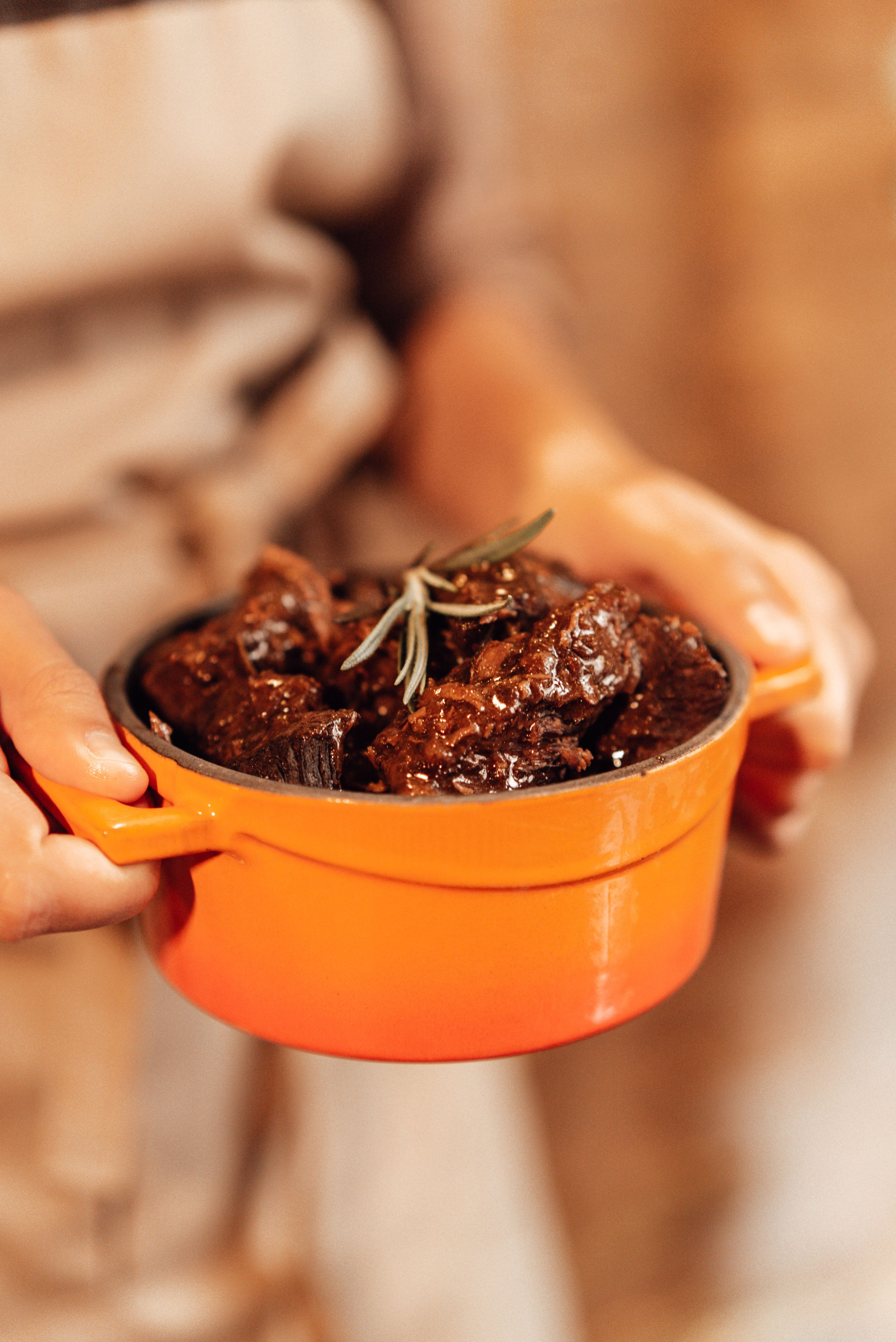
Photo: furkanfdemir / Pexels
French
Daube Provençale
The diets react (see scores below)
Common Ingredients
- beef chuck
- red wine
- orange peel
- olives
- tomatoes
- carrots
- herbes de Provence
- bacon
Specific recipes may vary.
Incompatible with 5 of 11 diets
Diet Ratings
Daube Provençale is a slow-braised beef stew with several keto-friendly elements — beef chuck and bacon provide excellent fat and protein, olives add healthy fats, and herbes de Provence are negligible in carbs. However, the dish presents meaningful carb concerns: red wine contributes residual sugars and carbs (though much reduces during braising, a full serving may still carry 3-6g from wine alone), tomatoes add moderate net carbs (~3-4g per serving), carrots are a starchy vegetable adding another 4-6g net carbs per serving, and orange peel contributes small but non-trivial carbs. Combined, a standard serving could approach or exceed 15-20g net carbs, which is manageable for those with a higher 50g daily limit but risky for strict 20g practitioners. With portion control — reducing carrots, limiting tomatoes, and using a smaller wine volume — this dish can fit keto, but as traditionally prepared it sits in caution territory.
Strict keto practitioners argue that red wine (even reduced), carrots, and tomatoes are categorically off-limits due to sugar content and glycemic impact, and would rate this dish as avoid. Conversely, lazy keto or targeted keto adherents comfortable with a 40-50g daily carb ceiling may approve a moderate serving without modification.
Daube Provençale is a classic French braised beef stew that contains multiple animal products. Beef chuck is the primary protein, and bacon is an additional pork-derived ingredient. Both are direct animal flesh products, making this dish entirely incompatible with a vegan diet. There is no ambiguity here.
Daube Provençale is largely paleo-compatible at its core — beef chuck, tomatoes, carrots, olives, orange peel, and herbes de Provence are all whole, hunter-gatherer-available foods. However, two ingredients introduce friction. Red wine is an alcoholic, fermented product rated as caution in the paleo framework — it appears in gray-area territory alongside other natural ferments and alcohol. Bacon is a processed meat that typically contains added salt, sugar, and preservatives (nitrates/nitrites), pushing it firmly into the avoid category under strict paleo rules. If the bacon were replaced with uncured pork belly or lardons with no additives, and the wine used only as a cooking medium (most alcohol burns off), many paleo practitioners would accept this dish. As presented, the combination of processed bacon and alcohol keeps this in caution territory rather than approval.
Strict Cordain-school paleo would push this closer to avoid, flagging the wine as a processed, sugar-containing alcoholic beverage and bacon as a processed meat. Robb Wolf and more pragmatic paleo voices, however, tend to allow wine used in slow-cooked dishes and would focus concern primarily on the bacon's additives rather than the dish as a whole.
Daube Provençale is a traditional Provençal beef braise, and while it originates from the Mediterranean region of southern France and incorporates genuinely Mediterranean-friendly ingredients (olives, tomatoes, carrots, orange peel, herbes de Provence, red wine), the primary protein is beef chuck — a red meat high in saturated fat. Red meat is limited in the Mediterranean diet to a few times per month. The inclusion of bacon adds additional processed red meat and saturated fat, compounding the concern. The vegetable and aromatic components are excellent, but they cannot offset the core issue of a red-meat-heavy dish with processed pork.
Some Mediterranean diet scholars note that traditional Provençal cuisine, particularly from the Bouches-du-Rhône region, did include occasional slow-braised beef dishes as part of festive or weekly meals, and that the moderate wine, vegetables, and olives in the preparation reflect genuine Mediterranean culinary heritage. Consumed very occasionally — in line with the 'few times per month' red meat allowance — this dish could be considered culturally compatible rather than a violation.
Daube Provençale is fundamentally incompatible with the carnivore diet. While it does contain carnivore-approved ingredients (beef chuck and bacon), the dish is dominated by plant-based components: tomatoes, carrots, olives, orange peel, herbes de Provence, and red wine. These plant foods are categorically excluded from the carnivore diet. Red wine introduces plant compounds, sugars, and alcohol. The vegetables (tomatoes, carrots) are plant foods excluded at every tier of carnivore eating. Herbes de Provence is a spice blend of plant origin. Olives are a plant fruit. Orange peel is plant-derived. This is a traditional French braise built around a plant-heavy flavor profile, making it essentially a plant dish with meat in it rather than a meat dish — the exact inverse of what carnivore requires.
Daube Provençale is a classic French braised beef stew. Most of the ingredients are straightforwardly Whole30-compliant: beef chuck, orange peel, olives, tomatoes, carrots, and herbes de Provence are all whole, unprocessed foods. Red wine used as a cooking ingredient (not a beverage) is generally accepted by the Whole30 community in the context of braising, as the alcohol cooks off and it functions as a flavor base — similar in spirit to using compliant vinegar. However, bacon is the primary complication: the vast majority of commercially available bacon contains added sugar in the cure, making it non-compliant by default. A sugar-free, compliant bacon does exist and must be sourced carefully. With compliant bacon confirmed, the dish is technically Whole30-compliant, but the reliance on a cured processed meat and cooking with wine keeps this in 'caution' territory for stricter adherents.
Official Whole30 guidelines allow cooking with wine and permit compliant (sugar-free) bacon, so a carefully sourced version of this dish is technically approvable. However, some Whole30 practitioners and community members argue that regularly cooking with alcohol — even if it reduces — edges against the spirit of eliminating alcohol entirely, and that leaning on processed meats like bacon as a flavor base runs counter to the program's whole-food emphasis.
Daube Provençale is a slow-braised beef stew with several ingredients that need careful evaluation. Beef chuck is low-FODMAP and safe. Bacon (plain, without additives) is generally low-FODMAP. Carrots, tomatoes (in moderate portions), olives, and orange peel are all low-FODMAP at standard servings. Herbes de Provence typically contains thyme, rosemary, savory, marjoram, and oregano — all low-FODMAP dried herbs, though some blends include lavender which is untested; the primary concern is whether garlic or onion powder is included in the blend, which is common in commercial versions. Red wine is low-FODMAP at ~150ml (1 glass), but large amounts used in braising concentrate as the dish reduces — the residual FODMAP load from fructans in wine after reduction is debated. The critical issue is that traditional Daube Provençale recipes almost universally include onion and/or garlic as aromatics, which are high-FODMAP. If this recipe as listed truly omits onion and garlic, it scores closer to the safe side, but the herbes de Provence blend and wine reduction remain points of caution. As a restaurant or home-cooked dish, hidden garlic and onion in the braise are highly probable, warranting a cautious rating.
Monash University confirms red wine is low-FODMAP at a standard 150ml glass, but the concentrated reduction in a braise may behave differently — clinical FODMAP practitioners often advise caution with wine-heavy reductions during strict elimination. Additionally, many herbes de Provence commercial blends contain trace garlic or onion; Monash tests individual herbs as low-FODMAP but the blend composition varies by brand, creating practical uncertainty.
Daube Provençale presents multiple red flags for the DASH diet. The primary protein is beef chuck, a fatty cut high in saturated fat and cholesterol, which DASH explicitly limits. Bacon is included as an ingredient, adding significant sodium and saturated fat — both directly contrary to DASH principles. Olives, while heart-healthy in isolation, contribute additional sodium. The dish is a slow-braised red meat preparation, and red meat is a category DASH recommends limiting. The positive elements — tomatoes, carrots, orange peel, and herbes de Provence — do provide vegetables and antioxidants, and red wine in cooking has minimal residual alcohol, but these do not offset the core problems. Overall, the combination of fatty red meat, processed meat (bacon), and sodium-rich olives makes this dish a poor fit for DASH dietary goals.
Daube Provençale is a slow-braised French beef stew with a rich, complex ingredient profile that presents both Zone-friendly and Zone-challenging elements. On the positive side, it contains excellent low-glycemic vegetables (carrots, tomatoes), polyphenol-rich olives (a monounsaturated fat source Sears would approve of), and the red wine and orange peel contribute beneficial polyphenols. However, the primary protein — beef chuck — is a fatty, higher-saturated-fat cut that falls outside Zone's preference for lean proteins. The bacon adds additional saturated fat, compounding this concern. Sears consistently recommends trimming fat and choosing lean cuts; chuck roast braised in wine carries significantly more saturated fat than the preferred skinless chicken or fish. The red wine used in braising, while polyphenol-rich, also contributes carbohydrate load and residual sugar that needs to be accounted for in blocks. The dish can technically be portioned into Zone-compatible servings — measuring a modest amount of the beef (~1 oz per protein block), ensuring the vegetable content counts toward carb blocks, and recognizing the olives as a fat source — but the saturated fat content from chuck and bacon makes this a less favorable choice. Later Sears anti-inflammatory writings are somewhat more permissive about saturated fat in whole food contexts, which slightly elevates this dish's standing compared to strict early Zone guidance.
In Sears' later work (particularly 'The Mediterranean Zone'), he became more favorable toward traditional Mediterranean dietary patterns, of which Provençal cuisine is a prime example. The polyphenol density from red wine, olives, tomatoes, orange peel, and herbes de Provence aligns well with his anti-inflammatory eicosanoid model. A Zone practitioner following the Mediterranean Zone approach might rate this more favorably (score 6-7), noting that the saturated fat from beef chuck, when consumed alongside high-polyphenol ingredients, is less concerning than the strict early Zone framework would suggest. Portion control of the beef remains key.
Daube Provençale is a mixed dish from an anti-inflammatory perspective. On the positive side, it contains several genuinely beneficial components: tomatoes provide lycopene and polyphenols; carrots offer beta-carotene and antioxidants; olives contribute oleic acid and anti-inflammatory polyphenols; herbes de Provence (thyme, rosemary, oregano, lavender, savory) are rich in anti-inflammatory flavonoids and terpenes; orange peel contains flavonoids including hesperidin; and red wine in cooking contributes some resveratrol and polyphenols, aligning with Dr. Weil's moderate red wine allowance. The long, slow braising also integrates spices and aromatics deeply, potentially enhancing bioavailability of beneficial compounds. However, the dish is anchored by beef chuck, a fatty cut of red meat high in saturated fat and arachidonic acid — a known precursor to pro-inflammatory eicosanoids — which anti-inflammatory guidelines consistently advise limiting. Bacon adds processed red meat and additional saturated fat, compounding this concern. The braising liquid will concentrate fat unless defatted. Overall, the dish reflects a traditional Mediterranean cooking pattern with meaningful anti-inflammatory ingredients, but the red meat and bacon base prevent a clean approval. Suitable occasionally, not as a regular staple.
Some anti-inflammatory practitioners, particularly those drawing on traditional Mediterranean diet research, would view this dish more favorably: the cooking method, wine, olive content, and herb profile all align with Mediterranean patterns associated with reduced inflammatory markers in epidemiological studies. Conversely, stricter anti-inflammatory protocols (such as those emphasizing very low saturated fat intake) would push this toward avoid territory due to the dual red meat and processed meat load.
Daube Provençale is a classic French braised beef stew that presents multiple significant concerns for GLP-1 patients. Beef chuck is a high-fat, high-saturated-fat cut that worsens GLP-1 side effects including nausea, bloating, and reflux — the slow gastric emptying caused by GLP-1 medications makes fatty red meat particularly problematic. Red wine adds alcohol, which provides empty calories. Bacon adds further saturated fat and processed meat concerns. While the dish does contain some positive elements — tomatoes and carrots add fiber and nutrients, olives provide unsaturated fat, and the slow-braised format does improve digestibility somewhat compared to grilled fatty beef — these benefits are insufficient to offset the core problems. The protein content is meaningful but comes packaged with a high saturated fat load. The overall dish is calorie-dense, fat-heavy, and contains alcohol, making it a poor fit for GLP-1 patients, especially those still managing early GI side effects.
Some GLP-1-experienced clinicians and dietitians note that slow-braised beef, while fatty, is significantly easier to digest than fried or grilled fatty cuts, and the vegetable and legume components in stews can support fiber intake. A small portion with the fat skimmed after cooking could be tolerated by patients who are past the initial side-effect phase, though most obesity medicine RDs would still recommend substituting a leaner protein source.
*See how scores were generated at our methodology page.
Nutritional profile
Six traits that cut across every diet.
Fiber & Plants
How much whole-plant food and fiber it delivers.
Healthy Fats
The quality of its fats (unsaturated, omega-3).
Whole / Unprocessed
How close it is to its natural, unprocessed form.
Gut Gentle
How easy it is on digestion (low FODMAP, few irritants).
Low Glycemic
How little it spikes your blood sugar.
Protein Density
How much protein it packs per calorie.
Controversy Index
Higher controversy = more disagreement between diets.
Diet-Specific Tips
 Keto — 5/10
View tips
- Red wine adds residual carbs even after reduction during braising
- Carrots are a starchy vegetable and a significant net carb contributor (~4-6g per serving)
- Tomatoes add moderate net carbs (~3-4g per serving)
- Orange peel contributes small additional carbs
- Beef chuck and bacon are highly keto-friendly fat and protein sources
- Olives provide healthy fats with minimal carbs
- Total net carbs per serving may approach 15-20g depending on portion size
- Suitable with strict portion control, especially reducing carrots and tomatoes
 Paleo — 5/10
View tips
- Beef chuck is a clean, unprocessed paleo protein — approved
- Tomatoes, carrots, olives, and orange peel are whole, paleo-compatible plant foods
- Herbes de Provence are herbs and spices — fully approved
- Red wine is alcoholic and fermented — paleo caution/gray area
- Bacon is a processed meat with typical additives (salt, sugar, nitrates) — paleo avoid
- Dish would score higher with uncured pork belly substituted for bacon
 Whole30 — 5/10
View tips
- Beef chuck, carrots, tomatoes, olives, orange peel, and herbes de Provence are all fully Whole30-compliant
- Red wine as a braising/cooking liquid is technically accepted but debated in the community
- Bacon commonly contains added sugar in the cure — a compliant, sugar-free version must be verified
- No grains, dairy, legumes, or other excluded ingredients present
- Dish is a whole-food braise, not a recreated junk food or baked good
 Low-FODMAP — 5/10
View tips
- Beef chuck is low-FODMAP and safe as primary protein
- Traditional Daube almost always includes onion and garlic (high-FODMAP fructans) — not listed but very likely present in practice
- Herbes de Provence blends may contain garlic or onion powder depending on brand
- Red wine is low-FODMAP at ~150ml but concentrated braising reductions may increase FODMAP load
- Carrots, tomatoes (moderate portions), olives, and orange peel are low-FODMAP
- Bacon is low-FODMAP when plain and free of high-FODMAP additives
- Dish safety depends heavily on whether aromatics (onion/garlic) are truly absent and which herb blend is used
 Zone — 5/10
View tips
- Beef chuck is a fatty, higher-saturated-fat cut — Zone prefers lean proteins like chicken breast or fish
- Bacon adds additional saturated fat, compounding the protein fat burden
- Olives are an excellent Zone-approved monounsaturated fat source
- Carrots and tomatoes are favorable low-glycemic Zone carbohydrates
- Red wine contributes polyphenols (favorable in Sears' anti-inflammatory model) but also residual carbs
- Orange peel and herbes de Provence add polyphenol value with negligible macro impact
- Dish can be portioned into Zone blocks but requires selecting small amounts of lean meat and controlling the braising liquid
- Strong alignment with Mediterranean Zone principles despite the lean-protein issue
 Anti-Inflammatory — 5/10
View tips
- Beef chuck: red meat high in saturated fat and arachidonic acid — anti-inflammatory guidelines advise limiting
- Bacon: processed red meat, adds saturated fat and potential nitrate/nitrite exposure
- Red wine: included in Dr. Weil's pyramid in moderation; contributes resveratrol and polyphenols to braising liquid
- Olives: excellent source of oleic acid and anti-inflammatory polyphenols
- Tomatoes: lycopene and antioxidants; bioavailability enhanced by cooking
- Herbes de Provence: rosemary, thyme, oregano contain rosmarinic acid, flavonoids — genuinely anti-inflammatory
- Carrots: beta-carotene, fiber, antioxidants
- Orange peel: hesperidin and other flavonoids with anti-inflammatory activity
- Traditional slow-braise method: integrates beneficial spice and herb compounds but also concentrates saturated fat unless defatted