Thai
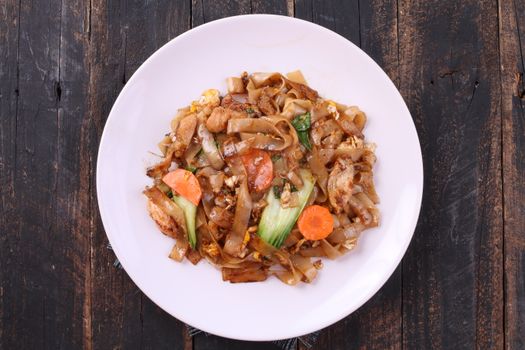
Drunken Noodles (Pad Kee Mao)
The diets react (see scores below)
Common Ingredients
- wide rice noodles
- Thai basil
- garlic
- chiles
- soy sauce
- oyster sauce
- bell pepper
- tomatoes
Specific recipes may vary.
Incompatible with 7 of 11 diets
Diet Ratings
Drunken Noodles is fundamentally incompatible with ketogenic eating. Wide rice noodles are the core ingredient and a single serving typically delivers 40-60g of net carbs on their own, immediately blowing past the daily 20-50g keto threshold. Oyster sauce adds hidden sugars, and the combination of bell peppers and tomatoes contributes additional net carbs. There is no realistic portion size that makes this dish keto-friendly, as removing the noodles would result in an entirely different dish. The protein (chicken or beef) and aromatics like garlic, chiles, and Thai basil are keto-compatible, but they are overwhelmed by the carb load of the noodle base and sauces.
This dish contains multiple animal-derived ingredients that disqualify it from a vegan diet. The primary protein is explicitly chicken or beef, both of which are animal flesh. Additionally, oyster sauce is derived from oysters (shellfish), making it a non-vegan ingredient regardless of the protein choice. These are not trace or cross-contamination issues — they are core ingredients. The remaining components (wide rice noodles, Thai basil, garlic, chiles, soy sauce, bell pepper, tomatoes) are all plant-based, meaning a vegan version is achievable by substituting tofu or tempeh for the meat and replacing oyster sauce with a mushroom-based vegan oyster sauce.
Drunken Noodles (Pad Kee Mao) is fundamentally incompatible with the Paleo diet. The dish is built around wide rice noodles, which are a grain-based product and explicitly excluded from Paleo. Soy sauce is a processed condiment derived from soy (a legume) and wheat (a grain), making it doubly non-compliant. Oyster sauce is a processed, sugar- and additive-laden condiment that also violates Paleo principles. While the protein (chicken or beef), Thai basil, garlic, chiles, bell peppers, and tomatoes are all Paleo-approved ingredients, the foundational components of the dish — the noodles and both sauces — are clear violations with strong community consensus against them.
Drunken Noodles is a Thai dish built on wide rice noodles, which are refined, processed carbohydrates with no fiber — contradicting the Mediterranean preference for whole grains. The dish relies on soy sauce and oyster sauce as primary flavor bases, both being highly processed, high-sodium condiments not part of Mediterranean tradition, and there is no olive oil. If the protein is beef, it falls into the 'red meat, limit to a few times per month' category, pushing the score lower. Chicken would be slightly more acceptable but doesn't rescue the dish's other issues. The vegetables — Thai basil, garlic, chiles, bell pepper, and tomatoes — are genuinely Mediterranean-friendly and are the dish's saving grace, preventing a score of 1-2. Overall, the combination of refined noodles, processed sauces, and potentially red meat makes this a poor fit for Mediterranean diet principles.
Some Mediterranean diet interpreters take a flexible, whole-diet-pattern view and argue that dishes rich in vegetables, garlic, herbs, and chiles can be adapted with whole-grain noodles and lean chicken, making occasional consumption acceptable. A food-as-eaten-in-context perspective, as seen in some Mediterranean lifestyle research (e.g., the PREDIMED study's broader dietary pattern focus), might rate the vegetable-heavy profile more charitably.
Drunken Noodles is almost entirely composed of plant-based and processed ingredients that are strictly excluded on a carnivore diet. The base is wide rice noodles (a grain product), accompanied by Thai basil, garlic, chiles, bell pepper, and tomatoes — all plant foods. Soy sauce is a fermented soy (legume) product, and oyster sauce, while derived from oysters, typically contains sugar, starch, and other plant-based additives. The only carnivore-compatible elements are the chicken or beef protein, which are a minor component in this dish's overall composition. This dish is fundamentally a carbohydrate and plant-heavy meal with no meaningful standing on the carnivore diet.
Drunken Noodles (Pad Kee Mao) contains multiple Whole30-excluded ingredients. Wide rice noodles are a grain-based product explicitly excluded from the Whole30 program. Soy sauce contains soy (a legume) and wheat (a grain), both of which are excluded. Oyster sauce typically contains added sugar and sometimes soy, also excluded. Even if compliant substitutions were made for the sauces (e.g., coconut aminos instead of soy sauce, a compliant oyster sauce alternative), the wide rice noodles are a disqualifying ingredient with no compliant swap — and noodles are explicitly listed as a excluded 'recreated' food category under Rule 4. The dish cannot be made Whole30-compliant in its traditional form.
Drunken Noodles as traditionally prepared contains garlic as a core ingredient, which is high-FODMAP due to fructans at any meaningful quantity used in stir-fry cooking. Garlic is one of the most concentrated FODMAP sources and disqualifies this dish during the elimination phase regardless of other ingredients. Oyster sauce also typically contains garlic or onion derivatives, adding further FODMAP load. While wide rice noodles are naturally low-FODMAP (a significant positive), Thai basil is low-FODMAP, bell peppers are low-FODMAP, tomatoes are low-FODMAP at standard servings, and chiles are low-FODMAP, the garlic alone makes this dish unsuitable for elimination-phase consumption. Soy sauce in small amounts (1 tablespoon) is considered low-FODMAP, but the overall dish cannot be approved due to garlic being a foundational, non-optional ingredient in traditional Pad Kee Mao.
Drunken Noodles (Pad Kee Mao) contains several DASH-friendly ingredients — Thai basil, garlic, chiles, bell pepper, and tomatoes are excellent vegetables rich in potassium and antioxidants, and lean chicken or fish would align with DASH protein guidelines. However, the dish is heavily reliant on soy sauce and oyster sauce, both of which are extremely high in sodium. A typical restaurant serving can easily contain 1,500–2,500mg of sodium from these condiments alone, potentially exceeding the entire daily sodium budget for the standard DASH diet (2,300mg) or the low-sodium DASH target (1,500mg) in a single meal. Wide rice noodles are refined carbohydrates with minimal fiber, falling short of the whole grain emphasis in DASH. Red meat (beef) as the protein adds saturated fat concerns. While the vegetable components are genuinely DASH-positive, the sodium load from the sauce base makes this dish problematic as typically prepared.
Drunken Noodles presents a classic Zone challenge: the dish is built around wide rice noodles, which are a high-glycemic, refined carbohydrate that Dr. Sears categorizes as 'unfavorable.' A typical restaurant serving would contain far too many carbohydrate blocks from the noodles alone — likely 4-6+ carb blocks worth — severely skewing the 40/30/30 ratio. The vegetables (bell pepper, tomatoes, Thai basil, garlic, chiles) are genuinely Zone-favorable and add polyphenols and low-glycemic carbs. Chicken or lean beef provides acceptable Zone protein. The sauces (soy, oyster) add sodium and modest sugar but are used in small quantities. The fundamental problem is portion control of the noodles: to hit Zone ratios, you would need to use a very small amount of noodles and dramatically increase the vegetable and protein proportion — essentially reengineering the dish away from its traditional form. A home-prepared version with noodle quantity cut by 60-70%, extra vegetables, and lean chicken could be made Zone-compatible, but restaurant portions are almost certainly out of Zone balance. The dish earns a 4 rather than lower because the supporting ingredients are quite Zone-friendly and the protein component is solid.
Some Zone practitioners apply a pragmatic approach: rice noodles, while unfavorable, are still lower glycemic than wheat pasta in some analyses, and a carefully portioned small serving (roughly 1 block = ~15g dry rice noodles) paired with abundant vegetables and protein could technically fit Zone blocks. Sears' later writing also emphasizes the overall inflammatory load of a meal rather than strict block math, and the high polyphenol content from Thai basil, chiles, and colorful vegetables is genuinely anti-inflammatory — partially offsetting the glycemic downside of the noodles.
Drunken Noodles has a genuinely mixed anti-inflammatory profile. On the positive side, the dish features several strongly anti-inflammatory ingredients: Thai basil and garlic are rich in anti-inflammatory polyphenols and organosulfur compounds; fresh chiles contain capsaicin, which has well-documented anti-inflammatory effects; bell peppers and tomatoes provide carotenoids and vitamin C; and garlic has robust support as an anti-inflammatory spice. If chicken is used as the protein, it falls within the 'moderate/acceptable' lean poultry category. The wide rice noodles are refined carbohydrates with a high glycemic index — a meaningful negative, as blood sugar spikes promote inflammatory cytokine release — but they are gluten-free, which is a modest positive for some individuals. Soy sauce contributes sodium (high sodium intake is linked to low-grade inflammation at excessive levels) and is highly processed, though used in small quantities. Oyster sauce is similarly processed and sugar-containing, though amounts are typically small. If beef is the protein, the dish edges slightly more pro-inflammatory due to saturated fat and arachidonic acid content. The dish is not fried in problematic oils in traditional preparation, though restaurant versions may use seed oils. Overall, this is a mixed but largely acceptable dish — the herb and vegetable load is genuinely beneficial, but the refined noodles and processed sauces prevent an 'approve' rating.
Dr. Weil and mainstream anti-inflammatory authorities would likely view this dish as acceptable given its strong herb, garlic, and vegetable content — and might rate it closer to a 6 for chicken versions. However, practitioners following stricter protocols (such as those focused on glycemic control or autoimmune conditions) would flag refined rice noodles for their high glycemic load and the processed sodium-heavy sauces, potentially rating it lower, especially with beef.
Drunken Noodles (Pad Kee Mao) is a mixed bag for GLP-1 patients. The lean protein (chicken or beef) is a positive, but wide rice noodles are a refined, low-fiber carbohydrate that offer minimal nutritional density per calorie — a significant drawback given reduced appetite. The dish is vegetable-forward (bell pepper, tomatoes, Thai basil) which adds some micronutrients and fiber, but not enough to offset the refined noodle base. The chile content is a real concern: Thai chiles in authentic Pad Kee Mao are used generously and can worsen GLP-1-related nausea, reflux, and gastric discomfort due to slowed gastric emptying. Oyster sauce and soy sauce add sodium, which is a secondary concern but relevant for fluid retention. Restaurant portions are typically large and noodle-heavy, making portion control critical. With chicken as the protein, the dish is lower in saturated fat; beef raises that concern modestly. Overall, a modified home-cooked version with extra protein, reduced noodles, reduced chile, and added vegetables could reach an acceptable profile, but the standard restaurant version falls squarely in caution territory.
Some GLP-1-focused RDs would rate this more favorably if ordered with extra chicken and light sauce, arguing that rice noodles are easier to digest than wheat-based pastas and that the vegetable and herb components provide meaningful micronutrient value. Others flag the chile load and high-sodium sauces as particularly problematic for patients experiencing active GI side effects, and would counsel avoidance during the medication adjustment phase.
*See how scores were generated at our methodology page.
Nutritional profile
Six traits that cut across every diet.
Fiber & Plants
How much whole-plant food and fiber it delivers.
Healthy Fats
The quality of its fats (unsaturated, omega-3).
Whole / Unprocessed
How close it is to its natural, unprocessed form.
Gut Gentle
How easy it is on digestion (low FODMAP, few irritants).
Low Glycemic
How little it spikes your blood sugar.
Protein Density
How much protein it packs per calorie.
Controversy Index
Higher controversy = more disagreement between diets.
Diet-Specific Tips
 DASH — 4/10
View tips
- Very high sodium from soy sauce and oyster sauce — likely 1,500–2,500mg per serving
- Wide rice noodles are refined, low-fiber carbohydrates — not DASH-preferred whole grains
- Bell pepper, tomatoes, Thai basil, garlic, and chiles are DASH-positive vegetables
- Lean chicken is acceptable DASH protein; beef adds saturated fat concerns
- Could be significantly improved with low-sodium soy sauce and reduced sauce volume
- Restaurant preparation typically adds more sauce and sodium than home cooking
 Zone — 4/10
View tips
- Wide rice noodles are high-glycemic refined carbohydrates — 'unfavorable' in Zone terminology and difficult to portion into Zone blocks in traditional serving sizes
- Typical restaurant portions would contain 4-6+ carb blocks from noodles alone, making Zone ratio balance nearly impossible without reengineering the dish
- Bell pepper, tomatoes, Thai basil, garlic, and chiles are Zone-favorable vegetables with polyphenol benefits
- Chicken or lean beef provides a solid Zone-compatible lean protein source
- Soy and oyster sauce contribute minor sugar/sodium but are used in small quantities — not a primary concern
- Home preparation allows noodle reduction and vegetable increase to approach Zone compliance; restaurant versions almost certainly cannot
 Anti-Inflammatory — 5/10
View tips
- Thai basil: rich in anti-inflammatory flavonoids (orientin, vicenin) and eugenol
- Garlic and chiles: well-documented anti-inflammatory compounds (allicin, capsaicin)
- Bell peppers and tomatoes: carotenoids, vitamin C, antioxidants
- Wide rice noodles: refined carbohydrate with high glycemic index — pro-inflammatory via blood sugar response
- Soy sauce and oyster sauce: processed, high-sodium condiments — minor negative in small amounts
- Protein choice matters: chicken (lean, acceptable) vs. beef (moderate saturated fat, more pro-inflammatory)
- No trans fats or problematic seed oils in traditional preparation
 GLP-1 Friendly — 5/10
View tips
- Wide rice noodles are refined carbohydrates with low fiber and low protein density per calorie
- Thai chiles may worsen nausea, reflux, and gastric discomfort due to GLP-1-slowed gastric emptying
- Lean chicken protein is a positive; beef increases saturated fat load
- Bell pepper and tomatoes add micronutrients and modest fiber but insufficient to offset refined noodle base
- High-sodium sauces (oyster, soy) are a secondary concern
- Restaurant portions are typically large and noodle-heavy — portion control is critical
- Modifiable at home: reduced noodles, extra protein, reduced chile improves the profile significantly