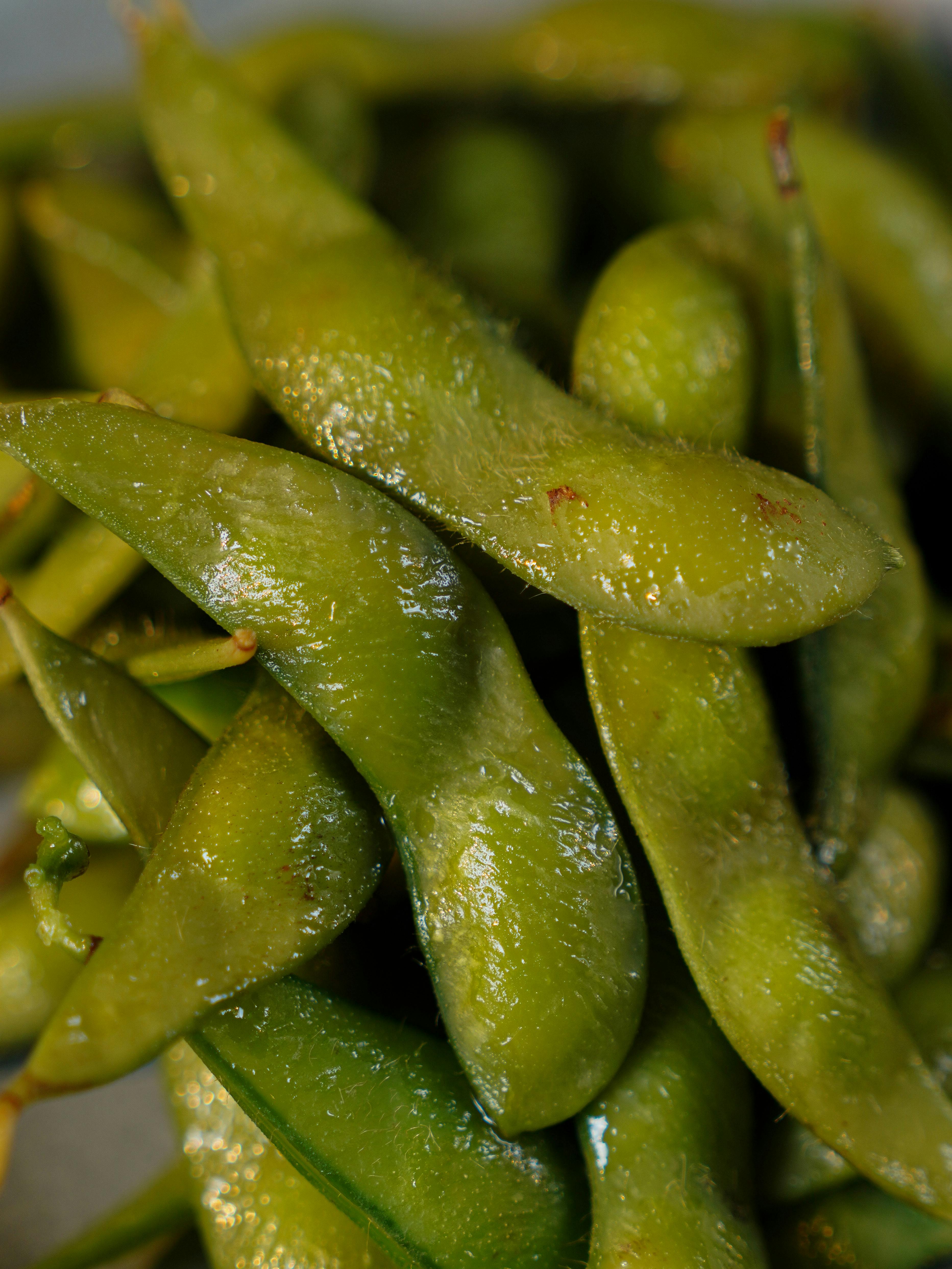
The diets react (see scores below)
Common Ingredients
- edamame pods
- sea salt
- water
- garlic
Specific recipes may vary.
Incompatible with 4 of 11 diets
Diet Ratings
Edamame (immature soybeans) contains approximately 5-6g net carbs per 100g serving (total ~8-9g carbs minus ~3-4g fiber), which is moderate for keto. A typical snack portion of 150-200g could contribute 8-12g net carbs, which is manageable within a daily keto budget but must be tracked carefully. On the positive side, edamame is relatively high in protein and fat compared to most legumes, and contains beneficial fiber. The ingredients here are clean — no added sugars or problematic additives. However, edamame is still a legume, which many keto practitioners avoid categorically due to carb content and anti-nutrients. Small, controlled portions (around 50-75g shelled) can fit within keto macros for those practicing flexible or lazy keto, but it demands careful accounting against the daily 20-50g net carb limit.
Strict keto and carnivore-adjacent practitioners reject edamame entirely, arguing that all legumes are too carb-dense for reliable ketosis and that anti-nutrients like lectins and phytates make them a poor food choice regardless of portion size. Some also flag soy's phytoestrogen content as a concern on keto protocols focused on hormonal optimization.
Edamame is a quintessential whole-food plant-based snack. All four ingredients — edamame pods (young soybeans), sea salt, water, and garlic — are entirely plant-derived with no animal products or animal-derived additives. Soybeans are a complete protein source, making this dish nutritionally excellent. There is no meaningful debate within the vegan community about this dish.
Edamame is young soybeans, and soy is a legume — one of the most clearly excluded food groups in the paleo diet. Legumes contain lectins, phytates, and other anti-nutrients that paleo proponents argue were not a significant part of the Paleolithic diet and contribute to gut permeability and inflammation. Soy in particular is also excluded due to its phytoestrogen content (isoflavones), which is a concern raised by nearly all major paleo authorities. Additionally, this dish contains sea salt/added salt, which is also discouraged under strict paleo guidelines. The garlic and water are paleo-compliant, but the foundational ingredient — soybeans — is a hard exclude with near-universal consensus in the paleo community.
Edamame are whole, immature soybeans — a legume and excellent plant-based protein source that aligns strongly with Mediterranean diet principles. The ingredients are minimal and wholesome: edamame pods, sea salt, water, and garlic. Legumes are a cornerstone of the Mediterranean diet, eaten multiple times per week, and soy specifically is a nutritious legume rich in protein, fiber, and beneficial phytonutrients. Garlic is a classic Mediterranean flavoring. The only minor note is that edamame is Japanese in origin, not traditionally Mediterranean, but the food itself fits perfectly within Mediterranean dietary principles.
Some strict Mediterranean diet traditionalists may note that soybeans and edamame are not part of the historical Mediterranean food culture, preferring legumes such as lentils, chickpeas, fava beans, and white beans. Modern Mediterranean diet guidelines, however, broadly embrace all legumes regardless of regional origin, making this distinction largely academic.
Edamame is entirely plant-derived — immature soybeans — and has no place on a carnivore diet. Soybeans are a legume, one of the most explicitly excluded food categories. The dish contains zero animal products. Garlic is also a plant-based additive. This is a clear violation of the core carnivore principle of eating exclusively animal-derived foods. There is unanimous consensus across all carnivore authorities and protocols that legumes like soybeans are strictly off-limits.
Edamame are immature soybeans, and soy is explicitly excluded on the Whole30 program. Legumes — including all soy products — are one of the core eliminated food groups for the full 30 days. While green beans, sugar snap peas, and snow peas are granted explicit exceptions as legumes, edamame (soybeans) receives no such exception. The remaining ingredients (sea salt, water, garlic) are all fully compliant, but the primary ingredient — edamame — is a disqualifying soy legume.
This dish contains two significant FODMAP concerns. First, edamame (immature soybeans) is high in GOS (galacto-oligosaccharides) at typical serving sizes. Monash University rates edamame as low-FODMAP only at a very small serving of around 90g (approximately half a cup shelled), but many people consume larger portions as a snack — and even at that threshold the margin is narrow. Second, and more decisively, the recipe explicitly lists garlic as an ingredient. Garlic is one of the highest-FODMAP foods per Monash University, containing significant fructans even in tiny amounts. There is no safe serving size of garlic during the elimination phase. The combination of borderline-GOS edamame with high-fructan garlic makes this dish a clear avoid during elimination.
Monash University does rate shelled edamame as low-FODMAP at 90g, and some clinical FODMAP practitioners allow it at carefully controlled portions. Without garlic, edamame-only preparations would be a 'caution' rather than 'avoid' — however, the garlic in this specific recipe is a firm disqualifier that most FODMAP dietitians would agree on.
Edamame (young soybeans) is an excellent DASH-compatible food. It is rich in plant-based protein, fiber, potassium, magnesium, and calcium — precisely the nutrients DASH emphasizes. Soybeans are a legume, a food group explicitly encouraged in DASH guidelines. The base ingredient is low in saturated fat and contains no cholesterol. However, sea salt is listed as an ingredient, which is a concern. Lightly salted edamame as commonly served in Japanese restaurants can contain 200–400mg of sodium per serving depending on how heavily salted. Prepared at home with minimal salt or unsalted, this dish would score a 9–10. As commonly consumed with moderate sea salt and garlic (a heart-healthy addition), it remains a solid DASH-friendly snack with the caveat to moderate added salt. The score of 8 reflects the typical preparation with light salting; unsalted versions would rate higher, and heavily salted versions would push toward 'caution.'
NIH DASH guidelines broadly endorse legumes (including soybeans) as a core food group without specific concern about edamame. However, some DASH-oriented clinicians note that the sodium added during preparation can vary significantly, and for individuals on the stricter 1,500mg/day low-sodium DASH protocol, even lightly salted edamame should be portioned carefully or prepared salt-free.
Edamame is an excellent Zone Diet snack. As a whole soybean, it provides a balanced macronutrient profile that aligns well with Zone principles. It contains plant-based protein (approximately 8-9g per 1/2 cup shelled), moderate low-glycemic carbohydrates with meaningful fiber content (net carbs are relatively low), and beneficial fats including some polyunsaturated and monounsaturated fats. Dr. Sears classifies soy protein as a favorable vegetarian protein source in the Zone. The low glycemic index of edamame means it won't spike insulin, which is central to the Zone's anti-inflammatory strategy. The garlic adds polyphenols, further supporting the anti-inflammatory goals Sears emphasizes in his later writings. One important Zone consideration: when eating vegetarian protein like edamame, the fat block size doubles (3g fat per block rather than 1.5g) because plant protein sources contain carbohydrates, requiring adjustments to maintain the 40/30/30 ratio. A standard snack portion (~1/2 cup shelled edamame) functions as approximately 1 protein block and 1 carb block simultaneously, making it a compact, Zone-friendly snack that requires minimal balancing.
Edamame is an exemplary anti-inflammatory food. As a whole soy food, it is explicitly emphasized in Dr. Weil's Anti-Inflammatory Food Pyramid and aligns strongly with anti-inflammatory dietary principles. Edamame provides complete plant protein, significant dietary fiber, isoflavones (genistein, daidzein) which are polyphenolic compounds with demonstrated anti-inflammatory properties, omega-3 alpha-linolenic acid (ALA), and a favorable omega-3 to omega-6 ratio compared to most legumes. It is also rich in folate, vitamin K, and antioxidants including vitamin C and carotenoids. Research associates soy isoflavones with reduced CRP and IL-6 levels. The addition of garlic adds further anti-inflammatory benefit via allicin and organo-sulfur compounds. Sea salt in moderate culinary quantities is acceptable. This dish is minimally processed, whole-food-based, and free from any problematic ingredients.
Edamame is an excellent GLP-1-friendly snack. A standard 1-cup (155g) serving of shelled edamame delivers approximately 17g of complete plant protein and 8g of fiber, making it one of the rare snack foods that meaningfully advances both top dietary priorities simultaneously. The fat content (~8g) is predominantly unsaturated, including beneficial omega-6 and some omega-3 fatty acids from soy, which aligns with GLP-1 dietary guidance. Edamame is minimally processed, nutrient-dense per calorie (~190 kcal/cup shelled), and easy to digest in moderate portions. The added garlic and sea salt pose no GLP-1-specific concerns. Its pod presentation also naturally encourages slower eating and portion awareness, which suits the small-meal cadence recommended for GLP-1 patients. The high water content of the pods supports hydration. One mild consideration: the sodium from sea salt should be monitored, particularly for patients with hypertension, but at typical snack portions this is not clinically significant.
*See how scores were generated at our methodology page.
Nutritional profile
Six traits that cut across every diet.
Fiber & Plants
How much whole-plant food and fiber it delivers.
Healthy Fats
The quality of its fats (unsaturated, omega-3).
Whole / Unprocessed
How close it is to its natural, unprocessed form.
Gut Gentle
How easy it is on digestion (low FODMAP, few irritants).
Low Glycemic
How little it spikes your blood sugar.
Protein Density
How much protein it packs per calorie.
Controversy Index
Higher controversy = more disagreement between diets.
Diet-Specific Tips
 Keto — 5/10
View tips
- ~5-6g net carbs per 100g — moderate, portion control required
- Legume classification raises concerns for strict keto followers
- Clean ingredient list with no added sugars or grains
- Relatively higher protein and fat content compared to other legumes
- Phytoestrogens and anti-nutrients in soy are a secondary concern for some keto camps
- A standard snack portion can consume 20-50% of daily net carb allowance
 Vegan — 10/10
View tips
- 100% plant-based ingredients
- Whole-food preparation — no processing or additives of concern
- Soybeans are a complete protein, nutritionally superior snack
- Sea salt, water, and garlic are universally vegan
- No cross-contamination or ambiguous ingredient concerns
 Mediterranean — 9/10
View tips
- Legume and excellent plant-based protein source
- Whole, minimally processed food
- Rich in fiber, protein, and beneficial phytonutrients
- Minimal, clean ingredient list with no added sugars or unhealthy fats
- Garlic is a traditional Mediterranean flavoring
- Not traditionally Mediterranean in origin, but nutritionally compatible
 DASH — 8/10
View tips
- Soybeans/legumes are explicitly encouraged in DASH guidelines
- High in plant-based protein, fiber, potassium, magnesium, and calcium
- Low in saturated fat and cholesterol-free
- Added sea salt introduces variable sodium — request low-salt or unsalted for best DASH compliance
- Garlic is a heart-healthy addition with no DASH concerns
- Excellent snack choice replacing processed, high-sodium alternatives
 Zone — 8/10
View tips
- Complete soy protein — a favorable Zone protein source per Dr. Sears
- Low glycemic index carbohydrates with significant fiber, keeping net carbs low
- Dual macro role (protein + carb) typical of legumes — must account for this in block calculations
- Vegetarian protein block requires larger fat block (3g vs 1.5g) to balance the 40/30/30 ratio
- Garlic contributes polyphenols, supporting the Zone's anti-inflammatory emphasis
- Minimal processing — just sea salt and water — no added sugars or seed oils
- Omega-3 fatty acids present in small amounts, consistent with Zone's anti-inflammatory goals
 Anti-Inflammatory — 9/10
View tips
- Whole soy food — explicitly emphasized in anti-inflammatory dietary frameworks including Dr. Weil's pyramid
- Rich in isoflavones (genistein, daidzein) with demonstrated anti-inflammatory and antioxidant activity
- Good source of plant-based omega-3 ALA and complete protein
- High dietary fiber supports gut microbiome and reduces systemic inflammation
- Garlic adds allicin and organo-sulfur compounds with additional anti-inflammatory properties
- Minimally processed preparation — boiled or steamed whole pods with no inflammatory additives
- Associated with reduced inflammatory markers (CRP, IL-6) in research
 GLP-1 Friendly — 8/10
View tips
- ~17g complete plant protein per cup shelled — strong protein contribution for a snack
- ~8g fiber per cup — directly supports GLP-1 constipation prevention
- Predominantly unsaturated fat profile — aligns with low saturated fat guidance
- Minimally processed, whole food — high nutrient density per calorie
- Natural portion control from pod-eating encourages slower consumption
- High water content supports hydration, important given reduced GLP-1 thirst sensation
- Garlic and sea salt are well-tolerated condiments at typical snack quantities