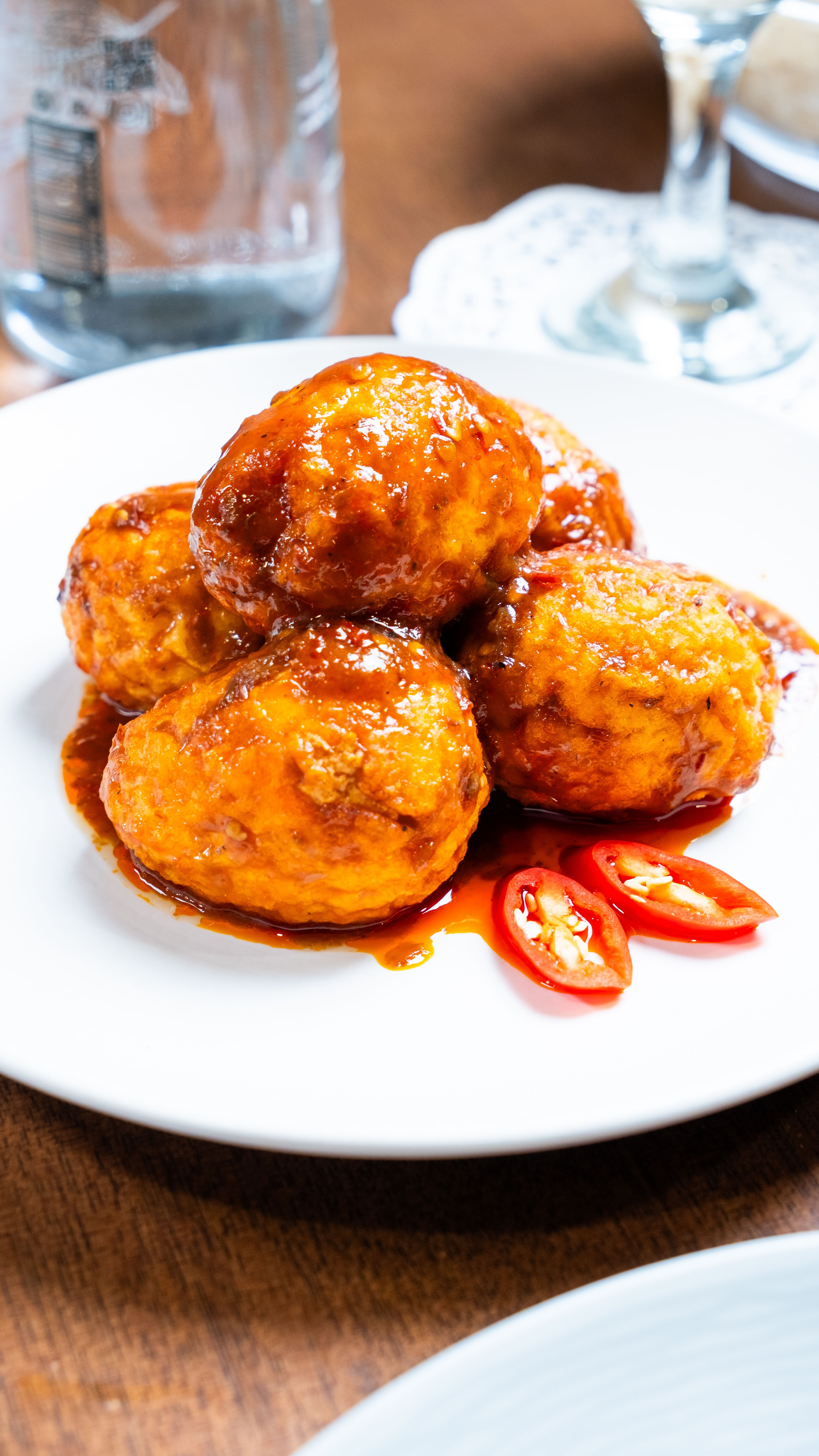
Photo: Fadli Octora Channel / Pexels
The diets react (see scores below)
Common Ingredients
- chicken
- berbere
- niter kibbeh
- onion
- garlic
- ginger
- hard-boiled eggs
- injera
Specific recipes may vary.
Incompatible with 6 of 11 diets
Diet Ratings
Doro Wat as traditionally prepared is disqualifying for keto primarily because of injera, the Ethiopian sourdough flatbread made from teff flour that serves as both the serving vessel and utensil. Injera is extremely high in carbohydrates (a single piece can contain 20-30g net carbs), immediately blowing the daily keto budget. Beyond injera, the dish contains a significant quantity of caramelized onions — Doro Wat is known for using an extraordinary amount of onions (often 2-3 lbs for a pot) cooked down slowly, which concentrates their natural sugars and carbs substantially. Berbere spice blend also typically includes small amounts of added sugar and higher-carb spices. The chicken, niter kibbeh (spiced clarified butter), garlic, ginger, and hard-boiled eggs are all keto-friendly components, but the injera alone makes the dish as served incompatible with ketosis. Without injera and with portion-controlled onions, the stew itself could be adapted to keto, but the traditional dish cannot be approved.
Doro Wat contains multiple animal products that are unequivocally non-vegan. Chicken is poultry (animal flesh), hard-boiled eggs are animal products, and niter kibbeh is an Ethiopian spiced clarified butter made from dairy. These three core ingredients alone make this dish entirely incompatible with a vegan diet. There is no ambiguity here — this is a traditional Ethiopian chicken and egg stew built on animal ingredients at its foundation.
Doro Wat is a traditional Ethiopian chicken stew that is largely paleo-compatible in its core ingredients — chicken, hard-boiled eggs, onion, garlic, and ginger are all fully approved. Berbere spice blend is generally paleo-friendly as it is composed of chili peppers, fenugreek, coriander, and other spices, though commercial blends may contain added salt. Niter kibbeh (Ethiopian spiced clarified butter) is similar to ghee — a dairy derivative — and sits in a gray area, generally accepted by most modern paleo practitioners but discouraged by strict Cordain-school interpretations. The critical disqualifying ingredient is injera, the spongy sourdough flatbread that is a staple accompaniment and structural component of the dish. Injera is made from teff, a grain, which is explicitly excluded from paleo. Since injera is integral to Doro Wat as traditionally served — used both as a plate and as the primary vehicle for eating the stew — the dish as a whole cannot be approved. Without injera, the stew itself would rate as a caution-to-approve.
Some paleo practitioners would argue the Doro Wat stew itself (minus injera) is acceptable, with niter kibbeh treated like ghee. Mark Sisson and the Primal Blueprint generally accept clarified butter, meaning the spiced stew alone could be considered paleo-compliant if served without injera.
Doro Wat is an Ethiopian chicken stew that contains several Mediterranean-compatible elements (chicken as a moderate-consumption protein, eggs, aromatic vegetables like onion, garlic, and ginger) alongside some problematic components. The primary fat source is niter kibbeh, a spiced clarified butter, which directly conflicts with the Mediterranean diet's emphasis on extra virgin olive oil as the principal fat. Injera, the traditional sourdough flatbread made from teff, is a fermented whole grain and nutritionally reasonable, though not a Mediterranean staple grain. Berbere spice blend is nutrient-rich and consistent with Mediterranean-style herb and spice use. Overall, chicken and eggs are acceptable in moderation, but niter kibbeh's saturated fat profile and non-olive-oil base pull the dish away from Mediterranean principles. The dish is not harmful but requires substitution or mindful portioning to align better.
Some modern Mediterranean diet interpreters take a broader cultural view, noting that teff-based injera is a whole grain with good fiber and micronutrient content, and that traditional Ethiopian cuisine is largely plant-forward in its broader dietary pattern. A few nutritionists argue that clarified butter used sparingly in an otherwise vegetable- and legume-rich dietary context is acceptable, as butter appears in some regional Mediterranean traditions (e.g., parts of North Africa and the Levant).
Doro Wat is a traditional Ethiopian chicken stew that is heavily incompatible with the carnivore diet. While chicken and hard-boiled eggs are animal-derived and acceptable to most carnivore practitioners, the dish is fundamentally defined by its plant-based components. Berbere is a complex spice blend containing chili peppers, fenugreek, coriander, and other plant-derived spices. Onion, garlic, and ginger are all plant foods explicitly excluded from carnivore. Injera, the sourdough flatbread made from teff flour, is a grain-based food entirely off-limits. Niter kibbeh (spiced clarified butter) is dairy-derived but also infused with onion, garlic, and spices, making it non-compliant. The dish as a whole cannot be modified into a carnivore-compatible form without ceasing to be Doro Wat — it would simply be plain chicken and eggs.
Doro Wat contains two disqualifying components. First, injera — the traditional Ethiopian flatbread served with this dish — is made from teff (a grain) and is explicitly a grain-based bread, which is excluded on Whole30. Second, niter kibbeh is a spiced clarified butter; while clarified butter (ghee) is explicitly allowed on Whole30, niter kibbeh is typically made with regular butter that is only partially clarified and often contains milk solids, making it functionally different from true ghee/clarified butter. The remaining ingredients — chicken, berbere spice blend (watch for added sugar in commercial blends), onions, garlic, ginger, and hard-boiled eggs — are all Whole30-compliant. However, the inclusion of injera alone disqualifies the dish as traditionally served.
Doro Wat contains multiple high-FODMAP ingredients that make it unsuitable during the elimination phase. Onion is one of the highest-fructan foods known and is a core ingredient used in large quantities. Garlic is similarly very high in fructans even in small amounts. Berbere spice blend typically contains onion powder and/or garlic powder, which are even more concentrated sources of fructans than fresh alliums. Injera is made from teff flour but is traditionally fermented and often mixed with wheat or barley, adding fructan risk; even pure teff injera in typical serving sizes may be problematic. Niter kibbeh (Ethiopian spiced clarified butter) is infused with onion, garlic, and other aromatics — unlike garlic-infused oil, butter-based infusions with particulate matter can retain water-soluble FODMAPs. The chicken and hard-boiled eggs are individually low-FODMAP, but the overall dish is built on a foundation of high-fructan ingredients that cannot be avoided without fundamentally changing the recipe.
Doro Wat is a traditional Ethiopian chicken stew with several DASH-compatible components — lean chicken, onions, garlic, ginger, and eggs provide lean protein, and berbere spice blend contributes antioxidant-rich spices. However, niter kibbeh (Ethiopian spiced clarified butter) is a significant source of saturated fat, which DASH explicitly limits. The dish is also typically very high in onion volume (onions are cooked down in large quantities in fat), and berbere can contain substantial amounts of added salt depending on preparation. Injera (fermented teff flatbread) is a whole grain with fiber and minerals, making it more DASH-friendly than refined grains. The overall dish is borderline — the saturated fat from niter kibbeh is the primary concern, though the chicken and vegetable base align with DASH principles. Consumed occasionally with portion control on the niter kibbeh, it can fit within a DASH framework.
NIH DASH guidelines explicitly limit saturated fat and recommend low-fat cooking methods, which niter kibbeh (clarified spiced butter) directly conflicts with. However, some updated clinical interpretations note that when saturated fat from dairy-based sources like clarified butter is consumed in moderate portions within an otherwise nutrient-dense meal rich in spices, vegetables, and lean protein, the overall dietary pattern may still support cardiovascular health — particularly given teff injera's notable magnesium, fiber, and potassium content.
Doro Wat is a rich Ethiopian chicken stew with several Zone-compatible elements alongside some significant challenges. On the positive side, chicken is an excellent lean Zone protein source, hard-boiled eggs add additional protein blocks, and the aromatics (onion, garlic, ginger) are low-glycemic vegetables. The berbere spice blend is polyphenol-rich, aligning with Sears' anti-inflammatory emphasis. The core stew without injera could actually be reasonably Zone-friendly with portion control. The two main concerns are: (1) Niter kibbeh is a spiced clarified butter (ghee), which is high in saturated fat — Zone protocol traditionally limits saturated fat in favor of monounsaturated fats, though Sears' later writings acknowledge some saturated fat is acceptable. The quantity used in authentic Doro Wat is substantial. (2) Injera (fermented teff flatbread) is a high-glycemic, starchy carbohydrate with a significant carb load — Zone classifies grains as 'unfavorable' carbs, and injera's role as both plate and utensil means portions tend to be large. If injera is limited to a very small serving (1 small piece) and the niter kibbeh quantity is modest, the dish can fit Zone blocks, but this requires significant departure from traditional preparation and serving.
Some Zone-adapted practitioners and later Sears writings are more permissive about saturated fat from whole food sources like clarified butter in modest amounts, especially when paired with anti-inflammatory spices. Teff, the grain in injera, has a moderate glycemic index (around 57) and contains fiber, making it somewhat more favorable than white bread. A small injera portion could be counted as 1-2 unfavorable carb blocks rather than an automatic disqualifier.
Doro Wat is a richly spiced Ethiopian chicken stew with a genuinely mixed anti-inflammatory profile. On the positive side, berbere spice blend is loaded with anti-inflammatory powerhouses — turmeric, ginger, fenugreek, chili peppers, garlic, and other spices that collectively deliver curcumin, gingerols, capsaicin, and allicin. Onion and garlic add quercetin and organosulfur compounds. Chicken (lean protein) is a 'moderate' category food, and eggs are acceptable in moderation. Injera, made from fermented teff, is a whole grain with prebiotic fiber and a lower glycemic impact than refined grains, and fermentation may offer additional gut-health benefits. The significant limiting factor is niter kibbeh — Ethiopian spiced clarified butter — which is high in saturated fat and falls into the 'limit' category under anti-inflammatory guidelines. The quantity used in authentic Doro Wat is substantial, which meaningfully offsets the benefits of the spice blend. The dish is not processed and contains no trans fats, high-fructose corn syrup, or seed oils. Overall, this is a flavorful, traditionally prepared dish with real anti-inflammatory ingredients, but the saturated fat load from niter kibbeh prevents a full approval.
Some anti-inflammatory researchers (notably those in the ancestral health space, including Weston A. Price-aligned practitioners) argue that grass-fed clarified butter like niter kibbeh is less problematic than industrial dairy fat due to its butyrate content and fat-soluble vitamins, potentially tempering the inflammatory concern. Conversely, mainstream anti-inflammatory protocols (including Dr. Weil's pyramid) consistently flag butter and high-fat dairy as foods to limit, supporting a cautious rating.
Doro Wat is a protein-rich Ethiopian chicken stew that offers meaningful nutritional benefits for GLP-1 patients — chicken is a lean protein source and hard-boiled eggs add additional protein and micronutrients. However, two key ingredients raise concern. Niter kibbeh (spiced clarified butter) is a saturated fat that is used in significant quantity, which can worsen GLP-1 side effects like nausea, bloating, and reflux. Berbere spice blend is moderately to heavily spiced and contains chili, which may exacerbate reflux or GI discomfort in GLP-1 patients with slowed gastric emptying. Injera (fermented teff flatbread) is a whole-grain carbohydrate with modest fiber and serves as the base starch — it is portion-sensitive and easy to overconsume. The dish is not fried and does contain good protein density from chicken and eggs, keeping it out of the avoid category. Caution is warranted due to the fat load from niter kibbeh and the spice intensity from berbere, both of which are signature and non-optional components of an authentic Doro Wat preparation.
Some GLP-1-focused dietitians would view Doro Wat more favorably, noting that the chicken and egg protein content is strong and that individual spice tolerance varies widely — patients who tolerate spice well may experience no GI distress. Others would flag the saturated fat from niter kibbeh as a meaningful concern regardless of tolerance, particularly in larger servings.
*See how scores were generated at our methodology page.
Nutritional profile
Six traits that cut across every diet.
Fiber & Plants
How much whole-plant food and fiber it delivers.
Healthy Fats
The quality of its fats (unsaturated, omega-3).
Whole / Unprocessed
How close it is to its natural, unprocessed form.
Gut Gentle
How easy it is on digestion (low FODMAP, few irritants).
Low Glycemic
How little it spikes your blood sugar.
Protein Density
How much protein it packs per calorie.
Controversy Index
Higher controversy = more disagreement between diets.
Diet-Specific Tips
 Mediterranean — 4/10
View tips
- Chicken is acceptable in moderation per Mediterranean guidelines
- Niter kibbeh (spiced clarified butter) replaces olive oil as the fat source, increasing saturated fat
- Hard-boiled eggs add moderate dairy/egg protein, acceptable in limited amounts
- Injera from teff is a fermented whole grain, nutritionally positive but not a Mediterranean staple
- Onion, garlic, and ginger are strongly encouraged aromatics
- Berbere spice blend aligns with Mediterranean herb/spice emphasis
- No red meat or heavily processed ingredients
- Dish is culturally non-Mediterranean but not inherently incompatible if fat source is moderated
 DASH — 4/10
View tips
- Niter kibbeh (spiced clarified butter) is high in saturated fat, a primary DASH concern
- Chicken is a DASH-approved lean protein source
- Hard-boiled eggs add cholesterol but are acceptable in moderation under current guidelines
- Berbere spice blend may add significant sodium depending on recipe
- Injera made from teff is a whole grain with fiber, magnesium, and potassium — DASH-friendly
- Garlic, onion, and ginger are DASH-compatible aromatics with cardiovascular benefits
- High onion volume cooked in fat increases caloric and saturated fat load
- Portion size of niter kibbeh is key — dish can be modified to reduce saturated fat
 Zone — 5/10
View tips
- Chicken is an ideal Zone lean protein source
- Hard-boiled eggs provide additional quality protein blocks
- Niter kibbeh (spiced clarified butter/ghee) is high in saturated fat, conflicting with Zone's preference for monounsaturated fats
- Injera is a starchy, high-glycemic carbohydrate classified as 'unfavorable' in Zone terminology
- Berbere spices are polyphenol-rich and support Sears' anti-inflammatory goals
- Onion, garlic, and ginger are favorable low-glycemic carb contributions
- Traditional serving sizes of injera make carbohydrate block management difficult
- Dish can be Zone-adapted by limiting injera and niter kibbeh quantities significantly
 Anti-Inflammatory — 5/10
View tips
- Berbere spice blend is highly anti-inflammatory (turmeric, ginger, chili, garlic, fenugreek)
- Niter kibbeh (spiced clarified butter) is high in saturated fat — a 'limit' ingredient
- Injera (fermented teff) is a beneficial whole grain with prebiotic properties
- Chicken and eggs are acceptable lean/moderate proteins
- Onion and garlic contribute quercetin and organosulfur compounds
- No processed ingredients, trans fats, refined sugar, or seed oils
- Net profile is positive on spices but moderated by significant saturated fat content
 GLP-1 Friendly — 5/10
View tips
- Chicken provides lean, high-quality protein supporting GLP-1 muscle preservation goals
- Hard-boiled eggs add additional protein and nutrient density per calorie
- Niter kibbeh (spiced clarified butter) adds significant saturated fat, increasing nausea and reflux risk
- Berbere spice blend is moderately to heavily spiced — may worsen GI side effects in sensitive patients
- Injera is a fermented whole-grain flatbread with modest fiber but is portion-sensitive
- Not fried — preparation method is a positive factor
- Slowed gastric emptying on GLP-1s amplifies sensitivity to both fat and spice