This dish contains raw or undercooked ingredients. Consume at your discretion.
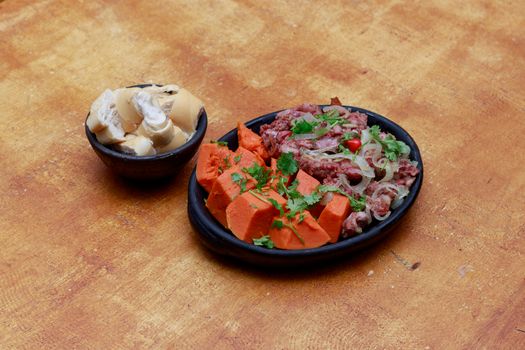
Photo: Victor Cayke / Pexels
The diets react (see scores below)
Common Ingredients
- beef
- mitmita
- niter kibbeh
- cardamom
- cottage cheese
- collard greens
- injera
- onion
Specific recipes may vary.
Incompatible with 8 of 11 diets
Diet Ratings
Kitfo as traditionally served includes injera, an Ethiopian sourdough flatbread made from teff flour, which is a high-carb grain product that is fundamentally incompatible with ketosis. A single piece of injera can contain 30-50g of net carbs, easily exceeding the daily keto limit on its own. Without the injera, the core of kitfo (raw/rare ground beef, niter kibbeh spiced butter, mitmita spice blend, cardamom) would be highly keto-friendly — lean beef with a fat-rich clarified butter base is an excellent keto combination. The cottage cheese (ayib) adds minimal carbs and is generally acceptable. Collard greens are low-carb and keto-safe in reasonable portions. However, since injera is a defining, structural component of the dish as served, the dish in its standard form must be rated 'avoid'. Ordering kitfo without injera would transform this into an 'approve' rated dish.
Kitfo is an Ethiopian beef tartare dish that contains multiple animal products, making it clearly incompatible with a vegan diet. The dish contains raw or lightly cooked beef (animal flesh), niter kibbeh (Ethiopian spiced clarified butter, a dairy product), and cottage cheese (dairy). Three distinct animal-derived ingredients are present, leaving no ambiguity about this dish's non-vegan status.
Kitfo contains multiple paleo-incompatible ingredients that make it a clear avoid. Injera is the most disqualifying ingredient — it is a fermented flatbread made from teff, a grain, which is strictly excluded from paleo. Cottage cheese is a dairy product, also firmly excluded. Niter kibbeh is a spiced clarified butter (similar to ghee) which is debated but leaning toward exclusion in stricter paleo frameworks. The base ingredients — raw/minced beef, mitmita (chili spice blend), cardamom, onion, and collard greens — are paleo-friendly, but the presence of injera and cottage cheese are hard disqualifiers with clear paleo consensus against them. Even if those two ingredients were substituted, niter kibbeh adds another layer of debate.
Kitfo is an Ethiopian dish centered on raw or lightly cooked minced beef as its primary protein, seasoned with mitmita and niter kibbeh (a spiced clarified butter). Red meat is a cornerstone ingredient, which the Mediterranean diet restricts to only a few times per month. Furthermore, niter kibbeh is a butter-based fat rather than olive oil, conflicting with the Mediterranean diet's emphasis on extra virgin olive oil as the primary fat. While the dish includes beneficial components — collard greens (excellent leafy vegetable), injera (a fermented grain, though refined), cottage cheese (acceptable dairy in moderation), onion, and aromatic spices — the dominant protein and fat sources directly contradict Mediterranean principles. The positive plant-based accompaniments are insufficient to offset the red meat and saturated fat core of the dish.
Some Mediterranean diet interpreters might rate this as 'caution' rather than 'avoid' given the meaningful presence of collard greens, fermented injera, cottage cheese, and spices, arguing that occasional lean red meat dishes with substantial vegetable accompaniments can fit within a broader Mediterranean-style eating pattern when consumed infrequently.
Kitfo is an Ethiopian minced beef dish that, while centered on beef (a carnivore-approved protein), is served with multiple plant-based components that make it incompatible with the carnivore diet. The dish contains injera (fermented teff flatbread — a grain), collard greens (a leafy vegetable), onion (a plant), mitmita (a spice blend of plant origin), and cardamom (a plant-derived spice). Niter kibbeh is a spiced clarified butter that contains plant spices, adding further plant contamination. Cottage cheese, while animal-derived, is a debated dairy product. The combination of a grain staple (injera), vegetables (collard greens, onion), and multiple plant spices places this dish firmly in the 'avoid' category despite its beef base. The dish as traditionally prepared cannot be made carnivore-compliant without stripping away most of its defining ingredients.
Kitfo contains two clear Whole30-disqualifying ingredients. First, injera — the traditional Ethiopian flatbread made from teff (a grain) — is explicitly excluded as a grain-based product and also falls under the 'no recreating bread/baked goods' rule. Second, cottage cheese is dairy and is excluded on Whole30 (only ghee and clarified butter are permitted dairy exceptions). Niter kibbeh is an Ethiopian spiced clarified butter, which is functionally similar to ghee and would be compliant on its own, but it cannot save a dish with two hard exclusions. The beef, mitmita (spice blend), cardamom, collard greens, and onion are all compliant, but the presence of injera and cottage cheese makes this dish a definitive avoid.
Kitfo contains multiple high-FODMAP ingredients that make it unsuitable during the elimination phase. Onion is one of the highest fructan sources and is a clear avoid. Injera is traditionally made from teff flour, which is low-FODMAP, but many commercial or home versions include wheat or barley, and the fermentation process may not reduce FODMAPs sufficiently — this introduces significant risk. Cottage cheese contains lactose and is rated high-FODMAP at standard serving sizes (low-FODMAP only at very small portions like 2 tablespoons). Collard greens are generally low-FODMAP at moderate servings. Beef, niter kibbeh (spiced clarified butter — the clarification removes lactose), mitmita (a spice blend), and cardamom are low-FODMAP. However, the combination of onion (unavoidable FODMAP trigger), lactose from cottage cheese at standard portions, and the uncertain FODMAP status of injera makes this dish a clear avoid during elimination.
Monash University rates teff injera as low-FODMAP in small serves due to fermentation reducing FODMAP content, but many clinical FODMAP practitioners advise caution with fermented grain products during strict elimination. Additionally, cottage cheese is low-FODMAP only at 2 tablespoons per Monash, but standard kitfo servings include much larger amounts, pushing lactose levels into high-FODMAP territory.
Kitfo is an Ethiopian dish primarily made from minced raw (or lightly cooked) beef seasoned with mitmita spice blend and niter kibbeh (spiced clarified butter). From a DASH perspective, this dish presents several concerns balanced against some positives. The primary protein is beef — DASH limits red meat, especially fattier cuts, recommending lean meat sparingly. Niter kibbeh is a clarified butter (similar to ghee) and contributes saturated fat, which DASH explicitly limits. However, this version includes cottage cheese (ayib), which can be a low-fat dairy source aligned with DASH if low-fat variety is used, and collard greens, which are an excellent DASH-approved vegetable rich in potassium, calcium, and fiber. Injera, the sourdough flatbread base, is made from teff — a whole grain — which is DASH-positive for fiber and minerals. Onions and spices (cardamom, mitmita) are negligible from a sodium standpoint. The main DASH concerns are the red meat component and the niter kibbeh's saturated fat content. Sodium is not a primary issue here given the ingredient list. Portion size of the butter-spiced beef is the key modulating factor. As commonly prepared, kitfo is a moderate-to-high saturated fat dish due to the generous use of niter kibbeh, placing it in the caution range rather than approved.
NIH DASH guidelines clearly limit red meat and saturated fat sources like clarified butter, suggesting caution or avoidance. However, some updated clinical interpretations note that the overall dietary pattern matters more than individual ingredients — the teff-based injera, collard greens, and spices provide fiber, potassium, and antioxidants that partially offset concerns, and if lean beef and minimal niter kibbeh are used, some DASH-oriented dietitians may view kitfo as an acceptable occasional meal within a broader DASH pattern.
Kitfo is an Ethiopian spiced minced beef dish that presents a mixed Zone Diet profile. The lean beef provides solid protein content, aligning well with Zone protein block requirements (~7g per block). The collard greens are excellent low-glycemic, high-polyphenol vegetables strongly favored in the Zone. Cottage cheese (ayibe) adds lean protein and some carbohydrate in a favorable ratio. However, niter kibbeh — a spiced clarified butter — is a significant source of saturated fat, which the Zone Diet cautions against, particularly in early Sears publications. The injera (fermented teff flatbread) is a high-glycemic carbohydrate that qualifies as an 'unfavorable' Zone carb, driving up glycemic load. The combination of saturated fat from niter kibbeh plus the high-GI injera makes careful portioning essential. A Zone-adapted version would reduce injera significantly, increase collard greens, and moderate the niter kibbeh to keep saturated fat in check. The dish has genuinely favorable components (beef, collard greens, cottage cheese, spices with anti-inflammatory properties like cardamom) but the fat source and primary carbohydrate source both require adjustment.
Sears' later work in 'The Mediterranean Zone' and subsequent anti-inflammatory writings took a more nuanced view of saturated fats, acknowledging that traditional whole-food preparations like clarified butter in modest amounts are preferable to processed seed oils. From this evolved perspective, the niter kibbeh is less problematic than early Zone literature suggested. Additionally, teff (the grain in injera) has a moderate glycemic index compared to white bread and contains beneficial minerals and fiber, meaning some Zone practitioners would treat small portions of injera more favorably than pure white bread equivalents.
Kitfo is an Ethiopian dish centered on raw or lightly cooked minced beef, seasoned with mitmita (a spice blend including chili, cardamom, and other spices) and niter kibbeh (a spiced clarified butter). The dish typically comes with ayib (here substituted with cottage cheese) and gomen (collard greens), served alongside injera (fermented teff flatbread). From an anti-inflammatory perspective, this dish is a mixed bag. On the pro-inflammatory side: beef is a red meat high in saturated fat and arachidonic acid, which the anti-inflammatory framework recommends limiting. Niter kibbeh is essentially spiced clarified butter (ghee), which is high in saturated fat — a category the framework places in the 'limit' tier. On the anti-inflammatory side: mitmita and the spice blend (chili pepper, cardamom) carry anti-inflammatory phytochemicals. Collard greens are an excellent anti-inflammatory food — rich in vitamins K, C, and antioxidants. Injera made from teff is a whole grain with a beneficial fiber profile and is fermented, which adds a modest probiotic benefit. Cottage cheese (low-fat dairy) is a moderate-tier food. Onions provide quercetin, a notable anti-inflammatory flavonoid. Overall, the dish's anti-inflammatory strengths (spices, collard greens, fermented teff, onion) are substantially offset by the red meat and high saturated-fat butter base, placing it firmly in the 'caution' zone. Portion size and preparation method (rare vs. cooked) also matter significantly.
Some anti-inflammatory researchers, particularly those aligned with ancestral or nose-to-tail nutrition frameworks (e.g., Paul Saladino's carnivore-adjacent approach), argue that unprocessed red meat from grass-fed sources contains conjugated linoleic acid (CLA) and a more favorable omega-3 to omega-6 ratio, making it less pro-inflammatory than conventional anti-inflammatory guidelines suggest. Conversely, more conservative practitioners would rate this dish lower due to the combination of red meat and clarified butter (double saturated fat load), which are both on the 'limit' list simultaneously.
Kitfo is an Ethiopian beef tartare dish — typically raw or lightly warmed minced beef heavily dressed with niter kibbeh (a spiced clarified butter), which makes it inherently high in saturated fat per serving. The mitmita spice blend is quite hot and chili-forward, posing a real risk of worsening GLP-1-associated nausea, reflux, and GI discomfort. While the dish does offer meaningful protein from lean beef and some benefit from cottage cheese (ayibe) and collard greens (gomen), the fat load from niter kibbeh is the dominant nutritional concern — traditional recipes use it generously, and it is not a modest garnish. Injera, made from fermented teff, adds fiber and is relatively easy to digest, but is a refined-carbohydrate-dominant base with limited protein contribution. The raw or semi-raw preparation also raises food safety considerations that are particularly relevant for GLP-1 patients who may already have compromised GI motility. The combination of high saturated fat, significant spice heat, and raw meat preparation makes this a poor fit for GLP-1 patients as standardly prepared.
Some GLP-1-focused dietitians may view a modified, lekemt (fully cooked) version of kitfo with reduced niter kibbeh as a borderline caution-level choice, given that beef provides complete protein, collard greens add fiber, and teff-based injera has micronutrient value. Individual spice tolerance varies, and patients who do not experience GI sensitivity may tolerate milder preparations — but the standard preparation as described warrants an avoid rating.
*See how scores were generated at our methodology page.
Nutritional profile
Six traits that cut across every diet.
Fiber & Plants
How much whole-plant food and fiber it delivers.
Healthy Fats
The quality of its fats (unsaturated, omega-3).
Whole / Unprocessed
How close it is to its natural, unprocessed form.
Gut Gentle
How easy it is on digestion (low FODMAP, few irritants).
Low Glycemic
How little it spikes your blood sugar.
Protein Density
How much protein it packs per calorie.
Controversy Index
Higher controversy = more disagreement between diets.
Diet-Specific Tips
 DASH — 4/10
View tips
- Red meat (beef) is limited on DASH diet — use lean cuts in small portions
- Niter kibbeh (spiced clarified butter) contributes saturated fat, which DASH restricts
- Collard greens are an excellent DASH food — rich in potassium, calcium, and fiber
- Injera made from teff is a whole grain, DASH-positive for fiber and minerals
- Cottage cheese (ayib) can align with low-fat dairy component of DASH if low-fat version used
- No significant added sodium in the ingredient list — a positive factor
- Portion control of the spiced butter and beef is critical for DASH compatibility
 Zone — 5/10
View tips
- Beef provides lean protein suitable for Zone protein blocks
- Collard greens are ideal low-glycemic, polyphenol-rich Zone vegetables
- Niter kibbeh (spiced clarified butter) is a saturated fat source cautioned in classic Zone methodology
- Injera is a high-glycemic 'unfavorable' Zone carbohydrate that raises overall glycemic load
- Cottage cheese adds lean protein and moderate favorable carbohydrates
- Spices (mitmita, cardamom) are anti-inflammatory and Zone-neutral
- Dish requires significant portioning adjustment — less injera, more greens — to achieve 40/30/30 balance
 Anti-Inflammatory — 4/10
View tips
- Red meat (beef) is a primary ingredient — anti-inflammatory framework recommends limiting red meat due to saturated fat and arachidonic acid content
- Niter kibbeh (spiced clarified butter) is high in saturated fat, placing it in the 'limit' category
- Mitmita spice blend (chili, cardamom, and other spices) contributes anti-inflammatory phytochemicals and capsaicin
- Collard greens (gomen) are a strongly anti-inflammatory ingredient — rich in antioxidants, vitamin K, and glucosinolates
- Injera (fermented teff flatbread) is a whole grain with fiber and fermentation benefits, supporting gut health
- Onions provide quercetin and other anti-inflammatory flavonoids
- Cottage cheese (low-fat dairy) is a moderate, acceptable dairy option
- Cardamom has anti-inflammatory and antioxidant properties