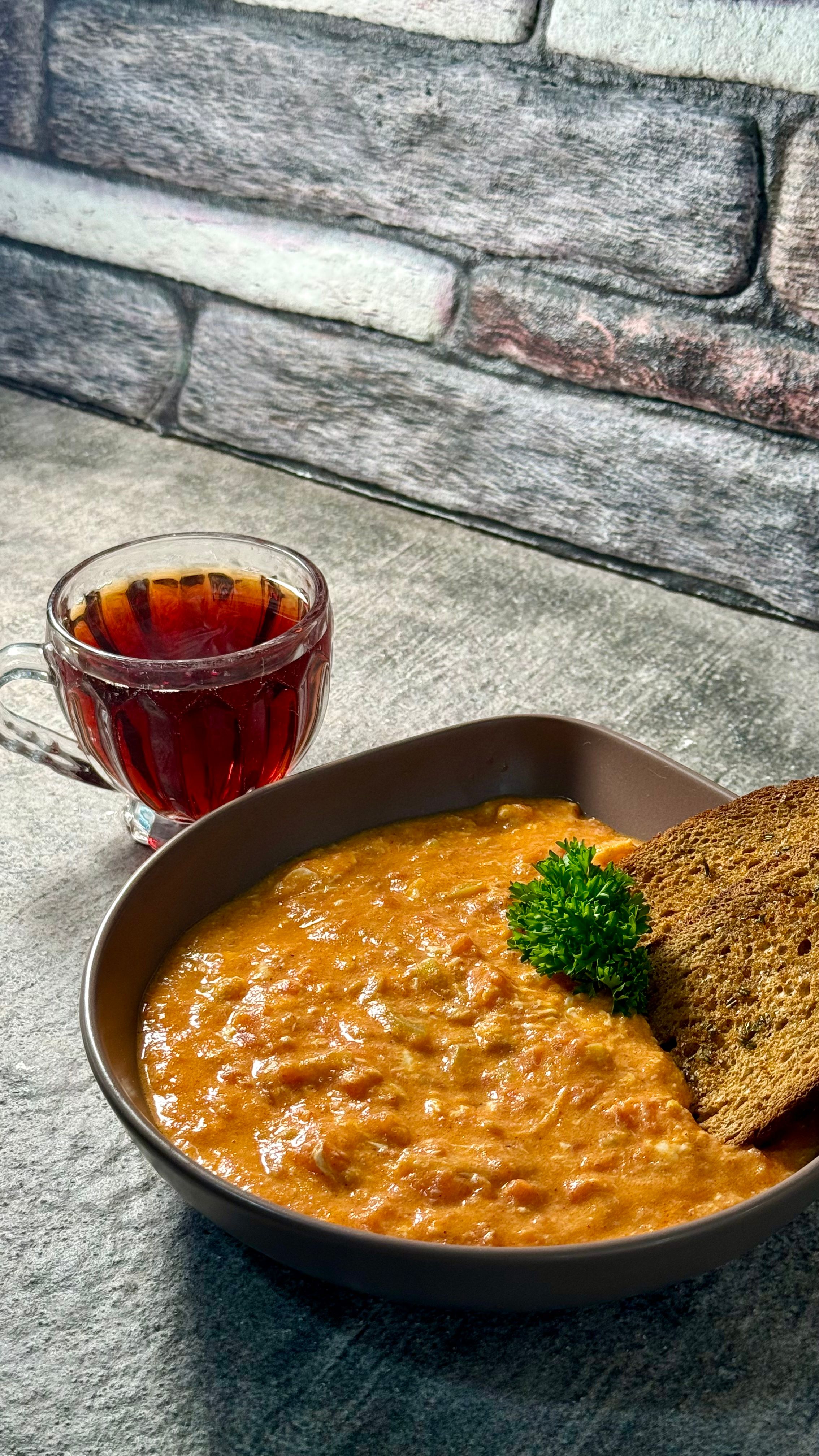
Photo: Merve Gülhan / Pexels
The diets react (see scores below)
Common Ingredients
- red lentils
- berbere
- onion
- garlic
- ginger
- niter kibbeh
- tomato
- injera
Specific recipes may vary.
Incompatible with 6 of 11 diets
Diet Ratings
Misir Wat is a red lentil stew that is fundamentally incompatible with ketogenic eating. Red lentils are a high-carbohydrate legume containing approximately 40g of net carbs per cooked cup (after subtracting fiber), which would exhaust or exceed the entire daily keto carb allowance in a single serving. Injera, the traditional Ethiopian flatbread served alongside, is made from teff flour and adds substantial additional carbohydrates (roughly 20-25g per piece). Together, these two primary components make the dish a keto disqualifier before even considering the tomato and onion content. While niter kibbeh (spiced clarified butter) and the aromatic spices like berbere, garlic, and ginger are keto-friendly ingredients, they cannot offset the overwhelming carbohydrate load from the lentils and injera. This dish, even in modified portions, would likely trigger an exit from ketosis.
Misir Wat is a traditional Ethiopian spiced red lentil stew that is inherently plant-based in its core ingredients (lentils, berbere spice blend, onion, garlic, ginger, tomato). However, the listed recipe includes niter kibbeh, which is a spiced clarified butter (ghee) — a dairy product — that is a defining ingredient in authentic Ethiopian cooking. Butter is unambiguously an animal-derived product excluded from vegan diets. The injera (fermented teff flatbread) is plant-based. The dish as described cannot be considered vegan due to the niter kibbeh. A fully vegan version of Misir Wat is easily achievable by substituting niter kibbeh with a spiced vegetable oil or vegan butter, which many home cooks and vegan restaurants do, but the dish as listed is not vegan.
Misir Wat is fundamentally incompatible with the paleo diet. The two core components — red lentils and injera — are both strictly excluded. Red lentils are legumes, one of the most clearly prohibited food categories in paleo due to their antinutrient content (lectins, phytates, saponins). Injera is a fermented flatbread made from teff, a grain, making it doubly excluded as both a grain and a processed food. Niter kibbeh is a spiced clarified butter (Ethiopian ghee), which sits in the debated dairy derivative category, but this is a minor concern overshadowed by the two hard exclusions. The paleo-approved ingredients — onion, garlic, ginger, tomato, and the spices in berbere — cannot redeem a dish whose primary substance and base are both explicitly off-limits.
Misir Wat is a highly nutritious Ethiopian red lentil stew that aligns well with Mediterranean diet principles in most respects — lentils are an excellent plant-based protein and fiber source, and aromatics like onion, garlic, ginger, and tomato are strongly encouraged. However, the dish is cooked with niter kibbeh, an Ethiopian spiced clarified butter, which is a saturated animal fat rather than the preferred extra virgin olive oil. Injera, made from teff (a whole grain), is broadly acceptable but is a refined/fermented flatbread not typical of the Mediterranean pattern. The berbere spice blend is nutritionally neutral to positive. Overall, this is a wholesome, plant-forward dish undermined primarily by the butter-based fat source.
Some modern Mediterranean diet practitioners would argue that niter kibbeh, used in modest cooking quantities, is comparable to the occasional dairy fat accepted in moderate amounts, and that the dish's exceptional legume content and plant-forward profile warrant a higher 'approve' rating. Traditional Mediterranean regions like Egypt and the Levant do incorporate butter in some dishes, suggesting some flexibility.
Misir Wat is an Ethiopian red lentil stew that is entirely plant-based at its core, with lentils as the primary ingredient. Every component except the niter kibbeh (a spiced clarified butter) is plant-derived: red lentils are a legume explicitly excluded from carnivore, berbere is a plant-based spice blend, onion, garlic, ginger, and tomato are all vegetables, and injera is a fermented grain flatbread. Even the niter kibbeh contains plant spices and is a minor component. Lentils are one of the highest-carbohydrate, plant-derived foods — the antithesis of carnivore eating. Injera adds another layer of plant-based, grain-derived carbohydrates. There is zero justification for including this dish on any tier of carnivore diet.
Misir Wat contains two excluded ingredients that make it non-compliant with Whole30. First, red lentils are legumes, which are explicitly excluded from the Whole30 program — and unlike green beans, sugar snap peas, or snow peas, lentils have no exception. Second, injera (the traditional Ethiopian flatbread used as a base/utensil) is made from teff, a grain, and falls squarely into the excluded grains category. Additionally, niter kibbeh is a spiced clarified butter, which is analogous to ghee and would itself be compliant, but that benefit is entirely negated by the two excluded core ingredients. The dish cannot be made compliant without fundamentally changing what it is.
Misir Wat contains multiple high-FODMAP ingredients that make it unsuitable during the elimination phase. Red lentils are high in GOS (galacto-oligosaccharides), a major FODMAP, at typical serving sizes. Onion is one of the highest-fructan foods and a primary FODMAP offender — it forms the flavor base of this dish. Garlic is similarly high in fructans and is used in meaningful quantities. Injera, the traditional Ethiopian flatbread served alongside, is made from teff and/or wheat/sorghum and is fermented, but its FODMAP status is uncertain and it is typically consumed in large portions. Niter kibbeh (Ethiopian spiced clarified butter) may contain onion and garlic infused into the fat — unlike garlic-infused oil where FODMAPs don't transfer, if onion/garlic solids are present or it's not a pure infusion, FODMAPs may carry over. Berbere spice blend typically contains garlic and onion powder, both high-FODMAP. Tomato in small amounts is generally low-FODMAP. Ginger is low-FODMAP. However, the combination of red lentils, onion, garlic, garlic/onion-containing spice blend, and injera makes this dish very high in FODMAPs overall.
Misir Wat is a red lentil stew that has a strong DASH-compatible foundation: red lentils are an excellent source of plant-based protein, fiber, potassium, and magnesium — all nutrients DASH emphasizes. Aromatics (onion, garlic, ginger, tomato) are fully DASH-approved. However, two components create concern: (1) Niter kibbeh is a spiced clarified butter (ghee), which is high in saturated fat — DASH limits saturated fat and specifies avoiding full-fat dairy-derived fats. A traditional preparation uses a meaningful amount of niter kibbeh. (2) Berbere spice blend can contain significant sodium depending on formulation and quantity used, and the dish can be quite salt-forward. (3) Injera, while a fermented whole grain flatbread, is typically made from teff (nutritious, high in fiber and minerals) but commercial versions may contain added sodium. The dish as traditionally prepared lands in 'caution' — the lentil base is excellent, but the saturated fat from niter kibbeh and potential sodium load from berbere and injera prevent a full approval. Substituting niter kibbeh with a small amount of canola or olive oil and using a low-sodium berbere blend would push this firmly into 'approve' territory.
NIH DASH guidelines restrict saturated fat and full-fat dairy fats like clarified butter, placing niter kibbeh-based dishes in the caution category. However, some DASH-aligned dietitians note that when niter kibbeh is used in modest culinary quantities within an otherwise high-fiber, legume-rich dish, the overall nutritional profile may still support cardiovascular health — particularly given emerging debate about whether all saturated fat sources carry equivalent cardiovascular risk.
Misir Wat is an Ethiopian spiced red lentil stew that presents a mixed Zone profile. Red lentils are a moderate-glycemic legume — higher than most vegetables but far better than refined grains, and they provide both protein and carbohydrate in one ingredient, making block balancing complex. A typical serving delivers roughly 18g protein and 30g+ net carbs, meaning the dish skews heavily carbohydrate-dominant. The berbere spice blend is polyphenol-rich and anti-inflammatory, a Zone positive. Onion, garlic, ginger, and tomato are all favorable low-glycemic vegetables. The problematic ingredient is niter kibbeh — a spiced clarified butter (ghee) that is high in saturated fat, which early Zone methodology strictly discouraged. The injera (fermented teff flatbread) is the biggest Zone concern: it is a high-glycemic, starchy carbohydrate that significantly worsens the meal's carb-to-protein ratio. Without injera, the lentil stew alone could be portioned into a cautious Zone meal, pairing a small serving with additional lean protein to correct the imbalance. With injera, the glycemic load becomes very difficult to balance within Zone block targets. The dish has no lean protein source listed, so it would need significant supplementation to approach a 40/30/30 ratio.
Some Zone practitioners following Sears' later anti-inflammatory writings give more latitude to legumes like lentils due to their fiber content, low insulin response relative to other carbs, and high polyphenol content. Additionally, niter kibbeh — while saturated fat-heavy — is used in relatively small quantities as a cooking fat, and later Sears work acknowledges that not all saturated fats are equally inflammatory. A Zone-adapted version skipping or sharply limiting injera and adding lean protein could score closer to 6.
Misir Wat is a richly spiced Ethiopian red lentil stew with a strongly anti-inflammatory foundation — red lentils provide excellent plant protein, fiber, and polyphenols; berbere spice blend is packed with anti-inflammatory spices including chili, turmeric, ginger, fenugreek, coriander, and black pepper; onion, garlic, and ginger are well-established anti-inflammatory aromatics; and tomato contributes lycopene and antioxidants. These ingredients would easily push this dish into 'approve' territory on their own. The key moderating factor is niter kibbeh, the spiced clarified butter that is traditional to Ethiopian cooking. As a clarified butter (essentially ghee with spices), it is high in saturated fat — a component that anti-inflammatory frameworks recommend limiting. However, niter kibbeh does carry fat-soluble anti-inflammatory compounds from the infused spices (cardamom, coriander, fenugreek, turmeric), and it is used in relatively modest amounts as a cooking fat. The injera (fermented teff flatbread) is a whole-grain, fermented food with a favorable glycemic profile compared to refined carbs, and teff itself is a nutritious grain — this is a net positive. Overall, Misir Wat is a nutrient-dense, heavily plant-based dish with exceptional spice diversity. The niter kibbeh prevents a full 'approve' under strict anti-inflammatory guidelines due to saturated fat content, but this is a very diet-friendly dish in the broader context.
A stricter anti-inflammatory interpretation (e.g., Dr. Weil's guidance to limit butter and full-fat dairy) would flag niter kibbeh as a meaningful source of saturated fat warranting a lower score; substituting with extra virgin olive oil is often recommended. Conversely, some researchers and ancestral health advocates (including those who distinguish between grass-fed and conventional dairy fat) argue that the saturated fat in clarified butter is metabolically neutral or even beneficial in the context of an otherwise whole-food, plant-rich dish, and would rate this dish more favorably.
Misir Wat is a spiced red lentil stew that has genuine strengths for GLP-1 patients — red lentils are an excellent source of plant-based protein (~18g per cooked cup) and fiber (~15g per cup), making them one of the better legume choices. The tomato, onion, garlic, and ginger add micronutrients and are easy to digest. However, two ingredients meaningfully lower the score for GLP-1 patients. First, niter kibbeh is a spiced clarified butter used in substantial quantities in traditional Misir Wat — it adds significant saturated fat, which can worsen nausea, bloating, and reflux in patients with slowed gastric emptying. Second, berbere is a bold, complex spice blend that frequently contains chili peppers and can be quite spicy, which may trigger or worsen GI discomfort, reflux, or nausea — common GLP-1 side effects. Third, injera (the traditional accompaniment) is a fermented teff flatbread with decent fiber but is made with refined and fermented flour, is high in carbohydrates, and is typically eaten in large sheets used to scoop the stew — not ideal for small-portion eating. The dish as traditionally prepared scores lower than its core lentil ingredient alone would suggest. A modified version using less niter kibbeh (or substituting olive oil), mild berbere, and skipping or minimizing injera would be considerably more GLP-1 friendly.
Some GLP-1-focused dietitians would rate the lentil base more favorably and consider niter kibbeh a modest enough fat addition in a restaurant portion to remain within caution-to-approve territory, particularly given lentils' strong protein and fiber profile. Individual spice tolerance varies significantly among GLP-1 patients — some handle berbere without GI issues, while others find any level of chili-based spice worsens nausea or reflux.
*See how scores were generated at our methodology page.
Nutritional profile
Six traits that cut across every diet.
Fiber & Plants
How much whole-plant food and fiber it delivers.
Healthy Fats
The quality of its fats (unsaturated, omega-3).
Whole / Unprocessed
How close it is to its natural, unprocessed form.
Gut Gentle
How easy it is on digestion (low FODMAP, few irritants).
Low Glycemic
How little it spikes your blood sugar.
Protein Density
How much protein it packs per calorie.
Controversy Index
Higher controversy = more disagreement between diets.
Diet-Specific Tips
 Mediterranean — 5/10
View tips
- Red lentils are a core Mediterranean legume — strongly encouraged
- Niter kibbeh (spiced clarified butter) replaces olive oil as the fat source, increasing saturated fat
- Injera (teff flatbread) is a whole-grain fermented bread — acceptable but not a Mediterranean staple
- Onion, garlic, ginger, and tomato are all Mediterranean-friendly aromatics and vegetables
- No meat or highly processed ingredients
- Berbere spice blend is nutritionally neutral to beneficial
 DASH — 5/10
View tips
- Red lentils are DASH-ideal: high fiber, potassium, magnesium, plant protein
- Niter kibbeh (spiced clarified butter) is high in saturated fat — a DASH-limited nutrient
- Berbere spice blend may contribute significant sodium depending on preparation
- Injera (teff flatbread) is nutritious but may contain added sodium in commercial versions
- Aromatics (onion, garlic, ginger, tomato) are fully DASH-approved
- Dish can be DASH-optimized by substituting niter kibbeh with olive/canola oil and using low-sodium berbere
 Zone — 5/10
View tips
- Red lentils are moderate-glycemic and carb-dominant, making block balancing difficult without added lean protein
- Injera is a high-glycemic starch that significantly worsens the carb load and is an 'unfavorable' Zone carbohydrate
- Niter kibbeh (spiced clarified butter) is high in saturated fat, disfavored in classic Zone methodology
- No lean protein source in the dish — requires supplementation to meet Zone protein targets
- Berbere, garlic, ginger, and tomato are polyphenol-rich and anti-inflammatory, aligning with Zone's anti-inflammatory goals
- Could be adapted for Zone by omitting injera, reducing portion size, and pairing with lean protein
 Anti-Inflammatory — 6/10
View tips
- Red lentils: high-fiber legume, strong anti-inflammatory properties per Dr. Weil's pyramid emphasis on beans and legumes
- Berbere spice blend: rich in chili peppers, turmeric, ginger, fenugreek, and coriander — multiple potent anti-inflammatory compounds
- Garlic, ginger, onion: well-supported anti-inflammatory aromatics
- Niter kibbeh (spiced clarified butter): saturated fat content is the primary anti-inflammatory concern; standard protocols recommend limiting butter and full-fat dairy
- Tomato: lycopene and antioxidants, mainstream anti-inflammatory protocols consider it beneficial
- Injera (fermented teff): whole grain, fermented food with favorable glycemic and probiotic properties — a net positive
- No processed ingredients, refined sugars, or trans fats
 GLP-1 Friendly — 5/10
View tips
- Red lentils provide strong plant-based protein (~18g/cup cooked) and high fiber (~15g/cup) — core strengths for GLP-1 patients
- Niter kibbeh (spiced clarified butter) adds significant saturated fat, which can worsen nausea, bloating, and reflux due to slowed gastric emptying
- Berbere spice blend contains chili peppers and may trigger or worsen GI discomfort and reflux in GLP-1 patients
- Injera is high-carbohydrate, low-protein, and consumed in large portions — not ideal for small-portion, nutrient-dense eating
- Overall dish is nutrient-dense in its lentil core but undermined by high-fat cooking medium and potentially irritating spice level
- Dish is categorized with no primary protein — lentils are the protein source, but plant protein is incomplete and lower in leucine than animal sources, requiring attention to daily protein totals