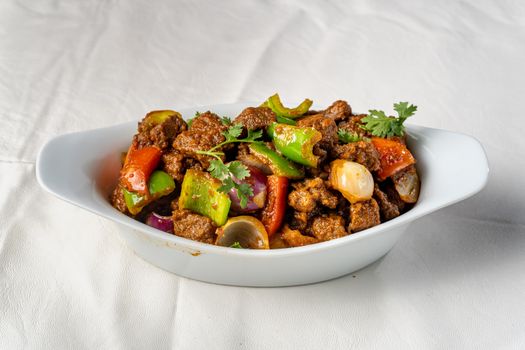
Photo: Shardar Tarikul Islam / Pexels
The diets react (see scores below)
Common Ingredients
- beef
- onion
- garlic
- rosemary
- jalapeño
- niter kibbeh
- cardamom
- injera
Specific recipes may vary.
Incompatible with 7 of 11 diets
Diet Ratings
Tibs is fundamentally incompatible with keto due to the inclusion of injera, a spongy Ethiopian flatbread made from teff flour. Injera is a grain-based, high-carb staple with roughly 20-25g of net carbs per single piece, and it is a structural component of the dish as served. The remaining ingredients — beef or lamb, niter kibbeh (spiced clarified butter), onion, garlic, jalapeño, rosemary, and cardamom — are largely keto-friendly. The meat provides high-quality protein and fat, and niter kibbeh is an excellent keto fat source. However, injera alone disqualifies the dish as traditionally prepared, easily pushing net carbs far beyond the daily 20-50g limit in a single serving.
Tibs is an Ethiopian/Eritrean sautéed meat dish that is fundamentally non-vegan. It contains beef (direct animal flesh) and niter kibbeh (Ethiopian spiced clarified butter, a dairy product). Both are clear animal products with no ambiguity. The remaining ingredients — onion, garlic, rosemary, jalapeño, cardamom, and injera — are plant-based, but they cannot offset the animal-derived core components. This dish cannot be made vegan without completely replacing the beef and niter kibbeh, which would fundamentally alter its identity.
Tibs is an Ethiopian sautéed meat dish that is disqualified by two key non-paleo ingredients. Injera is a fermented teff flatbread — a grain-based staple that is clearly excluded from all paleo frameworks. Niter kibbeh is a spiced clarified butter (similar to ghee) infused with aromatics; even setting aside the dairy debate, injera alone makes this dish incompatible. The remaining ingredients — beef, onion, garlic, rosemary, jalapeño, cardamom — are all individually paleo-approved, but the dish as traditionally prepared cannot be considered paleo due to the grain component. Without injera and with a paleo-accepted fat substitute, a modified version could be approved.
Tibs is an Ethiopian stir-fried meat dish built around beef or lamb as the primary protein, cooked in niter kibbeh (a spiced clarified butter), and served with injera (a fermented teff flatbread). Multiple elements conflict with Mediterranean diet principles: red meat (beef or lamb) is the central ingredient and should be limited to a few times per month; niter kibbeh is a butter-based fat that replaces olive oil as the cooking medium, adding saturated fat without the monounsaturated fat benefits central to the Mediterranean pattern; and injera, while fermented and made from teff, functions as a refined/starchy base rather than a whole grain in the Mediterranean sense. The aromatic vegetables (onion, garlic, jalapeño) and spices (rosemary, cardamom) are positives, but they are minor components that do not offset the dominant incompatible elements. This dish is not a Mediterranean staple and contradicts core principles around protein source and fat quality.
Tibs is fundamentally incompatible with the carnivore diet. While the primary protein (beef or lamb) is carnivore-approved, the dish contains numerous plant-based ingredients that are strictly excluded: onion, garlic, rosemary, jalapeño, cardamom (plant spices), and injera — a fermented teff flatbread that is one of the most plant-heavy components possible, being a grain-based staple. Niter kibbeh is a spiced clarified butter infused with onion, garlic, and various spices, compounding the plant ingredient problem. Injera alone is a complete disqualifier, being a grain product. The dish as traditionally prepared cannot be modified into a carnivore-compatible meal without essentially deconstructing it entirely — leaving only the plain sautéed meat.
Tibs as traditionally served contains injera, an Ethiopian flatbread made from teff (a grain), which is excluded on Whole30. Even though the sautéed meat components — beef or lamb, onion, garlic, rosemary, jalapeño, cardamom — are all Whole30-compliant, and niter kibbeh (a spiced clarified butter) is essentially a compliant fat similar to ghee, the inclusion of injera as a listed ingredient disqualifies the dish. Injera is a grain-based bread/wrap that also falls under the 'no recreating baked goods or bread' spirit of the program. If the dish were served without injera and the niter kibbeh were confirmed to be fully clarified (no milk solids), the meat and spice components would be compliant.
Tibs contains multiple high-FODMAP ingredients that make it unsuitable during the elimination phase. Onion is one of the highest-FODMAP foods tested by Monash University, rich in fructans, and is a core ingredient in this dish. Garlic is similarly high in fructans and essentially unavoidable in Tibs. Injera, the Ethiopian flatbread traditionally served with or alongside Tibs, is made from teff and/or wheat/barley and often fermented — while teff itself is low-FODMAP, injera prepared with wheat or barley adds fructans, and even teff injera may contain added high-FODMAP flours. Niter kibbeh (Ethiopian spiced clarified butter) is typically infused with onion, garlic, and other aromatics during cooking; while the fat-soluble base (clarified butter) is low-FODMAP, the onion and garlic are often strained out but their fructans can leach into the butter depending on preparation, making it a risk. The combination of onion and garlic alone is sufficient to classify this dish as high-FODMAP at any standard serving.
Tibs is an Ethiopian sautéed meat dish that presents a mixed DASH diet profile. The primary protein (beef or lamb) is red meat, which DASH guidelines recommend limiting due to saturated fat and cholesterol content. More significantly, niter kibbeh — the spiced clarified butter central to this dish — is a high saturated fat ingredient derived from full-fat dairy, directly conflicting with DASH's emphasis on limiting saturated fat and using vegetable oils over animal fats. On the positive side, the dish incorporates DASH-friendly aromatics (onion, garlic), anti-inflammatory spices (rosemary, cardamom), and jalapeño. Injera (fermented teff flatbread) offers fiber and is a whole grain-adjacent component. Sodium content is relatively moderate compared to processed Western dishes, which is a point in its favor. However, the combination of red meat plus clarified butter (niter kibbeh) creates a meaningful saturated fat load that places this dish in 'caution' territory — acceptable occasionally and in moderate portions, but not a DASH staple. Choosing lean beef trimmed of fat, or substituting lamb for a leaner cut, and reducing the quantity of niter kibbeh would improve the DASH compatibility.
NIH DASH guidelines explicitly limit red meat and saturated fat, which niter kibbeh and beef/lamb both contribute to significantly. However, some updated clinical interpretations note that traditional Ethiopian-style tibs uses relatively small portions of meat with flavorful spices and vegetables, and emerging research on fermented teff (injera) suggests benefits for glycemic control and gut health — some DASH-aligned dietitians may view modest portions of tibs as acceptable within a broader heart-healthy dietary pattern.
Tibs is an Ethiopian sautéed meat dish that presents a mixed Zone profile. The beef or lamb provides solid lean protein potential, and the aromatic vegetables (onion, garlic, jalapeño) are low-glycemic Zone-favorable carbs. However, two components create friction: niter kibbeh (Ethiopian spiced clarified butter) is a saturated fat that replaces Zone-preferred monounsaturated fats like olive oil, adding significant saturated fat load. More problematically, injera — a fermented teff flatbread — is a high-glycemic, high-carbohydrate staple that is difficult to portion into Zone blocks without dramatically spiking the carb ratio. The combination of saturated cooking fat and high-GI grain-based bread makes the traditional preparation challenging for Zone compliance. That said, the dish is salvageable: ordering or preparing tibs without injera (or with a very small portion), using a leaner cut, and pairing with additional vegetables can bring it into Zone balance. The protein component itself is a reasonable Zone building block.
Some Zone practitioners and Sears' later anti-inflammatory writings show more tolerance for clarified butter/ghee than early Zone materials, which strictly limited all saturated fat. Niter kibbeh, while saturated, is a minimally processed traditional fat without trans fats, and some interpret Sears' updated framework as permissive of moderate saturated fat when omega-3 intake is adequate. Additionally, teff (injera's base grain) has a lower glycemic index than wheat bread and contains fiber, leading some practitioners to treat small injera portions as a manageable unfavorable carb block rather than a hard avoid.
Tibs is an Ethiopian stir-fried dish with a mixed anti-inflammatory profile. On the positive side, garlic, rosemary, jalapeño (capsaicin), cardamom, and onion are all recognized anti-inflammatory ingredients with meaningful polyphenol, allicin, and antioxidant content. Injera, made from fermented teff, is a whole grain with decent fiber and a fermented gut-health benefit. However, the central concerns are: (1) Niter kibbeh — the Ethiopian spiced clarified butter — is a saturated fat that anti-inflammatory frameworks place in the 'limit' category, analogous to ghee or butter. It is the primary cooking fat and contributes meaningfully to the dish's saturated fat load. (2) Beef (or lamb) is red meat, placed in the 'limit' category due to arachidonic acid, saturated fat, and associations with elevated inflammatory markers like CRP and IL-6 in research. Together, the combination of red meat cooked in spiced clarified butter creates a pro-inflammatory fat and protein base that the beneficial spices partially but not fully offset. The dish is not in 'avoid' territory — the spice profile is genuinely strong and the absence of processed ingredients, trans fats, or added sugars is a clear positive — but regular consumption would conflict with anti-inflammatory dietary principles primarily due to the niter kibbeh and red meat combination.
Some anti-inflammatory practitioners, particularly those influenced by ancestral or paleo-adjacent frameworks, argue that saturated fats from traditional whole-food sources like clarified butter are not inherently inflammatory and may be metabolically neutral or even beneficial compared to refined seed oils; this view would rate niter kibbeh more favorably. Mainstream anti-inflammatory frameworks including Dr. Weil's pyramid, however, consistently place butter and full-fat dairy fats in the 'limit' category, making the cautionary rating more representative of the consensus position.
Tibs is an Ethiopian sautéed meat dish with meaningful protein content from beef or lamb, but several components work against GLP-1 compatibility. Niter kibbeh — a spiced clarified butter — is the primary cooking fat and adds significant saturated fat per serving, directly conflicting with the low-fat priority and risk of worsening nausea, bloating, and reflux. Beef and lamb (depending on cut) are fatty red meats with split clinical opinions for GLP-1 patients. The jalapeño introduces moderate spice that can aggravate reflux or nausea in sensitive patients. Injera, the traditional sourdough flatbread served alongside, is made from teff — a high-fiber whole grain that is a genuine positive — but portions tend to be large and it is a refined-carbohydrate-heavy vehicle that adds caloric bulk with limited protein density. Garlic, onion, rosemary, and cardamom are all fine in typical culinary amounts. The dish is not fried and is not ultra-processed, which are points in its favor. Overall: a culturally important dish with real protein and some fiber from injera, but the saturated fat from niter kibbeh and fatty meat cuts, combined with spice and portion size concerns, place it firmly in caution territory.
Some GLP-1-focused dietitians would argue that if tibs is prepared with a leaner cut (e.g., beef sirloin or lamb loin) and niter kibbeh is used sparingly, the dish can deliver an adequate protein hit in a small portion and is preferable to processed alternatives — particularly given teff injera's high fiber content. Others maintain that the saturated fat load from traditional preparation, combined with GLP-1-slowed gastric emptying, reliably worsens GI side effects and that fatty red meat should be a consistent avoid regardless of cut.
*See how scores were generated at our methodology page.
Nutritional profile
Six traits that cut across every diet.
Fiber & Plants
How much whole-plant food and fiber it delivers.
Healthy Fats
The quality of its fats (unsaturated, omega-3).
Whole / Unprocessed
How close it is to its natural, unprocessed form.
Gut Gentle
How easy it is on digestion (low FODMAP, few irritants).
Low Glycemic
How little it spikes your blood sugar.
Protein Density
How much protein it packs per calorie.
Controversy Index
Higher controversy = more disagreement between diets.
Diet-Specific Tips
 DASH — 4/10
View tips
- Red meat (beef or lamb) is limited on DASH due to saturated fat and cholesterol
- Niter kibbeh is spiced clarified butter — high in saturated fat, conflicting with DASH fat guidelines
- No high-sodium processed ingredients, sodium load is moderate
- Onion, garlic, jalapeño, and spices are DASH-friendly and add potassium and phytonutrients
- Injera (teff-based fermented flatbread) provides fiber and is a whole grain-adjacent food
- Portion size is critical — smaller servings with lean beef and less niter kibbeh improve DASH compatibility
 Zone — 5/10
View tips
- Beef/lamb protein is usable but requires lean cuts to avoid excess saturated fat
- Niter kibbeh (spiced clarified butter) is a high-saturated-fat cooking medium, not Zone-preferred monounsaturated fat
- Injera is a high-glycemic, high-carbohydrate flatbread that disrupts Zone 40/30/30 ratios if eaten in typical portions
- Aromatic vegetables (onion, garlic, jalapeño, rosemary) are Zone-favorable low-glycemic carb components
- Traditional serving style with injera makes macro balancing very difficult without modification
- Dish is Zone-adaptable if injera is minimized or replaced with non-starchy vegetables
 Anti-Inflammatory — 4/10
View tips
- Red meat (beef or lamb) is in the anti-inflammatory 'limit' category due to arachidonic acid and saturated fat content
- Niter kibbeh (spiced clarified butter) is a saturated fat, placed in the 'limit' category alongside butter and ghee
- Garlic, rosemary, jalapeño (capsaicin), and cardamom are all recognized anti-inflammatory spices with polyphenol and antioxidant activity
- Onion contributes quercetin, a well-documented anti-inflammatory flavonoid
- Injera (fermented teff flatbread) is a whole grain with fiber and fermentation-derived gut benefits
- No trans fats, refined sugars, seed oils, or artificial additives — a meaningful positive
- Combined red meat + saturated cooking fat creates a pro-inflammatory base that spices partially offset
 GLP-1 Friendly — 4/10
View tips
- High saturated fat from niter kibbeh (spiced clarified butter) worsens GLP-1 GI side effects
- Beef or lamb are fatty red meats — cut-dependent protein-to-fat ratio
- Jalapeño may trigger reflux or nausea in GLP-1 patients
- Injera adds fiber (teff is high-fiber) but also significant carbohydrate volume
- Good protein potential if lean cuts used, but traditional preparation undermines this
- Not fried and not ultra-processed — partial positives
- Portion control challenging given traditional serving style with shared injera