Photo: Karina Ustiuzhanina / Pexels
Middle-Eastern
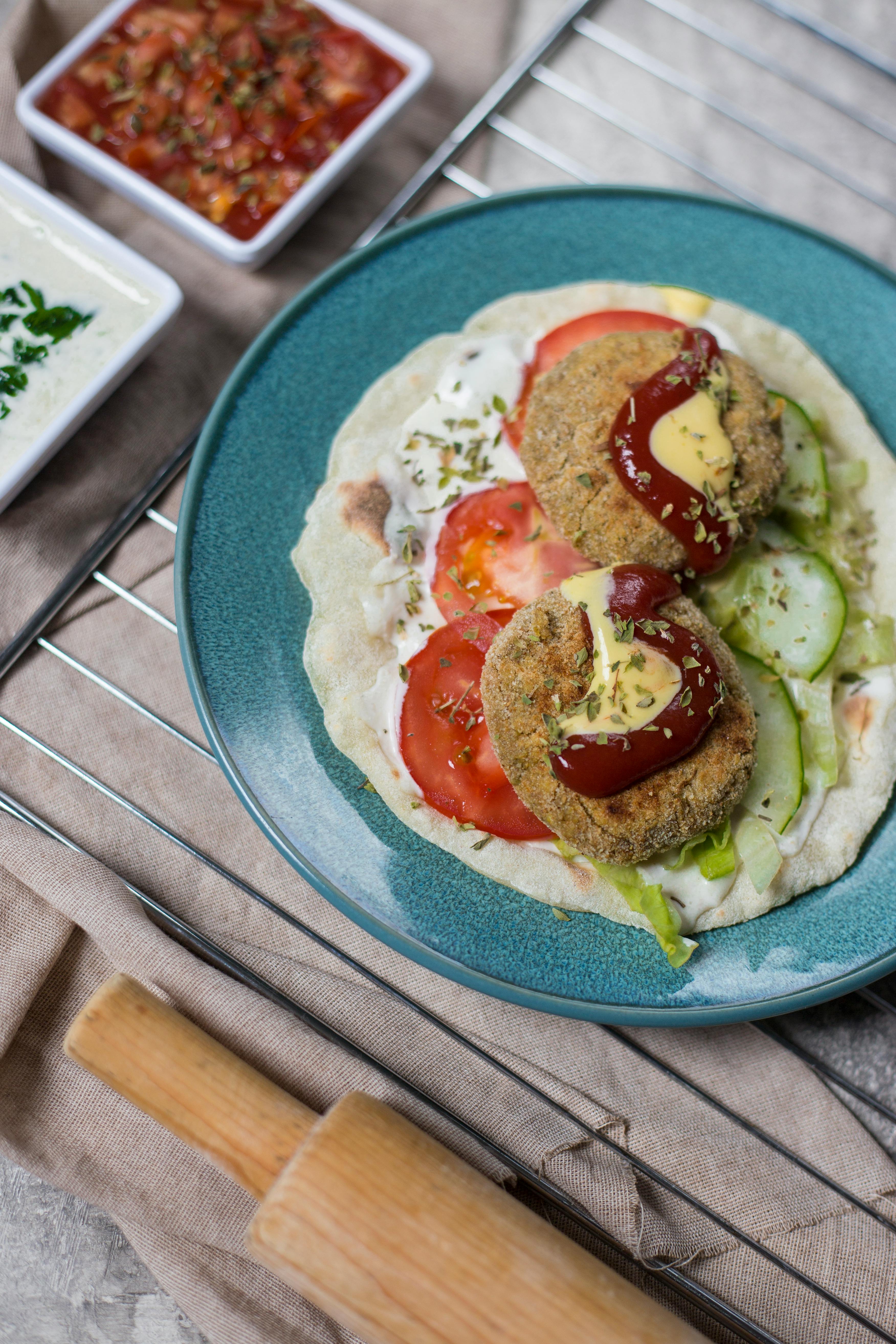
Falafel Wrap
The diets react (see scores below)
Common Ingredients
- chickpeas
- pita bread
- tomatoes
- cucumbers
- tahini
- parsley
- pickled turnips
- onion
Specific recipes may vary.
Incompatible with 5 of 11 diets
Diet Ratings
A falafel wrap is fundamentally incompatible with a ketogenic diet. The two primary components — chickpeas and pita bread — are both high-carb foods that alone would exceed or nearly exhaust a full day's net carb budget. Chickpeas (used to make falafel) contain roughly 25-30g net carbs per 100g serving, and a standard pita bread adds another 30-35g net carbs. Together, a single wrap easily delivers 60-80g+ net carbs, which is well above the 20-50g daily keto limit. While tahini, cucumbers, parsley, tomatoes, and onion are more keto-tolerable in small amounts, they cannot offset the core issue. This dish is a grain-and-legume-based meal by design, making it a clear keto violation regardless of portion size.
Every ingredient in this falafel wrap is fully plant-based. Chickpeas provide protein and fiber, pita bread is traditionally made from flour, water, yeast, and salt with no dairy or eggs, tahini is pure ground sesame seeds, and all the vegetables and herbs (tomatoes, cucumbers, parsley, pickled turnips, onion) are whole plant foods. This is a nutrient-dense, minimally processed meal that exemplifies the kind of whole-food plant-based eating encouraged by vegan dietary frameworks. No animal products or animal-derived ingredients are present in any of the listed components.
Falafel Wrap contains multiple core paleo violations. Chickpeas are legumes — explicitly excluded from the paleo diet due to their lectin and phytate content. Pita bread is a wheat-based grain product, another fundamental exclusion. Tahini (sesame paste) is derived from sesame seeds and uses sesame oil, a seed oil not compatible with paleo guidelines. Pickled turnips typically contain added salt and vinegar-based brine, placing them in processed/additive territory. The only paleo-compliant ingredients in this dish are tomatoes, cucumbers, parsley, and onion. With the primary protein source (chickpeas), the wrap itself (pita), and the sauce (tahini) all being clear avoid items, this dish is fundamentally incompatible with the paleo diet.
Falafel wrap is a predominantly plant-based dish built around chickpeas (a Mediterranean diet staple legume), fresh vegetables (tomatoes, cucumbers, parsley, onion), and tahini (sesame paste, a plant-based fat). These ingredients align closely with the Mediterranean diet's emphasis on legumes, vegetables, and plant-derived fats. Pickled turnips add beneficial fermented vegetables. The main reservation is the pita bread, which is typically made from refined white flour rather than whole grains, slightly reducing the nutritional alignment. However, the overall dish remains strongly plant-forward and legume-centered.
Some Mediterranean diet authorities would score this slightly lower due to the refined white flour pita, noting that modern clinical guidelines (e.g., Oldways Mediterranean Diet Pyramid) emphasize whole grains; substituting whole-wheat pita would bring it closer to ideal. Conversely, traditional Levantine and Eastern Mediterranean culinary practice fully embraces this dish as a wholesome, everyday meal.
Falafel Wrap is entirely plant-based and contains zero animal products. Every single ingredient — chickpeas, pita bread, tomatoes, cucumbers, tahini (sesame paste), parsley, pickled turnips, and onion — is explicitly excluded from the carnivore diet. Chickpeas are legumes, pita is a grain-based bread, tahini is a plant-derived seed paste, and the remaining ingredients are vegetables and herbs. This dish represents the antithesis of carnivore eating: high in plant antinutrients (lectins from chickpeas, phytic acid from sesame), fiber, and carbohydrates, with no animal protein or fat whatsoever. There is complete and unanimous consensus across all carnivore diet tiers and practitioners that this dish is entirely off-limits.
This dish contains multiple excluded ingredients. Chickpeas are legumes, which are explicitly prohibited on Whole30. Pita bread is a grain-based product (wheat), which is also explicitly excluded. Additionally, even if the ingredients were compliant, a wrap falls directly into the 'no recreating baked goods/junk food' category — wraps and tortillas are explicitly listed as off-limits regardless of ingredient compliance. Pickled turnips may also contain added sugar or sulfites, though sulfites are no longer excluded per 2024 rules. There is no path to making this dish Whole30-compliant without fundamentally changing what it is.
This falafel wrap contains multiple high-FODMAP ingredients that make it unsuitable during the elimination phase. Chickpeas are high in GOS (galacto-oligosaccharides) and are high-FODMAP at typical falafel serving sizes (a standard falafel portion uses well over the Monash low-FODMAP threshold of 42g/¼ cup canned). Pita bread is made from wheat, which is high in fructans — a major FODMAP trigger. Onion is one of the highest-FODMAP foods tested by Monash, rich in fructans, and should be completely avoided in elimination. These three ingredients alone make the dish clearly high-FODMAP. Tomatoes and cucumbers are low-FODMAP at standard servings. Tahini (sesame paste) is low-FODMAP in small amounts (~2 tbsp). Parsley is low-FODMAP. Pickled turnips are generally considered low-FODMAP in small portions, though testing data is limited. The combination of chickpeas + wheat pita + onion creates a triple-hit of high-FODMAP content with no practical workaround at standard serving sizes.
A falafel wrap contains several DASH-friendly ingredients — chickpeas are an excellent source of plant-based protein, fiber, potassium, and magnesium, all nutrients DASH emphasizes. Tomatoes, cucumbers, parsley, and onion are vegetables that align well with DASH principles. However, several factors push this into 'caution' territory. Pickled turnips are high in sodium (a single serving can contribute 200–400mg+), and tahini, while made from sesame seeds which are DASH-compatible, adds moderate fat and calories. Pita bread, typically made from refined white flour, is not a whole grain and provides limited fiber. Falafel itself is deep-fried in the traditional preparation, adding significant fat (though not saturated). The combination of fried preparation, refined-grain pita, and pickled vegetables raises the sodium and fat load meaningfully. If falafel is baked and the wrap uses whole-wheat pita with minimal pickled vegetables, the dish becomes much more DASH-friendly.
NIH DASH guidelines emphasize legumes like chickpeas as a core food group (4–5 servings/week) and would generally support the plant-protein base of this dish. Some updated clinical interpretations note that when falafel is baked rather than fried and served with a whole-grain wrap, this dish closely mirrors Mediterranean-DASH hybrid eating patterns (MIND diet), making it a reasonable choice — the pickled vegetable sodium can be reduced by rinsing or omitting.
A falafel wrap presents several Zone challenges but can be adapted with careful portioning. The primary concern is the carbohydrate-heavy profile: pita bread is a high-glycemic refined grain (an 'unfavorable' carb in Zone terminology), and chickpeas, while nutritious, are a high-carb legume that also serves as the main protein source. This creates a Zone imbalance — the wrap is likely 60-70% carbohydrate calories before modification. On the positive side, chickpeas provide vegetarian protein (though it's incomplete and carb-dense), tahini contributes monounsaturated and polyunsaturated fats in a reasonable Zone-friendly fat role, and the vegetables (tomatoes, cucumbers, parsley, onion, pickled turnips) are excellent low-glycemic Zone-favorable carbs. The absence of a lean animal protein is notable — the wrap lacks a clean protein block anchor. As a Zone meal, a standard falafel wrap would be difficult to balance without replacing the pita with lettuce wraps, reducing the chickpea volume significantly, and adding a lean protein source. In its standard form, the ratio skews heavily toward carbohydrates. When using vegetarian protein blocks (chickpeas), the fat block size doubles (3g per block), which makes tahini more workable, but the pita bread remains a significant glycemic liability.
Some Zone practitioners and later Sears writings on the OmegaRx Zone and anti-inflammatory eating acknowledge chickpeas as a reasonable vegetarian protein/carb source with a moderate glycemic index — lower than pita bread alone. A modified falafel bowl (no pita, extra vegetables, measured tahini, adequate chickpea protein blocks) could approach Zone compliance. Practitioners comfortable with vegetarian Zone blocks may rate this more favorably if the pita is eliminated or minimized.
A falafel wrap built from whole-food, plant-based ingredients aligns well with anti-inflammatory principles. Chickpeas are a fiber-rich legume emphasized in anti-inflammatory frameworks for their role in reducing CRP and supporting gut health. Tahini (sesame paste) provides sesamin and sesamol — lignans with documented antioxidant and anti-inflammatory activity — as well as some calcium and healthy fats, though it also carries a moderate omega-6 load. Tomatoes and cucumbers contribute lycopene, quercetin, and other carotenoids. Parsley is rich in apigenin, a flavonoid with anti-inflammatory properties, and vitamin K. Pickled turnips add probiotic benefit if lacto-fermented, supporting gut-mediated inflammation control. Onion supplies quercetin and prebiotic inulin. The main concern is pita bread: refined white pita is a processed grain with a high glycemic index that can promote insulin spikes and modest pro-inflammatory signaling. If the pita is whole-grain, this concern is largely mitigated. The overall dish is plant-forward, fiber-dense, and rich in polyphenols, making it a net anti-inflammatory meal, but the refined pita and tahini's omega-6 content prevent a top-tier score.
Most anti-inflammatory protocols would view this favorably given its legume and vegetable base, consistent with Dr. Weil's emphasis on beans and colorful produce. However, practitioners following stricter low-glycemic or autoimmune-protocol approaches (e.g., AIP, or those managing blood sugar) would flag refined pita as a pro-inflammatory refined carbohydrate and potentially note that nightshade-sensitive individuals should be cautious with tomatoes.
A falafel wrap has genuine nutritional strengths but a meaningful drawback for GLP-1 patients: traditional falafel is deep-fried, which adds significant fat and makes it harder to digest given the slowed gastric emptying these medications cause. Chickpeas are a solid plant-based protein and fiber source, and the vegetable inclusions (tomatoes, cucumbers, parsley, pickled turnips, onion) add micronutrients, water content, and additional fiber. Tahini contributes unsaturated fat, which is the preferred fat type, but in a wrap it is typically applied generously, pushing total fat per serving higher. Pita bread is a refined grain with modest fiber. Overall protein content per serving is moderate at best — chickpeas provide roughly 6-9g per half cup, but the wrap format and falafel preparation make it unlikely to hit the 15-30g per meal protein target without supplementation. The fried preparation is the primary concern; a baked falafel version would score meaningfully higher. As served in most contexts, this is acceptable occasionally but is not an optimal GLP-1 meal.
Some GLP-1-focused dietitians view chickpea-based meals favorably because the combination of plant protein and soluble fiber supports satiety and blood sugar stability even at lower calorie loads. Others flag the fried preparation and tahini fat content as likely to worsen nausea or reflux, particularly early in treatment when GI side effects are most pronounced, and recommend patients avoid this dish entirely until tolerating fats well.
*See how scores were generated at our methodology page.
Nutritional profile
Six traits that cut across every diet.
Fiber & Plants
How much whole-plant food and fiber it delivers.
Healthy Fats
The quality of its fats (unsaturated, omega-3).
Whole / Unprocessed
How close it is to its natural, unprocessed form.
Gut Gentle
How easy it is on digestion (low FODMAP, few irritants).
Low Glycemic
How little it spikes your blood sugar.
Protein Density
How much protein it packs per calorie.
Controversy Index
Higher controversy = more disagreement between diets.
Diet-Specific Tips
 Vegan — 9/10
View tips
- Chickpeas are a whole-food plant protein — strongly vegan-approved
- Tahini is 100% plant-derived (sesame seeds only)
- Traditional pita bread contains no dairy or eggs
- All vegetables and herbs are unambiguously plant-based
- Pickled turnips use a brine of water, salt, and vinegar — fully vegan
- No animal products, by-products, or animal-derived additives present
- Dish represents a nutrient-dense, whole-food plant-based meal
 Mediterranean — 8/10
View tips
- Chickpeas are a core Mediterranean diet legume — strongly encouraged
- Rich in plant-based vegetables: tomatoes, cucumbers, parsley, onion
- Tahini provides plant-based healthy fats (sesame)
- Pickled turnips add fermented vegetable variety
- Pita bread is typically refined white flour, not whole grain — mild concern
- No red meat, processed ingredients, or added sugars
- Dish is entirely plant-based — aligns with Mediterranean diet emphasis
 DASH — 5/10
View tips
- Chickpeas are a DASH-approved legume: high in fiber, potassium, and magnesium
- Falafel is traditionally deep-fried, increasing total fat content
- Pita bread is typically refined white flour, not a whole grain
- Pickled turnips contribute notable sodium, a key DASH concern
- Tahini adds healthy fats but increases calorie density
- Vegetables (tomatoes, cucumbers, parsley, onion) are DASH-positive additions
- Baked falafel in whole-wheat pita with minimal pickled vegetables would score higher (7–8)
 Zone — 4/10
View tips
- Pita bread is a high-glycemic 'unfavorable' carb that significantly disrupts Zone ratios
- Chickpeas are carbohydrate-dense and serve dual duty as both protein and carb blocks, making macro balancing difficult
- No lean animal protein source — wrap lacks a clean Zone protein anchor
- Tahini provides monounsaturated and polyunsaturated fats consistent with Zone fat blocks
- Vegetables (cucumbers, tomatoes, onion, parsley, pickled turnips) are Zone-favorable low-glycemic carbs
- Overall carbohydrate ratio likely 60-70% of calories in standard preparation — well above the 40% Zone target
- Easily modified into a Zone-compliant bowl by removing pita and adding lean protein
 Anti-Inflammatory — 7/10
View tips
- Chickpeas: anti-inflammatory legume, high in fiber, associated with reduced CRP
- Tahini: polyphenol-rich (sesamin, sesamol) but moderate omega-6 fatty acid content
- Tomatoes: lycopene and quercetin; generally anti-inflammatory, with caveats for nightshade-sensitive individuals
- Parsley: high in apigenin (flavonoid) and vitamin K — anti-inflammatory herb
- Onion: quercetin and prebiotic inulin support gut and inflammatory health
- Pickled turnips: potential probiotic benefit if lacto-fermented; vinegar-pickled versions less so
- Pita bread: refined white pita is a high-glycemic refined grain — the primary inflammatory liability; whole-grain pita would improve the profile
- No red meat, no trans fats, no added sugars or artificial additives — strong overall profile
 GLP-1 Friendly — 5/10
View tips
- Falafel is typically deep-fried, increasing fat content and digestive burden — a significant concern with slowed GLP-1 gastric emptying
- Chickpeas provide plant-based protein and fiber, but total protein per wrap likely falls short of the 15-30g per meal target
- Tahini adds healthy unsaturated fat but in quantity can elevate total fat per serving to problematic levels
- Pita bread is a refined grain with limited fiber contribution
- Vegetable inclusions (tomatoes, cucumbers, pickled turnips) support hydration and micronutrient density
- Baked or air-fried falafel would substantially improve the rating by reducing fat and improving digestibility
- Portion sensitivity: a large wrap can be calorie-dense and heavy; a half-wrap with added lean protein would be more appropriate