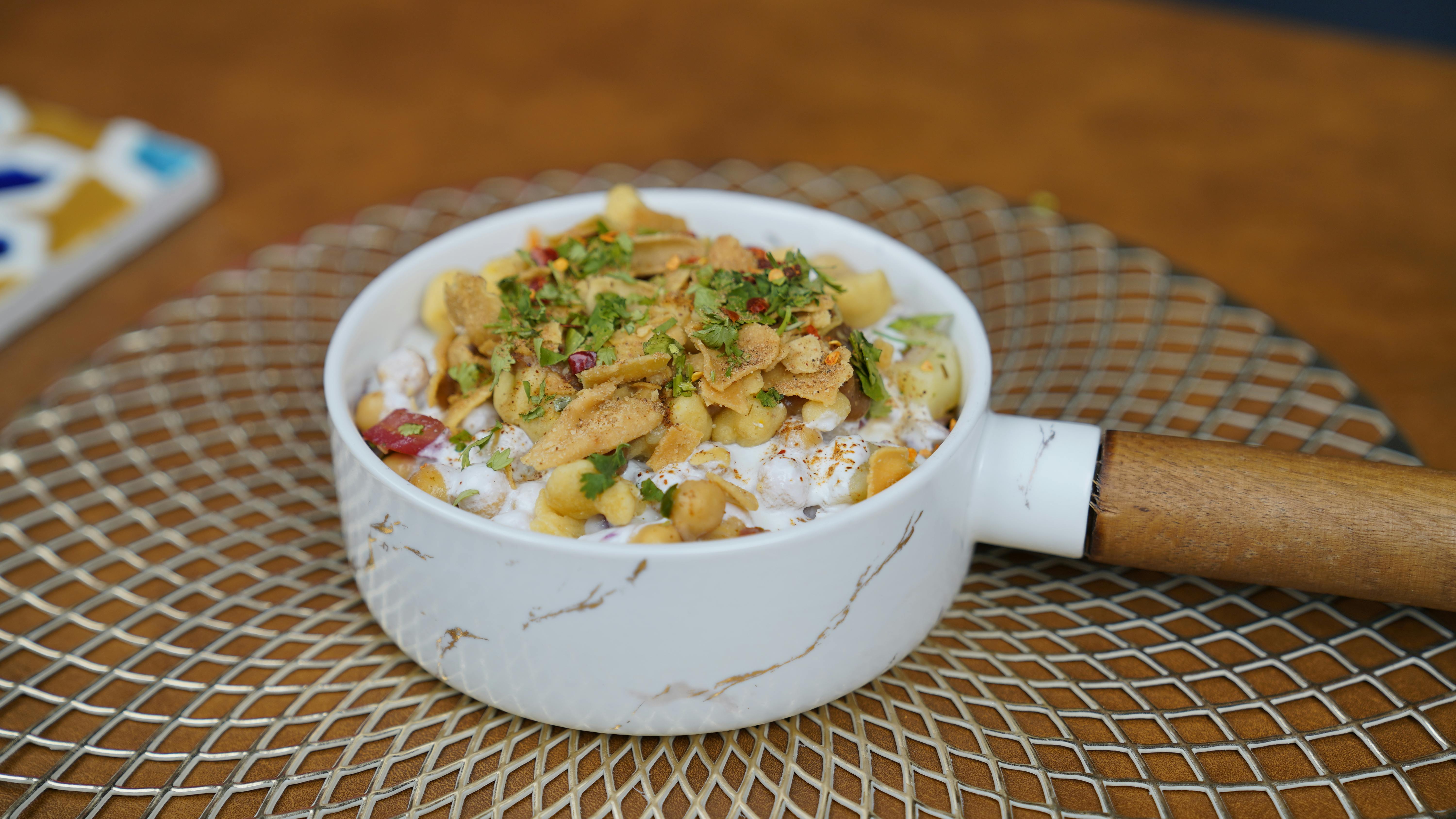
Photo: Hamza Awan / Pexels
Middle-Eastern
Fatteh
The diets react (see scores below)
Common Ingredients
- pita bread
- chickpeas
- yogurt
- tahini
- garlic
- pine nuts
- sumac
- parsley
Specific recipes may vary.
Incompatible with 6 of 11 diets
Diet Ratings
Fatteh is fundamentally incompatible with a ketogenic diet. The two primary ingredients — pita bread and chickpeas — are both high-carb foods that alone would exceed or nearly exhaust the entire daily net carb budget. Pita bread is a refined grain product (~35g net carbs per piece), and chickpeas are a starchy legume (~25-30g net carbs per half cup). Together, a standard serving of fatteh could easily deliver 60-80g of net carbs, which would break ketosis entirely. While tahini, garlic, pine nuts, and parsley are keto-friendly, and full-fat yogurt is acceptable in small amounts on most keto protocols, these ingredients are minor players and cannot offset the massive carb load from the base ingredients. There is no realistic portion size that makes this dish keto-compatible without fundamentally reconstructing it.
Fatteh as listed contains yogurt, which is a dairy product derived from animal milk. This makes the dish non-vegan by any standard vegan definition. The majority of ingredients — pita bread, chickpeas, tahini, garlic, pine nuts, sumac, and parsley — are fully plant-based and would score highly on their own. However, the yogurt is a core structural component of this dish, not a minor additive, and cannot be overlooked. A vegan version of fatteh is achievable by substituting the yogurt with a plant-based alternative (e.g., coconut or cashew yogurt), which is a common adaptation, but the dish as described here is not vegan-compliant.
Fatteh is fundamentally incompatible with the Paleo diet. The dish is built on three major non-Paleo pillars: pita bread (wheat grain), chickpeas (legume), and yogurt (dairy). These are not edge cases or gray-area ingredients — they are among the most clearly excluded food groups in Paleo across all major authorities, from Loren Cordain to Robb Wolf to Mark Sisson. Tahini (sesame paste) is made from sesame seeds and is also typically excluded as a seed oil-adjacent product. The only Paleo-compliant ingredients in this dish are garlic, pine nuts, parsley, and sumac. The non-compliant ingredients are not minor additions — they are the structural and caloric foundation of the dish, making substitution equivalent to creating an entirely different recipe.
Fatteh is a nutrient-dense, largely plant-based dish rooted in Levantine cuisine that aligns well with many Mediterranean diet principles. Chickpeas provide excellent plant protein and fiber, tahini offers healthy fats and minerals, yogurt contributes beneficial probiotics and calcium in moderate amounts, and pine nuts add heart-healthy fats. Garlic, parsley, and sumac are classic Mediterranean aromatics and antioxidants. The primary concern is the pita bread base, which is typically made from refined white flour — a refined grain that modern Mediterranean diet guidelines discourage. The yogurt, while acceptable in moderation, adds to the dairy load. Overall the dish is wholesome and plant-forward, but the refined pita keeps it from a full approval under strict interpretations.
Some Mediterranean diet practitioners, particularly those referencing traditional Levantine and Eastern Mediterranean foodways, would rate this more favorably, noting that flatbreads have been dietary staples in the region for millennia and that the overall nutritional profile — legumes, fermented dairy, seeds, and herbs — is exemplary. Substituting whole-wheat pita would elevate the score closer to 8.
Fatteh is entirely plant-based and grain-heavy, containing zero animal products. Every single ingredient — pita bread (grain), chickpeas (legume), yogurt (the only borderline ingredient, but it is heavily outweighed), tahini (seed paste), garlic (plant), pine nuts (nuts), sumac (plant spice), and parsley (herb) — is either a plant food, a grain, or a legume. Even if yogurt were considered acceptable on a lenient carnivore protocol, it is a minor component surrounded by foods that are categorically excluded. Pita bread and chickpeas alone disqualify this dish entirely. There is no meaningful animal protein or fat present. This dish is fundamentally incompatible with the carnivore diet at every level.
Fatteh contains multiple excluded ingredients that make it entirely incompatible with Whole30. Pita bread is a grain-based product (wheat), which is explicitly excluded. Chickpeas are legumes, also explicitly excluded. Yogurt is a dairy product, also explicitly excluded. Three separate core ingredients each independently disqualify this dish, and there is no compliant substitution that would preserve the identity of Fatteh — the dish fundamentally is pita, chickpeas, and yogurt.
Fatteh contains multiple high-FODMAP ingredients that together make this dish unsuitable during the elimination phase. Chickpeas are high in GOS (galacto-oligosaccharides) at standard serving sizes — Monash rates chickpeas as low-FODMAP only at 1/4 cup (42g) canned, but a main-course dish would easily exceed this. Yogurt is high in lactose (a disaccharide) and would be used in substantial quantities as the sauce base. Garlic is one of the highest-FODMAP foods tested by Monash, rich in fructans, and is used directly (not as infused oil). Pita bread is wheat-based and high in fructans. With four independently high-FODMAP ingredients — chickpeas (GOS), yogurt (lactose), garlic (fructans), and wheat pita (fructans) — this dish presents a significant FODMAP load across multiple categories simultaneously. Tahini (sesame paste) is low-FODMAP. Pine nuts are low-FODMAP at small servings (≤1 tbsp). Sumac and parsley are low-FODMAP condiments. However, the core structural ingredients of this dish are all problematic, making substitution impractical without fundamentally changing the dish.
Fatteh contains several DASH-friendly ingredients — chickpeas (excellent source of plant protein, fiber, potassium, and magnesium), yogurt (calcium, low-fat if using standard variety), garlic, parsley, and sumac (anti-inflammatory polyphenols). Pine nuts provide healthy unsaturated fats and magnesium. Tahini adds calcium and healthy fats but is calorie-dense. The main concern is the pita bread, which is typically made from refined white flour and can contribute moderate sodium (a standard pita may contain 300–400mg sodium), pushing the dish's total sodium to moderate-high levels depending on portion size and preparation. Yogurt type matters: if full-fat yogurt is used, saturated fat increases, making this less ideal. The dish lacks a primary animal protein, which actually aligns well with DASH's emphasis on plant-based proteins. Overall, Fatteh is a mostly plant-forward dish but requires attention to sodium from pita, yogurt fat content, and portion control of tahini.
NIH DASH guidelines emphasize low-fat dairy and limiting refined grains, which would flag standard pita and full-fat yogurt as concerns. However, updated clinical interpretations increasingly recognize that whole-dish context matters — the high fiber and potassium load from chickpeas may partially offset moderate sodium, and some DASH-aligned practitioners would approve this dish if made with whole-wheat pita and low-fat yogurt.
Fatteh is a Middle Eastern dish combining pita bread, chickpeas, yogurt, tahini, garlic, pine nuts, sumac, and parsley. From a Zone perspective, the macro balance is problematic but not catastrophic. The dish skews heavily carbohydrate — pita bread is a high-glycemic refined grain (an 'unfavorable' Zone carb), and chickpeas, while a moderate-GI legume with decent fiber, add significant carb load on top. Together, these two ingredients push the carb ratio well above the Zone's 40% target. The protein picture is mixed: yogurt and chickpeas provide some protein, but the dish is categorized as having 'no primary protein,' meaning it lacks the lean protein anchor Zone meals require (roughly 7-28g of lean protein per meal). Tahini and pine nuts contribute monounsaturated and polyunsaturated fats, which are Zone-favorable fat sources, and the parsley, garlic, and sumac add polyphenols consistent with Sears' anti-inflammatory emphasis. To bring Fatteh toward Zone compatibility, one would need to: significantly reduce or eliminate the pita bread, moderate the chickpea portion, and add a lean protein source (e.g., grilled chicken or egg whites alongside). As served traditionally, the dish is carb-dominant with insufficient lean protein, earning a caution rating. It is not an 'avoid' because the fat sources are appropriate and chickpeas are a moderate-GI legume, but it requires substantial modification to fit Zone blocks.
Some Zone practitioners, particularly those following Sears' later vegetarian Zone adaptations, might view chickpeas more favorably — they serve as both a protein and carb block (a vegetarian protein source in Zone terminology), which changes the fat block calculation (3g fat per block rather than 1.5g). Under this reading, a chickpea-and-yogurt-based dish with tahini fat blocks could be re-architected into a reasonable Zone vegetarian meal if the pita is minimized or omitted. The unfavorable element remains the pita bread, not the dish's core components.
Fatteh is a layered Middle Eastern dish with a genuinely mixed anti-inflammatory profile. On the positive side, chickpeas are a standout ingredient — a legume high in fiber, plant protein, and associated with reduced CRP levels. Tahini (sesame paste) provides calcium, vitamin E, and lignans with antioxidant properties, though its omega-6 content is notable. Garlic is well-regarded for its allicin content and anti-inflammatory effects. Sumac is exceptionally rich in polyphenols and anthocyanins, making it one of the stronger anti-inflammatory spices in this dish. Parsley contributes flavonoids (apigenin, luteolin) and vitamin C. Pine nuts offer some healthy fats and vitamin E. Yogurt, as a low-fat dairy product, falls in the 'moderate' category — its probiotics may support gut-related inflammation pathways. The main concern is the pita bread, typically made from refined white flour, which represents a refined carbohydrate that the anti-inflammatory framework categorizes as something to limit. This ingredient anchors the dish and is central to its identity, bringing the score down from what would otherwise be a high-6 or low-7. The overall dish leans toward net-neutral to mildly anti-inflammatory, with excellent individual ingredients partially offset by the refined grain base.
Some anti-inflammatory practitioners would rate this higher, noting that traditional Middle Eastern diets — even when including refined pita — are associated with reduced inflammatory markers in population studies, and that the legume-forward, spice-rich, yogurt-based composition aligns well with Mediterranean anti-inflammatory principles. Others following stricter grain-free or autoimmune protocols (e.g., AIP, Grain Brain framework) would rate it lower due to the refined pita and potential lectin concerns in chickpeas for sensitive individuals.
Fatteh is a layered Middle Eastern dish combining toasted or fried pita bread, chickpeas, yogurt, and tahini. It has meaningful redeeming qualities for GLP-1 patients — chickpeas provide both plant protein (~7-8g per half cup) and fiber (~6g per half cup), and yogurt adds additional protein and probiotics. However, several factors limit its rating. The pita bread is a refined carbohydrate with low protein density and moderate glycemic impact. Tahini and pine nuts add a notable fat load per serving, and tahini in particular is calorie-dense — problematic given the reduced appetite and calorie budget on GLP-1 medications. The dish is also portion-sensitive: a small serving delivers reasonable nutrition, but traditional portions can be large and calorie-dense. The absence of a dedicated lean protein source (chicken, egg, fish) means this dish alone is unlikely to meet the 15-30g protein-per-meal target without augmentation. On the positive side, the dish is soft, easily digestible, and not fried or greasy in its standard form, which suits slowed gastric emptying. Overall this is an acceptable occasional choice in a controlled, small portion, ideally supplemented with additional lean protein.
Some GLP-1-focused dietitians view legume-based dishes like fatteh favorably because chickpeas deliver a combined protein-and-fiber hit in a single ingredient, supporting both muscle preservation and constipation prevention — two primary GLP-1 dietary concerns. Others flag the refined pita and tahini fat content as making this dish too calorie-dense per gram of high-quality protein compared to lean animal proteins, particularly given the reduced calorie budget on GLP-1 medications.
*See how scores were generated at our methodology page.
Nutritional profile
Six traits that cut across every diet.
Fiber & Plants
How much whole-plant food and fiber it delivers.
Healthy Fats
The quality of its fats (unsaturated, omega-3).
Whole / Unprocessed
How close it is to its natural, unprocessed form.
Gut Gentle
How easy it is on digestion (low FODMAP, few irritants).
Low Glycemic
How little it spikes your blood sugar.
Protein Density
How much protein it packs per calorie.
Controversy Index
Higher controversy = more disagreement between diets.
Diet-Specific Tips
 Mediterranean — 6/10
View tips
- Chickpeas are a core Mediterranean legume and excellent plant protein source
- Tahini and pine nuts provide heart-healthy unsaturated fats
- Yogurt is an acceptable moderate dairy component with probiotic benefits
- Pita bread is typically refined white flour, a refined grain to minimize
- Garlic, parsley, and sumac are antioxidant-rich Mediterranean staples
- No red meat, processed ingredients, or added sugars
- Strongly plant-forward overall profile despite the refined grain component
 DASH — 6/10
View tips
- Chickpeas are an excellent DASH-approved plant protein and fiber source rich in potassium and magnesium
- Pita bread is typically refined white flour with moderate sodium (~300–400mg per piece), lowering DASH compatibility
- Yogurt contributes calcium; full-fat version adds saturated fat — low-fat yogurt preferred per DASH guidelines
- Tahini is calorie-dense but provides healthy unsaturated fats and calcium; portion control advised
- Pine nuts offer heart-healthy fats and magnesium, consistent with DASH nut recommendations
- No red meat or high-sodium processed ingredients; plant-forward protein profile aligns well with DASH
- Total dish sodium is moderate but can be managed with whole-wheat pita and low-sodium preparation
 Zone — 4/10
View tips
- Pita bread is a high-glycemic refined grain — an 'unfavorable' Zone carbohydrate that spikes insulin
- Chickpeas are a moderate-GI legume with fiber; usable as a Zone carb or vegetarian protein block but add to carb load
- No lean primary protein source — dish lacks the ~25g lean protein anchor Zone meals require
- Yogurt provides modest protein and can count as a partial protein block, but volume needed is high
- Tahini and pine nuts are monounsaturated/polyunsaturated fat sources — favorable Zone fat blocks
- Sumac, parsley, and garlic contribute polyphenols aligned with Sears' anti-inflammatory Zone principles
- Overall macro ratio is carbohydrate-dominant, skewing significantly above the 40% carb target
- Dish can be modified toward Zone compliance by removing pita and adding lean protein
 Anti-Inflammatory — 6/10
View tips
- Chickpeas: anti-inflammatory legume, high fiber, associated with reduced CRP
- Sumac: exceptionally high in polyphenols and anthocyanins — a strong anti-inflammatory spice
- Garlic: allicin content with well-documented anti-inflammatory properties
- Tahini: contains beneficial lignans and vitamin E, but moderately high omega-6
- Pita bread: refined carbohydrate — the dish's main anti-inflammatory liability
- Yogurt: low-fat dairy in the 'moderate' category; probiotics may support gut-inflammation pathways
- Parsley: flavonoids (apigenin, luteolin) and vitamin C contribute antioxidant value
- Pine nuts: source of vitamin E and healthy fats, minor but positive contribution
 GLP-1 Friendly — 5/10
View tips
- Chickpeas provide moderate plant protein and meaningful fiber — supports two top GLP-1 priorities
- Yogurt adds protein and probiotics, beneficial for GI health on GLP-1s
- Pita bread is a refined carbohydrate with low protein density — reduces overall nutrient density per calorie
- Tahini and pine nuts add significant fat load, increasing calorie density in a meal where appetite and portion size are already limited
- No dedicated lean protein source — unlikely to meet 15-30g protein per meal target without augmentation
- Soft texture and non-fried preparation are GI-friendly and suit slowed gastric emptying
- Portion-sensitive: traditional servings can be large; small portions improve the nutritional profile considerably