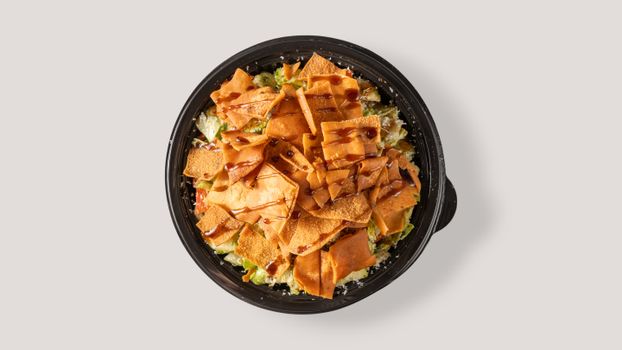
Photo: Mahmut Zeytin / Pexels
Middle-Eastern
Fattoush
The diets react (see scores below)
Common Ingredients
- romaine
- cucumber
- tomatoes
- radishes
- pita bread
- sumac
- pomegranate molasses
- mint
Specific recipes may vary.
Incompatible with 5 of 11 diets
Diet Ratings
Fattoush is fundamentally incompatible with keto due to two core ingredients: pita bread (a grain-based, high-carb flatbread adding ~30-35g net carbs per piece) and pomegranate molasses (a concentrated sugar syrup adding significant sugar/carbs). These two ingredients alone can exceed the entire daily net carb budget of a strict keto diet. While the vegetable base — romaine, cucumber, tomatoes, radishes, and mint — is relatively low-carb and would otherwise be cautiously acceptable in moderate portions, the dish as traditionally prepared cannot be made keto-compatible without fundamentally restructuring it by removing pita and substituting or eliminating the pomegranate molasses dressing.
Fattoush as described is entirely plant-based. All listed ingredients — romaine lettuce, cucumber, tomatoes, radishes, pita bread, sumac, pomegranate molasses, and fresh mint — are derived from plants with no animal products or animal-derived ingredients present. Pita bread in its traditional form is typically made from flour, water, yeast, and salt, containing no eggs or dairy. The dressing components (sumac and pomegranate molasses) are both plant-derived. This is a whole-food-dominant dish with minimal processing, making it an excellent fit for both vegan and whole-food plant-based diets. The only minor note is to verify the specific pita bread used contains no added dairy (some commercial versions include milk solids), but the standard formulation is vegan.
Fattoush is a traditional Levantine salad that is fundamentally defined by pita bread — a wheat-based grain product that is explicitly excluded from the paleo diet. Grains are among the clearest 'avoid' categories in paleo, with strong consensus across all major paleo authorities. The remaining ingredients (romaine, cucumber, tomatoes, radishes, mint, sumac) are all paleo-approved vegetables and spices. Pomegranate molasses is a borderline ingredient — it is made from pomegranate juice reduced with sugar, making it a processed, refined-sugar product that would also be excluded. Even without the pita, pomegranate molasses would push this dish to 'caution.' With pita bread as a defining and non-optional component, the dish earns an 'avoid' verdict. A paleo adaptation could remove the pita and substitute a small amount of pure pomegranate juice reduction or omit the molasses entirely.
Fattoush is a vibrant, vegetable-forward Levantine salad that aligns strongly with Mediterranean principles through its abundance of fresh vegetables (romaine, cucumber, tomatoes, radishes, mint) and flavorful herbs and spices (sumac). However, two ingredients temper the score: the pita bread is typically made from refined white flour, which falls under the 'refined grains' category that Mediterranean guidelines discourage, and pomegranate molasses contains concentrated added sugars. The vegetable base is excellent and wholly consistent with the diet, but the refined pita and sweetened molasses introduce elements that conflict with optimal Mediterranean eating. If whole-wheat pita were substituted and molasses minimized or replaced with fresh pomegranate seeds, this dish would easily reach 'approve' territory.
Traditional Levantine and Eastern Mediterranean culinary practice embraces dishes like fattoush as everyday fare, and some Mediterranean diet researchers (such as those at the Oldways Preservation Trust) recognize that modest amounts of refined bread used in culturally authentic salads—especially when baked rather than fried—are acceptable within a broadly healthful Mediterranean-style pattern. Pomegranate molasses, used in small quantities as a dressing, is a whole-fruit-derived condiment in regional tradition rather than a processed sugar source.
Fattoush is entirely plant-based with zero animal-derived ingredients. It consists of romaine lettuce, cucumber, tomatoes, radishes, and pita bread (a grain product), dressed with sumac (a plant spice) and pomegranate molasses (a fruit-derived sweetener), and garnished with mint (an herb). Every single component is explicitly excluded on the carnivore diet. There is no meat, fish, seafood, eggs, or animal fat present. Pita bread adds a grain/gluten element, pomegranate molasses adds plant-based sugar, and sumac and mint are plant compounds carnivore eliminates. This dish is as far from carnivore-compatible as a food can get.
Fattoush contains two non-compliant ingredients that disqualify it from the Whole30 program. First, pita bread is made from wheat, a grain explicitly excluded from the Whole30. Second, pomegranate molasses is a concentrated sweetener made by reducing pomegranate juice with added sugar, classifying it as an added sugar — also explicitly excluded. The remaining ingredients (romaine, cucumber, tomatoes, radishes, sumac, mint) are all fully compliant vegetables and spices. However, the presence of pita bread and pomegranate molasses makes this dish non-compliant as traditionally prepared.
Fattoush contains two high-FODMAP ingredients that make it problematic during the elimination phase. Pita bread is made from wheat and is high in fructans — a primary FODMAP offender — and would need to be replaced with a gluten-free alternative to make this dish safe. Pomegranate molasses is a concentrated reduction of pomegranate juice, and at the quantities typically used in dressings it delivers a significant hit of excess fructose (pomegranate juice itself becomes high-FODMAP at moderate serves, and molasses concentrates this further). The vegetable base — romaine lettuce, cucumber, tomatoes (capped at ~65g per serve), radishes, and mint — are all low-FODMAP at standard portions. Sumac is generally considered low-FODMAP as a spice. However, the combination of wheat-based pita and pomegranate molasses means this dish as traditionally prepared is not suitable during elimination without significant modifications.
Monash University has not specifically tested pomegranate molasses as a concentrated product, so its exact FODMAP threshold is uncertain — some FODMAP dietitians may consider a very small drizzle (1 tsp or less) tolerable, while others advise avoiding it entirely during elimination. Similarly, some practitioners suggest simply omitting or substituting the pita rather than avoiding the dish outright, which would materially change the verdict.
Fattoush is predominantly a vegetable-forward salad with romaine, cucumber, tomatoes, radishes, and fresh mint — all core DASH-approved vegetables rich in potassium, magnesium, fiber, and antioxidants. Sumac is a low-sodium spice that adds flavor without salt. The main considerations are the pita bread (refined carbohydrates, modest sodium) and pomegranate molasses (concentrated natural sugars), which temper the score slightly. Pomegranate molasses does contain added or concentrated sugars that DASH advises limiting, though the quantity used as a dressing component is typically small. There is no high-sodium dressing, no saturated fat, no processed meats, and no full-fat dairy. Overall, this dish aligns well with DASH principles as a vegetable-rich, low-fat, low-sodium salad, with the pita and molasses warranting modest portion awareness.
NIH DASH guidelines would broadly endorse this dish as vegetable-rich and low in saturated fat and sodium; however, some DASH-oriented clinicians note that pomegranate molasses contributes concentrated sugars and that substituting whole-wheat pita would better align with DASH's whole grains emphasis — a stricter interpretation might rate it slightly lower on that basis.
Fattoush is a vegetable-forward salad with Zone-favorable ingredients at its core — romaine, cucumber, tomatoes, radishes, mint, and sumac are all low-glycemic, polyphenol-rich vegetables that Sears would enthusiastically endorse. However, the dish has two meaningful Zone complications: (1) Pita bread is a refined grain and 'unfavorable' carbohydrate in Zone terminology — high glycemic and providing empty carb blocks without fiber benefit. (2) Pomegranate molasses is a concentrated sugar source with a notably high glycemic load per tablespoon, adding fast-acting carbs. These two ingredients push the dish toward unfavorable carb territory. The dish also lacks any protein source, which means it cannot stand alone as a Zone meal — it contributes only carbs and trace fat, breaking the 40/30/30 ratio entirely. For Zone use, fattoush requires modification: reduce or eliminate pita, use fresh pomegranate seeds instead of molasses, and pair with a lean protein. As served in traditional form, it earns a caution rating — usable as a side component but not a standalone Zone-balanced dish.
Some Zone practitioners argue that small amounts of pita (1 mini pita = ~1 carb block) and a teaspoon of pomegranate molasses can be measured and incorporated within carb block limits, making this an acceptable carb component when paired with protein. Sears' later writings also emphasize polyphenols heavily, and pomegranate is a high-polyphenol food — some Zone-aligned nutritionists may accept small amounts of the molasses for its anti-inflammatory polyphenol content despite the sugar load.
Fattoush is predominantly a vegetable-forward salad with strong anti-inflammatory credentials. Romaine, cucumber, tomatoes, and radishes provide a range of antioxidants, vitamins, and fiber. Tomatoes contribute lycopene, a well-studied anti-inflammatory carotenoid. Sumac is a polyphenol-rich spice with documented antioxidant and anti-inflammatory properties, making it one of the more underrated anti-inflammatory ingredients in Middle Eastern cooking. Fresh mint adds additional polyphenols and has anti-inflammatory and digestive benefits. Pomegranate molasses — a concentrate of pomegranate juice — delivers punicalagins and anthocyanins, among the most potent anti-inflammatory compounds found in any fruit; the added sugar concentration is a mild concern but the dose used as a dressing component is modest. The main limiting factor is pita bread (refined white flour), which is a refined carbohydrate and weakly pro-inflammatory. However, its proportion in the dish is relatively small compared to the vegetables, and it is a traditional whole-food ingredient rather than an ultra-processed additive. The overall profile is strongly anti-inflammatory with only a minor offset from the pita.
Tomatoes and other nightshade vegetables in this dish (tomatoes) are embraced by mainstream anti-inflammatory authorities including Dr. Weil for their lycopene and antioxidant content. However, Autoimmune Protocol (AIP) advocates such as Dr. Tom O'Bryan flag solanine and lectins in nightshades as potentially pro-inflammatory for individuals with autoimmune conditions — for that population, this dish would warrant caution.
Fattoush is a nutrient-dense, high-water-content vegetable salad with meaningful fiber from romaine, cucumber, tomatoes, and radishes — all of which support digestion and hydration, both priorities for GLP-1 patients. Sumac and mint are GLP-1 friendly seasonings. However, the dish has no primary protein source, which is the #1 priority for GLP-1 patients and makes it unsuitable as a standalone meal. The pita bread adds refined carbohydrates with modest fiber contribution. Pomegranate molasses contributes natural sugars and some tartness — not a major concern in the small amounts typical of a dressing, but worth noting. The dish is low in fat, easy to digest, and portion-friendly. It earns a caution rating because it is a good side dish or base but should not stand alone as a meal without a protein addition (grilled chicken, chickpeas, lentils, or feta in moderate amounts).
Some GLP-1-focused dietitians would rate this closer to an approve if evaluated strictly as a side dish rather than a meal, noting that the vegetable base is exemplary. Others flag the pita and pomegranate molasses as meaningful refined carbohydrate and sugar contributors that should be reduced or swapped for whole grain pita and lemon juice, particularly for patients managing blood sugar alongside GLP-1 therapy.
*See how scores were generated at our methodology page.
Nutritional profile
Six traits that cut across every diet.
Fiber & Plants
How much whole-plant food and fiber it delivers.
Healthy Fats
The quality of its fats (unsaturated, omega-3).
Whole / Unprocessed
How close it is to its natural, unprocessed form.
Gut Gentle
How easy it is on digestion (low FODMAP, few irritants).
Low Glycemic
How little it spikes your blood sugar.
Protein Density
How much protein it packs per calorie.
Controversy Index
Higher controversy = more disagreement between diets.
Diet-Specific Tips
 Vegan — 9/10
View tips
- All vegetables (romaine, cucumber, tomatoes, radishes) are fully plant-based
- Sumac is a plant-derived spice — no animal ingredients
- Pomegranate molasses is made from pomegranate juice reduction — fully vegan
- Standard pita bread contains no eggs or dairy; verify commercial brands for milk solids
- Mint is a whole plant herb
- No animal protein, dairy, eggs, or hidden animal-derived additives in the listed ingredients
- High whole-food content earns a top-tier score within the approve range
 Mediterranean — 6/10
View tips
- Abundant fresh vegetables strongly aligned with Mediterranean principles
- Sumac and mint are traditional Mediterranean-region flavor enhancers with antioxidant properties
- Pita bread is typically refined white flour, a 'caution' under Mediterranean guidelines
- Pomegranate molasses adds concentrated sugar, conflicting with minimal added-sugar guidance
- No protein source; dish relies entirely on plant foods
- Whole-wheat pita substitution would significantly improve compatibility
 DASH — 8/10
View tips
- High vegetable content (romaine, cucumber, tomatoes, radishes, mint) aligns with DASH's 4-5 vegetable servings goal
- Sumac is a sodium-free flavor enhancer, supporting low-sodium DASH targets
- Pomegranate molasses contributes concentrated natural sugars; DASH limits sweets and added sugars
- Pita bread is typically made from refined flour and contains moderate sodium; whole-wheat pita would be preferable
- No saturated fat, no full-fat dairy, no processed meat — no major DASH red flags
- Naturally rich in potassium, fiber, and antioxidants from the vegetable base
 Zone — 5/10
View tips
- Excellent low-glycemic vegetable base (romaine, cucumber, tomatoes, radishes) — all Zone-favorable carbs
- Pita bread is a refined, high-glycemic carbohydrate — 'unfavorable' in Zone terminology
- Pomegranate molasses is a concentrated sugar source with high glycemic impact
- Sumac and mint are polyphenol-rich spices aligned with Sears' anti-inflammatory focus
- No protein source present — cannot balance the 40/30/30 ratio as a standalone dish
- Easily modified: omit pita, substitute fresh pomegranate seeds, add lean protein to Zone-qualify
 Anti-Inflammatory — 8/10
View tips
- Sumac: rich in polyphenols and anthocyanins with documented anti-inflammatory activity
- Pomegranate molasses: high in punicalagins and anthocyanins, among the most potent anti-inflammatory compounds in fruit
- Colorful vegetable base (romaine, cucumber, tomato, radish): antioxidants, fiber, low glycemic load
- Fresh mint: polyphenol source with anti-inflammatory and digestive properties
- Pita bread: refined carbohydrate, mildly pro-inflammatory, but used in modest quantity
- Tomatoes: anti-inflammatory for general population (lycopene), but nightshade concern for autoimmune individuals
- No inflammatory proteins, oils, or processed ingredients beyond the pita
 GLP-1 Friendly — 5/10
View tips
- No protein source — fails the #1 GLP-1 dietary priority as a standalone dish
- High water content from romaine, cucumber, and tomatoes supports hydration
- Good fiber contribution from mixed vegetables
- Pita bread adds refined carbohydrates; whole grain pita would improve the rating
- Pomegranate molasses adds natural sugars — acceptable in small dressing quantities but worth monitoring
- Sumac and mint are well-tolerated seasonings unlikely to worsen GI side effects
- Low fat profile supports GLP-1 side effect management
- Works well as a side dish paired with a lean protein