Filipino
Arroz Caldo
The diets react (see scores below)
Common Ingredients
- rice
- chicken
- ginger
- garlic
- fish sauce
- saffron
- hard-boiled eggs
- scallions
Specific recipes may vary.
Incompatible with 6 of 11 diets
Diet Ratings
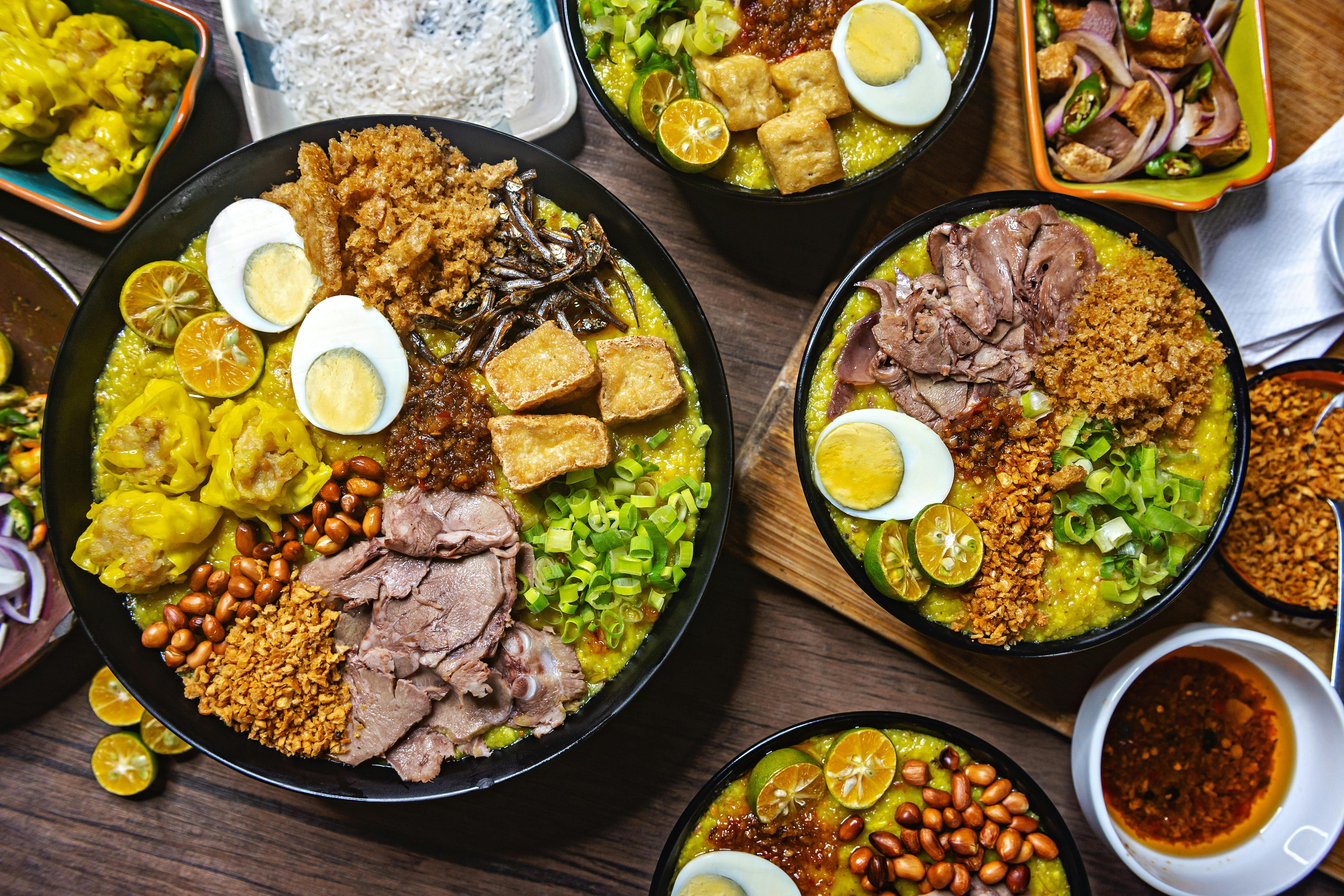
Arroz Caldo is a Filipino rice porridge (congee) where rice is the primary and dominant ingredient. A standard serving contains approximately 30-45g of net carbs from rice alone, and a full bowl easily exceeds 50g — instantly breaking ketosis. Rice is a grain and one of the highest-carb foods excluded from ketogenic diets with zero ambiguity. The remaining ingredients (chicken, ginger, garlic, eggs, fish sauce, scallions) are largely keto-friendly, but they cannot offset the fundamental incompatibility of a rice-based dish. There is no practical portion size that makes this dish keto-compatible while preserving its identity as arroz caldo.
Arroz Caldo contains multiple animal-derived ingredients that are strictly incompatible with a vegan diet. Chicken is a direct animal product (poultry), fish sauce is derived from fermented fish, and hard-boiled eggs are an animal product. Any single one of these ingredients would disqualify the dish; together they make it clearly and unambiguously non-vegan. The rice, ginger, garlic, saffron, and scallions are plant-based, but the animal-derived components are core to the dish's identity and cannot be considered incidental.
Arroz Caldo is a Filipino rice porridge, and rice is its foundational ingredient — a grain that is excluded under all mainstream paleo frameworks. Additionally, fish sauce typically contains added salt and sometimes other additives, making it a processed condiment that conflicts with strict paleo guidelines. The remaining ingredients — chicken, ginger, garlic, saffron, hard-boiled eggs, and scallions — are all paleo-approved, but the dish cannot be meaningfully prepared without rice as its primary base. The non-negotiable grain component makes this dish a clear avoid.
Arroz Caldo is a Filipino rice porridge featuring chicken, eggs, aromatics (ginger, garlic, scallions), and fish sauce — several components align reasonably well with Mediterranean principles. Chicken and eggs are acceptable in moderation, ginger and garlic are anti-inflammatory and Mediterranean-friendly, and fish sauce provides umami without being highly processed. However, white rice is the base, which contradicts the Mediterranean preference for whole grains. There is no olive oil, and the dish lacks vegetables or legumes that would make it more plant-forward. Overall it is a wholesome, minimally processed dish but not closely aligned with Mediterranean dietary patterns.
Some Mediterranean diet interpretations — particularly those drawing on traditional Greek or Turkish rice-based dishes like pilafi — accept white rice as a culturally appropriate grain in moderation. From this perspective, Arroz Caldo's clean ingredient list, lean protein sources, and anti-inflammatory aromatics could push it toward the higher end of 'caution,' especially if prepared with olive oil substituted for any cooking fat.
Arroz Caldo is fundamentally incompatible with the carnivore diet. The dish is built on rice as its primary base, which is a grain and entirely excluded from all tiers of carnivore eating. Additionally, ginger, garlic, saffron, and scallions are all plant-derived ingredients that violate carnivore principles. While the dish does contain carnivore-compatible elements — chicken, fish sauce, and hard-boiled eggs — these are entirely overshadowed by the dominant plant-based components. There is no version of this dish that could be considered carnivore-friendly without a complete reconstruction.
Arroz Caldo is a Filipino rice porridge (congee), and rice is explicitly excluded on the Whole30 as a grain. There is no exception for rice in any form — whether whole grain, porridge, or otherwise. All other ingredients (chicken, ginger, garlic, fish sauce, saffron, hard-boiled eggs, scallions) are individually Whole30-compliant, but the foundational ingredient — rice — makes this dish incompatible with the program. No compliant substitution exists that would still make it Arroz Caldo.
Arroz Caldo contains garlic as a core ingredient, which is high-FODMAP due to fructans and should be avoided entirely during the elimination phase. Garlic is one of the highest-FODMAP foods per Monash University and has no safe serving size during elimination. Scallions (green onions) are also an issue — the white/bulb portions are high in fructans and typically the whole stalk is used in this dish. While many other ingredients are low-FODMAP (white rice is very safe, chicken breast is safe, ginger is low-FODMAP in typical culinary amounts up to 1 tsp, fish sauce is low-FODMAP in small servings of 2 tbsp, saffron is low-FODMAP, and hard-boiled eggs are fully safe), the inclusion of garlic is a disqualifying factor for the elimination phase. The dish cannot realistically be rated as safe given that garlic is foundational to the flavor profile and typically cannot be omitted or replaced without fundamentally changing the dish.
Arroz Caldo is a Filipino rice porridge (congee) featuring lean chicken, anti-inflammatory ginger, garlic, and eggs — several DASH-friendly components. However, the primary concern is fish sauce, which is extremely high in sodium (roughly 1,400–1,500mg per tablespoon). In traditional preparation, fish sauce is used generously as both a cooking ingredient and table condiment, making it easy to exceed DASH sodium limits in a single serving. White rice is also a refined grain, not the whole grain DASH emphasizes. On the positive side, the lean chicken provides quality protein with low saturated fat, ginger and garlic offer beneficial phytonutrients, and scallions contribute some potassium and fiber. Eggs add moderate nutritional value but introduce mild cholesterol considerations. The dish can be made more DASH-compatible by substituting low-sodium soy sauce or reduced fish sauce and swapping white rice for brown rice, which would improve the score significantly.
NIH DASH guidelines explicitly limit sodium to 1,500–2,300mg/day and flag high-sodium condiments like fish sauce as problematic; however, updated clinical interpretations note that when fish sauce is used in small quantities within an otherwise nutrient-dense, vegetable- and lean-protein-rich meal, the overall dietary pattern may still support cardiovascular health — some DASH-oriented dietitians focus on total daily sodium budget rather than eliminating individual high-sodium ingredients.
Arroz Caldo is a Filipino rice porridge (congee) where white rice is the dominant macronutrient and structural base of the dish. This creates a significant Zone challenge: white rice is a high-glycemic, 'unfavorable' carbohydrate in Zone terminology, and as a porridge it is cooked until soft, which further raises its glycemic impact. The dish is rice-heavy by design, making the carb block ratio skewed toward a single unfavorable source with very little fiber to moderate glycemic response. On the positive side, the protein components — chicken and hard-boiled eggs — are lean Zone-favorable proteins. Ginger and garlic contribute anti-inflammatory polyphenols aligned with Sears' later writings. Fish sauce adds minimal macronutrient impact. Scallions are favorable low-glycemic vegetables. The fat content of the dish is quite low (no added fat source like olive oil or avocado), meaning the 30% fat target would be unmet without a side addition. To fit Zone principles, a practitioner would need to dramatically reduce the rice portion (perhaps 1/3 cup cooked), increase the chicken and egg portions, add a monounsaturated fat source (olive oil drizzle or avocado), and supplement with low-glycemic vegetables. As traditionally served, this dish is carb-dominant with unfavorable carb sources and lacks Zone fat balance.
Arroz Caldo is a Filipino rice porridge (congee) with a generally neutral-to-mild anti-inflammatory profile. On the positive side, ginger and garlic are well-established anti-inflammatory spices — ginger contains gingerols and shogaols that suppress NF-κB and COX-2 pathways, and garlic contains allicin and organosulfur compounds with documented anti-inflammatory effects. Saffron contains crocin and crocetin, which have demonstrated antioxidant and anti-inflammatory activity. Scallions add additional flavonoids. Lean chicken (especially skinless) is an acceptable moderate protein source on anti-inflammatory frameworks. Fish sauce, while high in sodium, is used in small amounts and contributes minimal inflammatory load. The main limiting factor is white rice, which is a refined carbohydrate with a high glycemic index — it provides rapid glucose spikes that can promote inflammation through advanced glycation end-products (AGEs) and oxidative stress. It lacks the fiber and phytonutrient content of whole grains like brown rice. Hard-boiled eggs are a mildly contested ingredient (arachidonic acid vs. beneficial choline/selenium), adding minor uncertainty. Overall, the dish is a warming, moderate-sodium comfort food with meaningful anti-inflammatory spices but a refined-carb base that tempers any approval. Substituting brown rice or adding leafy greens would substantially improve the profile.
Most anti-inflammatory frameworks would rate white rice as a neutral-to-mildly-problematic refined carb, but some practitioners note that in traditional Asian dietary patterns, white rice is consumed with vegetables, fermented foods, and spices in ways that moderate its glycemic impact — Dr. Weil's pyramid allows white rice in moderation as part of a broader healthy pattern. Eggs are similarly debated: some anti-inflammatory sources caution against arachidonic acid content, while others (including mainstream research) consider whole eggs anti-inflammatory net-neutral due to choline, selenium, and lutein.
Arroz Caldo is a Filipino rice porridge (congee) made with chicken, ginger, garlic, fish sauce, hard-boiled eggs, and scallions. It has several GLP-1-friendly qualities: the soft, porridge texture is easy to digest and gentle on a slowed GI tract, ginger is actively beneficial for nausea relief (a common GLP-1 side effect), the high water content supports hydration, and chicken plus hard-boiled eggs provide meaningful protein. However, the dish is rice-dominant, meaning a standard serving delivers a significant carbohydrate and calorie load with relatively modest protein per bowl unless portioned carefully with extra chicken and eggs. White rice is a refined grain with low fiber and low nutrient density per calorie — the opposite of what GLP-1 patients need to maximize from every bite. Protein yield depends heavily on how much chicken and egg are included relative to rice. A broth-heavy, protein-loaded version (extra chicken, two eggs, smaller rice portion) scores well; a rice-heavy version with minimal protein scores poorly. Fish sauce adds sodium, which is worth noting for patients monitoring blood pressure, but is not a disqualifying factor in typical amounts.
Some GLP-1-focused dietitians view congee-style dishes favorably as a transitional food during high-nausea phases because the soft texture, high water content, and ginger content support tolerability even when other foods are poorly tolerated. Others caution that the refined white rice base crowds out higher-priority protein and fiber calories in an already calorie-restricted eating window, and recommend substituting cauliflower rice or reducing the rice ratio significantly.
*See how scores were generated at our methodology page.
Nutritional profile
Six traits that cut across every diet.
Fiber & Plants
How much whole-plant food and fiber it delivers.
Healthy Fats
The quality of its fats (unsaturated, omega-3).
Whole / Unprocessed
How close it is to its natural, unprocessed form.
Gut Gentle
How easy it is on digestion (low FODMAP, few irritants).
Low Glycemic
How little it spikes your blood sugar.
Protein Density
How much protein it packs per calorie.
Controversy Index
Higher controversy = more disagreement between diets.
Diet-Specific Tips
 Mediterranean — 5/10
View tips
- White rice base rather than whole grains reduces alignment with Mediterranean grain preferences
- Chicken and hard-boiled eggs are acceptable moderate-consumption proteins per Mediterranean guidelines
- Garlic, ginger, and scallions are anti-inflammatory aromatics consistent with Mediterranean flavor principles
- Fish sauce is a minimally processed condiment; no added sugars or refined ingredients
- No olive oil or plant-based fats present; dish lacks legumes or substantial vegetables
- Overall minimally processed and home-cooked, which is consistent with Mediterranean dietary philosophy
 DASH — 5/10
View tips
- Fish sauce is very high in sodium (~1,400mg/tbsp), a major DASH concern
- White rice is a refined grain; DASH recommends whole grains like brown rice
- Lean chicken is an excellent DASH-approved protein source
- Ginger and garlic provide beneficial phytonutrients aligned with DASH principles
- Eggs add moderate nutritional value with mild cholesterol considerations
- Scallions contribute potassium and fiber, supporting DASH nutrient goals
- Dish can be substantially improved with low-sodium fish sauce substitution and brown rice
 Zone — 4/10
View tips
- White rice is the primary carbohydrate — classified as 'unfavorable' in Zone due to high glycemic index
- Porridge-style preparation (overcooked rice) further elevates glycemic impact compared to whole-grain alternatives
- Chicken and hard-boiled eggs are Zone-favorable lean proteins — positive elements
- Dish is naturally low in fat, leaving the 30% fat macro target unmet without additions
- Ginger and garlic provide anti-inflammatory polyphenols aligned with Sears' later Zone writings
- Heavy carb-to-protein ratio as traditionally served makes Zone block balancing difficult
- Usable in Zone only with significant portion reduction of rice and addition of monounsaturated fat
 Anti-Inflammatory — 5/10
View tips
- Ginger: potent anti-inflammatory gingerols and shogaols (approve)
- Garlic: allicin and organosulfur compounds reduce inflammatory markers (approve)
- Saffron: crocin/crocetin antioxidant activity (approve)
- White rice: high glycemic index refined carbohydrate promotes AGEs and oxidative stress (caution/limit)
- Lean chicken: acceptable moderate protein per anti-inflammatory guidelines (neutral)
- Fish sauce: high sodium but used in small quantities; minimal inflammatory impact at typical doses (neutral)
- Hard-boiled eggs: mildly debated arachidonic acid vs. choline/selenium (neutral to mild caution)
- Scallions: flavonoids and quercetin add minor anti-inflammatory benefit (approve)
 GLP-1 Friendly — 6/10
View tips
- Soft porridge texture is easy to digest — well suited to slowed gastric emptying
- Ginger ingredient actively helps reduce GLP-1-associated nausea
- High water content supports hydration
- Chicken and hard-boiled eggs provide solid protein, but total protein per serving is portion-dependent
- White rice is a refined grain: low fiber, low nutrient density per calorie
- Rice-to-protein ratio determines whether this dish is a net positive or net neutral
- No fried components, no high-fat ingredients — low fat profile is a positive
- Sodium from fish sauce is worth monitoring but not disqualifying in standard amounts
- Recommended modification: increase chicken and egg, reduce rice volume to improve protein and fiber density