Photo: Jeff Vinluan / Pexels
The diets react (see scores below)
Common Ingredients
- beef
- soy sauce
- calamansi
- garlic
- sugar
- rice
- egg
- vinegar
Specific recipes may vary.
Incompatible with 8 of 11 diets
Diet Ratings
Tapsilog is fundamentally incompatible with a ketogenic diet. The dish is built around white rice (the 'sinangag' component), which is a high-glycemic grain delivering roughly 45-50g of net carbs per cup — enough to single-handedly exceed the entire daily keto carb allowance. Additionally, the marinade contains added sugar, which violates strict zero-tolerance rules for added sugars. The soy sauce also contributes small amounts of carbs and often contains wheat. While the tapa beef component (marinated beef) and the fried egg are keto-friendly proteins and fats, the rice and sugar make the dish as a whole a clear avoid. There is no meaningful ambiguity here — rice-based dishes are universally rejected across all keto protocols.
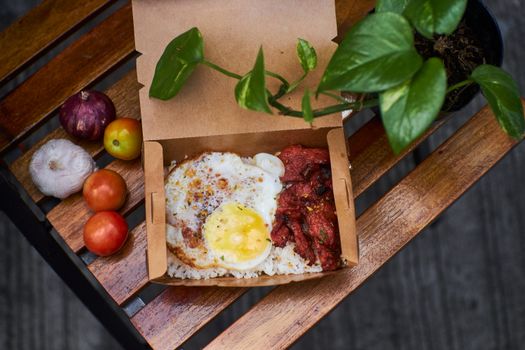
Tapsilog is a classic Filipino breakfast dish consisting of cured/marinated beef (tapa), garlic fried rice (sinangag), and a fried egg (itlog). It contains multiple animal products: beef as the primary protein and egg as a standard component. Both are unambiguously non-vegan ingredients. There is no meaningful debate within the vegan community about the status of beef or eggs.
Tapsilog is a classic Filipino breakfast combining beef tapa (marinated beef), sinangag (garlic fried rice), and itlog (egg). While the beef and egg components are paleo-compliant, the dish contains multiple disqualifying ingredients. Rice is a grain, strictly excluded from paleo. Soy sauce is a legume-derived, highly processed condiment also containing wheat. Sugar (refined) is explicitly banned. Vinegar in its processed commercial form and added salt are also problematic. The marinade fundamentally relies on soy sauce and sugar, which are core to the dish's identity — this is not a case where minor substitutions preserve the dish. With at least three hard-exclude ingredients (rice, soy sauce, refined sugar), Tapsilog as traditionally prepared is firmly in the avoid category.
Tapsilog is a Filipino breakfast combination of beef tapa (cured/marinated beef), sinangag (garlic fried rice), and itlog (egg). It conflicts with Mediterranean diet principles on multiple fronts: beef is a red meat that should be consumed only a few times per month, the beef is cured with sugar and soy sauce making it a processed preparation with added sugar and high sodium, and white rice is a refined grain rather than a whole grain. The combination of processed red meat, refined carbohydrates, and added sugar in a single meal represents a concentrated departure from Mediterranean dietary patterns. The egg is the only component that fits within acceptable Mediterranean moderation guidelines.
Tapsilog is fundamentally incompatible with the carnivore diet. While the dish does contain beef and egg — both carnivore-approved animal products — the marinade includes soy sauce (plant-derived, fermented soy), calamansi (citrus fruit), garlic (plant), sugar, and vinegar (plant-derived). Most critically, rice is a core component of the dish, making it a grain-heavy meal. The 'silog' in the name itself stands for 'sinangag' (garlic fried rice) and 'itlog' (egg), meaning rice is structurally essential to the dish. No amount of modification keeps this recognizable as Tapsilog on a carnivore diet — it would require stripping the rice, marinade, and all plant-based ingredients, leaving only plain beef and egg.
Tapsilog contains multiple Whole30-excluded ingredients. Soy sauce contains soy (a legume) and typically wheat (a grain), both of which are explicitly prohibited. Sugar is an excluded added sweetener. Rice is an excluded grain. These are core, non-negotiable violations of the Whole30 program — not edge cases. The dish as traditionally prepared cannot be made Whole30-compliant without fundamentally changing its character.
Tapsilog contains garlic as a core marinade ingredient, which is high-FODMAP due to fructans and must be avoided during the elimination phase at any meaningful quantity. The beef marinade (tapa) is typically made by soaking the meat in a mixture of soy sauce, calamansi, sugar, and garlic, meaning the fructans from garlic leach directly into the beef during marination — the meat itself becomes a FODMAP vehicle. While the individual components of rice (white rice is low-FODMAP), egg (low-FODMAP), vinegar (low-FODMAP), calamansi juice (likely low-FODMAP in small amounts), soy sauce (low-FODMAP in standard servings per Monash), and plain beef (low-FODMAP) are otherwise safe, the garlic marinade is a disqualifying factor. Sugar is low-FODMAP in small quantities. The dish as traditionally prepared cannot be made FODMAP-safe without fundamentally altering the marinade recipe to remove garlic entirely (garlic-infused oil could be a substitute, but is not part of the traditional dish).
Tapsilog is a traditional Filipino breakfast combining beef tapa (marinated in soy sauce, sugar, calamansi, garlic, and vinegar), sinangag (garlic fried rice), and itlog (fried egg). From a DASH diet perspective, this dish presents multiple concerns. Soy sauce is very high in sodium — a typical marinade can contribute 800–1,500mg of sodium per serving, pushing the dish close to or exceeding the entire daily DASH sodium allowance in one meal. Beef is a red meat, which DASH guidelines explicitly limit. White rice (the standard form in sinangag) is a refined grain rather than a whole grain as emphasized by DASH. The fried egg adds saturated fat and cholesterol, and frying the rice in oil adds additional fat. The sugar in the marinade contributes added sugar. Together, these factors make Tapsilog poorly aligned with DASH principles.
NIH DASH guidelines clearly limit red meat, high-sodium condiments like soy sauce, refined grains, and added sugars. However, some updated DASH-oriented clinicians note that small portions of lean beef, when the marinade sodium is controlled (e.g., using low-sodium soy sauce or tamari), eggs consumed a few times per week are no longer categorically restricted per 2020–2025 Dietary Guidelines, and the dish could be partially modified (brown rice, low-sodium soy sauce, less sugar, poached egg) to reach 'caution' territory — though the red meat component remains a persistent concern under DASH.
Tapsilog is a classic Filipino breakfast combining tapa (marinated beef), sinangag (garlic fried rice), and itlog (egg). From a Zone perspective, it has a workable protein source (beef and egg) but presents multiple challenges. The white rice is a high-glycemic carbohydrate that dominates the carb block — Zone methodology classifies white rice as 'unfavorable,' with a single small serving consuming many carb blocks rapidly. The marinade includes sugar, adding further glycemic load. The beef itself, while a protein source, is typically a fattier cut used for tapa (often sirloin or beef strips), contributing saturated fat rather than the preferred monounsaturated fat. On the positive side, the egg adds quality protein, calamansi provides polyphenols, garlic is anti-inflammatory, and vinegar may slightly blunt the glycemic response of the rice. To make this more Zone-compatible, one would need to substitute cauliflower rice or reduce rice portion dramatically, use a leaner beef cut, minimize added sugar in the marinade, and add low-glycemic vegetables. As served in traditional portions, the carb-to-protein-to-fat ratio skews heavily toward high-GI carbohydrates with inadequate favorable fat, making it difficult to fit cleanly into Zone blocks without significant modification.
Some Zone practitioners argue that the overall dish can be portioned into a rough Zone block structure — a small amount of rice (1 carb block), a modest beef serving (3 protein blocks), and the egg (1 protein block) — with the understanding that Zone is ratio-based rather than exclusionary. In later writings, Sears acknowledges that traditional whole-food cultural dishes can be adapted rather than eliminated, and the vinegar component may partially mitigate the glycemic impact of the rice. From this perspective, careful portioning with a very small rice serving could push this to a borderline 5-6.
Tapsilog is a classic Filipino breakfast combining beef tapa (marinated cured beef), garlic fried rice (sinangag), and a fried egg. From an anti-inflammatory perspective, it presents a mixed profile. On the positive side, garlic is a well-established anti-inflammatory ingredient with allicin and organosulfur compounds shown to reduce inflammatory markers. Calamansi (a Filipino citrus) provides vitamin C and flavonoids with antioxidant properties. Vinegar (likely cane or coconut vinegar) may offer modest acetic acid benefits. Eggs in moderation are acceptable under most anti-inflammatory frameworks. However, beef — particularly when cured and pan-fried as tapa — is the central concern: red meat is associated with arachidonic acid and saturated fat that can promote inflammatory pathways, and is explicitly in the 'limit' category. Added sugar in the marinade contributes to glycemic load and can promote inflammatory signaling. White rice is a refined carbohydrate with high glycemic index, offering minimal fiber. The combination of red meat, added sugar, and refined white rice in a single meal creates a moderately pro-inflammatory load, even accounting for the garlic and citrus benefits. The dish is not in 'avoid' territory because portions of beef tapa are typically modest, and the preparation involves marinating rather than deep-frying, but it is not advisable as a regular anti-inflammatory meal.
Some anti-inflammatory practitioners (particularly those aligned with traditional and whole-food approaches) note that grass-fed beef in modest portions provides conjugated linoleic acid (CLA) and zinc, which have anti-inflammatory properties, and that the garlic-heavy marinade meaningfully offsets concerns. The mainstream anti-inflammatory framework (Dr. Weil) does not categorically ban red meat, only recommends limiting it — so occasional tapsilog within an otherwise anti-inflammatory diet may be considered acceptable by less strict interpretations.
Tapsilog is a traditional Filipino breakfast plate combining marinated beef (tapa), sinangag (garlic fried rice), and a fried egg. It delivers meaningful protein from the beef and egg combination, which is a genuine GLP-1 positive. However, several features create concern for GLP-1 patients: (1) The beef cut used for tapa is typically a fatty cut (sirloin or flank marbled with fat), and the marinade contains sugar, adding empty calories and glycemic load. (2) The rice component is a refined carbohydrate with low fiber and low protein density per calorie — a poor use of limited stomach capacity on GLP-1s. (3) The egg is typically fried, adding unnecessary fat that can worsen nausea and slow gastric emptying further. (4) The soy sauce marinade is very high in sodium, which is a concern for water retention and cardiovascular health in a population already metabolically vulnerable. (5) The overall fat content of the meal — from marbled beef plus fried egg plus garlic fried rice cooked in oil — is likely to trigger GLP-1 side effects including nausea, bloating, and reflux. The dish is not without nutritional merit (real protein, real food, no ultra-processing), but as traditionally prepared it is poorly optimized for GLP-1 patients.
Some GLP-1-focused dietitians working with Filipino patients would argue for cultural dietary preservation and modest modification rather than avoidance — substituting lean beef (e.g., eye of round), reducing sugar in the marinade, swapping white rice for cauliflower rice or a smaller portion of brown rice, and poaching rather than frying the egg. Under those modifications, the dish could approach a caution-high or borderline approve rating. The disagreement centers on whether the platform should rate dishes as traditionally prepared versus as they could realistically be modified.
*See how scores were generated at our methodology page.
Nutritional profile
Six traits that cut across every diet.
Fiber & Plants
How much whole-plant food and fiber it delivers.
Healthy Fats
The quality of its fats (unsaturated, omega-3).
Whole / Unprocessed
How close it is to its natural, unprocessed form.
Gut Gentle
How easy it is on digestion (low FODMAP, few irritants).
Low Glycemic
How little it spikes your blood sugar.
Protein Density
How much protein it packs per calorie.
Controversy Index
Higher controversy = more disagreement between diets.
Diet-Specific Tips
 Zone — 4/10
View tips
- White rice is a high-glycemic 'unfavorable' carbohydrate in Zone terminology, dominating the carb blocks
- Added sugar in the marinade increases glycemic load further
- Beef cut used for tapa is often moderately fatty, contributing saturated rather than monounsaturated fat
- Egg is a quality Zone protein source
- Garlic and calamansi provide anti-inflammatory polyphenols
- Vinegar may modestly blunt glycemic response
- No low-glycemic vegetables in traditional preparation
- Macronutrient ratio skews heavily carb-forward relative to Zone's 40/30/30 target
- Dish is modifiable (cauliflower rice swap) but requires significant alteration from traditional form
 Anti-Inflammatory — 4/10
View tips
- Beef (red meat) is in the 'limit' category — associated with arachidonic acid and saturated fat promoting inflammatory pathways
- Added sugar in marinade raises glycemic load and can stimulate inflammatory cytokines
- White rice is a refined carbohydrate with high glycemic index and low fiber
- Garlic is a potent anti-inflammatory ingredient with allicin and organosulfur compounds
- Calamansi provides vitamin C and citrus flavonoids with antioxidant effects
- Egg is acceptable in moderation under most anti-inflammatory frameworks
- Vinegar (acetic acid) may have modest metabolic and anti-inflammatory benefits
- Typical tapa preparation involves shallow pan-frying, not deep-frying, which is a modest advantage
 GLP-1 Friendly — 4/10
View tips
- Moderate-to-high fat content from marbled beef cut and fried egg worsens GLP-1 GI side effects
- White garlic fried rice is a refined carbohydrate with low fiber, poor use of limited appetite capacity
- Sugar in marinade adds glycemic load and empty calories
- High sodium from soy sauce is a secondary concern
- Egg and beef together provide meaningful protein — the primary GLP-1 priority — but fat delivery method undermines this benefit
- Not fried as a whole dish but cooking method for rice and egg typically adds oil
- Portion sensitivity: smaller beef portion with rice substituted could shift this toward caution-high