Photo: Kenneth Surillo / Pexels
The diets react (see scores below)
Common Ingredients
- chicken
- green papaya
- ginger
- garlic
- onion
- chile leaves
- fish sauce
- scallions
Specific recipes may vary.
Incompatible with 3 of 11 diets
Diet Ratings
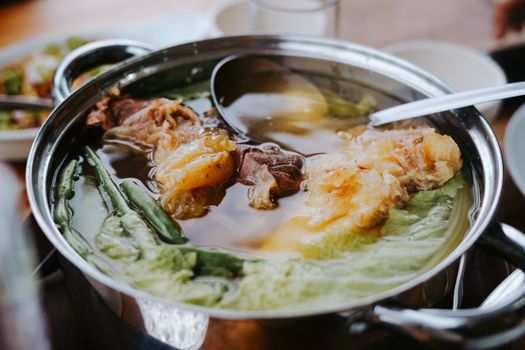
Tinola is a light Filipino chicken ginger soup that is mostly keto-friendly, but the green papaya is the main concern. Green (unripe) papaya has fewer net carbs than ripe papaya (roughly 5-7g net carbs per 100g), but a standard serving of Tinola typically includes a meaningful portion of papaya, potentially pushing net carbs to 8-15g per bowl depending on serving size. The chicken, ginger, garlic, onion, fish sauce, scallions, and chile leaves are all low-carb or used in small enough quantities to be negligible. The broth itself is keto-friendly and the dish has no grains or added sugars. With portion control on the papaya — or substituting it with chayote (which some traditional recipes use and has slightly fewer net carbs) — this dish can fit within a keto framework. However, as commonly served, the papaya content warrants caution.
Some strict keto practitioners would argue the green papaya should be omitted entirely or replaced with a zero-carb vegetable, as even moderate carb sources can disrupt ketosis for metabolically sensitive individuals; conversely, lazy keto practitioners tracking daily totals may approve this freely given the papaya's relatively low net carbs compared to ripe fruit.
Tinola is a traditional Filipino chicken soup that contains multiple animal-derived ingredients. Chicken is the primary protein and a direct animal product. Fish sauce, a common seasoning in Filipino cuisine, is derived from fermented fish and is also an animal product. These two ingredients alone make this dish entirely incompatible with a vegan diet. The remaining ingredients — green papaya, ginger, garlic, onion, chile leaves, and scallions — are all plant-based, but the presence of chicken and fish sauce renders the dish non-vegan without significant reformulation.
Tinola is largely paleo-friendly: chicken, green papaya, ginger, garlic, onion, chile leaves, and scallions are all whole, unprocessed ingredients available to hunter-gatherers. The primary concern is fish sauce, which is a processed, fermented condiment that typically contains added salt — a non-paleo ingredient. Salt and fermented/processed condiments are excluded from strict paleo. Without the fish sauce, or substituted with a coconut aminos alternative, this dish would comfortably score in the approve range. The fish sauce brings the overall verdict down to caution.
Some modern paleo practitioners, including those following the Primal Blueprint (Mark Sisson) and more permissive ancestral health approaches, accept small amounts of fermented fish products like fish sauce on the basis that fermentation is an ancient preservation technique and the sodium content is minimal at typical serving amounts. They would likely approve this dish as written.
Tinola is a light, whole-ingredient Filipino ginger broth soup that aligns reasonably well with Mediterranean principles. The base is aromatic vegetables (ginger, garlic, onion, scallions), green papaya provides plant-based bulk, and chile leaves add nutrient-dense greens — all strongly Mediterranean-compatible elements. Fish sauce, while not a Mediterranean ingredient, is a minimally processed fermented condiment used sparingly, analogous to anchovy-based seasonings common in Mediterranean cooking. The primary protein is chicken, which the Mediterranean diet classifies as acceptable in moderate amounts (a few servings per week), not as a daily staple. The dish is notably low in saturated fat, contains no refined grains or added sugars, and is broth-based rather than oil-heavy. The main limitation is the absence of olive oil and the reliance on poultry as the protein rather than fish or legumes. Overall, this is a health-positive dish that earns a moderate-to-good score within Mediterranean guidelines, held back only by chicken being a 'moderation' protein rather than a preferred one.
Some Mediterranean diet practitioners would score this higher (7-8), arguing that the vegetable-forward, low-fat, whole-ingredient profile is more important than strict ingredient provenance, and that lean poultry in a broth with abundant vegetables is functionally equivalent to many traditional Mediterranean soups. The New Nordic and broader 'planetary health' interpretations of the Mediterranean diet pattern would likely approve this dish outright.
Tinola is fundamentally incompatible with the carnivore diet. While chicken is an acceptable animal protein, the dish is dominated by plant-based ingredients: green papaya (a fruit/vegetable), ginger, garlic, onion, chile leaves, and scallions. These plant foods are categorically excluded from the carnivore diet. Fish sauce may contain additives but is at least animal-derived. The overall dish cannot be adapted without removing the majority of its defining ingredients — it would no longer be Tinola. Even the most liberal carnivore practitioners who include chicken, fish sauce, and minor spices would reject this dish due to the green papaya and the volume of plant matter.
Tinola is a Filipino ginger-based chicken soup that is highly compatible with Whole30. Every ingredient in this dish is explicitly allowed: chicken (meat), green papaya (vegetable/fruit), ginger, garlic, onion, and scallions (vegetables/aromatics), and chile leaves (leafy greens). Fish sauce is the only ingredient requiring a label check — most traditional fish sauce contains only fish and salt, making it compliant, but some brands add sugar or other excluded ingredients. Assuming a compliant fish sauce (e.g., Red Boat brand), this dish is a clean, whole-food, nutrient-dense meal perfectly aligned with the Whole30 philosophy.
Tinola contains two classic high-FODMAP ingredients that make it unsuitable during the elimination phase: garlic and onion. Both are among the highest-fructan foods in the Monash database and are problematic at any cooking quantity. Garlic is high-FODMAP even in very small amounts (1/4 clove), and onion is high-FODMAP at any typical serving. Scallions (spring onion) are also a concern — the white bulb portion is high in fructans, though the green tops are low-FODMAP. Green papaya is low-FODMAP at moderate servings (Monash rates unripe papaya as low-FODMAP). Ginger is low-FODMAP in culinary quantities. Chicken is low-FODMAP. Fish sauce is low-FODMAP in standard amounts. Chile leaves are not widely tested but likely low-FODMAP in small amounts as leafy herbs typically are. Despite several safe components, the mandatory presence of both garlic and onion as aromatics — foundational to this dish — means the soup broth itself will be heavily contaminated with fructans, making the dish high-FODMAP as traditionally prepared.
Tinola is a Filipino ginger-based chicken soup with strong DASH-compatible elements: lean chicken (protein), green papaya (potassium, fiber, vitamins), ginger and garlic (anti-inflammatory), onion and scallions (flavonoids), and chile leaves (nutrients). These ingredients align well with DASH principles. The primary concern is fish sauce, which is extremely high in sodium — a single tablespoon can contain 900–1,400mg of sodium, easily pushing the dish toward or beyond the DASH daily sodium limit of 2,300mg (or 1,500mg for the stricter version). As traditionally prepared, the sodium load from fish sauce places this dish in the caution category despite its otherwise excellent nutritional profile. With reduced or low-sodium fish sauce, or by substituting part of the fish sauce with low-sodium broth and lemon juice, this dish could approach an 'approve' rating.
NIH DASH guidelines emphasize limiting sodium strictly, which fish sauce directly violates at standard quantities. However, updated clinical interpretations of DASH in the context of whole-food, vegetable-rich ethnic cuisines suggest that moderate use of high-sodium condiments in an otherwise potassium-rich, low-saturated-fat dish may still support favorable blood pressure outcomes — particularly when overall dietary patterns are considered rather than individual ingredients in isolation.
Tinola is an excellent Zone Diet-compatible dish. The primary protein is chicken, which is a lean, Zone-favorable protein source. Green papaya is a low-glycemic carbohydrate (unlike ripe papaya, unripe/green papaya has a much lower sugar content and glycemic index), and the chile leaves (malunggay/moringa or sili leaves) add polyphenol-rich, low-glycemic vegetable carbs — exactly the colorful vegetables Sears recommends. Ginger, garlic, onion, and scallions are all Zone-favorable aromatics with anti-inflammatory properties, particularly ginger which aligns with Sears' anti-inflammatory focus. Fish sauce adds sodium and umami but negligible macronutrient impact. The dish is naturally low in fat, so a small addition of olive oil or avocado on the side would complete the 30% fat block. The broth-based preparation keeps caloric density low, making block portioning straightforward. The only minor consideration is portion control on the green papaya to stay within carb block targets, but overall this dish is a near-ideal Zone meal framework.
Tinola is a light Filipino ginger-broth soup with a strongly favorable anti-inflammatory profile. Ginger is a well-established anti-inflammatory ingredient containing gingerols and shogaols that suppress pro-inflammatory cytokines and COX-2 pathways. Garlic and onion provide quercetin, allicin, and organosulfur compounds that reduce inflammatory markers. Green papaya is rich in vitamins C and E, beta-carotene, and papain enzyme, all with antioxidant and anti-inflammatory activity. Chili/pepper leaves (dahon ng sili) contribute flavonoids and antioxidants. Fish sauce, while high in sodium, is used in small quantities as a seasoning and does not meaningfully alter the inflammatory profile of the dish. Chicken, the primary protein, falls in the 'moderate' category — lean poultry is acceptable and clearly preferable to red meat. The dish is broth-based, low in saturated fat, free of refined carbohydrates or added sugars, and contains no processed or artificial ingredients. The cooking method (gentle simmering) preserves much of the nutritional integrity of the vegetables and aromatics. Overall, Tinola exemplifies many anti-inflammatory dietary principles: emphasizing anti-inflammatory aromatics and spices, colorful vegetables, lean protein, and whole-food ingredients in a light preparation.
Tinola is an excellent fit for GLP-1 patients. It is a light, broth-based soup built around lean chicken (typically bone-in pieces with skin removable), which provides solid protein per serving. The broth itself contributes significant hydration — critically important given that GLP-1 medications blunt thirst sensation. Green papaya adds fiber and digestive enzymes (papain) that may actually support gastric comfort. Ginger is well-established as an anti-nausea agent, directly counteracting one of the most common GLP-1 side effects. Garlic, onion, and scallions add micronutrients with negligible caloric cost. Chile leaves (dahon ng sili) are mild — not the spicy chiles that worsen reflux — and contribute additional micronutrients. Fish sauce is used in small quantities for seasoning and does not meaningfully affect fat, sugar, or caloric load. The dish is warm, easy to digest, low in fat, and portion-flexible — a small bowl delivers meaningful protein, fiber, and hydration simultaneously.
*See how scores were generated at our methodology page.
Nutritional profile
Six traits that cut across every diet.
Fiber & Plants
How much whole-plant food and fiber it delivers.
Healthy Fats
The quality of its fats (unsaturated, omega-3).
Whole / Unprocessed
How close it is to its natural, unprocessed form.
Gut Gentle
How easy it is on digestion (low FODMAP, few irritants).
Low Glycemic
How little it spikes your blood sugar.
Protein Density
How much protein it packs per calorie.
Controversy Index
Higher controversy = more disagreement between diets.
Diet-Specific Tips
 Keto — 5/10
View tips
- Green papaya contributes 5-7g net carbs per 100g — portion size is critical
- Chicken is an excellent keto-compatible protein source
- Broth base (ginger, garlic, fish sauce) is very low carb
- Chile leaves and scallions add negligible carbs
- No grains, sugar, or high-carb starches in the recipe
- Chayote substitution (common variant) would reduce carb load slightly
- Dish is low in fat — may need added fat sources to meet keto macros
 Paleo — 5/10
View tips
- Chicken is a fully approved paleo protein
- Green papaya, ginger, garlic, onion, scallions, and chile leaves are all paleo-compliant whole foods
- Fish sauce contains added salt and is a processed fermented condiment — excluded under strict paleo rules
- Dish has no grains, legumes, dairy, or seed oils
- Substituting fish sauce with coconut aminos would make this dish fully paleo-approved
 Mediterranean — 6/10
View tips
- Chicken is an acceptable but moderate-category protein, not a Mediterranean staple
- Green papaya and leafy greens provide strong plant-based bulk
- Ginger, garlic, onion are Mediterranean-compatible aromatics
- Fish sauce is a minimally processed fermented condiment — analogous to anchovy seasoning
- No olive oil, refined grains, added sugars, or processed ingredients
- Light broth-based preparation is low in saturated fat
- Dish is whole-food and minimally processed throughout
 Whole30 — 9/10
View tips
- Chicken is explicitly allowed on Whole30
- Green papaya, ginger, garlic, onion, scallions, and chile leaves are all compliant vegetables/aromatics
- Fish sauce must be label-checked — compliant versions contain only anchovies/fish and salt (e.g., Red Boat); avoid brands with added sugar
- No grains, legumes, dairy, or other excluded ingredients present
- Whole, minimally processed ingredients align well with the spirit of the program
 DASH — 6/10
View tips
- Fish sauce is very high in sodium (900–1,400mg per tablespoon), the primary DASH concern
- Chicken is a lean protein, well-aligned with DASH guidelines
- Green papaya provides potassium, fiber, and vitamins — core DASH nutrients
- Ginger, garlic, onion, and scallions are DASH-friendly aromatics with cardiovascular benefits
- Chile leaves are nutrient-dense and DASH-compatible
- Low-sodium fish sauce or reduced quantity would significantly improve DASH compatibility
- No saturated fat concerns — broth-based soup with lean protein and vegetables
 Zone — 8/10
View tips
- Chicken is a lean Zone-approved protein source (~7g protein per block)
- Green (unripe) papaya is low-glycemic unlike ripe papaya — favorable Zone carb
- Chile/moringa leaves are polyphenol-rich, colorful, low-glycemic vegetables strongly recommended in Zone
- Ginger and garlic have anti-inflammatory properties consistent with Sears' anti-inflammatory framework
- Broth-based soup is naturally low in fat — needs a monounsaturated fat addition (olive oil, avocado) to complete the 40/30/30 ratio
- Fish sauce contributes sodium but minimal macronutrients — not a Zone concern
- Portion control on green papaya recommended to stay within carb block limits
 Anti-Inflammatory — 8/10
View tips
- Ginger: potent anti-inflammatory; gingerols and shogaols inhibit COX-2 and pro-inflammatory cytokines
- Garlic and onion: quercetin and allicin compounds with well-documented anti-inflammatory effects
- Green papaya: rich in beta-carotene, vitamin C, and papain; strong antioxidant profile
- Chili leaves: flavonoids and antioxidants add to the polyphenol load
- Chicken (lean poultry): moderate category — acceptable and far preferable to red or processed meat
- Broth-based preparation: low in saturated fat, no refined carbs or added sugars
- Fish sauce: high sodium but used in small amounts; no significant pro-inflammatory effect at typical quantities
- Whole-food, minimally processed ingredients throughout
 GLP-1 Friendly — 9/10
View tips
- Lean chicken protein supports muscle preservation during GLP-1-driven weight loss
- Broth base provides substantial hydration support — critical for GLP-1 patients with reduced thirst
- Ginger actively helps mitigate nausea, a primary GLP-1 side effect
- Green papaya contributes fiber and papain, supporting digestion and GI comfort
- Chile leaves are mild, not irritating — no reflux or nausea risk
- Low fat, low calorie density, high nutrient density per serving
- Small portions remain satisfying due to broth volume and protein content
- Minimal processed or high-sugar ingredients — fish sauce used sparingly