Photo: Likeboss lertpongsaporn / Pexels
Filipino
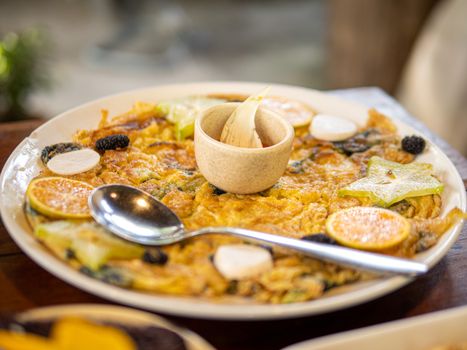
Tortang Talong
The diets react (see scores below)
Common Ingredients
- eggplant
- eggs
- ground pork
- onion
- garlic
- tomato
- fish sauce
- oil
Specific recipes may vary.
Incompatible with 3 of 11 diets
Diet Ratings
Tortang Talong is an eggplant omelette with ground pork filling, which is fundamentally keto-friendly in its protein and fat profile. However, the carb load needs careful assessment. Eggplant contains roughly 3g net carbs per 100g — manageable in moderate portions. The ground pork and eggs provide excellent fat and protein. The concern lies in the cumulative carbs: eggplant (one medium ~5-6g net carbs), tomato (~3g net carbs), and onion (~3g net carbs) add up to approximately 11-12g net carbs per serving, which is workable within a daily keto budget but requires mindful tracking. Fish sauce typically contains minimal carbs in cooking quantities. No grains, no added sugars, and no starchy binders are used in the traditional preparation. This dish sits in 'caution' territory because portion size and the combination with other meals that day determines whether it fits — a single serving is likely fine, but doubling up or pairing with other moderate-carb foods could push daily limits.
Some strict keto practitioners flag eggplant as a borderline vegetable and would exclude tomatoes entirely due to their natural sugars, arguing these nightshades add unnecessary carb risk; they would recommend replacing with lower-carb vegetables like zucchini or eliminating the tomato from the filling.
Tortang Talong contains multiple animal-derived ingredients that are strictly excluded from a vegan diet. Eggs are a direct animal product used as the primary binder and protein source in the dish. Ground pork is animal flesh. Fish sauce is derived from fermented fish, another animal product. These three ingredients — eggs, ground pork, and fish sauce — each independently disqualify this dish from vegan compliance. There is no ambiguity here; this is a classic Filipino omelette (torta) built around eggs and typically stuffed with meat, making it fundamentally incompatible with vegan eating.
Tortang Talong is largely paleo-compatible: eggplant, eggs, ground pork, onion, garlic, and tomato are all clearly approved paleo foods. The two sticking points are fish sauce and the unspecified 'oil.' Fish sauce is minimally processed and ancestrally available in fermented fish traditions, but it contains added salt — a paleo exclusion — and sometimes trace additives or sugar; most practical paleo adherents accept it in small amounts as a condiment, but strict Cordain-school paleo would flag the salt. The oil is the bigger concern: if it is a seed oil (canola, vegetable, sunflower — the default in Filipino cooking), that is a clear paleo avoid. Substituting coconut oil, avocado oil, or lard brings the dish solidly into approved territory. Because the dish's compliance hinges on ingredient sourcing choices that vary in practice, a 'caution' verdict is appropriate.
Strict Cordain-school paleo would flag fish sauce for its added salt content and potentially disqualify the dish outright if cooked in a conventional seed oil. Conversely, more permissive practitioners (Mark Sisson, Robb Wolf) accept fish sauce as a minimally processed, nutrient-dense condiment and would approve this dish if a compliant fat is used for cooking.
Tortang Talong is a Filipino eggplant omelette that has several Mediterranean-compatible elements but is pulled down by the inclusion of ground pork. Eggplant is a quintessentially Mediterranean vegetable (central to dishes like baba ganoush and caponata), and eggs are an acceptable moderate-consumption protein. Onion, garlic, and tomato are Mediterranean staples. However, ground pork qualifies as red/processed meat, which the Mediterranean diet limits to a few times per month. Fish sauce is a minor ingredient used in small amounts and is broadly analogous to the umami role played by anchovies or garum in traditional Mediterranean cooking. The overall dish is vegetable-forward with the eggplant as the dominant component, but the pork filling prevents a full approval. The type of oil used is also unspecified — olive oil would be preferred over neutral vegetable oils.
Some Mediterranean diet practitioners would view this dish more favorably, arguing that the ground pork is used as a minor flavoring component rather than the primary protein, and that the dominant eggplant base aligns well with plant-forward Mediterranean principles. Others might apply stricter red meat guidelines and rate this closer to 'avoid' territory if consumed frequently.
Tortang Talong is fundamentally incompatible with the carnivore diet. The dish is built around eggplant (a nightshade vegetable) as its primary base, with additional plant ingredients including onion, garlic, tomato, and plant-based oil. While it does contain carnivore-compatible ingredients — eggs, ground pork, and fish sauce — these are secondary to the plant foundation. The majority of this dish by volume and character is plant-derived, making it a clear avoid. Even if one attempted to strip out the animal components, the dish would lose its identity entirely.
Tortang Talong is a Filipino eggplant omelette dish, and all of its core ingredients — eggplant, eggs, ground pork, onion, garlic, tomato, fish sauce, and oil — are individually Whole30-compliant. However, the dish is classified as a 'torta,' which is essentially a savory omelette or fritter. The Whole30 program's Rule 4 explicitly prohibits recreating baked goods and junk food with compliant ingredients, and specifically calls out pancakes, crepes, and fritters-style preparations as disallowed. Tortang Talong, while not a sweet baked good, functions as a savory egg-and-meat fritter/patty, which some practitioners argue falls into the spirit-of-the-program gray zone around egg-based 'pancake-like' dishes. Additionally, fish sauce must be verified as compliant (no added sugar or non-compliant additives), which many commercial brands contain. The ingredients themselves are sound, but the preparation style and the need to verify fish sauce compliance warrant a 'caution' rating.
Official Whole30 guidance specifically calls out pancakes and fritters made with compliant ingredients as violating the program's spirit (Rule 4), and some practitioners argue that a savory egg-and-pork fritter like Tortang Talong fits this disallowed pattern. However, others contend that Melissa Urban's restrictions target sweet, comfort-food recreations, and that a traditional savory vegetable-and-egg dish like this is clearly within the program's intent.
Tortang Talong contains two major high-FODMAP ingredients that cannot be easily modified in this dish: onion and garlic. Both are among the highest-fructan foods tested by Monash University and are high-FODMAP at any culinary quantity. These two ingredients alone are sufficient to classify the dish as 'avoid' during the elimination phase. Eggplant is low-FODMAP at a standard serving (~75g), eggs are low-FODMAP, ground pork is low-FODMAP, tomato is low-FODMAP at a standard serving, fish sauce is generally low-FODMAP in small amounts (1-2 tbsp), and oil is low-FODMAP. However, the presence of both onion and garlic — typically sautéed as aromatics forming the base of the dish — makes this unsafe during elimination. There is no practical way to consume a traditional Tortang Talong without ingesting significant fructan loads from these two ingredients.
Tortang Talong is a Filipino eggplant omelette that has several DASH-friendly components but also notable concerns. Eggplant is an excellent DASH vegetable — low sodium, rich in fiber and potassium. Eggs, onion, garlic, and tomato are all acceptable within DASH principles. However, the dish raises concerns in three areas: (1) Fish sauce is very high in sodium (around 1,400mg per tablespoon), which directly conflicts with DASH's sodium limits of 1,500–2,300mg/day; (2) Ground pork is a red meat with moderate-to-high saturated fat, which DASH recommends limiting; (3) The dish is fried in oil, adding fat and calories. The combination of fish sauce and ground pork makes this a 'caution' food. Modifications such as substituting fish sauce with a low-sodium alternative or soy sauce, swapping ground pork for lean ground turkey or chicken, and minimizing oil could meaningfully improve the DASH compatibility of this dish.
NIH DASH guidelines would flag this dish primarily for its fish sauce sodium load and red meat content. However, updated clinical interpretations note that eggs are no longer cholesterol-restricted under the 2020–2025 Dietary Guidelines, and that the overall dish is vegetable-forward with eggplant as the base — some DASH-oriented dietitians would approve a modified version (low-sodium seasoning, lean protein swap) rather than categorically cautioning the dish.
Tortang Talong is a Filipino eggplant omelette that has several Zone-friendly elements but requires careful portioning to hit the 40/30/30 target. Eggplant is a favorable Zone carbohydrate — low-glycemic, high-fiber, and polyphenol-rich (anthocyanins support Sears' anti-inflammatory framework). Eggs provide a solid protein block and contribute monounsaturated and saturated fats. Ground pork raises a flag: it is fattier than Zone-preferred lean proteins like chicken breast or fish, increasing saturated fat load. The aromatics (onion, garlic, tomato) are favorable Zone carbs in small quantities. Fish sauce adds sodium but negligible macros. The frying oil is a concern — if a neutral seed oil (high omega-6) is used, it conflicts with Zone's anti-inflammatory emphasis; substituting olive oil would improve the profile significantly. The overall dish is carbohydrate-light (eggplant is low in net carbs), which means it will likely be protein-and-fat heavy as served, skewing away from the 40/30/30 ratio. To zone-balance this meal, it should be paired with additional low-glycemic vegetables or a small fruit serving to bring carbs up to 40%. The ground pork portion should be modest to control saturated fat. With these adjustments, it is a workable Zone meal component.
Some Zone practitioners would rate this higher (7) because eggplant is an exemplary favorable carb and the egg base provides a clean protein anchor. Sears' later anti-inflammatory writing (The Anti-Inflammation Zone) softened the strict lean-protein stance somewhat, acknowledging that whole-food fat sources like egg yolk and moderate pork are acceptable if omega-3 intake is adequate. Conversely, stricter Zone followers would penalize the ground pork's saturated fat and the likely use of omega-6-heavy vegetable oil, keeping the score at 5.
Tortang Talong is a Filipino eggplant omelette that presents a genuinely mixed anti-inflammatory profile. On the positive side, eggplant is a standout ingredient — rich in nasunin (a potent anthocyanin antioxidant in its purple skin), chlorogenic acid, and dietary fiber, all with demonstrated anti-inflammatory properties. Garlic, onion, and tomato contribute meaningful polyphenols, quercetin, and lycopene respectively. Eggs provide choline and selenium. The aromatics and alliums are broadly supported by anti-inflammatory research. On the less favorable side, ground pork is a red meat and a source of saturated fat and arachidonic acid, which are flagged in anti-inflammatory frameworks as pro-inflammatory, especially when consumed regularly. Fish sauce is very high in sodium and typically contains additives, though the quantity used as seasoning is modest. The unspecified frying oil is a concern — if a refined high-omega-6 seed oil (corn, sunflower) is used rather than extra virgin olive oil or avocado oil, it meaningfully worsens the inflammatory profile. Eggs occupy a contested middle ground (see dissenting view). Overall, the dish has a real anti-inflammatory backbone from its vegetables and aromatics, but the ground pork and frying oil pull it into the caution range. Swapping pork for tofu or shrimp and using EVOO or avocado oil would significantly improve the score.
Eggs are debated: some anti-inflammatory researchers flag the arachidonic acid content as a concern for inflammatory conditions, while others (including Dr. Weil's framework) consider eggs acceptable in moderation given their nutrient density. The eggplant/nightshade question is also worth noting: mainstream anti-inflammatory nutrition (including Dr. Weil) endorses eggplant for its antioxidants, but Autoimmune Protocol (AIP) practitioners like Dr. Tom O'Bryan argue solanine in nightshades can trigger inflammation in sensitive individuals.
Tortang Talong is a Filipino eggplant omelette typically made by grilling or broiling eggplant, then pan-frying it dipped in beaten egg. This version includes ground pork (giniling-style filling), which adds meaningful protein but also introduces saturated fat. The egg and ground pork combination can deliver a reasonable protein load (roughly 20-28g per serving depending on portion), and eggplant contributes modest fiber and hydration due to its high water content. However, the dish is pan-fried in oil, which is the primary concern for GLP-1 patients — added fat from frying increases caloric density, can worsen nausea and reflux, and slows gastric emptying further. Ground pork is a moderate-fat meat compared to leaner alternatives like ground chicken or turkey. Fish sauce adds sodium but is used in small amounts and is not a significant concern. Onion, garlic, and tomato are all GLP-1-friendly supporting ingredients. The dish is acceptable in moderation if prepared with minimal oil (e.g., light pan spray rather than deep frying), leaner protein substituted for pork, and served in a small portion. As traditionally prepared with standard oil amounts and ground pork, it sits firmly in the caution tier.
Some GLP-1-focused dietitians would rate this higher, noting that eggs and pork together provide a complete protein profile that supports muscle preservation, and that the eggplant base adds fiber and bulk with low caloric density — making it more satiating per calorie than many alternatives. Others would push it closer to avoid, citing that pan-fried dishes are consistently problematic for GLP-1 patients with active GI side effects, regardless of the underlying ingredients.
*See how scores were generated at our methodology page.
Nutritional profile
Six traits that cut across every diet.
Fiber & Plants
How much whole-plant food and fiber it delivers.
Healthy Fats
The quality of its fats (unsaturated, omega-3).
Whole / Unprocessed
How close it is to its natural, unprocessed form.
Gut Gentle
How easy it is on digestion (low FODMAP, few irritants).
Low Glycemic
How little it spikes your blood sugar.
Protein Density
How much protein it packs per calorie.
Controversy Index
Higher controversy = more disagreement between diets.
Diet-Specific Tips
 Keto — 5/10
View tips
- Eggplant provides ~5-6g net carbs per medium fruit — portion-sensitive
- Eggs and ground pork are ideal keto proteins with favorable fat content
- Tomato and onion add ~4-6g net carbs to the dish
- No grains, breadcrumbs, or added sugars in traditional preparation
- Fish sauce adds negligible carbs
- Cumulative net carbs per serving estimated at 11-13g — fits within daily keto budget if tracked
- Cooking oil adds beneficial fat content
 Paleo — 5/10
View tips
- Eggplant, eggs, ground pork, onion, garlic, and tomato are all paleo-approved whole foods
- Fish sauce contains added salt, which is excluded under strict paleo guidelines, though widely tolerated by most practitioners
- 'Oil' is unspecified — seed oils (canola, vegetable) are a paleo avoid; substituting coconut oil, lard, or avocado oil resolves this issue
- No grains, legumes, dairy, or refined sugar present
- Overall dish is close to paleo-compliant but ingredient sourcing (oil type, fish sauce quality) determines final verdict
 Mediterranean — 5/10
View tips
- Eggplant is a core Mediterranean vegetable and the dominant ingredient
- Eggs are an acceptable moderate-frequency protein
- Ground pork is a red/processed meat limited to a few times per month
- Garlic, onion, and tomato are Mediterranean staples
- Fish sauce serves a minor umami role similar to traditional anchovy use
- Oil type unspecified — olive oil preferred over generic vegetable oil
- Dish is not processed and is whole-food based overall
 Whole30 — 6/10
View tips
- All individual ingredients (eggplant, eggs, ground pork, onion, garlic, tomato, oil) are Whole30-compliant
- Fish sauce must be label-checked — many brands contain added sugar or other non-compliant additives
- The dish is a savory fritter/omelette, which may conflict with Rule 4's prohibition on pancake/fritter-style preparations
- No grains, dairy, legumes, or other explicitly excluded ingredients present
- Preparation style is the primary concern, not the ingredient list
 DASH — 5/10
View tips
- Fish sauce is very high in sodium (~1,400mg/tbsp), a major DASH concern
- Ground pork is a red meat with saturated fat, limited on DASH
- Eggplant is an excellent DASH vegetable — high fiber, potassium-rich, low sodium
- Eggs are acceptable in moderation under current dietary guidelines
- Frying in oil adds fat; minimal oil or non-stick pan use is preferred on DASH
- Garlic, onion, and tomato are DASH-friendly aromatics
- Low-sodium fish sauce or soy sauce substitution would significantly improve sodium profile
- Swapping ground pork for lean ground chicken or turkey would better align with DASH lean protein guidelines
 Zone — 6/10
View tips
- Eggplant is a favorable Zone carb — low glycemic index, high fiber, rich in polyphenols
- Eggs are a good Zone protein source but yolks add saturated fat
- Ground pork is a higher-fat, higher-saturated-fat protein; lean ground pork or substituting turkey would improve the Zone score
- Dish is carbohydrate-light as served; needs pairing with additional low-GI vegetables to reach 40% carb ratio
- Frying oil choice is critical — olive oil aligns with Zone; seed oils (canola, vegetable) increase omega-6 load against Zone anti-inflammatory principles
- Aromatics (onion, garlic, tomato) are favorable Zone carb contributors in small amounts
- Fish sauce adds sodium without meaningful macro impact
 Anti-Inflammatory — 5/10
View tips
- Eggplant provides nasunin, chlorogenic acid, and fiber — strong anti-inflammatory phytonutrients
- Garlic, onion, and tomato contribute quercetin, allicin, and lycopene
- Ground pork is a red meat with saturated fat and arachidonic acid — pro-inflammatory in anti-inflammatory frameworks
- Unspecified frying oil is a risk factor — refined seed oils (corn, sunflower) high in omega-6 would reduce the score
- Fish sauce adds significant sodium; use in moderation mitigates concern
- Eggs are nutritionally mixed — choline and selenium are beneficial, but arachidonic acid is a minor concern
- No omega-3 sources, whole grains, or legumes present to boost anti-inflammatory credentials
 GLP-1 Friendly — 5/10
View tips
- Pan-frying in oil increases fat content and may worsen nausea and reflux common with GLP-1 medications
- Ground pork contributes saturated fat; substituting ground chicken or turkey would improve the rating
- Eggs provide high-quality complete protein supportive of muscle preservation
- Eggplant adds fiber and high water content, both beneficial for GLP-1 patients
- Moderate protein per serving (~20-28g) depending on portion size — adequate but not exceptional
- Small portion friendliness is moderate; dish works in a single-omelette serving
- Fish sauce contributes sodium but in amounts too small to be a primary concern