Photo: Rachel Claire / Pexels
American
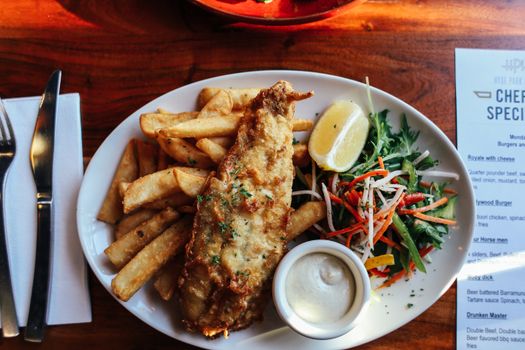
Fish and Chips
The diets react (see scores below)
Common Ingredients
- cod fillets
- flour
- beer
- russet potatoes
- tartar sauce
- lemon
- malt vinegar
- vegetable oil
Specific recipes may vary.
Incompatible with 11 of 11 diets
Diet Ratings
Fish and Chips is fundamentally incompatible with a ketogenic diet. The dish contains two major high-carb offenders: flour-and-beer batter coating the fish, and russet potato chips (fries). Russet potatoes alone deliver roughly 30-40g of net carbs per medium serving, easily blowing the daily keto limit on their own. The beer batter adds significant additional carbs from both flour and beer (which contains maltose and residual sugars). Together, a standard serving of fish and chips can easily contain 70-100g+ of net carbs. While the cod or haddock itself is keto-friendly (high protein, zero carbs), the preparation method renders the dish entirely incompatible with ketosis. Tartar sauce may also contain added sugar. There is no practical portion size of this dish that would fit within keto parameters.
Fish and Chips is fundamentally a non-vegan dish. The primary protein is cod or haddock — fish are animals, and consuming them is explicitly excluded under all vegan frameworks without exception. Beyond the fish itself, tartar sauce typically contains eggs (mayonnaise base), adding a second animal-derived ingredient. These two factors make this dish clearly incompatible with a vegan diet.
Fish and Chips is fundamentally incompatible with the Paleo diet. The dish contains multiple hard-exclude ingredients: wheat flour (a grain used in the batter), beer (a grain-based alcohol and processed ingredient), vegetable oil (a seed oil — one of the most strongly excluded categories in Paleo), and tartar sauce (a processed condiment likely containing dairy, refined sugar, additives, and seed oils). Malt vinegar is derived from barley, another excluded grain. The russet potatoes are a debated ingredient within the Paleo community, but they are the least problematic element here. The only clearly Paleo-compliant components are the cod fillets and lemon. The dish's core preparation method — battering in grain flour, deep-frying in seed oil, and serving with processed condiments — is antithetical to Paleo principles across nearly every dimension.
Fish and Chips fundamentally contradicts Mediterranean diet principles despite featuring an otherwise Mediterranean-approved protein (white fish like cod or haddock). The fish is battered in refined white flour and beer, then deep-fried in vegetable oil rather than olive oil — a highly processed preparation. The chips (russet potatoes) are deep-fried, transforming a neutral vegetable into a high-fat, calorie-dense food. Tartar sauce is a processed condiment typically laden with refined ingredients. The cooking method (deep frying in large quantities of non-olive oil) is the antithesis of Mediterranean fat usage. While the underlying fish protein is encouraged 2-3 times weekly, this preparation method strips away any health benefit and replaces it with refined carbohydrates, excess unhealthy fats, and processed condiments.
Fish and Chips is almost entirely incompatible with the carnivore diet. While cod or haddock is a carnivore-approved protein, every other component of this dish is plant-derived or heavily processed: flour (grain), beer (grain-based), russet potatoes (starchy vegetable), tartar sauce (plant oils, sugar, pickles), lemon (fruit), malt vinegar (grain-derived), and vegetable oil (plant oil). The fish itself is battered and deep-fried in plant oil, making even the protein component non-compliant as prepared. This dish is fundamentally a carbohydrate-heavy, plant-oil-fried meal with a small amount of fish — the polar opposite of carnivore principles.
Fish and Chips contains multiple Whole30-excluded ingredients. Beer is alcohol and also typically grain-based, both of which are excluded. Flour is a grain product (wheat), which is explicitly excluded. Malt vinegar contains gluten (derived from barley/malt) and is the one vinegar type explicitly called out as excluded on Whole30. Additionally, the dish itself — battered and fried fish with chips — falls squarely into the 'recreating junk food' category (fried battered food, fries/tots analog). Tartar sauce commonly contains dairy, added sugar, or other non-compliant ingredients. The potatoes themselves and the cod are fine, but the preparation method and multiple key ingredients make this dish clearly non-compliant.
Fish and Chips as traditionally prepared contains several high-FODMAP ingredients that make it problematic during the elimination phase. The primary concern is the wheat flour batter — wheat is high in fructans and is a major FODMAP trigger. Beer used in the batter also typically contains wheat/barley, adding additional fructans. Tartar sauce frequently contains high-FODMAP ingredients such as onion, garlic, or high-FODMAP relish. The cod or haddock itself is naturally low-FODMAP, as is lemon juice, malt vinegar (in small amounts), and vegetable oil. Russet potatoes are low-FODMAP at a standard serving (~1 medium potato). However, the wheat flour batter alone is sufficient to make this dish high-FODMAP during strict elimination. A low-FODMAP adaptation is possible — using rice flour or a certified GF flour blend instead of wheat flour, a gluten-free beer or sparkling water, and a homemade FODMAP-safe tartar sauce — but the standard preparation as listed should be avoided.
Monash University clearly rates wheat flour as high-FODMAP due to fructans, and most FODMAP practitioners would agree this dish is unsuitable during elimination. However, some clinicians note that the total fructan load from a thin batter coating (versus eating bread) may be lower than it appears, and individualized reintroduction responses vary — a point relevant in the personalization phase but not the elimination phase.
Fish and chips presents multiple DASH diet concerns. While cod and haddock are excellent lean proteins that DASH actively encourages, the preparation method undermines nearly every DASH principle. Deep frying in vegetable oil significantly increases total fat content and calories. The beer batter adds refined carbohydrates with little nutritional value. Russet potato chips/fries, deep fried, lose their natural potassium benefits and absorb large amounts of fat. Tartar sauce is typically high in sodium and fat. The overall dish is high in sodium (batter, tartar sauce), high in total fat from deep frying, and heavily processed in preparation. Commercial versions can exceed 1,500-2,000mg sodium per serving, approaching or exceeding both the standard and low-sodium DASH daily limits in a single meal. The cooking method transforms otherwise DASH-compatible ingredients (white fish, potatoes) into a DASH-incompatible dish.
Fish and Chips is one of the most Zone-unfriendly classic dishes. The protein component — cod or haddock — is actually excellent Zone protein (lean white fish, ideal omega-3 source). However, every other element works against Zone balance. Russet potatoes are explicitly listed as an 'unfavorable' high-glycemic carbohydrate in Sears' Zone materials and are among the foods most strongly discouraged. Deep-frying in vegetable oil (likely high omega-6 soybean or sunflower oil) adds significant inflammatory polyunsaturated fats directly contradicting the anti-inflammatory foundation of the Zone. The beer batter combines high-glycemic refined flour with alcohol, adding empty, fast-digesting carbohydrates that spike insulin. The fat macro is dominated by omega-6 vegetable oil rather than the monounsaturated fats Zone prefers. The carbohydrate macro comes almost entirely from high-glycemic sources (potatoes, batter flour). Even with careful portioning, you cannot salvage the macro ratio here — the dish structurally delivers a high-glycemic carb + omega-6 fat combination with minimal Zone-friendly elements. The lean fish is the only redeeming component, but it is buried under batter fried in inflammatory oil. This is not a dish that can be portion-adjusted into Zone compliance; it would need to be fundamentally reconstructed (grilled fish, vegetable sides, olive oil) to qualify.
Fish and chips presents a significant conflict between its beneficial base ingredient and a highly problematic preparation method. Cod and haddock are lean white fish with some anti-inflammatory benefit (modest omega-3s, lean protein, selenium), but far less potent than fatty fish like salmon or sardines. The dish's major anti-inflammatory liabilities dominate: deep frying in vegetable oil (likely a high-omega-6 refined oil such as sunflower or corn oil) creates oxidized lipids and aldehydes with clear pro-inflammatory effects. The beer batter adds refined carbohydrates with minimal nutritional value. Russet potatoes fried at high temperatures produce acrylamide and a high glycemic load. Tartar sauce typically contains refined vegetable oil-based mayonnaise and added sugars. Malt vinegar and lemon are benign or mildly positive. The net profile is dominated by deep-fried refined carbohydrates in oxidized omega-6-heavy oil — a combination that research consistently associates with elevated CRP and other inflammatory markers. The beneficial properties of the white fish are largely overwhelmed by the preparation. A grilled or baked version of cod would score substantially higher.
Some mainstream nutritionists argue that occasional fish and chips is acceptable in a broadly healthy diet given the lean fish protein and that the omega-6 concern from vegetable oils is overstated by anti-inflammatory advocates — the AHA still considers these oils heart-neutral or beneficial compared to saturated fat. However, anti-inflammatory authorities including Dr. Weil and IF Rating researchers consistently flag deep-frying in refined seed oils and high-glycemic refined carbohydrate loads as among the most pro-inflammatory dietary patterns, making this a 'avoid' under strict anti-inflammatory principles.
Fish and chips is a poor fit for GLP-1 patients in its traditional preparation. The cod or haddock itself is an excellent lean protein source, but the dish is dominated by deep-frying in vegetable oil, a battered coating made with refined flour and beer, and a large portion of starchy fried potatoes. The high fat content from deep-frying directly worsens GLP-1 side effects — nausea, bloating, reflux, and delayed gastric emptying compounding the medication's already-slowed gastric motility. Tartar sauce adds further saturated fat and empty calories. The calorie density is high while fiber and micronutrient density are low relative to the caloric load. Refined flour batter and fried potatoes contribute minimal nutritional value. Malt vinegar and lemon are benign. The beer batter also introduces a small alcohol component. A standard restaurant portion is large and high in total fat, making it especially problematic given the need for small, easily digestible meals. The underlying fish protein is the only meaningful positive, but it is entirely overshadowed by the preparation method.
*See how scores were generated at our methodology page.
Nutritional profile
Six traits that cut across every diet.
Fiber & Plants
How much whole-plant food and fiber it delivers.
Healthy Fats
The quality of its fats (unsaturated, omega-3).
Whole / Unprocessed
How close it is to its natural, unprocessed form.
Gut Gentle
How easy it is on digestion (low FODMAP, few irritants).
Low Glycemic
How little it spikes your blood sugar.
Protein Density
How much protein it packs per calorie.
Controversy Index
Higher controversy = more disagreement between diets.