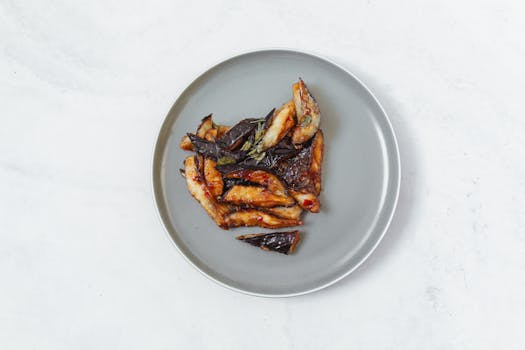
Photo: Polina Tankilevitch / Pexels
Chinese
Fish-Fragrant Eggplant
The diets react (see scores below)
Common Ingredients
- Chinese eggplant
- pickled chili paste
- garlic
- ginger
- Shaoxing wine
- sugar
- black vinegar
- scallions
Specific recipes may vary.
Incompatible with 5 of 11 diets
Diet Ratings
Fish-Fragrant Eggplant is fundamentally incompatible with ketogenic eating in its traditional form. While eggplant itself is a relatively low-carb vegetable (~3g net carbs per 100g), the dish is built around a sauce that combines multiple keto-hostile ingredients: sugar (added directly), Shaoxing wine (a rice wine with significant carbohydrate content), and black vinegar (contains residual sugars and carbs). Together, these sauce components can easily add 10-20g of net carbs per serving on top of the eggplant's natural carbs. The dish also provides no meaningful fat or protein, leaving it nutritionally misaligned with the keto macronutrient profile. There is no ambiguity here — the explicit addition of sugar and the grain-derived alcohol make this dish a clear avoid without substantial recipe modification.
Fish-Fragrant Eggplant (鱼香茄子) is a classic Sichuan dish whose name refers to the flavor profile — a sauce traditionally used in fish dishes — not to any actual fish content. All listed ingredients are entirely plant-based: Chinese eggplant, pickled chili paste (doubanjiang or similar), garlic, ginger, Shaoxing wine, sugar, black vinegar, and scallions. There are no animal products or animal-derived ingredients present. The dish is a whole-food-forward preparation with minimal processing, earning a high score. The only minor consideration is that some commercial Shaoxing wines contain trace amounts of added ingredients, but the base product is fermented rice and is vegan.
While Chinese eggplant, garlic, ginger, and scallions are paleo-approved vegetables, several key ingredients disqualify this dish. Shaoxing wine is a grain-based rice wine (a processed grain alcohol), which is excluded under paleo rules. Sugar (refined) is explicitly excluded. Pickled chili paste is a processed condiment that typically contains added salt, sugar, preservatives, and often fermented bean paste (a legume derivative) — making it non-paleo. Black vinegar is typically made from glutinous rice or other grains, adding another grain-derived ingredient. The combination of multiple non-paleo ingredients makes this dish firmly in the avoid category with high confidence.
Fish-Fragrant Eggplant is a plant-forward dish built around eggplant, garlic, ginger, and scallions — all Mediterranean-friendly ingredients. Eggplant is a staple vegetable in Mediterranean cooking (think caponata or imam bayildi), and the aromatic base aligns well with Mediterranean flavor principles. However, several elements create friction: Shaoxing wine is a non-standard ingredient (though a small amount of wine is not inherently problematic), pickled chili paste may contain preservatives and sodium levels inconsistent with whole-food principles, added sugar is explicitly discouraged in the Mediterranean diet, and black vinegar — while not harmful — is simply outside the tradition. The dish is also typically cooked in a significant amount of vegetable oil rather than olive oil. None of these are disqualifying on their own, but together they shift this from a core Mediterranean food to an acceptable occasional dish that borrows some compatible elements.
Some Mediterranean diet interpreters might score this higher, noting that eggplant is a celebrated Mediterranean vegetable and the dish contains no red meat, refined grains, or heavy saturated fats. The small amount of sugar (a teaspoon or two) and the fermented chili paste could be viewed as negligible concerns in the broader dietary pattern, placing it closer to a 6 or even a low-7.
Fish-Fragrant Eggplant is entirely plant-based and contains zero animal products. Every single ingredient violates carnivore diet principles: eggplant is a nightshade vegetable, pickled chili paste is plant-derived and likely contains additives, garlic and ginger are plant aromatics, Shaoxing wine is a grain-based alcohol, sugar is a refined carbohydrate, black vinegar is grain-fermented, and scallions are vegetables. Despite its name suggesting fish, there is no animal protein or fat of any kind in this dish. It represents the antithesis of carnivore eating — a vegetable-forward, carbohydrate-containing, plant-oil-likely-cooked dish with added sugar and fermented plant products.
This dish contains multiple excluded ingredients. Sugar is explicitly banned on Whole30 as an added sweetener. Shaoxing wine is an alcoholic ingredient (rice wine), which falls under the alcohol exclusion. Pickled chili paste typically contains sugar and often fermented bean pastes or other legume-derived ingredients. Black vinegar, while vinegar itself is generally allowed, Chinese black vinegar (Chinkiang) is made from glutinous rice and other grains, making it non-compliant. The combination of sugar, alcohol (Shaoxing wine), and grain-based black vinegar makes this dish clearly non-compliant.
Fish-Fragrant Eggplant contains multiple high-FODMAP ingredients that make it unsuitable during the elimination phase. Garlic is one of the highest-FODMAP foods tested by Monash University, rich in fructans, and is typically used in meaningful quantities in this dish — there is no safe serving size. Scallions (green onions) are also high-FODMAP in their white bulb portions, which are commonly used in Chinese cooking. Eggplant itself is borderline: Monash rates it as low-FODMAP at 75g but moderate-to-high at larger serves (182g+), and Chinese eggplant dishes typically use substantial amounts. Pickled chili paste (such as doubanjiang) frequently contains garlic as a primary ingredient, compounding the fructan load. Shaoxing wine is generally considered low-FODMAP in small culinary amounts. Sugar and black vinegar are low-FODMAP. Ginger is low-FODMAP. However, the combination of garlic (high-FODMAP at any culinary dose) and likely garlic-containing chili paste makes this dish unavoidable during elimination — the FODMAP burden from fructans alone is significant.
Fish-Fragrant Eggplant features Chinese eggplant as its base, which is a DASH-approved vegetable rich in fiber, potassium, and antioxidants. However, the dish as commonly prepared in Chinese cuisine raises several concerns under DASH guidelines. Pickled chili paste (doubanjiang or similar) is typically very high in sodium — a tablespoon can contain 400–700mg of sodium. Sugar is added (contributing to discretionary calories/sweets), and Shaoxing wine adds modest sodium as well. The dish is also stir-fried, usually in a moderate amount of vegetable oil, which is acceptable under DASH. The aromatic base of garlic, ginger, and scallions is positive. Overall, the eggplant base and aromatics are DASH-friendly, but the pickled chili paste and combined sodium load push this into caution territory. A home-prepared version with reduced-sodium chili paste or miso, minimal added sugar, and portion control could bring it closer to DASH compliance.
NIH DASH guidelines broadly support vegetables including eggplant and would flag the high-sodium condiments (pickled chili paste) as problematic. However, some DASH-oriented clinicians note that if this dish is prepared with low-sodium chili paste and modest portions, the overall sodium per serving may be manageable within a <2,300mg/day budget, and the eggplant's potassium and fiber content provide meaningful cardiovascular benefit.
Fish-Fragrant Eggplant is a vegetable-forward Chinese dish with eggplant as the main component, which is a Zone-favorable low-glycemic vegetable. However, the dish has several complicating factors. First, there is no primary protein, making it incomplete as a Zone meal — it would need a lean protein source added to achieve the 40/30/30 ratio. Second, the sauce contains sugar, which is an unfavorable high-glycemic ingredient in Zone terms, though in typical portions the sugar content is modest. Third, pickled chili paste and Shaoxing wine add small amounts of carbohydrates. The dish is essentially a carbohydrate block (eggplant) with condiments, and is usable in Zone eating only as a side dish paired with lean protein and monounsaturated fat. Eggplant itself is a favorable Zone carb — low glycemic, high in polyphenols (particularly nasunin), and anti-inflammatory, which aligns with Sears' later anti-inflammatory emphasis. The black vinegar and garlic/ginger also have polyphenol benefits. The main concerns are the added sugar in the sauce, the complete absence of protein, and the likely use of seed oils (vegetable oil) in stir-frying which are omega-6 heavy and discouraged in Zone. With careful portioning of the sugar-heavy sauce and pairing with Zone-appropriate protein and fat, this can fit into a Zone meal as a carbohydrate component.
Some Zone practitioners following Sears' later anti-inflammatory framework (Toxic Fat, The OmegaRx Zone) would rate this more favorably, emphasizing eggplant's strong polyphenol content and low glycemic load, and treating the modest sugar as negligible in a single serving. Conversely, strict early Zone adherents might penalize this more heavily for lacking protein and containing added sugar, placing it closer to a score of 4.
Fish-Fragrant Eggplant is a predominantly plant-based dish with several genuinely anti-inflammatory ingredients — garlic and ginger are well-established anti-inflammatory spices, scallions provide quercetin and allicin, and eggplant itself contains nasunin (a potent anthocyanin antioxidant in the skin) and chlorogenic acid. Black vinegar (Chinkiang) contributes polyphenols and acetic acid, which has modest anti-inflammatory associations. However, the dish has meaningful counterweights: added sugar is a direct pro-inflammatory factor, and pickled chili paste (doubanjiang or similar) typically contains significant sodium and may include refined oils or additives depending on the brand. Shaoxing wine contributes a small amount of alcohol, which at culinary doses is largely benign but is not a net positive. The dish is also a nightshade preparation — eggplant is a nightshade, which is broadly considered anti-inflammatory in mainstream nutrition (high antioxidants) but flagged in AIP and autoimmune-sensitive protocols. For a generally healthy person, this dish leans net-neutral to mildly positive: rich in vegetables, aromatic anti-inflammatory spices, and polyphenols, but offset by added sugar and processed condiment components. It earns a 'caution' rather than 'approve' primarily due to the sugar, sodium load, and processed chili paste rather than the whole food ingredients themselves.
Mainstream anti-inflammatory nutrition (Dr. Weil's framework, Mediterranean-adjacent guidance) would view this dish favorably as a whole-food, vegetable-forward plate rich in garlic, ginger, and polyphenol-dense eggplant. The Autoimmune Protocol (AIP) and Tom O'Bryan-style practitioners would flag eggplant as a nightshade to avoid in inflammatory or autoimmune conditions due to solanine and lectin content, potentially rating the dish more negatively for that population.
Fish-Fragrant Eggplant is a vegetable-forward dish with meaningful fiber from eggplant but virtually no protein, making it poorly suited as a standalone main course for GLP-1 patients who must prioritize 15-30g protein per meal. Eggplant itself is low-calorie, easy to digest, and high in water content — positives for GLP-1 tolerability. However, traditional preparations are typically cooked in substantial oil (eggplant absorbs oil readily), which adds significant fat and can worsen GLP-1 side effects like nausea and reflux. The pickled chili paste adds moderate spice that may irritate some patients with GLP-1-related GI sensitivity. Sugar in the sauce contributes empty calories with no nutritional benefit. Shaoxing wine adds minimal alcohol but is negligible at cooking quantities. Black vinegar and aromatics (garlic, ginger, scallions) are benign or mildly beneficial. The dish scores as caution rather than avoid because the eggplant base has genuine fiber and digestibility value — but it cannot function as a main course without a protein addition (tofu, shrimp, or chicken would be common pairings) and should be prepared with minimal oil.
Some GLP-1-focused dietitians would rate this lower (toward avoid) specifically because eggplant's high oil absorption makes fat control unreliable in restaurant or standard home preparation, and the sugar-forward sauce profile adds glycemic load with no protein payoff. Others would view it more favorably as a fiber-rich vegetable side that pairs well with lean protein, arguing the dish's components are individually benign and spice levels are moderate compared to hotter Chinese preparations.
*See how scores were generated at our methodology page.
Nutritional profile
Six traits that cut across every diet.
Fiber & Plants
How much whole-plant food and fiber it delivers.
Healthy Fats
The quality of its fats (unsaturated, omega-3).
Whole / Unprocessed
How close it is to its natural, unprocessed form.
Gut Gentle
How easy it is on digestion (low FODMAP, few irritants).
Low Glycemic
How little it spikes your blood sugar.
Protein Density
How much protein it packs per calorie.
Controversy Index
Higher controversy = more disagreement between diets.
Diet-Specific Tips
 Vegan — 9/10
View tips
- All ingredients are plant-derived
- 'Fish-fragrant' refers to flavor profile only — no fish or seafood present
- Eggplant as the primary ingredient is a nutrient-dense whole vegetable
- Shaoxing wine is a fermented grain product with no animal ingredients
- Pickled chili paste (e.g., doubanjiang) is typically made from fermented beans and chilies — vegan by default
- No dairy, eggs, meat, or animal-derived additives in the listed ingredients
 Mediterranean — 5/10
View tips
- Eggplant is a Mediterranean staple vegetable — strongly positive
- No animal protein or saturated fat — positive
- Added sugar contradicts Mediterranean diet principles
- Pickled chili paste may be high in sodium and additives
- Shaoxing wine and black vinegar are non-Mediterranean pantry items
- Dish is not traditionally cooked in olive oil
- Overall plant-based profile is compatible, but preparation style is culturally divergent
 DASH — 5/10
View tips
- Eggplant is a DASH-approved vegetable high in fiber and potassium
- Pickled chili paste is typically very high in sodium (400–700mg per tablespoon)
- Added sugar conflicts with DASH guidance on limiting sweets
- Shaoxing wine contributes additional sodium
- No saturated fat concerns — dish uses plant-based ingredients and vegetable oil
- Garlic, ginger, and scallions are heart-healthy aromatics consistent with DASH
- Low-sodium chili paste substitution would significantly improve DASH compatibility
- No lean protein source, limiting nutritional completeness as a main dish
 Zone — 5/10
View tips
- Eggplant is a Zone-favorable low-glycemic, high-polyphenol carbohydrate
- No primary protein source — dish is incomplete for Zone 40/30/30 balance
- Added sugar in sauce is an unfavorable Zone ingredient
- Likely stir-fried in omega-6 vegetable/seed oil, which conflicts with Zone anti-inflammatory principles
- Shaoxing wine and pickled chili paste add modest unfavorable carbohydrates
- Garlic, ginger, scallions, and black vinegar contribute beneficial polyphenols
- Must be paired with lean protein and monounsaturated fat to form a Zone-compliant meal
 Anti-Inflammatory — 5/10
View tips
- Eggplant: rich in nasunin (anthocyanin) and chlorogenic acid — strong antioxidant profile, but a nightshade with caveats for autoimmune individuals
- Garlic and ginger: well-established anti-inflammatory spices with research support for reducing CRP and NF-κB activation
- Added sugar: pro-inflammatory; even in small culinary amounts, sugar is a net negative
- Pickled chili paste (doubanjiang): typically processed, high-sodium, may contain refined seed oils and additives depending on brand
- Black vinegar: contributes polyphenols and acetic acid — minor positive
- Shaoxing wine: culinary alcohol dose is minimal but not a positive factor
- No protein source: dish lacks omega-3s or legumes that would elevate anti-inflammatory rating
- Overall: vegetable-forward and spice-rich framework is positive, offset by sugar and processed condiment components
 GLP-1 Friendly — 4/10
View tips
- No meaningful protein — fails the 15-30g per meal protein target as a standalone main
- Eggplant is high in fiber and water content, supporting digestion and hydration
- Eggplant absorbs oil heavily during cooking, significantly increasing fat content and GLP-1 side effect risk
- Pickled chili paste may trigger nausea or reflux in GLP-1 patients with GI sensitivity
- Added sugar in sauce contributes empty calories in a context where every calorie must count
- Shaoxing wine alcohol content is negligible after cooking
- Garlic, ginger, and scallions are digestive-neutral or mildly beneficial
- Suitable as a side dish paired with a lean protein source, not as a primary meal