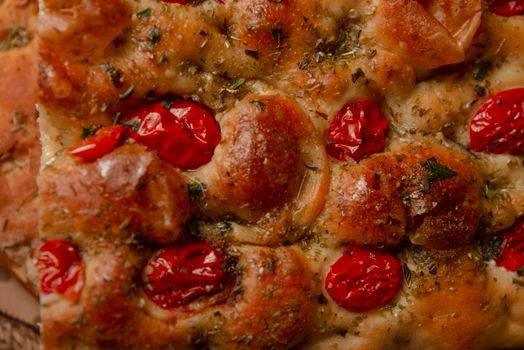
Photo: Natalia Olivera / Pexels
Italian
Tomato Focaccia
The diets react (see scores below)
Common Ingredients
- bread flour
- cherry tomatoes
- olive oil
- yeast
- oregano
- sea salt
- garlic
Specific recipes may vary.
Incompatible with 5 of 11 diets
Diet Ratings
Tomato focaccia is fundamentally incompatible with a ketogenic diet. The primary ingredient is bread flour, a refined grain that is extremely high in net carbs — a single serving of focaccia can contain 30-40g of net carbs, instantly exceeding or consuming the entire daily keto carb allowance. Yeast-leavened bread made from wheat flour is one of the clearest 'avoid' foods in any keto framework. The olive oil, oregano, sea salt, and garlic are keto-friendly, and cherry tomatoes in small amounts could be cautious, but they are irrelevant given the bread flour base dominates the dish entirely.
Tomato focaccia as described contains exclusively plant-based ingredients: bread flour, cherry tomatoes, olive oil, yeast, oregano, sea salt, and garlic. There are no animal products or animal-derived ingredients present. All components are whole or minimally processed plant foods, making this a strong vegan approval. Olive oil is the most processed element, but it is unambiguously plant-derived and widely accepted across all vegan frameworks.
Tomato Focaccia is fundamentally incompatible with the Paleo diet. The primary ingredient, bread flour (wheat), is a grain and one of the clearest exclusions in all interpretations of Paleo eating. Wheat contains gluten and anti-nutrients like phytic acid and lectins that Paleo specifically aims to eliminate. Yeast, while not inherently non-Paleo, is used here exclusively in the context of bread-making. Sea salt is also a minor concern under strict Paleo guidelines. The remaining ingredients — cherry tomatoes, olive oil, oregano, and garlic — are all Paleo-approved, but they cannot redeem a dish whose foundation is a non-negotiable excluded food. There is no version of traditional focaccia that is Paleo-compliant.
Tomato focaccia is a traditional Italian bread with genuinely Mediterranean ingredients — extra virgin olive oil, tomatoes, garlic, oregano — all of which are staples of the Mediterranean diet. However, the primary base is bread flour, a refined grain, which modern Mediterranean diet guidelines discourage in favor of whole grains. The olive oil and vegetable toppings partially redeem it, but the refined flour keeps it out of the 'approve' category under strict interpretations. As a side dish enjoyed occasionally alongside a plant-rich meal, it is acceptable in moderation.
Traditional Mediterranean cuisine — particularly in southern Italy, Liguria, and Greece — has long included white bread and flatbreads as everyday staples, and focaccia with olive oil and vegetables would be considered a wholesome, culturally authentic food. Some Mediterranean diet researchers argue that the overall dietary pattern matters more than individual food refinement, and that olive-oil-enriched bread consumed with vegetables fits the spirit of the diet.
Tomato Focaccia is entirely plant-based and grain-based, containing zero animal products. Every single ingredient — bread flour, cherry tomatoes, olive oil, yeast, oregano, sea salt, and garlic — is either a plant food, a plant-derived oil, or a plant-based seasoning. Bread flour is a grain product, which is one of the most strictly excluded food categories on the carnivore diet. Olive oil is a plant oil, also excluded. Cherry tomatoes, oregano, and garlic are plant foods. This dish is incompatible with carnivore at every level, including the most liberal interpretations. There is universal consensus across all carnivore authorities and protocols that grains, vegetables, and plant oils have no place in a carnivore diet.
Tomato Focaccia is disqualified on two separate grounds. First, bread flour is a wheat-based grain product, which is explicitly excluded on the Whole30. Second, focaccia is bread — it falls squarely within the 'no recreating baked goods' rule, which explicitly lists bread as a prohibited category even when made with otherwise compliant ingredients. There is no compliant workaround for this dish; its very identity is as a grain-based bread product.
Tomato Focaccia contains two high-FODMAP ingredients that make it unsuitable during the elimination phase. First, bread flour (wheat) is high in fructans at any standard serving size — a typical slice of focaccia would contain far more wheat than any low-FODMAP threshold allows. Second, garlic is one of the highest-FODMAP foods tested by Monash University, containing significant fructans even in very small amounts. Cherry tomatoes and olive oil are low-FODMAP, oregano is fine as a dried herb at typical quantities, yeast in baked goods is not a FODMAP concern, and sea salt is FODMAP-free. However, the combination of wheat flour and garlic makes this dish clearly high-FODMAP at any realistic serving size. There is no ambiguity here — standard focaccia is not compatible with the FODMAP elimination phase.
Tomato focaccia contains mostly DASH-friendly ingredients — bread flour (refined grain, not whole grain), cherry tomatoes, olive oil, garlic, oregano, and yeast. The main concerns are: (1) refined white bread flour rather than whole grain, which DASH emphasizes; (2) generous olive oil typical of focaccia, which while heart-healthy and DASH-acceptable, adds significant calories; and (3) sea salt — focaccia is traditionally heavily salted both in the dough and on top, making sodium content a real concern for DASH compliance. A typical focaccia serving can contain 400–600mg sodium, which is significant against the 1,500–2,300mg/day DASH limits. The tomatoes, garlic, oregano, and olive oil are positive DASH elements. Overall, acceptable in moderate portions with restrained salting, but not an emphasized DASH food due to refined flour and sodium load.
NIH DASH guidelines emphasize whole grains and sodium restriction, which standard focaccia does not fully support. However, some updated DASH-oriented clinical dietitians note that olive oil-based breads with vegetables can fit within a DASH pattern when portion-controlled and prepared with reduced salt — a homemade low-sodium version using whole wheat flour would score considerably higher (7–8).
Tomato focaccia is built on bread flour, which is a refined high-glycemic carbohydrate — exactly the type of grain Dr. Sears classifies as 'unfavorable' in Zone terminology. Bread flour has a high glycemic index, spikes insulin rapidly, and lacks the fiber buffer that whole grains provide. As a side dish with no protein component, it also offers no contribution to the 30% protein target, meaning it would need to be paired very carefully with lean protein and fat to approach Zone balance. The olive oil is a genuine Zone positive — it is the ideal monounsaturated fat source — and cherry tomatoes, garlic, and oregano are all favorable Zone ingredients (low-glycemic, polyphenol-rich). However, the carbohydrate base dominates the dish. A small portion (roughly one thin slice) could technically count as a carbohydrate block within a larger Zone meal that supplies protein and more vegetables, but the glycemic load and absence of fiber make it a poor carb choice compared to vegetables or whole-grain alternatives. It is not 'avoid' because the Zone is ratio-based and small portions can be incorporated, but it requires strict portion discipline and should be an occasional rather than regular choice.
Tomato focaccia presents a mixed anti-inflammatory profile. On the positive side, extra virgin olive oil is a cornerstone of the anti-inflammatory diet, rich in oleocanthal and monounsaturated fats with well-documented anti-inflammatory effects. Cherry tomatoes provide lycopene, vitamin C, and polyphenols — all antioxidant compounds. Garlic and oregano are both recognized anti-inflammatory herbs with antimicrobial and antioxidant properties. The sea salt is neutral. The main concern is bread flour, a refined carbohydrate that lacks the fiber and nutrient density of whole grains. Refined white flour has a high glycemic index and can promote glycemic spikes and low-grade inflammatory signaling over time — the anti-inflammatory framework explicitly favors whole grains over refined grains. Yeast itself is benign. Overall, this dish is not aggressively pro-inflammatory, but the refined flour base prevents a full approval. If made with whole wheat or whole grain flour, the score would rise meaningfully. As an occasional side dish dressed generously with EVOO and anti-inflammatory toppings, it falls into the acceptable-in-moderation category.
Dr. Andrew Weil's framework and Mediterranean diet research generally treats traditional bread — especially olive oil-based Italian breads consumed as part of a varied diet — as acceptable, given the overall dietary pattern matters more than any single refined ingredient. Some anti-inflammatory practitioners, however, would flag any refined white flour product more strictly, arguing consistent blood sugar elevation from refined carbs is a primary driver of systemic inflammation regardless of accompanying ingredients.
Tomato focaccia is a refined-grain bread with minimal protein, low fiber, and moderate fat from olive oil. As a side dish with no primary protein source, it contributes mostly simple carbohydrates and calories with limited nutritional return — a poor use of the reduced appetite window GLP-1 patients have. Olive oil is a healthy unsaturated fat, cherry tomatoes and oregano add micronutrients, and the dish is easy to digest and unlikely to worsen GI side effects. However, the lack of protein is a significant strike: GLP-1 patients need every meal and snack to contribute toward the 100–120g daily protein target, and focaccia delivers essentially none. Refined bread flour also provides little fiber and raises blood sugar faster than whole grain alternatives. Portion size matters enormously here — a small slice alongside a high-protein main is tolerable, but eating focaccia as a standalone side displaces nutritionally superior foods. It is not fried, not spicy, not high in sugar, and not carbonated, so it avoids the 'avoid' category, but it offers little to support GLP-1 dietary priorities.
*See how scores were generated at our methodology page.
Nutritional profile
Six traits that cut across every diet.
Fiber & Plants
How much whole-plant food and fiber it delivers.
Healthy Fats
The quality of its fats (unsaturated, omega-3).
Whole / Unprocessed
How close it is to its natural, unprocessed form.
Gut Gentle
How easy it is on digestion (low FODMAP, few irritants).
Low Glycemic
How little it spikes your blood sugar.
Protein Density
How much protein it packs per calorie.
Controversy Index
Higher controversy = more disagreement between diets.
Diet-Specific Tips
 Vegan — 9/10
View tips
- All seven ingredients are entirely plant-based
- No dairy, eggs, or animal-derived additives
- Yeast is a fungus, not an animal product — universally accepted as vegan
- Olive oil is plant-derived with no meaningful vegan debate
- Whole-food dominant ingredient list elevates the score toward the top of the approve range
 Mediterranean — 5/10
View tips
- Refined bread flour rather than whole grain is the primary ingredient
- Extra virgin olive oil is generously used, a core Mediterranean fat
- Cherry tomatoes, garlic, and oregano are all Mediterranean staples
- No added sugars, processed ingredients, or unhealthy fats
- Traditional Italian preparation with strong cultural authenticity
- Best consumed in moderation as a side, not a dietary staple
 DASH — 5/10
View tips
- Refined bread flour instead of DASH-preferred whole grain
- High sodium from sea salt in dough and topping — traditional focaccia can exceed 400–600mg per serving
- Olive oil is DASH-compatible (unsaturated fat, vegetable oil)
- Cherry tomatoes and garlic add potassium and beneficial phytonutrients
- Oregano adds flavor without sodium — good DASH strategy
- Portion control critical; smaller servings reduce sodium and refined carb load
- Low-sodium homemade version with whole wheat flour would rate significantly higher
 Zone — 4/10
View tips
- Bread flour is a refined, high-glycemic carbohydrate classified as 'unfavorable' in Zone methodology
- No protein component — cannot contribute to the 30% protein target on its own
- Olive oil is an ideal Zone fat source (monounsaturated), partially redeeming the fat profile
- Cherry tomatoes, garlic, and oregano are low-glycemic, polyphenol-rich Zone-favorable additions
- Small portions can technically serve as a carb block in a larger Zone-balanced meal
- High glycemic load without fiber buffer makes blood sugar management difficult
- As a side dish, it would need substantial lean protein and vegetable accompaniments to approach Zone balance
 Anti-Inflammatory — 5/10
View tips
- Extra virgin olive oil is a top-tier anti-inflammatory fat (oleocanthal, MUFAs)
- Cherry tomatoes provide lycopene, vitamin C, and polyphenols
- Garlic is a well-established anti-inflammatory ingredient
- Oregano contributes antioxidant and anti-inflammatory compounds
- Bread flour is a refined carbohydrate — high glycemic, low fiber, not a whole grain
- No significant sources of omega-3s, added sugars, or trans fats
- Overall profile acceptable in moderation; whole grain flour would substantially improve score
 GLP-1 Friendly — 4/10
View tips
- Near-zero protein — fails the #1 GLP-1 dietary priority
- Refined bread flour provides minimal fiber and spikes blood sugar
- Olive oil is a healthy fat but adds calories with little satiety value at this protein-to-calorie ratio
- Easy to digest — unlikely to worsen nausea or bloating
- Cherry tomatoes and garlic add modest micronutrient value
- Highly portion-sensitive — small slice as accompaniment to protein is far preferable to eating as a standalone side
- Displaces higher-priority foods in a reduced-appetite eating window