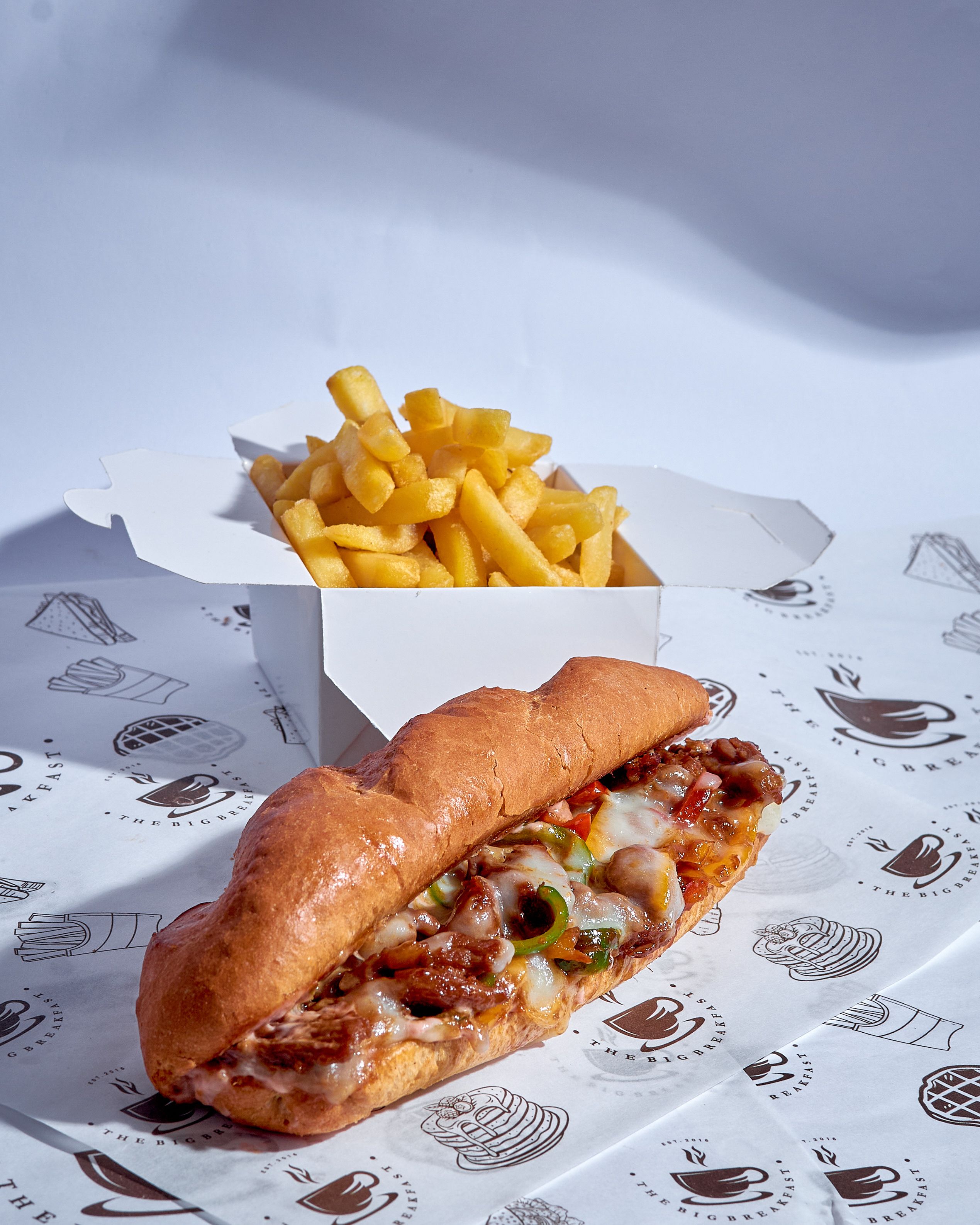
Photo: Tochukwu Ekeh / Pexels
American
French Dip Sandwich
The diets react (see scores below)
Common Ingredients
- roast beef
- crusty roll
- beef au jus
- Swiss cheese
- onion
- horseradish
- butter
Specific recipes may vary.
Incompatible with 9 of 11 diets
Diet Ratings
The French Dip Sandwich is fundamentally incompatible with a ketogenic diet due to its crusty roll, which is a grain-based bread contributing approximately 30-45g of net carbs per serving on its own — enough to exceed or nearly exhaust the entire daily keto carb budget in a single component. The remaining ingredients (roast beef, Swiss cheese, beef au jus, butter, horseradish, onion) are largely keto-friendly, but the bread is non-negotiable in the traditional preparation and disqualifies the dish as served. Without the roll, the components would be approvable, but that would no longer constitute a French Dip Sandwich.
The French Dip Sandwich contains multiple animal-derived ingredients that make it entirely incompatible with a vegan diet. Roast beef is slaughtered animal flesh, beef au jus is a broth derived from beef drippings, Swiss cheese is a dairy product, and butter is an animal-derived fat. There is no ambiguity here — this dish is built almost entirely around animal products at every component level.
The French Dip Sandwich contains multiple non-paleo ingredients that disqualify it outright. The crusty roll is a grain-based bread, which is strictly excluded from all paleo frameworks. Swiss cheese is dairy, also excluded under paleo rules. Butter is dairy as well. While the roast beef, beef au jus, onion, and horseradish are paleo-compatible, the foundational components of this sandwich — the bread and cheese — are core paleo violations. This dish cannot be adapted into paleo without fundamentally ceasing to be a French Dip Sandwich.
The French Dip Sandwich conflicts with Mediterranean diet principles on multiple fronts. Red meat (roast beef) is the primary protein, which should be limited to a few times per month. The crusty roll is a refined grain product lacking the nutritional value of whole grains. Butter is used as a fat instead of the cornerstone extra virgin olive oil. Swiss cheese adds saturated fat beyond the modest dairy allowances. The beef au jus, while minimally processed, reinforces the red meat base. The only redeeming elements are the onion and horseradish, which contribute negligible plant-based value in this context. This dish is essentially the antithesis of Mediterranean eating: red meat-centric, built on refined grains, with saturated fat from both butter and cheese.
The French Dip Sandwich is fundamentally incompatible with the carnivore diet. While the roast beef and beef au jus are carnivore-approved components, the dish is built around a crusty roll (grain-based bread), which is a plant-derived, processed carbohydrate that is strictly excluded. Additional non-carnivore ingredients include onion (plant) and horseradish (plant). Swiss cheese adds dairy debate, and butter is marginally acceptable, but these are secondary concerns when the foundational structure of the sandwich — the bread — is a hard exclude. This is a sandwich at its core; removing the roll would leave you with a beef and au jus dish, which would be entirely different and largely carnivore-friendly. As presented, this dish cannot be adapted to carnivore without ceasing to be a French Dip Sandwich.
A French Dip Sandwich contains multiple Whole30-excluded ingredients. The crusty roll is a grain-based bread product, which is excluded both as a grain and as a recreated baked good/bread. Swiss cheese is dairy, which is excluded. Butter is also dairy and excluded (only ghee/clarified butter is the allowed exception). These three ingredients alone make this dish clearly non-compliant, regardless of the other components (roast beef, beef au jus, onion, and horseradish are generally compliant).
The French Dip Sandwich contains multiple high-FODMAP ingredients that make it unsuitable during the elimination phase. The crusty roll is almost certainly made from wheat flour, which is high in fructans — a major FODMAP trigger. Onion is one of the highest-FODMAP foods known, rich in fructans, and is a primary ingredient here. The beef au jus dipping broth is very likely to contain onion and/or garlic as flavor bases, compounding the fructan load. Swiss cheese, while lower in lactose than soft cheeses, is present alongside these other high-FODMAP items. Roast beef itself is low-FODMAP, as is plain horseradish and butter. However, the combination of wheat-based bread, onion, and onion/garlic-laden au jus makes this dish firmly high-FODMAP at any standard serving size. Even partial modifications (e.g., removing visible onion) would not resolve the fructan content from the bread and au jus.
The French Dip Sandwich presents multiple significant concerns under DASH diet guidelines. Roast beef (especially deli-style or restaurant-prepared) is typically high in sodium and saturated fat, falling into the red meat category that DASH recommends limiting. The beef au jus is exceptionally high in sodium, often containing 400-800mg or more per serving. The crusty roll is typically made from refined white flour rather than whole grains. Swiss cheese adds saturated fat and additional sodium, and butter on the roll further increases saturated fat content. Cumulatively, this sandwich can easily contain 1,500-2,500mg of sodium in a single serving — potentially exceeding the entire daily sodium budget for the low-sodium DASH protocol and consuming the majority of the standard DASH allowance. The combination of red meat, full-fat cheese, butter, and a high-sodium dipping broth runs counter to nearly every core DASH principle simultaneously.
The French Dip Sandwich presents multiple Zone Diet challenges. The crusty roll is a high-glycemic refined carbohydrate that dominates the carb block budget unfavorably — a typical roll can carry 40-50g of carbs with minimal fiber, blowing out the carb allocation with poor-quality, fast-digesting starch. The roast beef itself is a reasonable lean protein source, though it carries more saturated fat than ideal Zone proteins like chicken breast or fish. Swiss cheese adds saturated fat rather than the preferred monounsaturated fat. Butter on the roll further compounds the saturated fat load. On the positive side, onion is a favorable low-glycemic vegetable, horseradish is essentially a free food, and beef au jus adds minimal macros. To fit Zone protocol, one would need to eliminate or drastically minimize the roll (perhaps use a small amount of whole grain bread instead), remove the butter, and control roast beef portions to ~3 oz. As served in any restaurant or traditional preparation, the carb-to-protein-to-fat ratio is badly skewed toward high-glycemic carbs and saturated fat, making it very difficult to balance into a Zone meal without fundamentally restructuring the dish.
The French Dip Sandwich is predominantly pro-inflammatory by anti-inflammatory diet standards. Red meat (roast beef) is in the 'limit' category due to its saturated fat content and association with elevated inflammatory markers like CRP and IL-6. The crusty roll is a refined carbohydrate — a white flour bread product with high glycemic impact and minimal fiber or nutrients. Swiss cheese adds saturated fat, which is flagged in anti-inflammatory frameworks. Butter on the roll further contributes saturated fat. Beef au jus, while low in itself, reinforces the red meat-heavy profile. The only redeeming ingredients are onion (quercetin, anti-inflammatory polyphenols) and horseradish (glucosinolates with mild anti-inflammatory properties), but these are present in modest quantities and cannot offset the dish's overall inflammatory burden. This is a typical Western comfort food built around the exact combination — red meat, refined grains, saturated dairy fat — that anti-inflammatory protocols consistently identify as problematic.
A French Dip Sandwich offers meaningful protein from roast beef (roughly 25-35g depending on portion), which is a genuine positive for GLP-1 patients. However, several factors drag the rating down. The crusty roll is a refined grain with low fiber and nutrient density — a significant drawback when every calorie must count. Swiss cheese and butter add saturated fat, compounding the higher fat content already present in typical roast beef cuts (which vary from lean to moderately fatty). The au jus dipping broth is high in sodium, which can contribute to water retention and is worth flagging. The overall meal is moderate-to-high in calories, moderate-to-high in saturated fat, and low in fiber — a combination that can worsen GLP-1 side effects like nausea, bloating, and reflux, especially given slowed gastric emptying. The crusty roll texture may also feel heavy and difficult to digest in smaller stomachs on GLP-1s. It is not a categorical avoid because the protein content is real and roast beef (depending on cut) is leaner than fried or heavily processed meats, but as constructed this sandwich is poorly optimized for GLP-1 dietary needs without meaningful modifications (e.g., whole grain or smaller roll, skip butter, reduce cheese).
Some GLP-1-focused dietitians would rate lean roast beef more favorably as a practical, accessible high-protein option, particularly for patients struggling to meet protein targets — the beef itself is not the primary problem. The disagreement centers on whether the overall sandwich construction is evaluated as a unit (unfavorable) or whether patients can reasonably be coached to modify it (more permissive view); individual GI tolerance to red meat also varies among GLP-1 patients, with some reporting increased sensitivity to heavier proteins.
*See how scores were generated at our methodology page.
Nutritional profile
Six traits that cut across every diet.
Fiber & Plants
How much whole-plant food and fiber it delivers.
Healthy Fats
The quality of its fats (unsaturated, omega-3).
Whole / Unprocessed
How close it is to its natural, unprocessed form.
Gut Gentle
How easy it is on digestion (low FODMAP, few irritants).
Low Glycemic
How little it spikes your blood sugar.
Protein Density
How much protein it packs per calorie.
Controversy Index
Higher controversy = more disagreement between diets.
Diet-Specific Tips
 Zone — 4/10
View tips
- Crusty roll is high-glycemic refined carbohydrate — unfavorable Zone carb source
- Roast beef is a usable protein but carries more saturated fat than ideal Zone proteins
- Swiss cheese and butter both add saturated fat, not preferred monounsaturated fats
- Macro ratio as served is skewed: too many poor-quality carbs, insufficient lean protein balance
- Onion is a favorable low-glycemic vegetable component
- As traditionally served, impossible to hit 40/30/30 without major modifications
- Could theoretically be salvaged with open-face presentation on small whole grain bread and controlled portions
 GLP-1 Friendly — 4/10
View tips
- Moderate-to-high protein from roast beef (~25-35g) is a positive
- Refined grain crusty roll adds low-fiber, low-nutrient-density carbohydrates
- Swiss cheese and butter increase saturated fat content
- High sodium from au jus may cause water retention
- Slowed gastric emptying makes this heavy, fatty, low-fiber meal harder to tolerate
- No meaningful fiber from vegetables or whole grains
- Butter is an unnecessary source of saturated fat for GLP-1 patients
- Portion-sensitive: a half sandwich with modifications scores meaningfully better