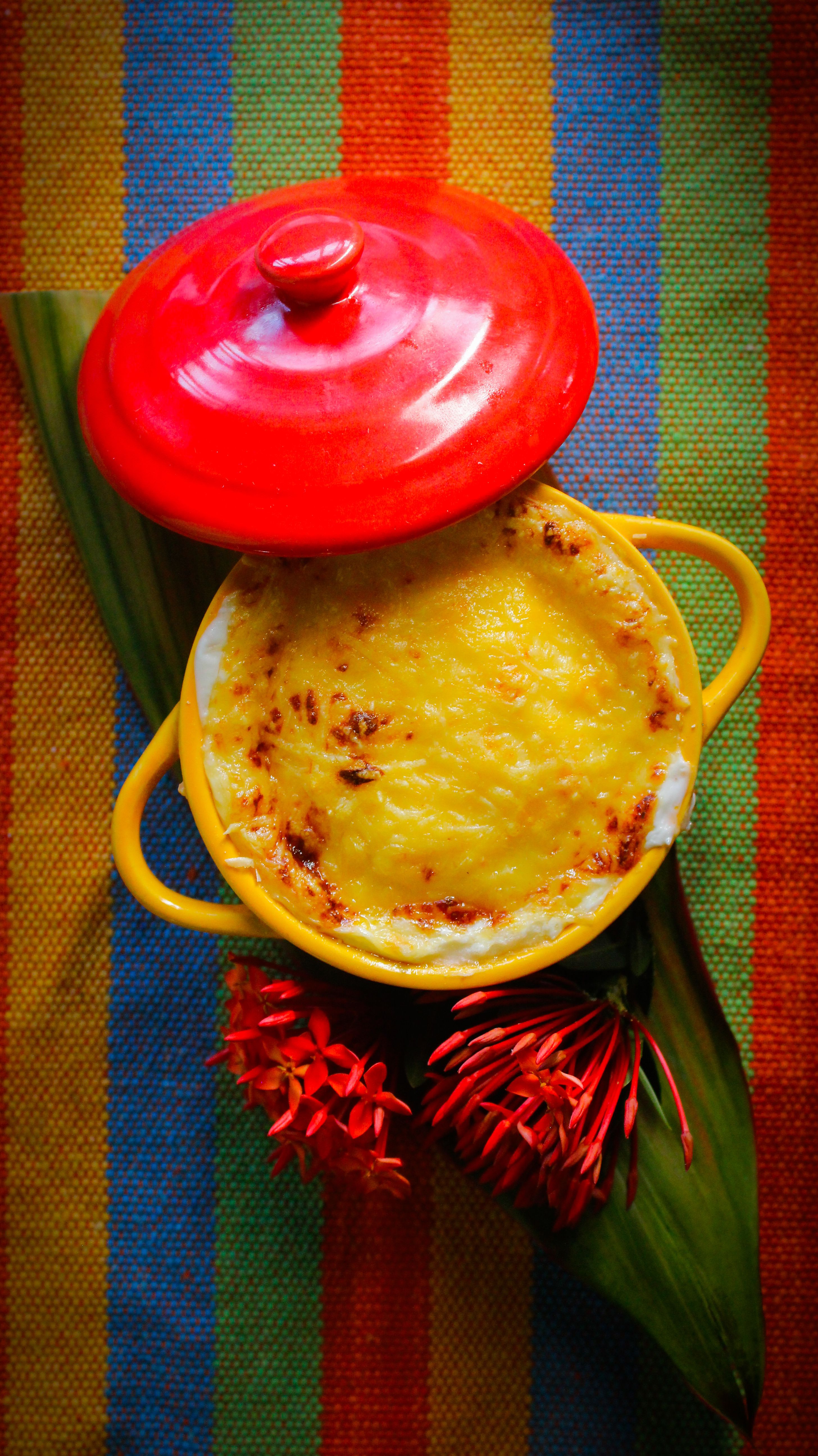
Photo: Caio Niceas / Pexels
French
French Onion Soup
The diets react (see scores below)
Common Ingredients
- yellow onions
- beef stock
- Gruyère
- baguette
- butter
- white wine
- thyme
- bay leaves
Specific recipes may vary.
Incompatible with 8 of 11 diets
Diet Ratings
French Onion Soup in its traditional form is incompatible with a ketogenic diet primarily due to the baguette crouton, which is a grain-based, high-carb bread that alone can contribute 15-25g of net carbs. Compounding this, caramelized yellow onions are relatively high in natural sugars — a standard serving of caramelized onions can add another 8-12g of net carbs. White wine also contributes residual sugars and carbs. Together, a standard bowl easily exceeds 30-40g of net carbs, potentially blowing the entire daily carb budget in a single dish. The Gruyère and butter are keto-friendly components, and the beef stock base is acceptable, but the structural elements (baguette, caramelized onions, wine) make the traditional dish a clear avoid.
French Onion Soup as listed contains multiple animal-derived ingredients that disqualify it from a vegan diet. Beef stock is a direct animal product derived from boiling beef bones and meat. Gruyère is a dairy cheese. Butter is a dairy product. All three are unambiguous animal products with no meaningful debate within the vegan community. The plant-based components (yellow onions, white wine, baguette crust, thyme, bay leaves) are vegan-friendly, but the presence of three distinct animal-derived ingredients makes this dish clearly non-compliant. A vegan version could be made by substituting vegetable stock for beef stock, vegan butter, and a melted plant-based cheese alternative, but that would constitute a fundamentally different dish from the one described.
French Onion Soup contains multiple hard paleo violations. The baguette is a wheat-based grain product, strictly excluded from paleo. Gruyère is a dairy cheese, excluded under paleo rules. Butter is also dairy. These three ingredients are non-negotiable avoids in virtually all paleo frameworks. The remaining ingredients — yellow onions, beef stock, white wine (caution-level), thyme, and bay leaves — are paleo-compatible or borderline acceptable, but the dish as a whole is fundamentally defined by its grain crouton and melted cheese topping, making it impossible to classify as paleo without completely reconstructing it.
French Onion Soup presents several conflicts with Mediterranean diet principles. While the caramelized onions and herbs are excellent, the dish relies on butter (rather than olive oil) as its fat source, beef stock as the flavor base, a refined white baguette for the crouton, and a generous layer of Gruyère cheese. Collectively, these elements — saturated fat from butter and cheese, refined grains, and a red-meat-derived stock — push this dish outside the diet's core guidelines. The overall composition is more aligned with classic French bistro cooking than Mediterranean eating patterns.
Some Mediterranean diet interpreters note that cheese and dairy in moderate portions are acceptable a few times per week, and onions are a celebrated Mediterranean vegetable. A lighter version using olive oil instead of butter, whole-grain bread, and vegetable or fish stock could be adapted into a cautious Mediterranean choice.
French Onion Soup is fundamentally incompatible with the carnivore diet. While it does contain beef stock, Gruyère, and butter — which are animal-derived — the dish is dominated by plant-based ingredients. Yellow onions are a plant food and form the entire base of the dish. The baguette is a grain product, completely excluded on carnivore. White wine, thyme, and bay leaves are plant-derived and also excluded. The majority of this dish's calories and flavor come from plant sources, making it a clear avoid. The beef stock is the only fully carnivore-compliant component, and even the dairy (Gruyère, butter) would be debated by strict practitioners.
French Onion Soup as traditionally prepared contains multiple Whole30-excluded ingredients. Gruyère is a dairy cheese (excluded), butter is excluded dairy (only ghee/clarified butter is allowed), and the baguette crouton topping is a grain-based bread product (excluded). White wine, while alcohol, is actually used in cooking and its alcohol content largely evaporates, but alcohol is excluded regardless. These are not edge cases — dairy, grains, and alcohol are clearly and explicitly banned on Whole30. This dish would require fundamental reconstruction to be compliant, losing its defining characteristics in the process.
French Onion Soup is one of the most FODMAP-unfriendly dishes in classical cuisine. Yellow onions are extremely high in fructans and are among the top foods to avoid during FODMAP elimination — a standard serving of this soup contains a very large quantity of caramelized onions (often 2-3 whole onions per serving). The baguette crouton adds wheat-based fructans. Gruyère is a hard aged cheese and is generally low-FODMAP in small amounts, but its presence does not offset the other high-FODMAP ingredients. Beef stock may contain onion or garlic, adding further fructan load. Butter, thyme, bay leaves, and white wine are low-FODMAP. However, the onion content alone makes this dish entirely unsuitable during the elimination phase at any standard serving size.
French Onion Soup is problematic for the DASH diet on multiple fronts. The beef stock base is typically very high in sodium (often 800–1,200mg per serving before any additions), placing it near or over the daily DASH sodium limit in a single bowl. Gruyère cheese adds significant saturated fat and additional sodium. Butter contributes saturated fat, which DASH limits. The baguette is a refined grain rather than the whole grain DASH emphasizes. While the caramelized onions themselves are a DASH-friendly vegetable rich in potassium and fiber, and thyme/bay leaves are neutral, the overall sodium load and saturated fat content from stock, cheese, and butter make this dish incompatible with DASH guidelines as commonly prepared. A heavily modified version using low-sodium homemade stock, reduced cheese, a whole-grain bread, and minimal butter could approach 'caution' territory, but the standard restaurant or home preparation is a clear avoid.
French Onion Soup presents several Zone challenges. The baguette crouton is a high-glycemic refined carbohydrate — one of the Zone's clearest 'unfavorable' carb sources. Caramelized onions, while nutritious, are higher-glycemic than raw onions due to sugar concentration. The Gruyère adds saturated fat, and butter compounds the saturated fat load, conflicting with Zone's preference for monounsaturated fats. Critically, the dish has virtually no lean protein, making it nearly impossible to hit the 30% protein target without significant augmentation. The beef stock provides minimal protein. White wine adds a small glycemic load. The soup is not irredeemable — the onion base provides some polyphenols, the beef stock has minor protein value, and the dish could theoretically be modified (omit or minimize baguette, add lean protein alongside) — but as served in traditional preparation, it falls well short of Zone balance and would require major restructuring to fit a Zone meal.
French Onion Soup presents a genuinely mixed anti-inflammatory profile. On the positive side, yellow onions are a rich source of quercetin, a potent anti-inflammatory flavonoid, and caramelizing them concentrates these polyphenols. Thyme and bay leaves contribute additional anti-inflammatory phytochemicals. White wine in small culinary quantities contributes polyphenols. Beef stock (especially bone broth) may offer some anti-inflammatory benefits from collagen and glycine. However, the dish also carries notable pro-inflammatory signals: butter is a saturated fat that should be limited under anti-inflammatory guidelines, Gruyère is a full-fat high-fat cheese (also in the limit category), and the baguette is a refined carbohydrate with a high glycemic index that can promote inflammatory responses. The overall dish is heavily reliant on sodium (beef stock + cheese) and the cheese-bread topping is calorically dense with saturated fat. It is not a dish one would architect for anti-inflammatory purposes, but it is not entirely void of benefit either — the onion base is genuinely protective and the culinary use of herbs is consistent with anti-inflammatory principles. Occasional consumption is unlikely to be harmful for a generally healthy person, but the combination of butter, full-fat Gruyère, and refined bread prevents any approval rating.
Some anti-inflammatory practitioners (aligned with Dr. Weil's more inclusive pyramid) would note that quercetin from onions is among the best-studied anti-inflammatory flavonoids, and that moderate full-fat dairy in the context of a varied diet is not clearly harmful per emerging research. A stricter AIP-influenced perspective would flag both the dairy and refined bread more harshly and rate this closer to avoid.
French Onion Soup is a mixed bag for GLP-1 patients. The broth base provides hydration and some nutrients, and the caramelized onions offer modest fiber and antioxidants. However, the dish is low in protein for its calorie load — the primary protein source is Gruyère cheese, which is high in saturated fat. The baguette crouton adds refined carbohydrates with minimal fiber or protein benefit. Butter adds saturated fat. White wine contributes negligible alcohol in a finished dish but adds empty calories. The combination of melted high-fat cheese, refined bread, and a rich stock can trigger nausea, reflux, or bloating due to slowed gastric emptying on GLP-1 medications. Calorie density is moderate but nutrient density per calorie is low — this dish does not meet the protein priority (likely under 10g per standard serving) and provides limited fiber. It is not a catastrophic choice in a small portion, but it falls short of GLP-1 dietary priorities and carries meaningful side effect risk.
Some GLP-1-focused dietitians permit French Onion Soup occasionally as a low-volume, warm, hydrating option that may be tolerable when appetite is severely suppressed and hot liquids are better accepted than solid food — particularly in the early weeks on the medication. Others flag the saturated fat from Gruyère and butter as a consistent trigger for GI side effects and recommend avoiding it until GI tolerance improves.
*See how scores were generated at our methodology page.
Nutritional profile
Six traits that cut across every diet.
Fiber & Plants
How much whole-plant food and fiber it delivers.
Healthy Fats
The quality of its fats (unsaturated, omega-3).
Whole / Unprocessed
How close it is to its natural, unprocessed form.
Gut Gentle
How easy it is on digestion (low FODMAP, few irritants).
Low Glycemic
How little it spikes your blood sugar.
Protein Density
How much protein it packs per calorie.
Controversy Index
Higher controversy = more disagreement between diets.
Diet-Specific Tips
 Zone — 4/10
View tips
- Baguette crouton is a high-glycemic refined carbohydrate — explicitly 'unfavorable' in Zone terminology
- Virtually no lean protein present; dish cannot meet the 30% protein target on its own
- Butter and Gruyère contribute saturated fat rather than Zone-preferred monounsaturated fat
- Caramelized onions are higher-glycemic than raw onions due to sugar concentration
- Beef stock provides negligible protein contribution
- No omega-3 sources; limited polyphenol value despite onion base
- Dish would require significant modification (remove baguette, add lean protein) to approach Zone balance
 Anti-Inflammatory — 5/10
View tips
- Yellow onions: high quercetin content, a well-researched anti-inflammatory flavonoid
- Thyme and bay leaves: minor but genuine anti-inflammatory herb contribution
- Butter: saturated fat, listed under 'limit' in anti-inflammatory guidelines
- Gruyère: full-fat high-fat cheese, pro-inflammatory when consumed regularly
- Baguette: refined carbohydrate, high glycemic index, promotes inflammatory signaling
- Beef stock: neutral to mildly beneficial; glycine and collagen may have anti-inflammatory properties
- White wine: trace polyphenol benefit in culinary quantity, but alcohol is generally limited
- High sodium load from stock and cheese may exacerbate inflammation in sensitive individuals
 GLP-1 Friendly — 4/10
View tips
- Low protein density — Gruyère provides some protein but not enough to meet per-meal targets of 15-30g
- High saturated fat from Gruyère cheese and butter increases GI side effect risk
- Refined baguette crouton adds carbohydrates with minimal fiber or nutritional value
- Broth base provides hydration support, a modest positive
- Low fiber content — onions offer some, but overall dish falls short of fiber goals
- White wine used in cooking burns off alcohol but contributes minimal nutritional value
- Rich, heavy cheese topping may worsen nausea and reflux due to slowed gastric emptying
- Small portion reduces risk but also reduces already-limited protein and fiber contribution