Photo: furkanfdemir / Pexels
French
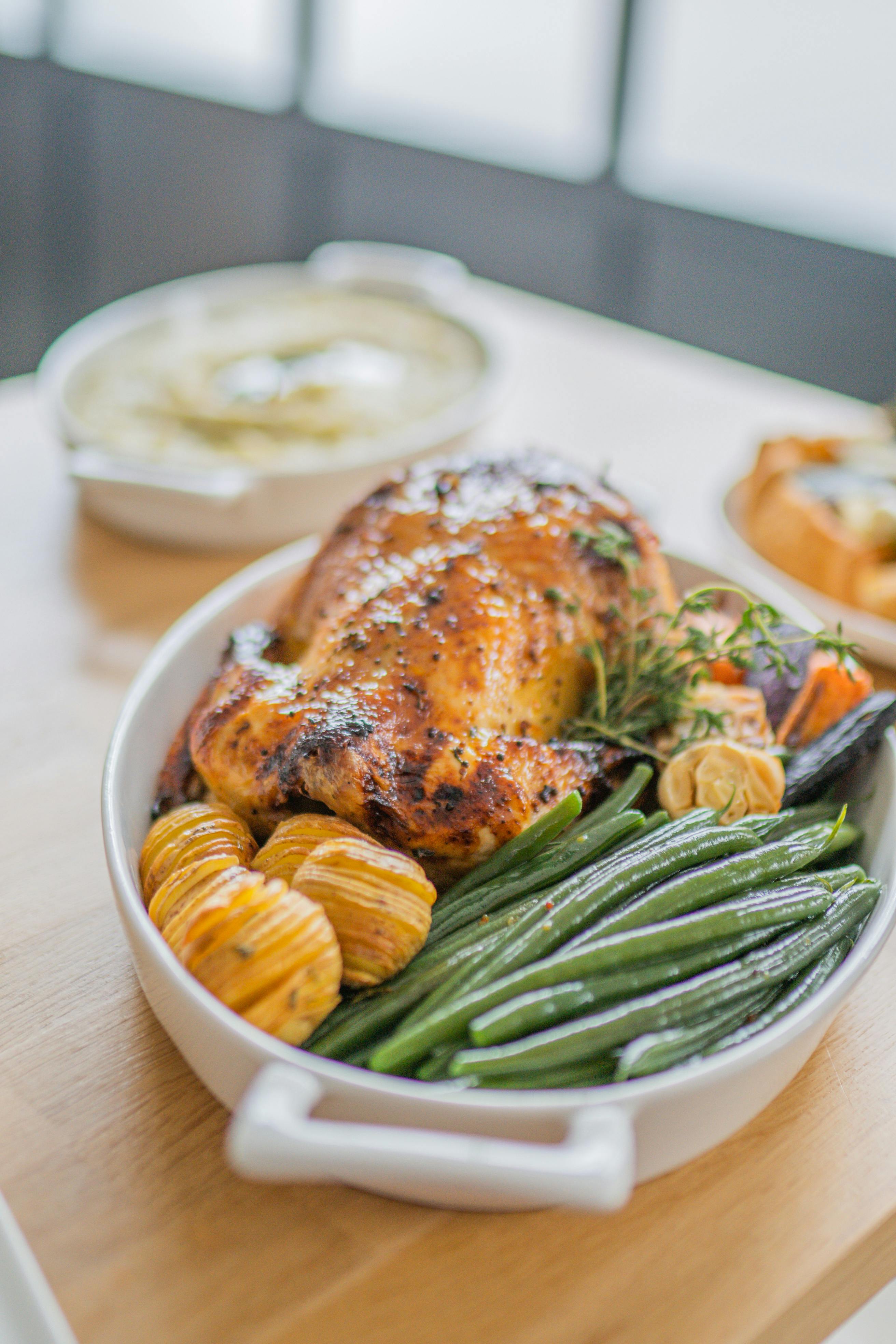
French Roast Chicken (Poulet Rôti)
The diets react (see scores below)
Common Ingredients
- whole chicken
- butter
- thyme
- rosemary
- lemon
- garlic
- salt
- black pepper
Specific recipes may vary.
Incompatible with 3 of 11 diets
Diet Ratings
French Roast Chicken is an excellent keto meal. The whole chicken provides high-quality protein and significant fat, especially from the skin. Butter adds healthy saturated fat, aligning perfectly with the 70-80% fat macro target. The aromatics — thyme, rosemary, garlic, and lemon — contribute negligible net carbs in the quantities used for roasting. Salt and black pepper are carb-free. There are no grains, added sugars, or starchy ingredients. A typical serving of roast chicken with skin and pan drippings fits squarely within keto macros with near-zero net carbs.
French Roast Chicken contains two clear animal products: whole chicken (poultry) and butter (dairy). Both are categorically excluded under vegan dietary rules. There is no ambiguity here — this dish is fundamentally built around animal-derived ingredients and is entirely incompatible with a vegan diet.
French Roast Chicken is largely paleo-compatible, featuring whole chicken, fresh herbs (thyme, rosemary), lemon, and garlic — all unambiguously approved ingredients. However, two components create friction: butter is a dairy product excluded under strict paleo guidelines, and salt (added salt) is explicitly on the avoid list. The butter is the more significant concern, as it retains milk solids and lactose unlike ghee. If butter were swapped for a paleo-approved fat (olive oil, coconut oil, or ghee) and salt omitted or minimized, this dish would score a strong 8–9. As written, it lands in caution territory due to these two non-compliant ingredients.
Some modern paleo practitioners, particularly those following Mark Sisson's Primal Blueprint framework, permit moderate amounts of high-quality grass-fed butter on the grounds that its fat profile is beneficial and the dairy protein content is minimal; under this lens, the dish could be considered largely acceptable.
French Roast Chicken is built around poultry (chicken), which is acceptable in the Mediterranean diet at moderate frequency — a few servings per week. The aromatic herbs (thyme, rosemary), lemon, and garlic are quintessentially Mediterranean and add real nutritional value. However, the primary fat is butter, not extra virgin olive oil, which directly contradicts a core Mediterranean principle. Butter is a saturated animal fat, whereas EVOO is the canonical fat of the Mediterranean pattern. The dish is otherwise whole and minimally processed, with no refined grains or added sugars, so it avoids the worst offenders. Swapping butter for olive oil would elevate this dish considerably. As prepared, it earns a cautious acceptance — the protein source is fine, but the fat choice is misaligned.
Some regional Mediterranean traditions, particularly in southern France and parts of northern Italy, do incorporate small amounts of butter in cooking, and moderate use in an otherwise whole-food, herb-rich preparation may be tolerated within a flexible interpretation of the diet. However, mainstream Mediterranean diet guidelines (Willett et al., Harvard School of Public Health) consistently identify olive oil as the preferred fat and recommend minimizing butter.
French Roast Chicken contains several plant-derived ingredients that disqualify it from carnivore compliance. While the whole chicken and butter are animal-based and acceptable to most carnivore practitioners, the recipe includes thyme, rosemary, lemon, garlic, and black pepper — all plant-derived ingredients that are excluded on a strict carnivore diet. Lemon is particularly problematic as a fruit, and garlic, thyme, and rosemary are plant foods. Even practitioners who allow some spice tolerance generally draw the line at citrus fruit and aromatic vegetables like garlic. Salt is the only seasoning permitted. As prepared, this dish cannot be considered carnivore-compatible without removing all plant ingredients.
A minority of carnivore practitioners in the 'animal-based' or flexible carnivore camp (influenced by figures like early Saladino) might tolerate small amounts of herbs and spices used in cooking, arguing that trace plant compounds in seasoning are negligible. However, even this camp would object to lemon and garlic as substantive plant food additions.
This dish contains regular butter, which is explicitly excluded on Whole30. Dairy products — including butter — are not allowed, with the sole exception being ghee or clarified butter. All other ingredients (whole chicken, thyme, rosemary, lemon, garlic, salt, black pepper) are fully Whole30-compliant. The fix is simple: substitute the butter with ghee or a compliant fat such as olive oil or avocado oil, which would make this dish fully approvable.
The primary concern with French Roast Chicken is garlic, which is a high-FODMAP ingredient containing significant fructans. During the elimination phase, garlic cloves used in roasting are problematic. However, the preparation method matters: if garlic is used only to stuff the cavity or placed in the roasting pan (not consumed directly), and the pan drippings/juices are avoided, fructan transfer into the meat is minimal since FODMAPs are water-soluble rather than fat-soluble. Butter is low-FODMAP (fat-based, negligible lactose). Thyme, rosemary, black pepper, and salt are all low-FODMAP herbs and seasonings. Lemon (juice and zest) is low-FODMAP at standard culinary amounts. Plain chicken is definitively low-FODMAP. The dish scores in the caution range because in practice, garlic is often rubbed into the skin, stuffed under the skin, or the pan juices (which may contain water-soluble fructans from garlic) are used as a sauce or baste — these preparation variations make the dish risky during strict elimination without modification.
Monash University confirms that FODMAPs are water-soluble and do not transfer into fat-based cooking mediums, so garlic-infused butter or oil used for basting may be safe; however, many clinical FODMAP practitioners advise eliminating all garlic contact with food surfaces during the elimination phase, as rubbing garlic on or under the skin creates direct fructan exposure that cannot be dismissed.
French Roast Chicken uses a whole chicken, which includes both lean white meat (DASH-approved) and darker cuts with higher saturated fat content, plus skin that is typically consumed and contributes significantly to saturated fat and calorie intake. The butter used for basting adds saturated fat, which DASH explicitly limits. Herbs, lemon, and garlic are excellent DASH-compatible aromatics. Salt is added during preparation, raising sodium concerns depending on quantity used — traditional French roast chicken can be moderately salted. If prepared with skin removed before eating, butter minimized or replaced with olive oil, and salt kept low, this dish moves closer to DASH approval. As commonly prepared and consumed (with skin, butter, and standard salting), it sits in the caution zone due to saturated fat and sodium.
NIH DASH guidelines emphasize skinless poultry as a lean protein staple and explicitly limit saturated fat and butter; however, some updated clinical interpretations note that moderate saturated fat from whole-food sources like poultry skin may not carry the same cardiovascular risk as processed sources, and that home-prepared roast chicken with herbs is vastly preferable to processed meats — suggesting the dish could be conditionally approved with minor modifications (skin removal, olive oil substitution).
French Roast Chicken is fundamentally a solid Zone protein source — chicken is one of Dr. Sears' preferred lean proteins — but the traditional preparation with butter introduces saturated fat that complicates Zone compliance. The skin, which is typically consumed in this dish, adds both fat and saturated fat beyond what a Zone meal targets. Early Zone methodology strictly limited saturated fat in favor of monounsaturated fats, which would push this toward a lower score. However, the aromatics (thyme, rosemary, lemon, garlic) are polyphenol-rich and strongly anti-inflammatory, aligning well with Sears' later nutritional emphasis. The dish itself contains no carbohydrates, which means it functions as a protein/fat component requiring a significant low-glycemic vegetable side (e.g., roasted asparagus, steamed broccoli) to complete the 40/30/30 Zone block ratio. With skinless portions and butter used sparingly or substituted with olive oil, this dish scores higher. As traditionally prepared with skin and generous butter basting, the fat profile is the primary concern. Portioning discipline is key: roughly 3 oz of skinless white meat provides ~3 protein blocks, and the meal needs ~27g of favorable carbs alongside it.
Early Zone books (Enter the Zone, 1995) classified butter and skin-on chicken as 'unfavorable' fat sources due to saturated fat content, suggesting olive oil and skinless cuts. However, Sears' later anti-inflammatory writings acknowledge that not all saturated fat is equal and that the overall inflammatory burden of a meal matters more than any single fat source. Some Zone practitioners treat moderate butter use as acceptable, especially when offset by the strong polyphenol content of herbs like rosemary and thyme, which are among the most anti-inflammatory spices documented in Sears' later work.
French Roast Chicken presents a mixed anti-inflammatory profile. On the positive side, the dish features several strongly anti-inflammatory ingredients: thyme and rosemary are rich in rosmarinic acid and other polyphenols with documented anti-inflammatory effects; garlic contains allicin and organosulfur compounds that reduce inflammatory markers like CRP; lemon provides vitamin C and flavonoids; and black pepper contains piperine, which has anti-inflammatory properties and enhances absorption of other compounds. Chicken itself is a lean protein that falls into the 'moderate' category — far preferable to red meat, with a more favorable omega-6 to omega-3 ratio depending on sourcing (pasture-raised is significantly better). The primary concern is the butter, which is a saturated fat that Dr. Weil's framework and mainstream anti-inflammatory protocols classify as something to limit rather than emphasize. A whole roasted chicken will also include skin and dark meat, which are higher in saturated fat. The dish is not processed, contains no trans fats, refined sugar, or artificial additives, and the herb profile is genuinely anti-inflammatory. Swapping butter for extra virgin olive oil would meaningfully improve the score. As written, this is a real-food, home-cooked dish that sits in the moderate/caution zone — better than most restaurant fare, but not optimized for anti-inflammatory eating due to the butter.
Some anti-inflammatory practitioners, including those influenced by Dr. Weil's broader Mediterranean-inspired approach, would view butter in modest cooking quantities as acceptable — especially from grass-fed sources which have a higher CLA and vitamin K2 content. Conversely, stricter anti-inflammatory protocols would flag both the saturated fat from butter and the potential arachidonic acid content of chicken skin as mildly pro-inflammatory, particularly for individuals managing autoimmune conditions.
French roast chicken is a protein-rich main dish built around whole chicken, which includes both lean breast meat and higher-fat dark meat (thighs, legs, skin). The preparation involves butter and roasting with the skin on, which significantly increases the saturated fat content compared to a plain skinless chicken breast. The aromatics (thyme, rosemary, lemon, garlic) are GLP-1 friendly and add flavor without caloric concern. The core issue for GLP-1 patients is the butter and skin: a skin-on roasted chicken portion can deliver 15-20g of fat per serving, with a meaningful saturated fat load, which can worsen nausea, bloating, and reflux — primary GLP-1 side effects. However, if the patient removes the skin and selects white meat, this dish becomes a much stronger protein source with reduced fat. As served in its classic French preparation (skin on, basted in butter), it sits in caution territory. Protein content is solid at roughly 25-35g per serving depending on portion and cut selected.
Some GLP-1-focused dietitians consider skin-on roasted chicken acceptable given that the fat is primarily unsaturated and the dish is home-cooked and nutrient-dense compared to processed alternatives; they prioritize the high protein yield and argue patients self-limit portion size naturally. Others flag butter and skin as meaningful saturated fat sources that reliably worsen GI side effects in the early weeks of GLP-1 therapy, recommending patients modify the recipe by removing skin and substituting olive oil for butter.
*See how scores were generated at our methodology page.
Nutritional profile
Six traits that cut across every diet.
Fiber & Plants
How much whole-plant food and fiber it delivers.
Healthy Fats
The quality of its fats (unsaturated, omega-3).
Whole / Unprocessed
How close it is to its natural, unprocessed form.
Gut Gentle
How easy it is on digestion (low FODMAP, few irritants).
Low Glycemic
How little it spikes your blood sugar.
Protein Density
How much protein it packs per calorie.
Controversy Index
Higher controversy = more disagreement between diets.
Diet-Specific Tips
 Keto — 9/10
View tips
- Whole chicken with skin is high in fat and protein — ideal keto macros
- Butter enhances fat content and supports ketogenic fat ratio
- Garlic and lemon contribute minimal net carbs in roasting quantities (~1-2g per serving)
- No grains, sugars, or starchy ingredients present
- Herb seasoning (thyme, rosemary) is carb-negligible
- Pan drippings are pure fat — fully keto-compatible
- Unprocessed, whole-food ingredients align with clean keto principles
 Paleo — 6/10
View tips
- Whole chicken is a core paleo protein — fully approved
- Fresh herbs (thyme, rosemary), lemon, and garlic are all paleo-approved
- Butter contains milk solids and lactose, making it non-compliant under strict paleo rules
- Added salt is excluded under standard paleo guidelines
- Substituting butter with ghee, olive oil, or coconut oil and omitting added salt would bring this dish close to full approval
 Mediterranean — 4/10
View tips
- Chicken is an acceptable moderate-frequency protein in the Mediterranean diet
- Butter as primary fat contradicts Mediterranean principles — olive oil is the prescribed fat
- Herbs, lemon, and garlic are strongly Mediterranean-aligned ingredients
- No refined grains, added sugars, or highly processed components
- Simple whole-food preparation method is consistent with Mediterranean cooking style
- Substituting olive oil for butter would significantly improve compatibility
 Low-FODMAP — 5/10
View tips
- Garlic is high-FODMAP due to fructans — the primary risk ingredient in this dish
- Preparation method is critical: garlic only in cavity vs. rubbed on/under skin changes FODMAP exposure significantly
- Butter is low-FODMAP (fat-based, negligible lactose)
- Plain chicken breast/thigh is definitively low-FODMAP and high-protein
- Thyme, rosemary, lemon, salt, and black pepper are all low-FODMAP at culinary serving sizes
- Pan juices/drippings may contain water-soluble fructans from garlic if garlic contacts the meat or cooking liquid
- Dish can be made fully low-FODMAP by substituting garlic-infused oil and omitting direct garlic contact
 DASH — 5/10
View tips
- Whole chicken includes skin and dark meat, elevating saturated fat above DASH ideals
- Butter adds saturated fat explicitly limited by DASH guidelines
- Lean white meat portions are DASH-compatible lean protein
- Herbs, lemon, and garlic are excellent DASH-friendly flavor enhancers
- Added salt during preparation raises sodium concerns
- Removing skin and substituting olive oil for butter would significantly improve DASH compatibility
- Portion control important — DASH recommends ≤6 oz cooked lean meat per day
 Zone — 6/10
View tips
- Chicken is a top-tier Zone protein — lean, complete, and explicitly favored by Dr. Sears
- Butter is a saturated fat, conflicting with Zone's monounsaturated fat preference
- Skin-on preparation significantly increases total and saturated fat content
- Zero carbohydrates in this dish — must be paired with substantial low-GI vegetable sides to achieve 40/30/30
- Herbs (rosemary, thyme, garlic) and lemon are polyphenol-rich and anti-inflammatory, aligning with Sears' later focus
- Easily adapted to Zone compliance by removing skin and using olive oil instead of butter
- Traditional French preparation style prioritizes richness over the lean-protein Zone ideal
 Anti-Inflammatory — 5/10
View tips
- Chicken is a lean protein in the 'moderate' category — acceptable but not emphasised
- Butter adds saturated fat, which anti-inflammatory guidelines recommend limiting
- Thyme and rosemary are potent anti-inflammatory herbs (rosmarinic acid, ursolic acid)
- Garlic has well-documented anti-inflammatory and immune-modulating effects
- Lemon provides vitamin C and flavonoids
- No processed ingredients, trans fats, added sugars, or artificial additives
- Pasture-raised chicken and grass-fed butter would improve the inflammatory profile
- Substituting extra virgin olive oil for butter would significantly raise the score
 GLP-1 Friendly — 5/10
View tips
- High protein content (25-35g per serving) supports GLP-1 protein priority
- Skin-on preparation with butter adds significant saturated fat — primary concern
- Saturated fat and high fat per serving can worsen GLP-1 nausea, bloating, and reflux
- Removing skin and choosing white meat substantially improves the profile
- Aromatics (garlic, lemon, herbs) are GLP-1 neutral and beneficial for palatability
- Whole chicken includes variable fat cuts — portion and cut selection matters significantly
- No fiber contribution — should be paired with high-fiber vegetables or legumes