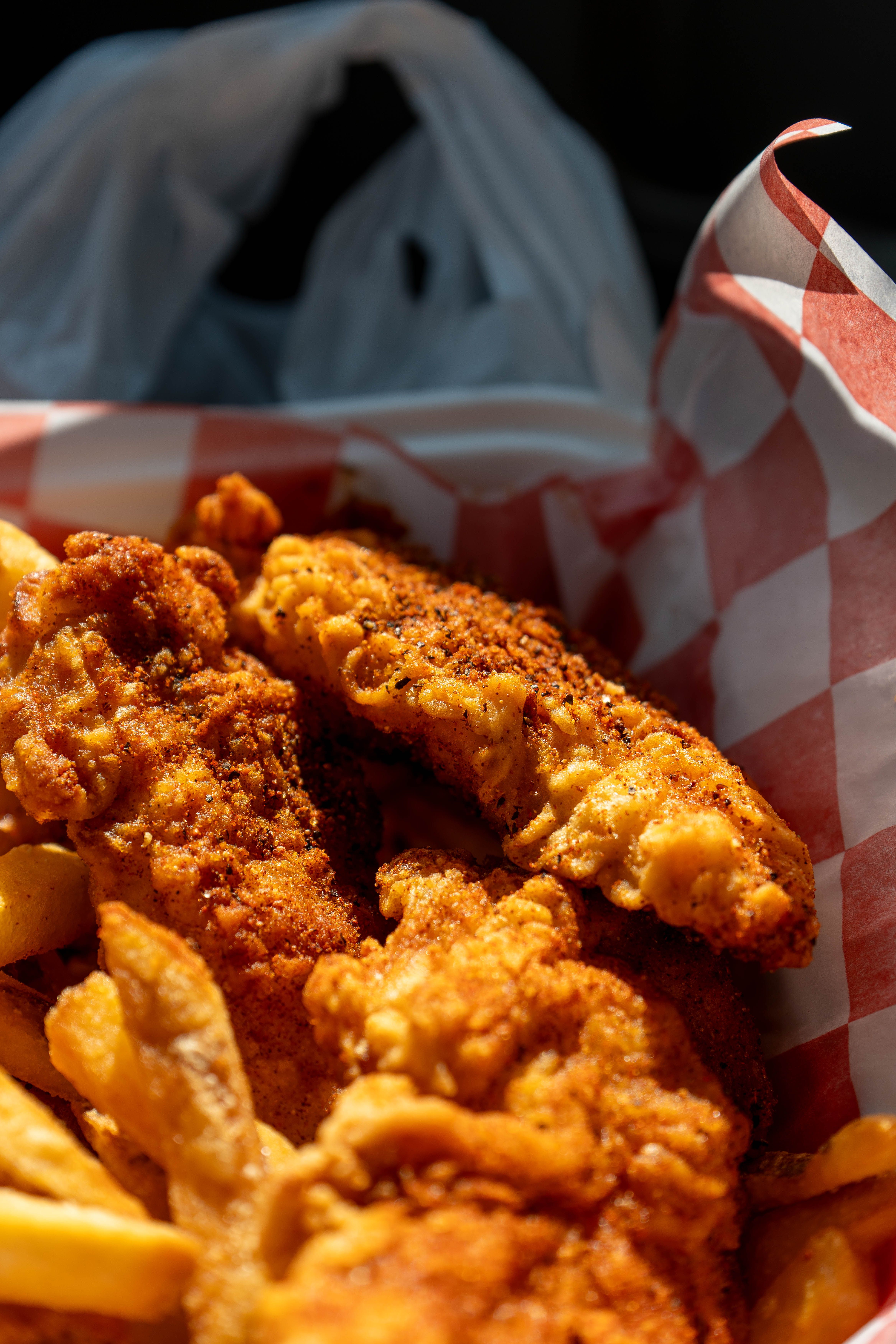
Photo: fish socks / Pexels
American
Fried Catfish
The diets react (see scores below)
Common Ingredients
- catfish fillets
- cornmeal
- flour
- buttermilk
- paprika
- cayenne
- vegetable oil
- lemon
Specific recipes may vary.
Incompatible with 6 of 11 diets
Diet Ratings
Traditional fried catfish is clearly incompatible with ketogenic eating due to its cornmeal and flour coating. Cornmeal is a high-carb grain product, and all-purpose flour compounds the problem. A standard serving of fried catfish (2-3 fillets) can easily deliver 30-50g of net carbs from the breading alone, threatening or completely blowing the daily keto carb budget. The buttermilk adds minor carbs as well. While catfish itself is an excellent keto protein source (lean, moderate fat, zero carbs), the preparation method disqualifies this dish entirely. Keto adaptations exist — using almond flour, crushed pork rinds, or parmesan as a coating — but the traditional recipe as described is not keto-compatible.
Fried Catfish contains two clear animal-derived ingredients: catfish (a fish) and buttermilk (a dairy product). Both are unambiguously excluded under vegan dietary rules. Fish is an animal product under any definition of veganism, and buttermilk is an animal-derived dairy byproduct. There is no meaningful debate within the vegan community about either ingredient.
Fried Catfish contains multiple non-paleo ingredients that make it clearly incompatible with the diet. Cornmeal and flour are grains — both strictly excluded from paleo. Buttermilk is a dairy product, also excluded. Vegetable oil is a seed oil, one of the most consistently avoided ingredients in paleo due to its high omega-6 content and industrial processing. The catfish itself and the spices (paprika, cayenne) and lemon are fully paleo-approved, but the breading and frying medium fundamentally define this dish and are entirely non-compliant. This is a traditional Southern preparation that relies on grain-based coating and seed oil frying — there is no paleo version of this dish without a complete overhaul of the recipe.
Catfish is a lean freshwater fish that aligns with the Mediterranean diet's emphasis on fish and seafood 2-3 times weekly. However, the preparation method significantly undermines its healthfulness: deep frying in vegetable oil (likely refined, not olive oil), coating with refined flour and cornmeal, and using buttermilk all conflict with Mediterranean principles. The fish itself is beneficial, but the heavy batter, deep-frying technique, and refined grain coating move this dish away from the diet's core values. Lemon and spices are positive elements. If the fish were grilled, baked, or pan-seared in olive oil, it would easily score an 8-9.
Some Mediterranean diet practitioners argue that the fish content is the primary consideration, and that occasional fried fish dishes are acceptable within a broadly healthy dietary pattern — traditional coastal Mediterranean communities (e.g., southern Italy, Greece) do prepare pan-fried fish dishes, though typically in olive oil rather than refined vegetable oil and without heavy flour coatings.
While catfish itself is a perfectly acceptable animal protein on the carnivore diet, this dish is fundamentally incompatible due to its extensive plant-based coating and cooking method. Cornmeal and flour are grains, buttermilk introduces a dairy product with additives, paprika and cayenne are plant-derived spices, vegetable oil is a processed plant oil (one of the most excluded items on carnivore), and lemon is a fruit. The catfish fillet comprises only a fraction of what is being consumed — the majority of the dish's character comes from plant-derived breading, seasoning, and frying medium. A carnivore-compliant version would require frying plain catfish in tallow or lard with salt only.
Fried Catfish contains multiple excluded ingredients. Cornmeal is a corn-based grain product, flour is a wheat-based grain product, and buttermilk is a dairy product — all three are explicitly excluded on the Whole30. The coating/breading also falls into the 'recreating fried junk food' category that violates the spirit of the program. The catfish itself, paprika, cayenne, and lemon are all compliant, but the core preparation method relies entirely on excluded ingredients.
Fried catfish is mostly low-FODMAP, but two ingredients introduce FODMAP concerns. Catfish itself is a plain protein and fully approved. Cornmeal is low-FODMAP at standard servings. Paprika, cayenne, and lemon are all low-FODMAP. Vegetable oil is fine. The two problem ingredients are flour and buttermilk. Wheat flour contains fructans and is high-FODMAP; however, in a coating application, the quantity per serving is relatively small (a light dredge rather than a full batter), which may keep total fructan load below the threshold. Buttermilk is a dairy product containing lactose — Monash rates buttermilk as high-FODMAP due to its lactose content, though the amount used as a marinade/dip is typically modest. The combination of wheat flour fructans plus buttermilk lactose, even in smaller coating quantities, creates a cumulative FODMAP load that warrants caution rather than a clear approve. Substituting gluten-free flour and lactose-free milk or egg wash would make this dish clearly low-FODMAP.
Monash University rates wheat flour as high-FODMAP, but some clinical FODMAP practitioners argue that the small amount used in a thin coating (roughly 1–2 tbsp per serving) may fall below the fructan threshold that triggers symptoms; similarly, buttermilk used only as a marinade wash may deliver minimal lactose per serving, so some practitioners would permit this dish with portion awareness.
Catfish itself is a lean, low-fat fish that DASH explicitly encourages as a lean protein source. However, the preparation method — deep frying in vegetable oil with a cornmeal-flour coating soaked in buttermilk — significantly alters its DASH compatibility. Deep frying adds substantial calories and fat, and the breading absorbs considerable oil during cooking, increasing total fat content well beyond what DASH recommends for a lean protein serving. The cornmeal-flour coating adds refined carbohydrates rather than the whole grains DASH emphasizes. Buttermilk contributes some sodium. That said, vegetable oil (likely soybean or canola) is not a tropical oil, which is a partial point in its favor. The lemon, paprika, and cayenne are DASH-friendly low-sodium flavor enhancers. The dish sits in 'caution' territory: the underlying protein is DASH-approved, but the frying preparation method moves it away from DASH ideals. Baked or pan-seared catfish with the same spices would score considerably higher (8-9).
NIH DASH guidelines emphasize lean fish preparation methods (baked, broiled, grilled) and limit added fats; fried preparations are not endorsed. However, some DASH-oriented clinicians note that frying in unsaturated vegetable oils (not tropical oils or lard as is traditional in some Southern recipes) with portion control is an occasional acceptable choice, and catfish's naturally lean profile partially offsets the added fat from frying.
Fried catfish presents a mixed Zone Diet profile. Catfish itself is a lean, favorable protein source that fits well into Zone blocks — a good source of omega-3s and low in saturated fat. However, the preparation method introduces significant Zone concerns. The cornmeal and flour breading adds high-glycemic carbohydrates that are 'unfavorable' in Zone terminology, spiking the carb block count with low-fiber, refined starches. Buttermilk adds modest carbs and some saturated fat. Most critically, frying in vegetable oil (typically soybean, corn, or canola oil) introduces a heavy omega-6 fatty acid load — precisely what Dr. Sears identifies as pro-inflammatory and antithetical to the Zone's anti-inflammatory goals. The oil absorption during frying also makes fat content unpredictable and high, making it difficult to hit the 30% fat target without blowing the ratio. Lemon and spices are Zone-neutral positives. This dish can be incorporated into a Zone meal with careful portioning — a small piece, accompanied by a large vegetable-heavy side to rebalance the macro ratio — but it is not a favorable Zone food as typically prepared.
Fried catfish presents a mixed anti-inflammatory profile. On the positive side, catfish itself is a lean white fish that provides some omega-3 fatty acids (though far less than fatty fish like salmon or sardines), along with protein, selenium, and B vitamins. The spices — paprika, cayenne, and lemon — contribute modest antioxidant and anti-inflammatory compounds. However, the preparation method significantly undermines these benefits. Deep-frying in vegetable oil (typically high-omega-6 soybean, corn, or cottonseed oil, which are flagged as problematic in anti-inflammatory frameworks) introduces substantial pro-inflammatory oxidized fats, especially at high frying temperatures. The refined flour and cornmeal breading adds refined carbohydrates with minimal fiber or nutritional value. Buttermilk is a moderate-concern dairy ingredient. The net result is a dish where a potentially beneficial protein source is rendered pro-inflammatory by its cooking method and oil choice. Occasional consumption is unlikely to cause harm for generally healthy individuals, but this preparation is not aligned with anti-inflammatory principles as a regular meal.
Some mainstream nutritionists and the AHA consider vegetable oils (soybean, corn) acceptable or even heart-healthy due to their polyunsaturated fat content, which could elevate this dish's profile slightly. However, most dedicated anti-inflammatory frameworks (Dr. Weil, IF Rating system) caution against regular use of high-omega-6 seed oils, especially when heated to frying temperatures, due to oxidation and the omega-6/omega-3 imbalance they promote.
Fried catfish is a poor choice for GLP-1 patients despite catfish being a lean, high-quality protein source. The preparation method is the primary problem: deep frying in vegetable oil dramatically increases fat content, adds empty calories, and produces a heavy, greasy meal that directly worsens GLP-1 side effects — nausea, bloating, and reflux. The cornmeal and flour breading adds refined carbohydrates with minimal fiber or nutritional value, and the coating absorbs significant oil during frying. Cayenne may further irritate the GI tract, which is already sensitized by slowed gastric emptying. The combination of high fat, fried preparation, refined coating, and spicy seasoning hits multiple avoid criteria simultaneously. The lemon is the only redeeming element. If catfish is desired, grilled, baked, or poached preparations would transform this into an approve-rated dish.
*See how scores were generated at our methodology page.
Nutritional profile
Six traits that cut across every diet.
Fiber & Plants
How much whole-plant food and fiber it delivers.
Healthy Fats
The quality of its fats (unsaturated, omega-3).
Whole / Unprocessed
How close it is to its natural, unprocessed form.
Gut Gentle
How easy it is on digestion (low FODMAP, few irritants).
Low Glycemic
How little it spikes your blood sugar.
Protein Density
How much protein it packs per calorie.
Controversy Index
Higher controversy = more disagreement between diets.
Diet-Specific Tips
 Mediterranean — 4/10
View tips
- Catfish is a healthy lean fish, consistent with Mediterranean seafood emphasis
- Deep-frying in refined vegetable oil contradicts olive oil as primary fat principle
- Cornmeal and flour coating adds refined grains, not consistent with whole grain emphasis
- Buttermilk adds modest dairy, acceptable in small amounts
- Lemon and spices are Mediterranean-friendly
- Overall preparation style is American Southern, not Mediterranean
 Low-FODMAP — 5/10
View tips
- Catfish is a FODMAP-free protein — fully safe
- Wheat flour in the coating contributes fructans, though quantity per serving is small
- Buttermilk is high-FODMAP due to lactose; use as a marinade may limit dose
- Cornmeal is low-FODMAP at standard servings
- Cumulative effect of flour fructans plus buttermilk lactose is the main concern
- Substituting GF flour and lactose-free milk would make this dish elimination-phase safe
- Lemon, paprika, cayenne, and vegetable oil are all low-FODMAP
 DASH — 4/10
View tips
- Catfish is a DASH-approved lean protein fish
- Deep frying adds significant fat and calories, not aligned with DASH preparation guidelines
- Cornmeal-flour breading is refined grain, not whole grain
- Buttermilk adds moderate sodium
- Vegetable oil used is unsaturated — not a tropical oil, which is a partial positive
- Lemon, paprika, cayenne are low-sodium DASH-friendly seasonings
- Baked or grilled preparation of same fish would score 8-9
 Zone — 4/10
View tips
- Catfish is a lean, favorable Zone protein with beneficial omega-3 fatty acids
- Cornmeal and flour breading adds high-glycemic, low-fiber 'unfavorable' carbohydrates
- Frying in vegetable oil introduces a heavy omega-6 load, directly opposing Zone anti-inflammatory principles
- Oil absorption during deep frying makes fat content unpredictable, complicating Zone block balancing
- Buttermilk contributes modest additional carbohydrates and saturated fat
- Lemon, paprika, and cayenne are Zone-neutral or mildly positive as polyphenol sources
- Could be partially rehabilitated by pairing with large low-glycemic vegetable sides to rebalance ratios
 Anti-Inflammatory — 4/10
View tips
- Catfish provides modest omega-3s and lean protein — a modest anti-inflammatory positive
- Deep-frying in high-omega-6 vegetable oil introduces oxidized, pro-inflammatory fats
- Refined flour and cornmeal breading adds refined carbohydrates with low fiber
- Cayenne and paprika contribute modest anti-inflammatory antioxidants
- Lemon adds vitamin C and brightens the anti-inflammatory profile minimally
- Buttermilk is a moderate concern as a full-fat dairy ingredient
- Frying temperature degrades oil quality and increases inflammatory potential significantly