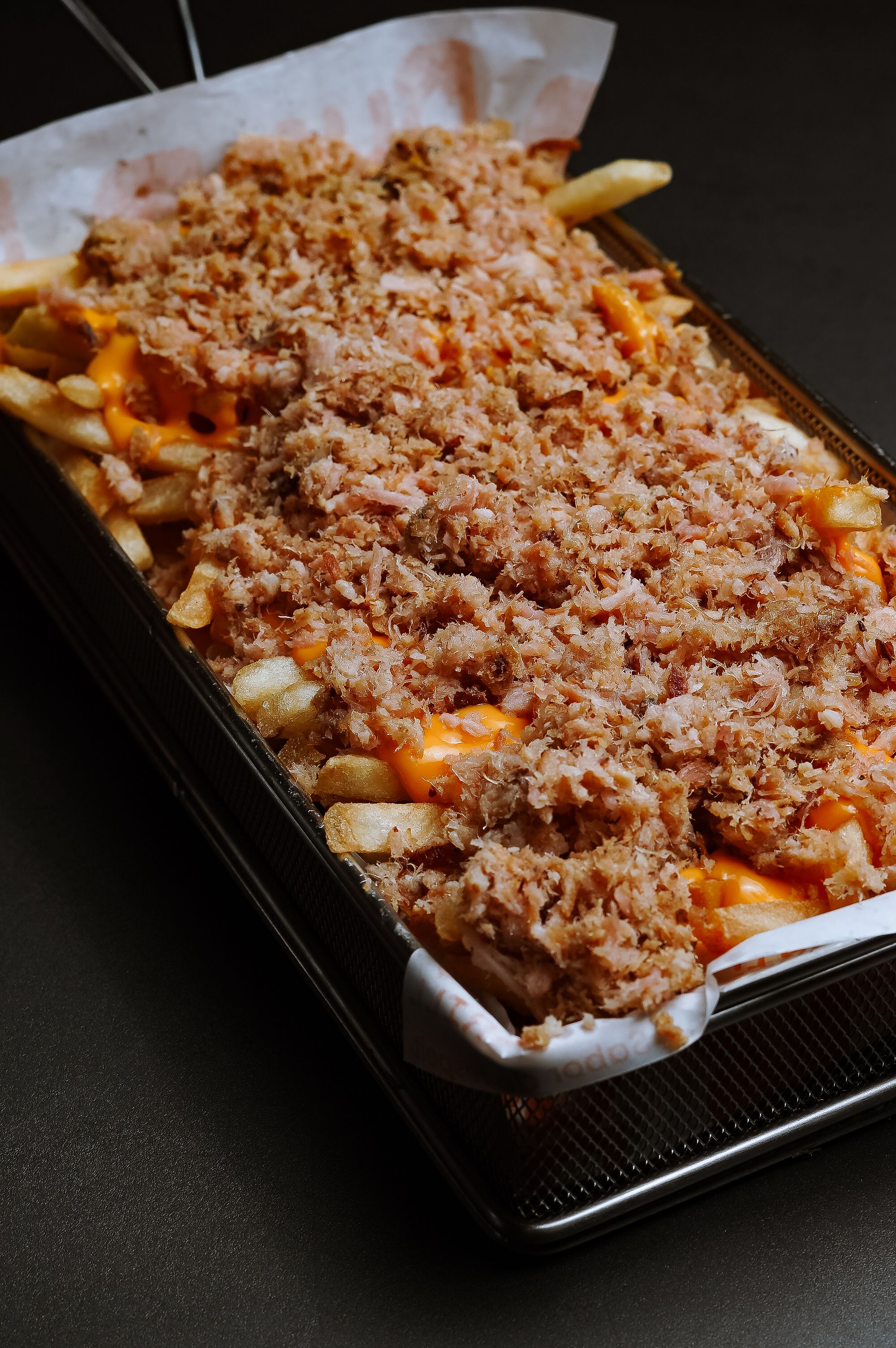
Photo: pedro furtado / Pexels
The diets react (see scores below)

That’s a heavy plate — want to see the leaner version?
Common Ingredients
- Fritos corn chips
- ground beef chiliGround turkey
Lean ground turkey cuts the saturated fat of ground beef chili while keeping the dish a ground-meat dish.
- cheddar cheese
- onion
- jalapeños
- sour creamGreek yogurt (plain, nonfat)
Nonfat Greek yogurt keeps the creamy body of sour cream with more protein and far less fat.
Specific recipes may vary.
Incompatible with 11 of 11 diets
Diet Ratings
Frito Pie is fundamentally incompatible with a ketogenic diet due to its primary base ingredient: Fritos corn chips. Corn chips are a grain-based, high-net-carb food — a standard single-serve bag (about 1 oz / 28g) contains roughly 16g of net carbs, and Frito Pie typically uses far more than that. A standard serving could easily deliver 40-60g of net carbs from the chips alone, blowing past the entire daily keto limit before accounting for anything else. The remaining ingredients — ground beef chili (which often contains beans and tomatoes adding more carbs), cheddar cheese, onion, jalapeños, and sour cream — are mostly keto-friendly in isolation, but they cannot redeem the dish when built on a foundation of corn chips. There is no realistic portion size of traditional Frito Pie that keeps net carbs within keto thresholds.
Frito Pie contains multiple animal-derived ingredients that disqualify it from a vegan diet. Ground beef chili is a direct animal product (meat), cheddar cheese is dairy, and sour cream is dairy. These are unambiguous animal products with no debate within the vegan community. While Fritos corn chips, onion, and jalapeños are plant-based, the dish as described is fundamentally built around animal products and cannot be considered vegan in any form.
Frito Pie is fundamentally incompatible with the paleo diet. The dish is built around Fritos corn chips, which are a processed corn (grain) product — corn is explicitly excluded from paleo as both a grain and a heavily processed, seed-oil-fried snack food. Cheddar cheese and sour cream are dairy products, also excluded. The chili base (ground beef) is paleo-friendly, and onions and jalapeños are approved vegetables, but these minor compliant elements are completely overshadowed by multiple core violations. This is a textbook non-paleo dish with no meaningful gray area.
Frito Pie is fundamentally incompatible with Mediterranean diet principles on multiple levels. The base is Fritos corn chips — a highly processed, refined grain snack food with added sodium and industrial oils. Ground beef chili introduces red meat, which is limited to a few times per month in Mediterranean eating. Cheddar cheese and sour cream add saturated fat beyond moderate dairy allowances. There is virtually no olive oil, no whole grains, no legumes as a primary component, and no plant-forward emphasis. The only redeeming elements are onion and jalapeños, which are vegetables but present in minor quantities. This dish represents the antithesis of Mediterranean diet principles: ultra-processed base, red meat as the primary protein, excess saturated dairy fat, and no healthy fat sources.
Frito Pie is fundamentally incompatible with the carnivore diet. The dish is built on a base of Fritos corn chips — a processed grain/corn product that is entirely plant-derived and loaded with plant oils (corn oil) and additives. The chili likely contains beans and tomatoes, both plant foods. Onion and jalapeños are vegetables, strictly excluded. Sour cream is a debated dairy product, but it is a minor concern compared to the overwhelmingly plant-based and processed foundation of this dish. Even the ground beef component cannot redeem a dish that is structurally defined by corn chips, vegetables, and processed ingredients. This is a classic comfort food with virtually no carnivore-compatible version in its traditional form.
Frito Pie contains multiple excluded ingredients that make it clearly non-compliant with Whole30. Fritos corn chips are made from corn, which is a grain excluded on Whole30, and chips are also explicitly listed as a forbidden 'junk food' category regardless of ingredients. Cheddar cheese is dairy, which is excluded. Sour cream is also dairy and excluded. The chili may contain additional non-compliant ingredients (beans, added sugar, corn starch). With at least three categories of excluded foods present, this dish is firmly off-program.
Frito Pie as traditionally prepared contains multiple high-FODMAP ingredients that make it unsuitable during the elimination phase. The most significant offenders are onion (high in fructans — one of the most potent FODMAP triggers, problematic even in small amounts), and ground beef chili which almost certainly contains garlic and onion as base aromatics. Sour cream contains lactose and becomes high-FODMAP at typical serving sizes (anything beyond about 2 tablespoons). Cheddar cheese is actually low-FODMAP as a hard aged cheese. Fritos plain corn chips are low-FODMAP (made from corn, oil, salt). Jalapeños are low-FODMAP at small servings. However, the combination of onion as a listed topping ingredient AND onion/garlic almost certainly embedded in the chili base makes this dish essentially unavoidable as a high-FODMAP food. Even attempting to modify it is complicated by the chili preparation. There is no realistic standard serving of traditional Frito Pie that would be low-FODMAP.
Frito Pie is a poor fit for the DASH diet on nearly every dimension. Fritos corn chips are high in sodium and saturated fat, and contribute refined carbohydrates with negligible fiber or micronutrients. Ground beef chili, unless prepared with lean beef and no added salt, is a significant source of saturated fat and sodium. Cheddar cheese is full-fat dairy — explicitly limited on DASH — and adds further saturated fat and sodium. Sour cream is another full-fat dairy item discouraged by DASH guidelines. The combination of these ingredients creates a dish that is high in sodium (likely exceeding 1,000–1,500mg per serving), high in saturated fat, and low in the potassium, magnesium, calcium, and fiber that DASH emphasizes. The only DASH-friendly components are the onion and jalapeños, which are vegetables but present in negligible amounts relative to the overall nutritional profile. This dish is emblematic of the comfort food category that DASH was specifically designed to move away from.
Frito Pie is a difficult dish to reconcile with Zone principles. The dominant carbohydrate source — Fritos corn chips — is a high-glycemic, processed, omega-6-heavy snack food made from corn, which is explicitly unfavorable in Zone terminology. The macronutrient ratio is badly skewed: the dish is calorie-dense from refined carbs and saturated fat (cheddar cheese, sour cream, fatty ground beef chili), with very little lean protein relative to calories. The fat profile is problematic on two fronts: cheddar and sour cream contribute significant saturated fat, while corn chips bring omega-6-rich corn oil — exactly the inflammatory fat Sears warns against. Ground beef chili could be a reasonable Zone protein source if made with very lean beef, but in this context it's buried under unfavorable carb and fat sources. The onion and jalapeños are Zone-friendly, but they are minor contributors. Even with careful portioning, the base structure of this dish — chips as the carbohydrate vehicle — cannot be made Zone-compatible without fundamentally reconstructing it into a different meal entirely.
Frito Pie is a heavily pro-inflammatory dish across nearly every component. Fritos corn chips are a processed food made with corn, corn oil (high omega-6), and salt — offering no nutritional benefit and contributing refined carbohydrates and potentially oxidized seed oils. Ground beef chili, while containing some anti-inflammatory elements like onion and jalapeños, is built on red meat, which anti-inflammatory frameworks recommend limiting. Cheddar cheese and sour cream are full-fat dairy products high in saturated fat, which the anti-inflammatory framework flags for limiting. The overall dish is high in saturated fat, refined/processed carbohydrates, omega-6 fatty acids, and sodium, with minimal redeeming anti-inflammatory content. The onion and jalapeños provide modest polyphenol and capsaicin benefit, but they are incidental to a fundamentally pro-inflammatory nutritional profile. This dish represents a combination of multiple 'limit' and 'avoid' category foods with no significant anti-inflammatory offset.
Frito Pie is a poor fit for GLP-1 patients across nearly every priority category. The base — Fritos corn chips — is a fried, high-fat, high-sodium, low-fiber, low-protein ultra-processed snack that offers almost no nutritional value per calorie. Ground beef chili provides some protein but is typically high in saturated fat. Cheddar cheese adds more saturated fat with modest protein. Sour cream contributes additional fat with minimal protein or fiber. Jalapeños, while low-calorie, are a spicy ingredient that can worsen GLP-1-related nausea and reflux, especially given the already heavy fat load in this dish. The combination of fried chips, high saturated fat, spice, and low fiber-per-calorie makes this dish likely to trigger or worsen nausea, bloating, reflux, and GI discomfort — the core side effects GLP-1 patients are most vulnerable to. The dish is also high in empty calories relative to its protein content, making it counterproductive when caloric intake is already reduced. Even a small portion delivers a poor nutritional return.
*See how scores were generated at our methodology page.
Nutritional profile
Six traits that cut across every diet.
Fiber & Plants
How much whole-plant food and fiber it delivers.
Healthy Fats
The quality of its fats (unsaturated, omega-3).
Whole / Unprocessed
How close it is to its natural, unprocessed form.
Gut Gentle
How easy it is on digestion (low FODMAP, few irritants).
Low Glycemic
How little it spikes your blood sugar.
Protein Density
How much protein it packs per calorie.
Controversy Index
Higher controversy = more disagreement between diets.