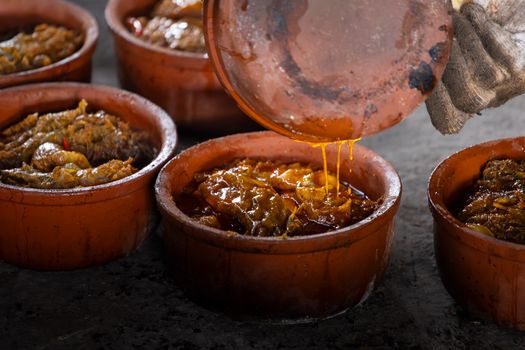
Photo: Hồng Quang Official / Pexels
Vietnamese
Caramelized Chicken (Gà Kho)
The diets react (see scores below)
Common Ingredients
- chicken
- caramel sauce
- fish sauce
- ginger
- garlic
- shallots
- scallions
- black pepper
Specific recipes may vary.
Incompatible with 4 of 11 diets
Diet Ratings
Caramelized Chicken (Gà Kho) is problematic for keto primarily due to the caramel sauce, which is made by cooking sugar and is a core component of the dish's flavor profile. This introduces a meaningful amount of added sugar that could disrupt ketosis depending on serving size and preparation. Fish sauce adds minimal carbs in typical quantities. The remaining ingredients — chicken, ginger, garlic, shallots, scallions, and black pepper — are keto-friendly or low-carb in standard amounts. The dish is not inherently incompatible, but the caramel sauce is a significant concern. A keto-adapted version could substitute the caramel with a low-carb sweetener like erythritol, making it more acceptable. As traditionally prepared, portion control and caution are warranted.
Some lazy keto or flexible keto practitioners argue that a small serving of this dish, where the caramel is distributed across multiple portions, may keep net carbs within daily limits and is therefore acceptable. Strict keto adherents, however, reject any form of added sugar regardless of quantity, making this dish a firm avoid in their protocols.
Caramelized Chicken (Gà Kho) contains multiple animal products that are strictly excluded from a vegan diet. Chicken is direct animal flesh, and fish sauce is derived from fermented fish — both are clear violations of vegan principles. There is no meaningful debate within the vegan community about either ingredient.
Caramelized Chicken (Gà Kho) is built on a paleo-friendly foundation — chicken, ginger, garlic, shallots, scallions, and black pepper are all unambiguously approved. The two problematic ingredients are caramel sauce and fish sauce. Caramel sauce is made from refined sugar (and often butter), placing it firmly in the 'avoid' category under strict paleo rules. Fish sauce in its traditional form (fermented fish and salt) is minimally processed and ancestrally plausible, but the added salt and common inclusion of sugar or preservatives in commercial versions raise concerns. The dish's defining characteristic — its caramelized sweetness — depends on refined sugar, which cannot be substituted without fundamentally changing the dish. A paleo-adapted version using coconut sugar or coconut aminos in place of refined caramel and commercial fish sauce would shift this closer to 'approve', but as traditionally prepared, the refined sugar content warrants a caution rating.
Some paleo practitioners, particularly those following a more flexible or ancestral-foods approach, may accept small amounts of natural fermented condiments like fish sauce and argue that minimal refined sugar used as a flavoring agent (rather than a primary ingredient) is tolerable in the context of an otherwise clean diet. Mark Sisson's Primal Blueprint, for example, allows for pragmatic use of certain fermented sauces.
Caramelized Chicken (Gà Kho) is built around poultry, which the Mediterranean diet permits in moderate amounts (a few servings per week). The aromatic base of ginger, garlic, shallots, and scallions is strongly aligned with Mediterranean principles. Fish sauce, while not a Mediterranean ingredient, functions as a fermented umami condiment similar to the ancient garum used in Mediterranean cooking, and contributes minimal calories. The main concern is the caramel sauce, which introduces added sugar — an ingredient the Mediterranean diet minimizes. The dish also lacks olive oil as the primary fat and is not plant-forward. Overall, it is acceptable occasionally as a moderate-protein dish, but the added sugar and absence of core Mediterranean fats and plant-based emphasis keep it firmly in the caution zone.
Some Mediterranean diet interpreters take a broader, pattern-based view: if this dish is served alongside vegetables, legumes, or whole grains, the overall meal could be considered compatible. The added sugar in caramel is a small quantity used as a seasoning glaze rather than a major ingredient, and strict purists may differ on how heavily to penalize minor sugar use in an otherwise lean poultry preparation.
Caramelized Chicken (Gà Kho) contains multiple plant-derived and non-carnivore ingredients that disqualify it from the diet. Caramel sauce introduces sugar, which is explicitly excluded. Ginger, garlic, shallots, scallions, and black pepper are all plant-derived ingredients — vegetables and spices that are off-limits on a strict carnivore diet. Fish sauce may contain added sugars and fermented plant residues. While chicken itself is carnivore-compatible, this dish as prepared is heavily plant-flavored and sugar-laden, making it clearly incompatible with carnivore principles.
The critical issue with Caramelized Chicken (Gà Kho) is the caramel sauce. Traditional Vietnamese caramel sauce (nước màu) is made by cooking sugar until it darkens — this is added sugar, which is explicitly excluded on Whole30. The dish is literally named for and built around this caramelized sugar base, making it fundamentally non-compliant. All other ingredients — chicken, fish sauce, ginger, garlic, shallots, scallions, and black pepper — are Whole30-compatible on their own. Fish sauce should be checked for additives, but plain fish sauce (water, anchovies, salt) is allowed. However, the caramel sauce is not an incidental or optional ingredient; it is the defining flavor component of the dish and cannot be omitted without fundamentally changing the recipe.
Caramelized Chicken (Gà Kho) contains multiple high-FODMAP ingredients that make it unsuitable during the elimination phase. Garlic is one of the highest-FODMAP foods tested by Monash University, rich in fructans even in small amounts. Shallots are similarly very high in fructans and are a major FODMAP trigger. Scallions (green onions) are high-FODMAP in their white bulb portions, though the green tops are low-FODMAP — traditional recipes typically use both parts. The caramel sauce, depending on preparation, may contain high-fructose corn syrup or honey, which are high in excess fructose or fructans. Fish sauce itself is generally low-FODMAP at standard serving sizes, as is ginger, black pepper, and chicken. However, the combination of garlic and shallots alone is sufficient to classify this dish as high-FODMAP and unsuitable for the elimination phase without significant ingredient modifications.
Caramelized Chicken (Gà Kho) features chicken as a lean protein base, which aligns well with DASH principles. However, the dish relies heavily on fish sauce, which is extremely high in sodium (approximately 1,400–1,500mg per tablespoon), and caramel sauce adds significant amounts of refined sugar. Together, these two ingredients are the primary concerns for DASH adherence. The aromatics — ginger, garlic, shallots, and scallions — are DASH-friendly and provide beneficial micronutrients. The chicken itself is a DASH-approved lean protein. The overall dish, as traditionally prepared, likely exceeds DASH sodium thresholds in a single serving due to the fish sauce, placing it firmly in the 'caution' category. A DASH-modified version using low-sodium fish sauce or reduced quantities could improve the score. The caramel (added sugar) also conflicts with DASH's guidance to limit sweets, though the quantity per serving may be modest. This dish is not categorically excluded from DASH but requires meaningful portion control and ideally ingredient modification.
NIH DASH guidelines explicitly limit sodium to 1,500–2,300mg/day and flag high-sodium condiments like fish sauce as problematic; however, some DASH-oriented clinicians working with Asian dietary patterns acknowledge that fish sauce, when used judiciously as a flavor enhancer rather than a base sauce, can be incorporated into an otherwise DASH-compliant meal — particularly if the rest of the day's sodium budget is managed carefully.
Caramelized Chicken (Gà Kho) is built around chicken — a lean, Zone-favorable protein — but the defining feature of this dish is the caramel sauce, which is essentially melted sugar cooked to a dark syrup. This adds a significant glycemic load and calories from refined sugar that don't fit neatly into Zone block calculations. Fish sauce contributes sodium and a small amount of carbohydrate but is used in small quantities. The aromatics (ginger, garlic, shallots, scallions) are Zone-friendly polyphenol-rich vegetables that Sears would actively encourage. The fat content of the dish is relatively low since chicken (especially breast or thigh without skin) is lean and no added oil is typical. The primary Zone concern is the caramel sauce: it elevates the glycemic index of the meal and skews the carbohydrate block toward high-glycemic, unfavorable territory. However, because the quantity of caramel per serving is modest (it coats rather than saturates), and the protein base is solid, this dish can be incorporated into a Zone meal with careful portioning — pairing a small serving with a large side of low-glycemic vegetables to rebalance the carb ratio. It is not a Zone ideal, but it is far from categorically excluded.
Some Zone practitioners and Sears' later anti-inflammatory writings place greater emphasis on polyphenol-rich foods and overall dietary patterns rather than penalizing small amounts of sugar used in cooking. In this view, the fish sauce and aromatics provide beneficial compounds, the sugar quantity per serving is limited, and the lean protein base makes this a workable Zone component — potentially scoring higher (6-7) when portioned correctly alongside favorable vegetables.
Gà Kho is a mixed profile dish from an anti-inflammatory standpoint. On the positive side, ginger and garlic are well-established anti-inflammatory spices (gingerols, allicin), black pepper enhances bioavailability of anti-inflammatory compounds, and shallots/scallions contribute quercetin and flavonoids. Chicken is a lean protein, classified as 'moderate' in anti-inflammatory frameworks — preferable to red meat. Fish sauce, while high in sodium, is fermented and contributes umami without significant inflammatory compounds in typical cooking quantities. The caramel sauce is the main concern: it represents added sugar, which at meaningful quantities can spike blood glucose and promote inflammatory signaling (TNF-α, IL-6). The extent of the issue depends on the amount used — Vietnamese caramelized dishes often use a moderate amount for glaze and color rather than a sugar-heavy sauce. Overall, this is a moderately acceptable dish with notable anti-inflammatory aromatics offset by added sugar from the caramel component.
Some anti-inflammatory practitioners (aligned with Dr. Weil's more permissive framework) would view this dish favorably, arguing the ginger, garlic, and black pepper substantially offset the small amount of caramel sugar typical in home-cooked Gà Kho. Others following stricter low-sugar anti-inflammatory protocols would flag any added sugar, especially caramelized (high-heat processed) sugar, as a meaningful inflammatory trigger and rate the dish lower.
Gà Kho (Vietnamese Caramelized Chicken) is a protein-rich dish built around chicken, which is a strong GLP-1-friendly base. However, the caramel sauce introduces a meaningful amount of added sugar, which is a notable drawback for GLP-1 patients who need to maximize nutrient density per calorie and should limit high-sugar preparations. Fish sauce adds sodium but is used in small quantities and is not a major concern. Ginger, garlic, shallots, and scallions are all beneficial — anti-inflammatory, easy to digest, and nutrient-dense at low calorie cost. Black pepper is generally well-tolerated in culinary amounts. The fat content depends heavily on which cut of chicken is used: if made with bone-in thighs or drumsticks (traditional), the saturated fat content rises and may worsen nausea or reflux; if made with breast meat, it becomes significantly more GLP-1 appropriate. The braised/stewed cooking method is a positive — it is easy to digest and avoids frying. The primary concern is the caramel sauce, which can add 10-20g of sugar per serving depending on preparation, conflicting with the guideline to avoid high-sugar foods. In small, controlled portions alongside a fiber source, this dish is acceptable, but the sugar load prevents a full approval.
Some GLP-1-focused dietitians may rate this dish more favorably, arguing that the sugar in a traditional caramel sauce is distributed across multiple servings and that the overall protein and micronutrient profile of the dish outweighs the modest glycemic impact. Others are stricter about any added sugar in GLP-1 meal planning, particularly for patients also managing insulin resistance or type 2 diabetes, and would recommend a reduced-sugar or sugar-substitute adaptation before including this dish regularly.
*See how scores were generated at our methodology page.
Nutritional profile
Six traits that cut across every diet.
Fiber & Plants
How much whole-plant food and fiber it delivers.
Healthy Fats
The quality of its fats (unsaturated, omega-3).
Whole / Unprocessed
How close it is to its natural, unprocessed form.
Gut Gentle
How easy it is on digestion (low FODMAP, few irritants).
Low Glycemic
How little it spikes your blood sugar.
Protein Density
How much protein it packs per calorie.
Controversy Index
Higher controversy = more disagreement between diets.
Diet-Specific Tips
 Keto — 4/10
View tips
- Caramel sauce contains significant added sugar — the primary keto concern
- Fish sauce contributes minimal carbs in standard serving amounts
- Chicken is an excellent keto protein source
- Garlic, shallots, and scallions add minor carb load but are acceptable in small quantities
- Traditional preparation is not keto-friendly; modified versions using sugar-free sweeteners can make it viable
- Portion size is critical — a small serving may stay within daily carb limits for flexible keto followers
 Paleo — 5/10
View tips
- Chicken is fully paleo-approved as the primary protein
- Caramel sauce is made from refined sugar — a core paleo exclusion
- Fish sauce (traditional) is fermented and ancestrally plausible but often contains added salt and sugar in commercial forms
- Ginger, garlic, shallots, scallions, and black pepper are all paleo-compliant aromatics
- Dish could be paleo-adapted using coconut sugar and clean fish sauce, but is not paleo as traditionally prepared
 Mediterranean — 5/10
View tips
- Chicken is an acceptable moderate protein source in the Mediterranean diet, not a daily staple
- Caramel sauce introduces added sugar, which the Mediterranean diet discourages
- Garlic, shallots, ginger, and scallions are plant-based aromatics consistent with Mediterranean principles
- Fish sauce acts as a fermented condiment, analogous to traditional Mediterranean garum
- No olive oil present; cooking fat and preparation method are non-Mediterranean
- Dish is protein-centric rather than plant-forward, misaligning with Mediterranean dietary emphasis
 DASH — 4/10
View tips
- Fish sauce is very high in sodium, potentially exceeding DASH daily limits in one dish
- Caramel sauce adds refined sugar, which DASH discourages
- Chicken is a DASH-approved lean protein
- Aromatics (ginger, garlic, shallots, scallions) are DASH-friendly
- Low-sodium fish sauce substitution would meaningfully improve DASH compatibility
- Portion size critical — smaller servings reduce sodium and sugar load
 Zone — 5/10
View tips
- Chicken is a lean, Zone-favorable protein source
- Caramel sauce introduces refined sugar, raising the glycemic load and making carb blocks unfavorable
- Fish sauce adds minimal carbohydrate and is used in small amounts
- Ginger, garlic, shallots, and scallions are Zone-approved polyphenol-rich aromatics
- Low added fat aligns with Zone fat block goals for animal protein meals
- Dish is workable in Zone with careful portioning and pairing with low-glycemic vegetable sides
- Overall macro balance can be achieved but requires deliberate plate composition
 Anti-Inflammatory — 5/10
View tips
- Ginger: strong anti-inflammatory (gingerols, shogaols)
- Garlic: anti-inflammatory (allicin, organosulfur compounds)
- Shallots and scallions: quercetin and flavonoids
- Black pepper: piperine enhances anti-inflammatory compound absorption
- Chicken: lean protein, anti-inflammatory framework 'moderate' category
- Caramel sauce: added sugar is a pro-inflammatory concern
- Fish sauce: high sodium but fermented; minimal direct inflammatory concern at culinary doses
- Overall balance depends heavily on the quantity of caramel/sugar used
 GLP-1 Friendly — 5/10
View tips
- Good protein source from chicken, but cut matters significantly — breast preferred over thighs or drumsticks
- Caramel sauce adds notable sugar content, conflicting with GLP-1 dietary guidelines to limit high-sugar foods
- Braised/stewed cooking method is easy to digest and GLP-1-appropriate
- Fish sauce is high in sodium but used in small amounts — not a primary concern
- Ginger is beneficial and may help with GLP-1-related nausea
- Low fiber on its own — should be paired with a vegetable or whole grain side
- Portion-sensitive: small servings reduce sugar and fat exposure while preserving protein benefit